
The Nasdaq Stock Market, often colloquially referred to simply as “the Nasdaq,” stands as a pivotal global exchange, renowned for its technological sophistication and its role as a hotbed for innovative, growth-oriented companies. Far from being a monolithic entity, Nasdaq hosts an incredibly diverse array of businesses, from the world’s most recognizable technology behemoths to nimble biotech startups and consumer goods giants. Understanding which companies list on Nasdaq, and why, offers critical insights for investors, entrepreneurs, and anyone interested in the mechanics of global finance.
Understanding The Nasdaq Stock Market
Established in 1971, Nasdaq was the world’s first electronic stock market, pioneering a trading system that revolutionized how securities were bought and sold. Its genesis was rooted in a desire for greater efficiency and transparency in an era dominated by traditional floor-based exchanges. This commitment to technology and innovation remains a defining characteristic, attracting companies that align with this forward-thinking ethos.
More Than Just Tech: A Diverse Ecosystem
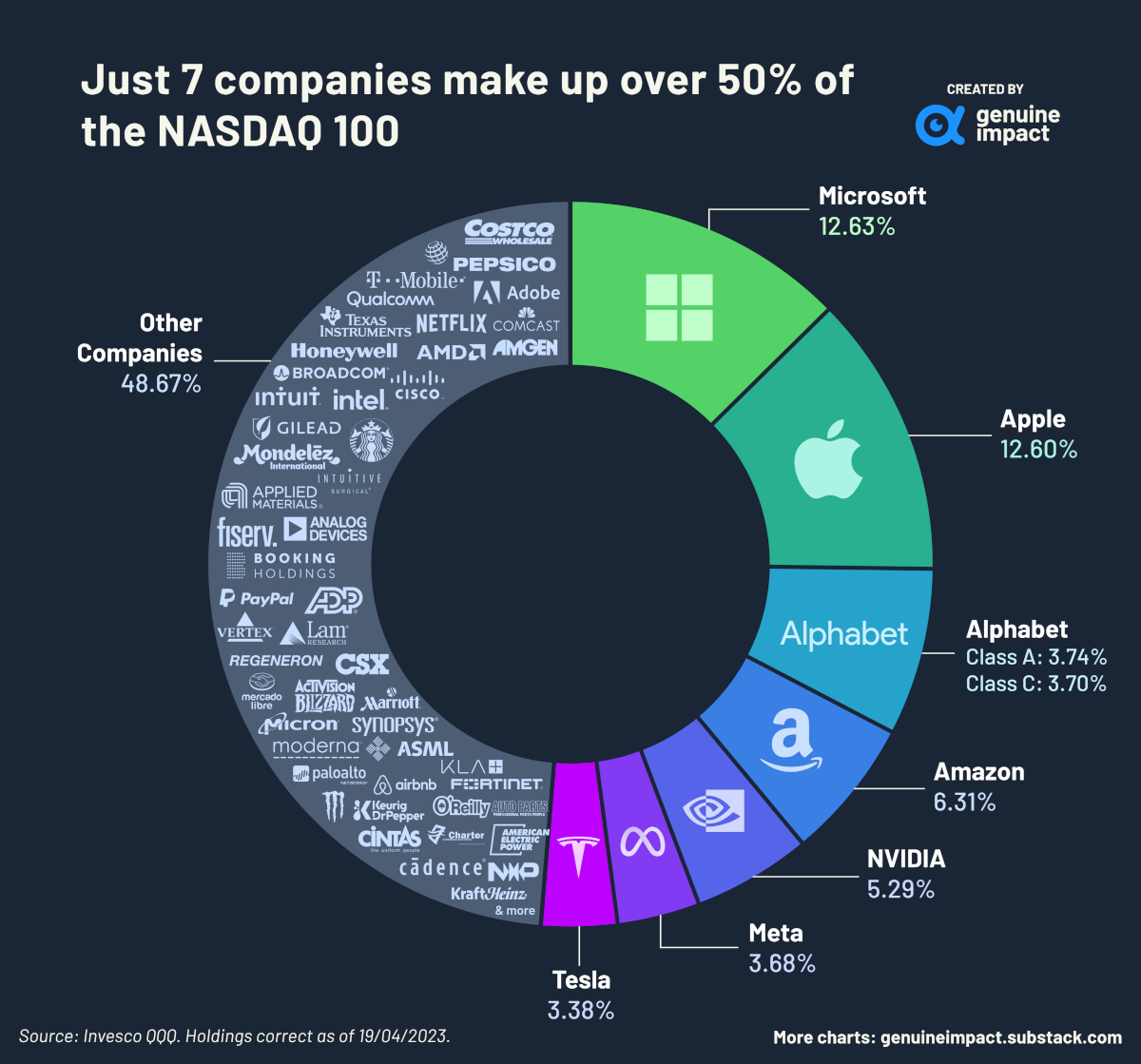
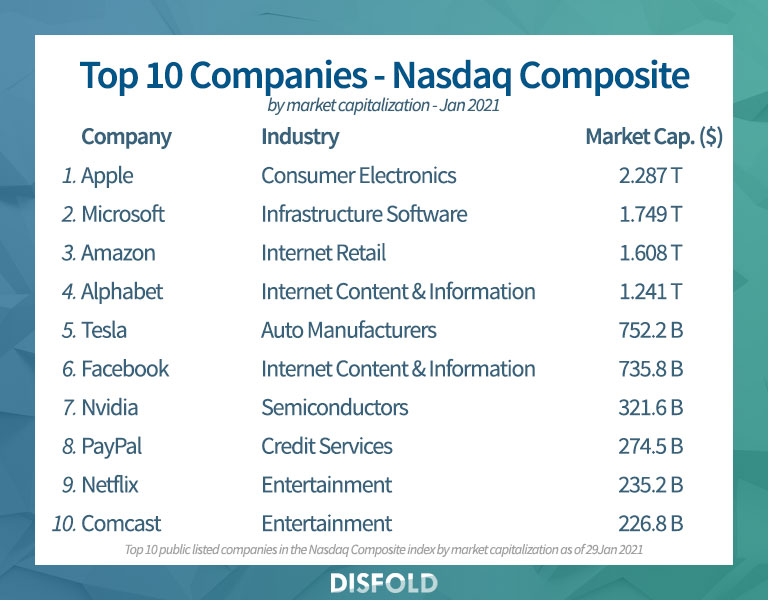
While Nasdaq is undeniably synonymous with technology, its roster of listed companies extends far beyond Silicon Valley. Indeed, while the exchange is home to titans like Apple, Microsoft, Amazon, and Alphabet (Google’s parent company), it also features prominent firms across various sectors. Biotechnology and pharmaceuticals find a significant home on Nasdaq, drawn by its deep investor base accustomed to evaluating intellectual property and long-term research cycles. Retail companies, both online and brick-and-mortar, financial services firms, telecommunications providers, and even some industrials choose Nasdaq for its distinct advantages. This sectoral breadth ensures that while technology may be its most visible component, the Nasdaq ecosystem is rich with opportunities across the economic spectrum.
Listing Requirements: The Bar for Entry
Companies seeking to list on Nasdaq must meet stringent initial and ongoing financial and corporate governance requirements. These standards are designed to protect investors and maintain market integrity, ensuring that only robust and transparent entities gain access to its trading platforms.
The primary listing tiers are the Nasdaq Global Select Market, Nasdaq Global Market, and Nasdaq Capital Market, each with varying thresholds for financial metrics, corporate governance, and liquidity. For instance, to qualify for the prestigious Nasdaq Global Select Market, a company typically needs to meet rigorous benchmarks related to earnings, cash flow, market capitalization, and shareholder equity. Additionally, it must adhere to strict corporate governance rules, including requirements for independent directors, audit committees, and shareholder approval for certain corporate actions.
These requirements extend beyond initial public offerings (IPOs) and are subject to continuous monitoring. Companies must maintain minimum share prices, public float values, and regular financial reporting. Failure to meet these ongoing standards can lead to a company being delisted, underscoring Nasdaq’s commitment to maintaining a high-quality marketplace for investors and listed companies alike. These rigorous standards help to assure investors of the financial viability and operational transparency of companies trading on the exchange.
Key Players: Dominating The Nasdaq Landscape
The companies that populate Nasdaq represent a dynamic cross-section of global enterprise. While the sheer number of listed firms is vast, certain indices and individual companies stand out due to their market capitalization, influence, and investment popularity.
The Nasdaq 100: A Bellwether of Innovation
Perhaps the most recognized subset of Nasdaq-listed companies is the Nasdaq 100 Index. This index comprises the 100 largest non-financial companies listed on the Nasdaq Stock Market, based on market capitalization. It is a modified capitalization-weighted index, meaning larger companies have a greater impact on its performance. The Nasdaq 100 is widely regarded as a benchmark for large-cap growth stocks, particularly those in the technology sector, though it also includes companies from retail, healthcare, and biotech.
Companies like Apple, Microsoft, Amazon, NVIDIA, Tesla, and Meta Platforms (Facebook) are consistent fixtures of the Nasdaq 100, driving significant investor interest and often setting the tone for broader market sentiment. The index’s composition is reviewed and rebalanced annually, ensuring it remains reflective of the leading innovative firms. Investing in the Nasdaq 100, typically through exchange-traded funds (ETFs) like QQQ, provides investors with diversified exposure to these market leaders, capitalizing on their collective growth potential.
Beyond The Giants: Growth and Mid-Cap Opportunities
While the Nasdaq 100 captures headlines, the vast majority of Nasdaq-listed companies are not megacap giants. The exchange is a vital platform for mid-cap and small-cap companies, many of which are early-stage growth enterprises across various industries. These companies, often characterized by higher growth potential but also higher risk, attract investors seeking ground-floor opportunities.
For example, numerous biotechnology firms with promising drug pipelines, software companies developing niche applications, and innovative e-commerce startups initially list on Nasdaq. These firms often leverage the exchange’s reputation for innovation to attract capital for research and development, market expansion, and operational scaling. While less visible than the market leaders, these smaller and mid-sized companies collectively contribute significantly to the Nasdaq’s dynamism and offer diverse investment possibilities for those willing to undertake thorough due diligence. Identifying these emerging players requires a deeper dive into financial statements, management teams, and market opportunities, but the potential rewards can be substantial.
Why Companies Choose Nasdaq
Companies select a stock exchange for their public listing based on a variety of strategic and financial considerations. For many, Nasdaq offers a compelling value proposition that aligns with their corporate identity and growth objectives.
Visibility and Investor Access
Listing on Nasdaq provides unparalleled visibility to a global audience of institutional and retail investors. The exchange’s brand is strongly associated with innovation and growth, a powerful magnet for capital seeking these characteristics. Companies benefit from the sophisticated analytical tools and robust trading infrastructure that Nasdaq offers, which facilitates efficient price discovery and transaction execution. This high level of market activity translates into greater liquidity for a company’s shares, making it easier for investors to buy and sell, which in turn can make the stock more attractive. Furthermore, the extensive financial media coverage surrounding Nasdaq-listed companies, particularly those in the tech and biotech sectors, amplifies their profile, attracting new investors and maintaining interest among existing shareholders.
Innovation-Centric Brand Identity
For many companies, especially those in technology, biotech, and other high-growth sectors, listing on Nasdaq is a strategic branding statement. It signals to the market, customers, and employees that the company is forward-thinking, technologically advanced, and positioned for future growth. This brand alignment can enhance a company’s reputation, making it more attractive for talent recruitment, business partnerships, and even customer acquisition. The “Nasdaq halo” can validate a company’s innovative efforts and distinguish it from competitors that might be listed on more traditional exchanges. This intangible benefit can be as crucial as the financial benefits in the long run.
Market Liquidity and Capital Formation
Nasdaq’s advanced electronic trading system is designed to maximize market liquidity, meaning there’s a ready supply of buyers and sellers at any given time. High liquidity is critical for companies, as it ensures that their shares can be traded efficiently without significant price disruption. This is particularly important for institutional investors who often trade large blocks of shares. The ease of trading also makes a company’s stock more appealing, potentially lowering its cost of capital over time. Furthermore, Nasdaq provides a robust platform for companies to raise additional capital through secondary offerings, debt issuance, or other financial instruments, leveraging its deep pool of investors to fund expansion and strategic initiatives. This access to capital is fundamental for growth-oriented businesses that require continuous investment to innovate and scale.
Investing in Nasdaq-Listed Companies
For individual and institutional investors, Nasdaq offers a vast universe of investment opportunities, ranging from stable, dividend-paying giants to speculative, high-growth startups. Navigating this landscape requires a clear understanding of investment strategies and risk management.
Direct Stock Investment
Investors can purchase individual stocks of Nasdaq-listed companies through brokerage accounts. This approach allows for targeted exposure to specific companies and industries that align with an investor’s research and convictions. Successful direct stock investment hinges on thorough fundamental analysis (evaluating a company’s financial health, management, competitive landscape, and growth prospects) and technical analysis (studying price movements and trading volumes). While direct ownership offers the potential for high returns, it also carries concentrated risk. A single company’s underperformance or adverse events can significantly impact a portfolio. Therefore, diversification across multiple stocks and sectors is a prudent strategy.
ETFs and Mutual Funds
For many investors, particularly those seeking diversification or a less hands-on approach, exchange-traded funds (ETFs) and mutual funds that track Nasdaq indices or focus on Nasdaq-listed companies are excellent options. Funds like those tracking the Nasdaq 100 (e.g., QQQ) offer exposure to the top non-financial companies on the exchange, providing instant diversification across many high-growth firms. Sector-specific ETFs, such as those focusing on biotechnology or semiconductors listed on Nasdaq, allow investors to target particular industries without the need to select individual stocks. These pooled investment vehicles manage risk through diversification and are professionally managed, making them accessible even for novice investors.
Understanding Risk and Volatility
While Nasdaq is often associated with high growth, it’s also known for higher volatility, especially in its technology and biotech segments. Growth stocks, by their nature, often trade at higher valuations based on future earnings potential rather than current profits, making them more susceptible to market sentiment shifts, interest rate changes, and economic slowdowns. Investors in Nasdaq-listed companies must be prepared for price fluctuations and should align their investment horizon with their risk tolerance. Long-term investing, dollar-cost averaging, and maintaining a diversified portfolio are common strategies employed to mitigate the inherent risks associated with growth-oriented markets. Understanding a company’s specific risk profile, including its debt levels, competitive pressures, and regulatory environment, is paramount before making any investment decision.
The Nasdaq’s Role in the Global Economy
Beyond its function as a trading venue, Nasdaq plays a profound and multifaceted role in shaping the global economic landscape. Its influence extends to fostering innovation, facilitating capital allocation, and driving overall economic growth.
Fueling Innovation and Economic Growth
Nasdaq’s emphasis on technology and growth companies positions it as a critical engine for innovation. By providing a public platform for these firms to raise capital, it directly fuels research and development, enables scaling of operations, and ultimately brings groundbreaking products and services to market. Companies listed on Nasdaq often lead advancements in areas like artificial intelligence, biotechnology, renewable energy, and digital commerce. This constant churn of innovation creates new industries, new jobs, and increased productivity, which are fundamental drivers of economic expansion. The success stories of Nasdaq-listed companies often inspire a new generation of entrepreneurs, creating a virtuous cycle of innovation and economic dynamism.

A Hub for Global Capital
As a globally recognized exchange, Nasdaq acts as a vital conduit for international capital flows. Investors from around the world direct funds into Nasdaq-listed companies, seeking exposure to promising growth sectors and robust economic performance. This global integration benefits companies by providing them with a broader and deeper pool of capital than they might find domestically, enhancing their ability to finance ambitious projects and global expansion strategies. Simultaneously, it allows international investors to participate in the growth of leading U.S. and global enterprises. Nasdaq’s transparent regulatory environment and advanced trading technology further enhance its appeal as a trusted hub for global capital, reinforcing its position as a cornerstone of the world’s financial infrastructure.
aViewFromTheCave is a participant in the Amazon Services LLC Associates Program, an affiliate advertising program designed to provide a means for sites to earn advertising fees by advertising and linking to Amazon.com. Amazon, the Amazon logo, AmazonSupply, and the AmazonSupply logo are trademarks of Amazon.com, Inc. or its affiliates. As an Amazon Associate we earn affiliate commissions from qualifying purchases.