
The Technological Imperative of Brake Fluid
In the intricate engineering marvel that is a modern vehicle, every component plays a critical role in its overall function and, more importantly, its safety. Among these, brake fluid often receives less attention than engine oil or coolant, yet its performance is absolutely paramount to the vehicle’s stopping power. Far from being a simple liquid, brake fluid is a highly engineered hydraulic fluid designed to transmit force from the brake pedal to the brake calipers and drums, converting kinetic energy into thermal energy and bringing thousands of pounds of metal to a halt. Its color, therefore, is not merely an aesthetic detail but a vital diagnostic indicator of its health and, by extension, the integrity of your vehicle’s most critical safety system. Understanding the nuances of brake fluid color is key to proactive maintenance within a technologically advanced automotive ecosystem.

Beyond a Simple Fluid: A Critical Component of Vehicle Safety Tech
The braking system is arguably the most important safety feature in any vehicle. It relies on a closed hydraulic system where incompressible brake fluid efficiently transfers pressure. When the driver presses the brake pedal, a piston in the master cylinder forces brake fluid through rigid lines and flexible hoses to the calipers or wheel cylinders at each wheel. This pressure then pushes pistons, engaging the brake pads against rotors or shoes against drums, creating the friction necessary to slow or stop the vehicle. This entire process, occurring in milliseconds, highlights the critical technological demands placed on brake fluid. Any degradation in its properties directly translates to a compromise in this safety chain, potentially leading to increased stopping distances or complete brake failure. Its ability to perform under extreme temperature fluctuations and high pressures without boiling or freezing is a testament to its sophisticated chemical engineering.
The Science of Hydraulic Systems
The principle behind hydraulic braking systems is Pascal’s Law, which states that pressure applied to an enclosed fluid is transmitted undiminished to every portion of the fluid and the walls of the containing vessel. Brake fluid, being nearly incompressible, is perfectly suited for this role. Its high boiling point is crucial because braking generates significant heat, which can transfer to the fluid. If the fluid boils, vapor bubbles form, and because gases are compressible, the brake pedal will feel spongy, and braking efficiency will drastically reduce—a dangerous condition known as “pedal fade.” Conversely, its low freezing point ensures reliable operation in cold climates. Modern brake fluids also contain additives to prevent corrosion of metal components within the brake lines, calipers, and master cylinder, which are essential for maintaining the long-term integrity of the hydraulic system.
Deciphering Brake Fluid Colors: What They Tell You
The visual inspection of brake fluid color is a primary, albeit basic, diagnostic tool for assessing its condition. While not a definitive measure of its exact chemical properties, a change in color is often the first visible sign of degradation or contamination.
The “New” Color: A Benchmark of Purity and Performance
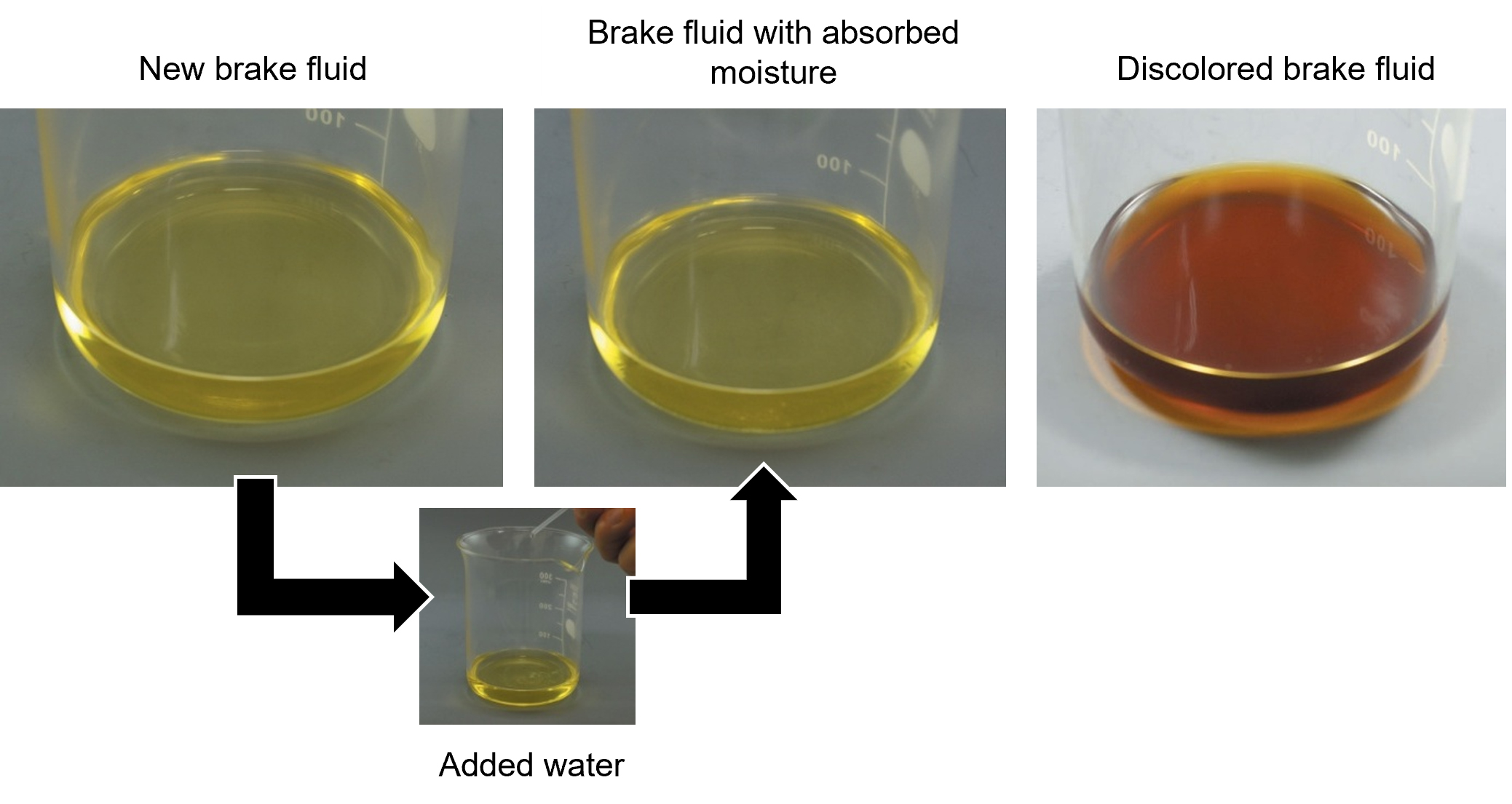
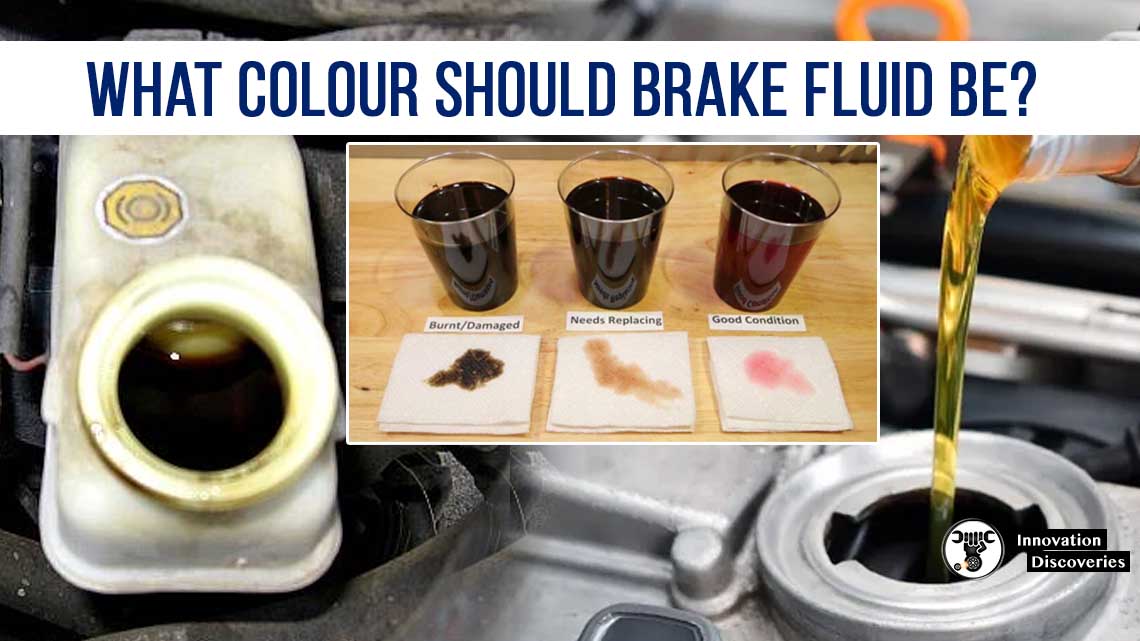
Fresh, unused brake fluid typically appears as a clear to light amber or straw yellow liquid. This transparent, clean appearance signifies its optimal chemical composition, free from contaminants and moisture. When fluid in the master cylinder reservoir matches this description, it generally indicates good health and readiness to perform its hydraulic duties effectively. This is the benchmark against which all subsequent inspections should be compared. Any deviation from this pristine state signals a decline in performance capability.
When Clear Turns Amber: The Inevitable Degradation Cycle
Over time, brake fluid naturally absorbs moisture from the air, a property known as hygroscopy. This moisture infiltration, even through microscopic pores in brake hoses and seals, is the primary enemy of brake fluid performance. As water content increases, the fluid’s boiling point decreases significantly. Moreover, the presence of water can lead to corrosion within the metallic components of the brake system. As the fluid degrades due to moisture absorption and thermal cycles, its color tends to darken, shifting from clear to a darker amber or light brown. This change signifies that the fluid is beginning to lose its effectiveness, its boiling point has dropped, and its anti-corrosion properties may be diminishing. At this stage, a fluid flush and replacement are highly recommended to prevent further degradation and maintain safety.
Dark Brown or Black: A Red Flag for System Integrity
When brake fluid appears dark brown or even black, it is a serious warning sign. This deeply discolored fluid indicates severe degradation, often coupled with significant contamination. This level of discoloration can result from:
- Excessive Moisture Absorption: The fluid is saturated with water, significantly lowering its boiling point and promoting rust within the system.
- Contamination by Debris: Worn seals, rubber components, or corroded metal within the brake lines can break down and introduce particulate matter into the fluid. This debris can clog hydraulic passages or cause wear on other components.
- Overheating: Prolonged exposure to extreme heat can accelerate fluid breakdown, turning it dark. This often points to issues within the braking system that cause excessive heat generation.
Fluid that is dark brown or black is critically compromised and poses an immediate safety risk. Its hydraulic properties are severely degraded, and it likely contains abrasive contaminants that could damage expensive brake components. Immediate professional inspection and a complete brake fluid flush are imperative.
The Tech Behind Brake Fluid Formulations
The seemingly simple act of pouring fluid into a reservoir belies the complex chemical engineering that goes into each brake fluid formulation. These formulations are designed to meet rigorous standards, ensuring compatibility with diverse braking systems and operating conditions.
DOT Classifications: Understanding Performance Specifications
Brake fluids are categorized by the Department of Transportation (DOT) based on their boiling points, both dry (new fluid) and wet (fluid with 3.7% water by volume), as well as viscosity. The most common classifications are DOT 3, DOT 4, DOT 5.1, and DOT 5.
- DOT 3 and DOT 4: These are glycol-ether based fluids, widely used in most conventional braking systems. DOT 4 has a higher dry and wet boiling point than DOT 3, making it suitable for vehicles that generate more heat or operate under more demanding conditions. Most modern vehicles specify DOT 4.
- DOT 5.1: Also glycol-ether based, DOT 5.1 offers even higher dry and wet boiling points than DOT 4, making it ideal for high-performance applications. It shares chemical properties with DOT 3 and 4, meaning it’s often compatible for upgrades (though always check your manufacturer’s specifications).
- DOT 5: Crucially, DOT 5 is a silicone-based fluid. Unlike the glycol-ether fluids, it is hydrophobic, meaning it does not absorb water. While this sounds advantageous, it comes with caveats: it is not compatible with DOT 3, 4, or 5.1 fluids and can cause severe damage if mixed. Its primary use is often in military vehicles or custom applications where moisture is a concern and the system is entirely dedicated to DOT 5. It has a high dry boiling point but can introduce other issues like compressibility if air pockets form.
Understanding these DOT classifications is a technological necessity for proper brake system maintenance. Using the wrong fluid type can lead to system malfunction, seal degradation, and dangerous brake failures.
Glycol-Based vs. Silicone-Based: Different Chemistries, Different Requirements
The fundamental difference between glycol-based (DOT 3, 4, 5.1) and silicone-based (DOT 5) fluids dictates their properties and application.
- Glycol-based fluids are hygroscopic, meaning they readily absorb water. This has a dual effect: it prevents pockets of water from forming (which could freeze or boil) but also contaminates the fluid over time. Their advantage lies in their good lubricity and compatibility with a wide range of rubber seals.
- Silicone-based fluids (DOT 5) are hydrophobic and do not mix with water. While this prevents moisture absorption into the fluid itself, any water that enters the system will pool, potentially leading to localized corrosion or boiling pockets, which can be even more dangerous than water dispersed throughout a glycol-based fluid. DOT 5 fluids are also more compressible than glycol-based fluids, which can sometimes lead to a slightly softer pedal feel. Their primary use is in systems where long-term storage and infrequent use are common, as they don’t degrade with moisture absorption.
These chemical distinctions underscore why mixing fluid types is catastrophic for braking systems, leading to severe component damage and complete brake failure.
Additives and Their Role in Longevity
Modern brake fluid formulations are not just pure glycol-ether or silicone. They contain a sophisticated blend of additives designed to enhance performance and longevity:
- Corrosion Inhibitors: These prevent rust and other forms of corrosion on metal components within the brake system, extending the life of lines, calipers, and the master cylinder.
- Lubricants: Additives that reduce friction and wear on rubber seals and moving parts, ensuring smooth operation of pistons and valves.
- pH Stabilizers: Maintain the fluid’s acidity/alkalinity within an optimal range, preventing corrosive reactions.
- Antioxidants: Combat oxidative breakdown of the fluid itself, which can occur due to heat exposure.
These additives collectively contribute to the brake fluid’s ability to maintain its integrity and performance over its service life, safeguarding the vehicle’s braking technology.
Digital Diagnostics and Proactive Maintenance
While visual inspection of brake fluid color remains a valuable first step, modern automotive technology increasingly incorporates advanced diagnostic tools and predictive maintenance strategies to ensure optimal brake fluid health and overall system performance.
Integrating Fluid Monitoring into Modern Vehicle Systems
High-end and performance vehicles are beginning to integrate advanced fluid monitoring systems. These sensors can measure not just the level of brake fluid but also its temperature and, in some cases, its electrical conductivity, which can be an indirect indicator of moisture content. This data can be relayed to the vehicle’s onboard computer (ECU) and displayed on the dashboard or infotainment system, alerting the driver to potential issues before they become critical. This proactive monitoring moves beyond reactive visual checks to real-time assessment, aligning with broader trends in vehicle health monitoring.
The Role of AI and Predictive Maintenance in Fluid Health
The future of brake fluid maintenance lies in predictive analytics, powered by artificial intelligence. By analyzing data from fluid sensors, vehicle usage patterns, environmental conditions, and historical maintenance records, AI algorithms can predict when brake fluid will reach a critical degradation point. This allows for scheduled maintenance precisely when needed, rather than strictly by time or mileage, optimizing service intervals and preventing premature fluid changes or, more importantly, late ones that compromise safety. This intelligent approach minimizes downtime and maximizes the operational lifespan of the fluid and the entire braking system.
DIY Checks vs. Professional Scans: Leveraging Tools for Optimal Performance
For the average vehicle owner, visual inspection of the master cylinder reservoir is the most common DIY check. However, for a more accurate assessment, specialized tools are available. Electronic brake fluid testers measure the fluid’s electrical conductivity, providing a digital readout of its water content. While these tools offer a more precise indication than color alone, professional technicians often employ even more sophisticated diagnostic equipment that can analyze fluid samples for chemical composition, particulate matter, and actual boiling points. Leveraging a combination of regular DIY visual checks and periodic professional diagnostic scans ensures comprehensive oversight of your brake fluid’s health, maintaining the technological edge of your vehicle’s safety systems.
The Consequences of Neglect: Safety and System Integrity
Ignoring the warning signs communicated by brake fluid color or condition carries severe repercussions, impacting both immediate safety and the long-term integrity of the entire braking system. This neglect invariably leads to a breakdown in critical vehicle technology.
Compromised Braking Performance: A Tech Breakdown
The primary and most dangerous consequence of neglected brake fluid is compromised braking performance.
- Reduced Stopping Power: Degraded fluid with a lower boiling point can vaporize under intense braking. These vapor bubbles are compressible, leading to a “spongy” brake pedal feel and significantly reducing the force transmitted to the wheels, increasing stopping distances dangerously.
- Brake Fade: Repeated heavy braking, especially when fluid is contaminated with water, can cause the fluid to boil, resulting in a sudden and severe loss of braking ability. This is a critical failure of the hydraulic system’s ability to transfer force.
- Increased Pedal Effort: Contaminated fluid can cause components to stiffen or corrode, requiring greater pedal effort to achieve the same braking effect, which can be particularly hazardous in emergency situations.
Each of these scenarios represents a failure of the vehicle’s core safety technology, directly attributable to the degradation of a seemingly minor component.
Component Damage and Costly Repairs: Understanding Systemic Failures
Beyond immediate safety concerns, neglected brake fluid can cause extensive and expensive damage to the braking system’s components.
- Corrosion: Water in the brake fluid promotes rust in metal brake lines, calipers, master cylinders, and ABS modulators. This corrosion can lead to leaks, seized components, or complete failure of parts. Replacing rusted brake lines or a corroded ABS module can be extremely costly.
- Seal Degradation: Contaminated fluid can attack rubber seals within the calipers and master cylinder, causing them to harden, swell, or crack, leading to leaks and loss of hydraulic pressure.
- ABS/Stability Control System Failure: The Anti-lock Braking System (ABS) and Electronic Stability Control (ESC) rely on precisely operating valves and pumps within a hydraulic control unit. Contaminated brake fluid can clog these intricate passages or damage their delicate internal components, leading to expensive repairs and a loss of these crucial safety technologies.
Regular inspection and timely replacement of brake fluid, guided by its color and professional diagnostics, are not just about maintaining peak performance; they are essential technological safeguards against catastrophic failures and financially burdensome repairs, ensuring the longevity and reliability of your vehicle’s most vital safety system.
aViewFromTheCave is a participant in the Amazon Services LLC Associates Program, an affiliate advertising program designed to provide a means for sites to earn advertising fees by advertising and linking to Amazon.com. Amazon, the Amazon logo, AmazonSupply, and the AmazonSupply logo are trademarks of Amazon.com, Inc. or its affiliates. As an Amazon Associate we earn affiliate commissions from qualifying purchases.