
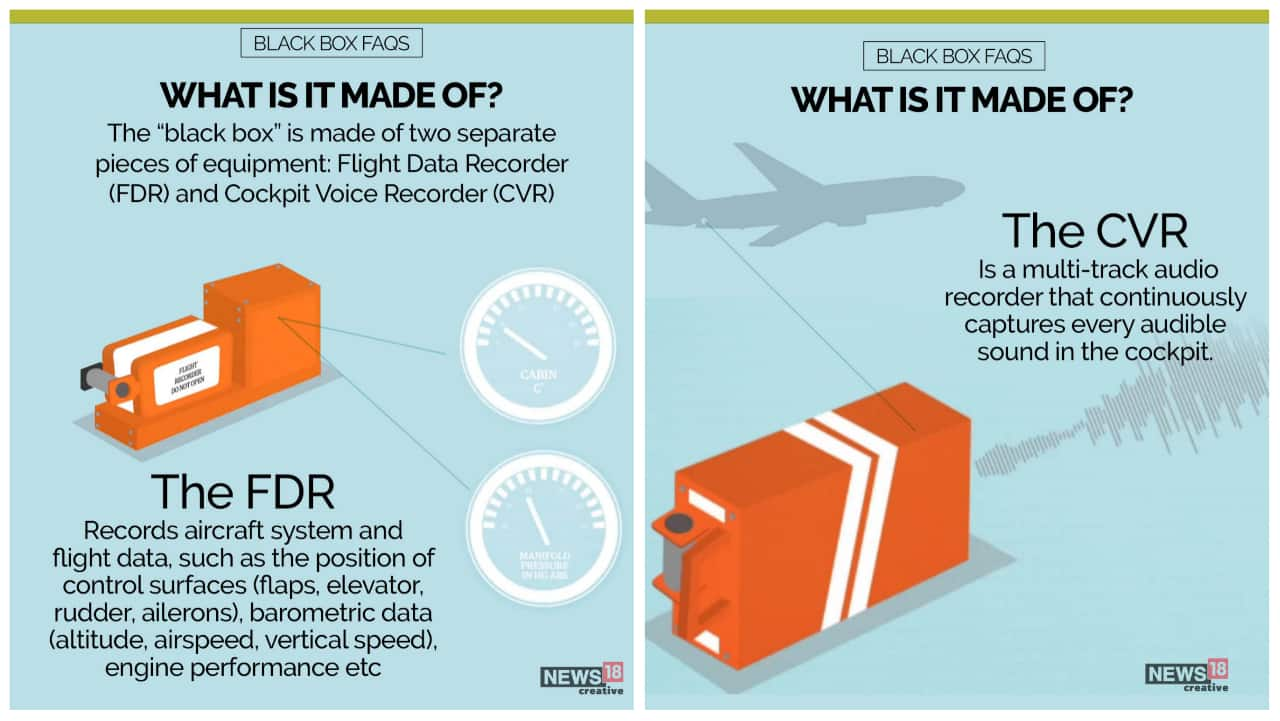
To the casual observer, the answer to the question “what colour is a black box” seems self-evident. However, in the realms of aviation, software engineering, and artificial intelligence, the answer is rarely black. In the physical world of aerospace, these critical data recorders are a vivid, high-visibility shade known as “International Orange.” In the digital world, the “black box” is not a physical object at all, but a metaphor for systems that are so complex or proprietary that their inner workings are invisible to the user.
As we move deeper into an era defined by automated decision-making and machine learning, understanding the “colour” of our black boxes—both literal and metaphorical—becomes a vital exercise in transparency, security, and technological literacy.

The Physical Paradox: Why the Original Black Box is Orange
The term “black box” first gained prominence in the mid-20th century, specifically regarding flight data recorders (FDR) and cockpit voice recorders (CVR). Despite their name, these devices have been painted bright orange since the late 1950s. The history of this paradox reveals much about the intersection of engineering and survival.
The Invention and Evolution of Flight Recorders
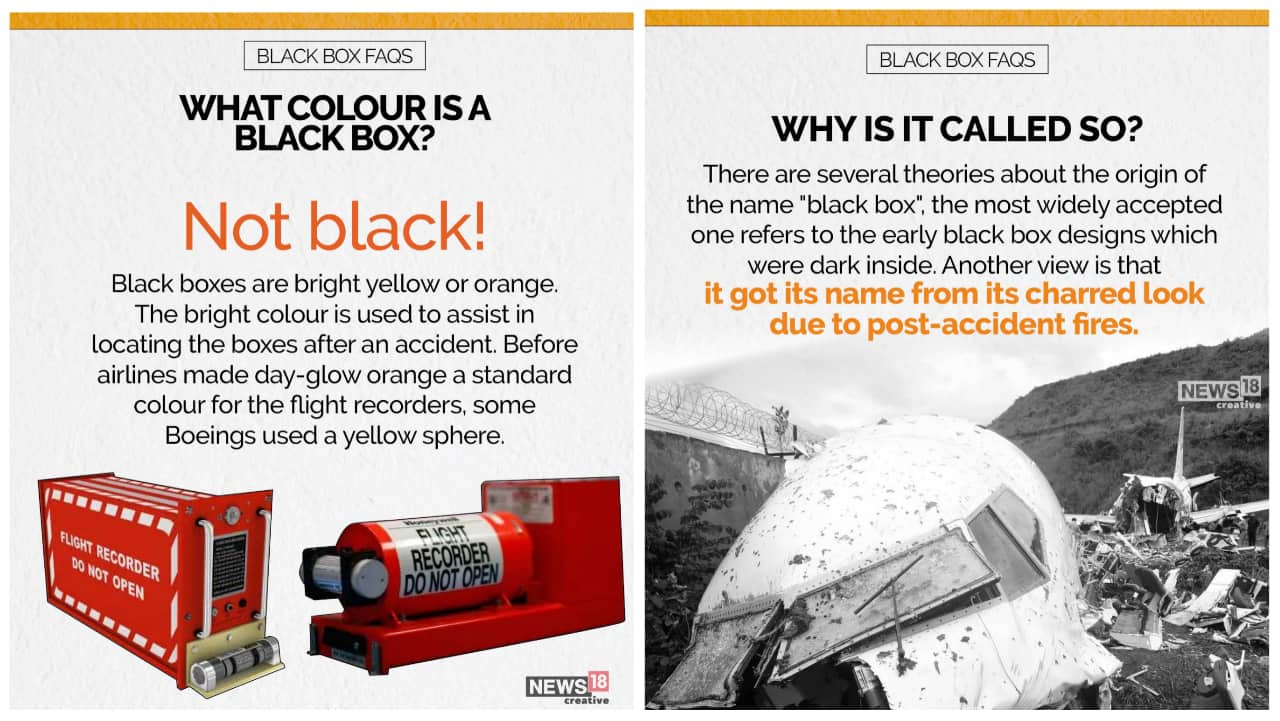
The concept of the flight recorder was pioneered by Australian scientist David Warren in the 1950s. Following the mysterious crashes of the world’s first commercial jetliner, the de Havilland Comet, Warren realized that a recording of cockpit audio and instrument data could provide the missing links in accident investigations. Early prototypes were often housed in dark, rectangular casings. Some historians suggest the name “black box” originated from the way these early devices were charred by fire after a crash, while others point to the general electronic engineering practice of referring to any complex internal system as a “black box.”
By 1965, aviation authorities realized that finding a small black object in the charred wreckage of a plane or at the bottom of the ocean was an impossible task. The industry standardized “International Orange,” a specific fluorescent hue designed to provide maximum contrast against almost any natural background—whether it be blue water, green forest, or grey rock.
Engineering for Extreme Resilience
While the exterior is orange, the interior of a black box is a marvel of high-tech fortification. To protect the data within, the memory boards are wrapped in a stainless steel or titanium shell, followed by a layer of high-temperature thermal insulation. This allows the device to survive temperatures of up to 1,100 degrees Celsius for an hour and withstand the crushing pressures of the deep ocean. The “colour” of the box is its first line of defense in recovery, but its internal architecture is what ensures the continuity of information.
The Digital Black Box: When Software Becomes Opaque
In modern technology, the “black box” has shifted from a physical safety device to a structural concept in software architecture. In this context, a black box is a system where the user sees the inputs and the outputs, but the internal transformation process—the “code” or “logic”—remains hidden.
The Principle of Abstraction
Abstraction is a fundamental pillar of software development. Developers use APIs (Application Programming Interfaces) as black boxes to simplify their work. For instance, when an app developer integrates a mapping service, they do not need to understand the millions of lines of code that render the map or calculate traffic data; they simply send a request (the input) and receive a route (the output). This “black boxing” allows for rapid innovation, as complex functions are packaged into usable modules.
However, this abstraction comes with a trade-off. When a system is a black box, the user—and sometimes even the developer—cannot verify the integrity of the process. If the output is biased, incorrect, or insecure, diagnosing the “why” becomes an uphill battle.
Intellectual Property and Proprietary Code
In the corporate tech world, the black box is often a deliberate choice for protecting intellectual property. Search engine algorithms, social media recommendation engines, and high-frequency trading bots are the ultimate black boxes of the modern economy. Companies guard these algorithms as trade secrets, arguing that transparency would allow bad actors to “game the system” or competitors to steal their innovations. This creates a “black box economy” where the most influential decisions in our lives—what news we see, what products we buy, and how our investments perform—are dictated by logic we are not permitted to see.
The AI Enigma: Deciphering the Opaque Algorithm
The most pressing discussion regarding black boxes today centers on Artificial Intelligence, particularly Deep Learning and Neural Networks. Unlike traditional software, where a human writes the logic, AI “learns” from data. This creates a new kind of black box: one where even the creators of the AI cannot fully explain how the machine reached a specific conclusion.
The Complexity of Neural Networks
Modern AI models, such as Large Language Models (LLMs) or computer vision systems, consist of billions of parameters. These parameters are adjusted during training to recognize patterns. When an AI identifies a tumor in a medical scan or flags a fraudulent credit card transaction, it is processing data through thousands of layers of mathematical weights.
Because these connections are non-linear and incredibly dense, they lack “interpretability.” We know the AI is right 99% of the time, but we cannot trace the exact path it took to get there. This is the “Black Box Problem” of AI: the more powerful and accurate the model becomes, the less transparent it tends to be.
The High Stakes of Algorithmic Secrecy
The “colour” of the AI black box becomes a matter of ethics and safety when applied to high-stakes environments. In healthcare, a black-box AI might recommend a treatment without the physician understanding the underlying rationale. In the legal system, algorithms used to predict recidivism have been found to contain “hidden” biases against certain demographics because they were trained on historically biased data. Because the model is a black box, these biases are difficult to detect until they have already caused harm.
Peering Inside: The Rise of Explainable AI (XAI)
As society becomes more dependent on these systems, the tech industry is pivoting toward a movement known as Explainable AI (XAI). The goal is to turn “black boxes” into “glass boxes”—systems that are high-performing yet transparent enough for humans to audit.
Techniques for Transparency
Data scientists are developing tools to peak inside the neural network. Techniques like SHAP (SHapley Additive exPlanations) and LIME (Local Interpretable Model-agnostic Explanations) help identify which specific inputs most heavily influenced a particular output. For example, if an AI denies a loan application, an XAI tool can highlight that the applicant’s debt-to-income ratio was the primary factor, rather than a protected characteristic like zip code or age.
The Regulatory Push for the “Right to Explanation”
Governments are also stepping in to mandate transparency. The European Union’s General Data Protection Regulation (GDPR) includes provisions for a “right to explanation,” meaning that if an automated system makes a decision that significantly affects a citizen, that citizen has the right to know the logic behind it. This is forcing tech companies to move away from purely black-box models toward architectures that prioritize accountability.
The Future: From Black Boxes to Open Ecosystems
The question of “what colour is a black box” ultimately leads us to a crossroads in technological development. Do we value the efficiency of the opaque system, or do we demand the safety of the visible one?
In the future, the most successful technologies will likely be those that find a middle ground. Just as the aviation industry realized that a “black box” must be orange to be useful, the tech industry is realizing that an algorithm must be “visible” to be trusted. We are seeing a shift toward open-source AI models and decentralized systems where the “logic” is distributed and verifiable by the community rather than hidden behind corporate firewalls.
The evolution of the black box—from a physical orange device in a cockpit to a mathematical mystery in a server farm—reflects our changing relationship with information. We no longer just want to record what happened; we want to understand why it happened. Whether we are painting a box orange or writing code that explains itself, the goal remains the same: ensuring that our most critical systems are never lost in the dark.
aViewFromTheCave is a participant in the Amazon Services LLC Associates Program, an affiliate advertising program designed to provide a means for sites to earn advertising fees by advertising and linking to Amazon.com. Amazon, the Amazon logo, AmazonSupply, and the AmazonSupply logo are trademarks of Amazon.com, Inc. or its affiliates. As an Amazon Associate we earn affiliate commissions from qualifying purchases.