
In the realm of digital technology, the fundamental combination of red, green, and blue light culminates in a singular, powerful result: white light. This principle, known as additive color mixing, forms the bedrock of nearly every digital display we encounter daily, from the smartphone in our pocket to the colossal LED billboards that illuminate cityscapes. Understanding this core concept is not merely a scientific curiosity but a gateway to appreciating the intricate engineering and software innovations that bring our digital world to vibrant life.
The Foundation of Digital Color: Understanding RGB
The RGB (Red, Green, Blue) color model is an additive color model in which red, green, and blue light are added together in various ways to reproduce a broad array of colors. The name of the model comes from the initials of the three additive primary colors. This system is inherently tied to the way human eyes perceive color through specialized photoreceptor cells called cones, which are most sensitive to wavelengths corresponding roughly to red, green, and blue light.

Additive Color Mixing Explained
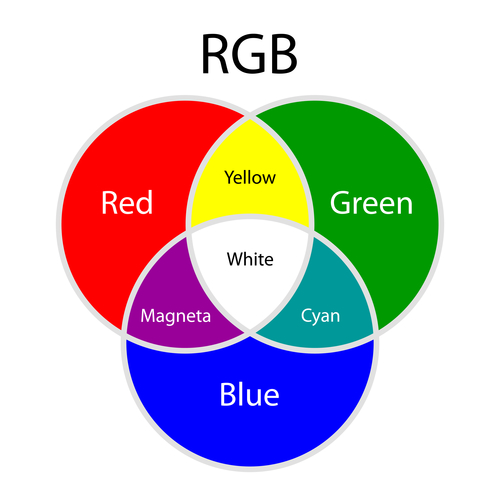
Unlike subtractive color mixing, which most people are familiar with through physical pigments (like paint or ink where mixing primaries like cyan, magenta, and yellow results in black by absorbing light), additive color mixing operates by emitting light. When red light, green light, and blue light are projected onto the same surface and their intensities are equal and maximized, the result is white light.
Imagine three separate light sources, one red, one green, and one blue.
- Combining red and green light produces yellow.
- Combining green and blue light produces cyan.
- Combining red and blue light produces magenta.
- Crucially, when all three primary colors—red, green, and blue—are mixed at their full intensity, the combined light spectrum stimulates all the cone cells in our eyes equally, leading to the perception of white light. This is because the emitted light from each source adds its spectral components to the total, creating a broader spectrum that our brains interpret as white.
This distinction between additive and subtractive color is critical for anyone working with digital media. A graphic designer creating a logo for a screen will specify RGB values, while a designer preparing the same logo for print will use CMYK (Cyan, Magenta, Yellow, Black) values. The underlying principles dictate how colors are rendered in vastly different mediums.
The White Light Conundrum
The perception of white light from the additive mixing of red, green, and blue might initially seem counter-intuitive to those accustomed to mixing paints, where combining colors typically leads to darker shades. However, this is precisely why digital displays are so effective at creating luminous, vibrant images. Each pixel on a screen is essentially a tiny array of red, green, and blue subpixels. By varying the intensity of each of these three subpixels, a display can generate millions of distinct colors, with full intensity across all three resulting in pure white. This ability to precisely control light emission at such a minute level is the technological marvel that underpins our visual digital experiences.
From Pixels to Perception: How RGB Powers Our Screens
The journey from the theoretical concept of additive color mixing to the breathtaking visuals on our screens is a testament to sophisticated hardware and software engineering. Every digital display, from the smallest smartwatch to the largest digital cinema projector, leverages the RGB model to render images, text, and video.
Display Technologies and RGB
Modern display technologies, including Liquid Crystal Displays (LCDs), Organic Light-Emitting Diodes (OLEDs), and various projection systems, all rely on the RGB model.
- LCDs: These displays use a backlight (typically white LED) that shines through a layer of liquid crystals. Each pixel then has a red, green, and blue filter. The liquid crystals act as tiny shutters, controlling how much light passes through each color filter. By varying the amount of light for each subpixel, millions of colors are generated.
- OLEDs: Unlike LCDs, OLEDs are self-emissive. Each subpixel in an OLED display is an individual organic light-emitting diode that produces its own red, green, or blue light. This allows for superior contrast, deeper blacks (by simply turning off pixels), and often more vibrant colors compared to LCDs, as there’s no backlight bleed.
- MicroLEDs: An emerging technology, MicroLEDs are essentially tiny individual LEDs for each subpixel. They combine the self-emissive advantages of OLEDs with potentially higher brightness and longer lifespan, representing a significant leap in display technology still rooted in the RGB paradigm.
The Role of Subpixels
The concept of a “pixel” on a digital screen is often simplified. In reality, what we perceive as a single pixel is typically an agglomeration of three distinct subpixels: one red, one green, and one blue. These subpixels are so small and so close together that our eyes blend their emitted light into a single, cohesive color. The specific color observed depends on the relative intensity of each subpixel. For instance, if the red subpixel is at 100% intensity, the green at 0%, and the blue at 0%, the pixel appears red. If all three are at 50% intensity, a shade of grey is produced. And, as established, if all three are at 100% intensity, the pixel displays pure white. This granular control over light emission at the subpixel level is what enables displays to render the vast spectrum of colors visible to the human eye.
Beyond the Basics: Applications and Implications in Tech
The RGB model’s influence extends far beyond mere display technology, permeating various facets of the tech industry, from content creation to cutting-edge immersive experiences.
Digital Imaging and Graphics Software
Every digital image file format (JPEG, PNG, GIF, TIFF, etc.) stores color information using the RGB model. When you take a photo with a digital camera, the sensor captures light intensities for red, green, and blue channels. Graphics software like Adobe Photoshop, GIMP, Blender, and myriad others operate fundamentally on RGB values. Artists, designers, and photographers manipulate these values to adjust hue, saturation, and brightness, creating stunning visual content that will be consumed predominantly on RGB-based displays. Understanding how changes in R, G, or B values affect the final perceived color is a core skill in digital content creation.
Virtual Reality and Augmented Reality
The immersion offered by VR and AR headsets relies heavily on precise color rendition. In these technologies, displays are placed extremely close to the user’s eyes, and the perceived realism of virtual environments is directly tied to the quality and accuracy of the colors displayed. Advanced VR/AR systems employ high-resolution RGB displays with wide color gamuts to ensure that virtual objects appear as lifelike as possible. The ability to render vibrant, accurate colors is crucial for preventing eye strain and enhancing the sense of presence in virtual worlds, where the user’s perception of reality is entirely constructed from emitted RGB light.
The Future of Color Technology
The pursuit of even more realistic and immersive visual experiences continues to drive innovation in color technology. Beyond standard RGB, advancements are being made in areas like quantum dots, which enhance color purity and vibrancy, and displays with even more precise subpixel control. These innovations, while complex, fundamentally aim to improve the fidelity of the RGB colors being generated, pushing the boundaries of what our screens can show and how our eyes perceive it. The core principle of additive red, green, and blue light remains the guiding star.
Overcoming Limitations and Evolving Standards
While the RGB model is foundational, its implementation and capabilities are continuously refined to address limitations and meet evolving demands for visual fidelity.
Color Gamuts and Standards
Not all RGB displays are created equal. The range of colors a display can accurately reproduce is known as its color gamut. Early computer monitors and televisions adhered to standards like sRGB, which defines a specific range of red, green, and blue primaries. As technology advanced, and creators sought to display richer, more vibrant colors, new standards emerged, such as Adobe RGB and DCI-P3. These wider gamuts encompass a greater spectrum of colors, pushing beyond the traditional sRGB boundaries. Developers and content creators must be aware of these standards to ensure their work is displayed as intended across various devices, often requiring careful color management to map colors from one gamut to another.
HDR and Wide Color Gamut (WCG)
High Dynamic Range (HDR) technology, often coupled with Wide Color Gamut (WCG), represents a significant leap in display capabilities. HDR displays can render a much broader range of luminosity and contrast, from deep blacks to intensely bright whites, and can simultaneously display a richer palette of colors. While still fundamentally using RGB subpixels, HDR allows for more nuanced control over the intensity of each red, green, and blue component, leading to more realistic and impactful visuals. This translates to more detailed shadows, brighter highlights, and a greater sense of depth and realism in content. For tech enthusiasts and professionals, HDR and WCG represent the current pinnacle of visual experience, all built upon the refined orchestration of red, green, and blue light.
Practical Applications for Developers and Creators
For anyone involved in the creation of digital experiences, a deep understanding of RGB color is not just academic; it’s a practical necessity.
Web Design and UI/UX
In web development, colors are typically specified using hexadecimal codes (e.g., #FF0000 for pure red) or RGB values (e.g., rgb(255, 0, 0)). These directly correspond to the intensity of red, green, and blue light. UI/UX designers must not only choose aesthetically pleasing color palettes but also consider accessibility (contrast ratios for readability), brand consistency (using specific RGB values), and how colors will render across different devices and display settings. A well-executed color scheme enhances usability and user engagement, directly tied to precise RGB implementation.
Game Development and Visual Effects
The gaming industry thrives on immersive visual experiences, and color plays a paramount role. Game developers and visual effects artists meticulously craft environments, characters, and spell effects using sophisticated rendering engines that manipulate RGB color channels. From the subtle ambient lighting that sets a mood to the explosive vibrant effects of a cinematic sequence, every visual element is meticulously constructed using additive color principles. Understanding how to generate specific hues, control brightness, and simulate natural light phenomena through RGB values is central to creating compelling and believable virtual worlds that resonate with players and viewers alike.
In essence, the seemingly simple question of “what colour does red green and blue make” unlocks a vast landscape of technological innovation. It’s the foundational truth that empowers our digital screens, fuels the creativity of digital artists, and underpins the immersive experiences that define our modern technological age. From the smallest pixel to the grandest display, the additive power of red, green, and blue light continues to illuminate our digital lives.
aViewFromTheCave is a participant in the Amazon Services LLC Associates Program, an affiliate advertising program designed to provide a means for sites to earn advertising fees by advertising and linking to Amazon.com. Amazon, the Amazon logo, AmazonSupply, and the AmazonSupply logo are trademarks of Amazon.com, Inc. or its affiliates. As an Amazon Associate we earn affiliate commissions from qualifying purchases.