
Modern vehicles are intricate ecosystems of mechanical, electrical, and hydraulic components, each playing a vital role in the overall performance and safety of the machine. Among these, the power steering system stands out as a key enabler of driver control and comfort. At its heart, beyond the pumps, hoses, and gears, lies the humble yet critical power steering fluid. Understanding the properties and condition of this fluid, particularly its color, is an essential diagnostic skill for maintaining the longevity and efficiency of this complex automotive technology. In a world increasingly reliant on system diagnostics and predictive maintenance, a simple visual inspection of power steering fluid can offer profound insights into the health of your vehicle’s steering mechanism, preventing potential failures and ensuring a consistently smooth driving experience.

The Essential Role of Power Steering Technology
The evolution of automotive design has consistently aimed at enhancing the driver’s interaction with the vehicle. Power steering technology, from its early hydraulic forms to modern electro-hydraulic and fully electric systems, has been instrumental in this progress. It transforms the strenuous task of maneuvering a heavy vehicle at low speeds into a light, almost effortless motion. This technological marvel, however, is deeply reliant on the integrity of its operational fluid.
How Power Steering Systems Function
At its core, a hydraulic power steering system utilizes fluid under pressure to amplify the driver’s input. When the steering wheel is turned, a pump (driven by the engine’s accessory belt) pressurizes the power steering fluid, which then flows through a series of hoses and valves to a piston within the steering rack or gearbox. This pressurized fluid applies force to the piston, assisting the driver in turning the wheels. In electro-hydraulic systems, an electric motor drives the pump, offering greater efficiency. Fully electric power steering (EPS) systems forgo hydraulic fluid entirely, using electric motors to directly assist steering, but for the vast majority of vehicles on the road, hydraulic fluid remains the lifeblood of the steering mechanism. The fluid not only transmits power but also lubricates moving parts and dissipates heat generated during operation, acting as a multi-functional medium.
The Fluid as a Critical Component
Often overlooked in routine checks, power steering fluid is as crucial to the steering system as engine oil is to the engine or transmission fluid is to the gearbox. It’s not merely a hydraulic medium; it’s a specially formulated lubricant designed to withstand high pressures and temperatures, resist foaming, and prevent corrosion. Over time, like any operational fluid, it degrades. Heat, wear particles from internal components, and chemical breakdown can compromise its integrity. When this occurs, the fluid’s ability to lubricate, cool, and transmit power diminishes, leading to increased steering effort, noise, and ultimately, accelerated wear on expensive components like the power steering pump or steering rack. This degradation often manifests first and most visibly in a change of its color.
Decoding Fluid Colors: A Diagnostic Tutorial
The visual inspection of power steering fluid is a quick and effective preliminary diagnostic step. While not a definitive assessment of all fluid properties, its color can provide immediate clues about the fluid’s age, contamination levels, and the overall health of the steering system.
The Pristine State: New Fluid Colors
When fresh, power steering fluid typically presents as a clear, translucent hue. The exact shade can vary depending on the manufacturer and specific formulation, but generally falls into one of these categories:
- Clear Red/Pink: This is perhaps the most common color for many power steering fluids, often resembling automatic transmission fluid (ATF), as many power steering systems are designed to use ATF. If your vehicle specifies ATF for power steering, this clear red or pink is the expected new color.
- Clear Amber/Yellow: Some manufacturers, particularly European and Asian brands, specify dedicated power steering fluids that are initially clear amber or light yellow. This color is also common for synthetic power steering fluids.
- Clear Brown/Tan: Less common, but some specific formulations might appear as a very light, clear brown or tan when new. This should not be confused with dirty fluid.
The key characteristic of new fluid, regardless of its specific shade, is its clarity and translucence. It should be free of any cloudiness, particles, or opaqueness.
Common Contaminants and Their Visual Cues
As power steering fluid ages and the system operates, various factors contribute to its degradation, leading to distinct color changes. These changes are vital indicators for maintenance.
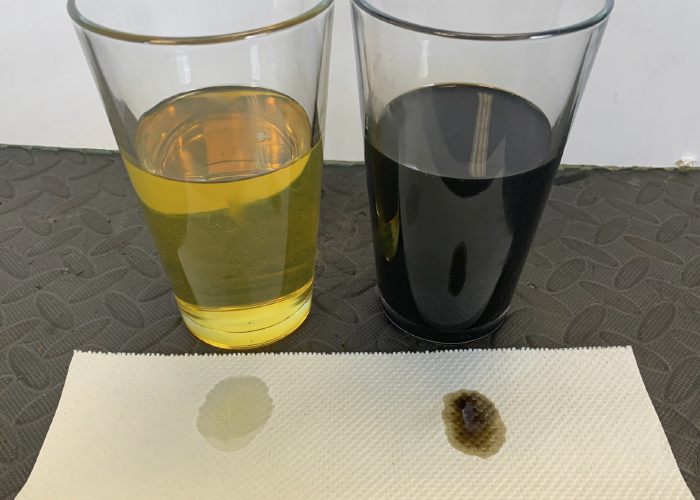
- Darkening to Brown/Black: This is the most common sign of fluid degradation. Over time, heat and pressure cause the fluid to break down chemically, leading to oxidation. Additionally, microscopic wear particles from the power steering pump, hoses, and seals circulate within the system. These particles, combined with oxidation byproducts, will cause the fluid to darken significantly, transitioning from its original clear shade to dark brown, and eventually to a sludgy black. Dark brown or black fluid indicates severe contamination and a critical need for replacement.
- Cloudy or Milky Appearance: A cloudy or milky fluid, often accompanied by a light brown or tan color, strongly suggests the presence of water contamination. Water can enter the system through a faulty reservoir cap, a leaking hose, or even condensation. Water in the system is highly detrimental as it can lead to rust, corrosion, and diminished lubrication, severely compromising system integrity.
- Burnt Smell: While not a color, a burnt smell accompanying dark fluid is a crucial indicator. It signifies severe overheating and extreme degradation of the fluid. This often points to significant mechanical stress within the power steering pump or rack, potentially due to prolonged high-load operation or an underlying component failure.
When Clear Signals Emerge: The Danger Zone
Any departure from the fluid’s original clear and translucent appearance is a warning sign.
- Sudden Color Change: If your fluid was recently changed and quickly darkens or becomes cloudy, it could indicate an accelerated breakdown, possibly due to an underlying mechanical issue or improper fluid type.
- Visible Particles: Observing metallic flakes, rubber bits, or other foreign particles in the fluid is an immediate cause for concern. Metallic flakes indicate wear within the pump or steering rack, while rubber bits suggest degrading seals or hoses. These contaminants can cause further damage if not addressed promptly.
- Foaming: While fluid foaming can be subtle and not directly a color change, it often accompanies severely degraded or aerated fluid. Aerated fluid will appear lighter, often with visible bubbles, and indicates a leak in the suction side of the pump or a low fluid level, drawing air into the system.
Beyond the Hue: Advanced Diagnostics and Maintenance
While color provides a strong initial assessment, a holistic approach to power steering fluid health extends beyond mere visual inspection. Integrating additional sensory data and leveraging modern maintenance practices can provide a more comprehensive understanding of system status.
Smell and Texture: Supplementary Indicators
In addition to color, the smell and texture of the power steering fluid offer crucial diagnostic clues.
- Smell: Fresh power steering fluid typically has a mild, almost oily scent. A strong, acrid, or “burnt toast” odor is a definitive sign of severe overheating and chemical degradation. This burnt smell often indicates that the fluid has lost its lubricating and heat-dissipating properties, putting the power steering pump and other components under extreme stress.
- Texture: When rubbed between your fingers (with gloves, for safety), fresh power steering fluid should feel smooth and slick. Degraded fluid, especially if contaminated with wear particles, might feel gritty or less viscous. A lack of proper lubrication can cause increased friction and wear within the system.
Proactive Fluid Management for System Longevity
Regular fluid checks and timely replacements are paramount for preventing steering system failures.
- Check Interval: Refer to your vehicle’s owner’s manual for specific recommendations, but a general guideline is to check the fluid level and condition every oil change or at least every 12,000 to 15,000 miles (approximately 20,000 to 24,000 kilometers).
- Replacement Interval: Power steering fluid is not a “lifetime” fluid. Most manufacturers recommend replacement every 50,000 to 75,000 miles (approximately 80,000 to 120,000 kilometers), or sooner if the fluid appears degraded. A complete system flush is often recommended over a simple drain and fill, as a significant portion of the old fluid remains within the steering rack and hoses.
- Correct Fluid Type: Always use the specific type of power steering fluid recommended by your vehicle manufacturer. Mixing different types of fluid or using an incorrect fluid can lead to seal degradation, foaming, and system failure. Some systems require ATF, others a specific synthetic power steering fluid.
Leveraging Digital Tools for Maintenance Schedules
In the era of smart vehicles and connected technology, managing vehicle maintenance, including power steering fluid checks, can be streamlined using digital tools. Many modern vehicles integrate onboard diagnostic systems that monitor various fluid levels and component health, alerting drivers to potential issues. Furthermore, mobile applications and online platforms offer personalized maintenance schedules, reminders, and even tutorials for basic checks. By inputting your vehicle’s make, model, and mileage, these digital assistants can help you track when your power steering fluid should be inspected or replaced, aligning with manufacturer guidelines and historical data for similar vehicles. This proactive approach, enabled by technology, ensures that critical components like the power steering system receive the attention they need before minor issues escalate into costly repairs, maintaining the technological integrity of your ride.
The Interplay of Fluid Health and Vehicle Performance
The health of your power steering fluid directly correlates with the operational efficiency and longevity of your vehicle’s steering system. Neglecting fluid maintenance not only risks immediate operational failures but also impacts the overall driving experience and the long-term value of your vehicle.
Impact on Driving Experience
A compromised power steering fluid translates directly into a noticeable degradation of the driving experience.
- Increased Steering Effort: One of the most immediate signs of fluid degradation is a stiffer steering wheel, particularly at low speeds. The fluid’s inability to transmit hydraulic pressure effectively means the pump has to work harder, and the driver has to exert more force to turn the wheels.
- Noise and Vibration: Whining, groaning, or squealing noises that intensify when turning the steering wheel are classic indicators of low fluid levels, degraded fluid, or a failing power steering pump. These noises are often a result of air in the system or the pump struggling to move thick, contaminated fluid. Vibrations felt through the steering wheel can also signal issues with the fluid or pump.
- Delayed Response: A less responsive steering system, where there’s a slight delay between turning the wheel and the vehicle responding, can be a subtle but dangerous symptom of compromised fluid or system components. This diminished precision affects control and safety.

Preventing Costly System Failures
The power steering pump and steering rack (or gearbox) are among the more expensive components of a vehicle’s steering system. When power steering fluid is neglected, it ceases to adequately lubricate and cool these vital parts, accelerating their wear and tear. Over time, this almost inevitably leads to component failure. A failing power steering pump can seize, causing a complete loss of power assistance and potentially requiring a costly replacement. Similarly, a worn steering rack can develop leaks, excessive play, or complete failure, leading to an even more substantial repair bill. Proactive monitoring of power steering fluid color, smell, and level, coupled with adherence to recommended service intervals, is a simple yet highly effective strategy for safeguarding these expensive components. It ensures the intricate hydraulic technology within your vehicle’s steering system continues to function optimally, providing both comfort and peace of mind on every journey.
aViewFromTheCave is a participant in the Amazon Services LLC Associates Program, an affiliate advertising program designed to provide a means for sites to earn advertising fees by advertising and linking to Amazon.com. Amazon, the Amazon logo, AmazonSupply, and the AmazonSupply logo are trademarks of Amazon.com, Inc. or its affiliates. As an Amazon Associate we earn affiliate commissions from qualifying purchases.