
Understanding Insect Phototaxis and Light Spectra
The perennial quest for an outdoor lighting solution that illuminates our spaces without inadvertently creating a beacon for every flying insect is a common challenge for homeowners and businesses alike. The answer lies deep within the fascinating interplay of insect biology and advanced lighting technology. Insects, driven by a phenomenon known as phototaxis – their innate response to light – perceive the world through a different lens than humans, rendering certain light spectra irresistible and others virtually invisible or even repellent.
The Science Behind Bug Attraction
Most nocturnal insects, including moths, mosquitoes, and gnats, exhibit positive phototaxis, meaning they are drawn towards light sources. This behavior is rooted in their ancient navigational systems, which likely relied on the moon and stars as fixed points of orientation. Artificial lights, however, disrupt this natural compass, confusing insects and causing them to circle or swarm light fixtures.
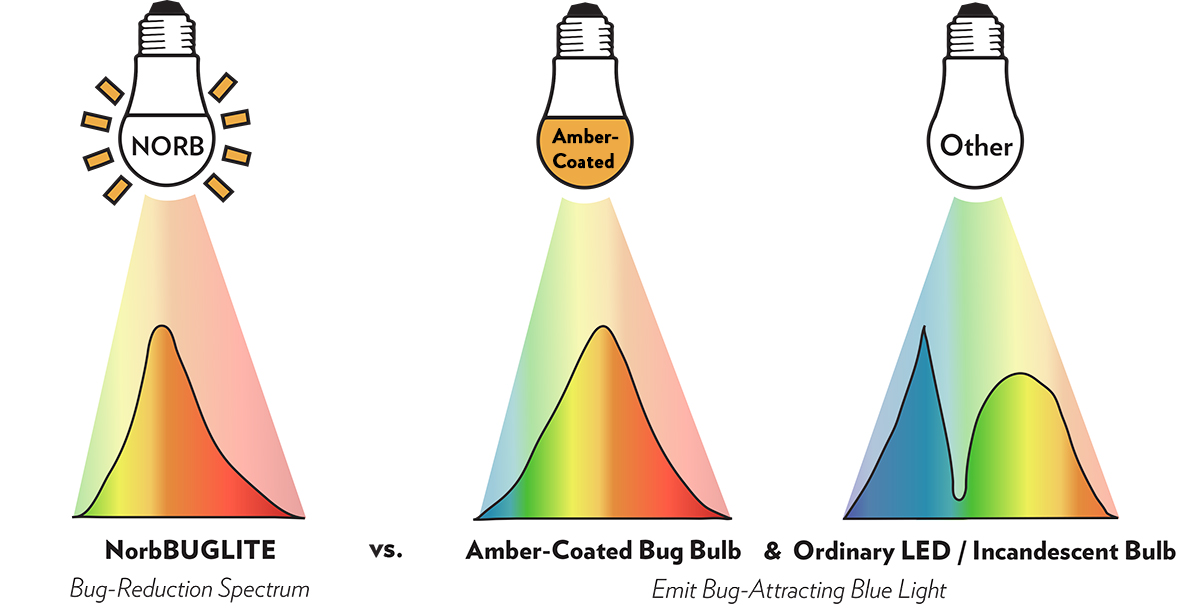
The key to understanding which lights attract bugs lies in the wavelengths of light they can see. Unlike humans, whose vision peaks in the green-yellow spectrum and extends into blue and red, many insects have eyes that are particularly sensitive to ultraviolet (UV) light. Their visual spectrum often includes UV-A (315-400 nm), violet, and blue light (400-500 nm). These shorter wavelengths, invisible to the human eye, are highly attractive to a vast array of nocturnal insects. Conversely, insects generally have poor vision in the longer wavelength regions, such as yellow, orange, and red light (above 550 nm), which appear much dimmer or entirely invisible to them.
The Visible Light Spectrum and Insect Vision
To effectively deter insects with light, we must consider the specific electromagnetic spectrum. The visible light spectrum, as perceived by humans, ranges from roughly 380 nm (violet) to 740 nm (red).
- Ultraviolet (UV) Light (Below 400 nm): Highly attractive to most insects. This is why “bug zappers” often emit a strong UV glow.
- Violet and Blue Light (400-500 nm): Very attractive. Standard white and cool-white LED lights, which have significant blue light components, will attract insects.
- Green Light (500-570 nm): Moderately attractive, depending on the species.
- Yellow Light (570-590 nm): Minimally attractive. This is where “bug lights” traditionally operate.
- Orange and Red Light (590-740 nm): Least attractive. These long wavelengths are often beyond the perception range of many common nuisance insects.
Therefore, the technological imperative becomes clear: develop and deploy lighting solutions that minimize or eliminate the emission of UV, violet, and blue wavelengths, while maximizing output in the yellow, orange, or red spectra.
The Technological Solutions: LED Innovations
The advent of Light Emitting Diode (LED) technology has revolutionized our ability to precisely control the spectral output of light sources, offering sophisticated solutions to the age-old problem of insect attraction. Unlike older incandescent or fluorescent bulbs, which inherently emit a broad spectrum of light (including significant UV and blue components), LEDs can be engineered to produce very specific wavelengths.
Yellow LEDs: The Go-To Solution
For decades, the standard “bug light” was a yellowish incandescent bulb. While somewhat effective, these bulbs were inefficient and still emitted some undesirable wavelengths. Modern LED technology has significantly advanced this concept. Contemporary yellow LED lights are specifically designed to emit light predominantly in the 570-590 nm range, often referred to as “amber” or “warm yellow.”
These specialized LEDs virtually eliminate UV and blue light emissions, making them far less appealing to a wide range of common nocturnal insects. Their efficacy stems from the fact that insects either do not perceive these longer wavelengths well or are simply not attracted to them for navigational or biological reasons. The result is a light source that provides ample illumination for human vision while dramatically reducing the congregation of bugs around your patio, porch, or outdoor fixtures. This targeted spectral output is a testament to the precision engineering possible with modern semiconductor lighting.
Beyond Yellow: Amber and Red Light Technologies
While yellow LEDs are a popular and effective choice, advancements in LED technology continue to push the boundaries, exploring even longer wavelengths for enhanced insect deterrence. Amber LEDs often operate in a slightly longer wavelength range than standard yellow, further minimizing attractiveness to insects.
Red LEDs, emitting light in the 620-700 nm range, represent the extreme end of the visible spectrum that humans can perceive. For many insect species, light in this range is virtually invisible. This makes red light an incredibly effective insect deterrent. However, red light’s utility for general illumination is limited, as it significantly alters color perception for humans. Therefore, red LED solutions are typically employed in niche applications where minimal insect disturbance is paramount, such as observatories, wildlife viewing areas, or for very specific ambient lighting effects where human visual fidelity to natural colors is not critical.
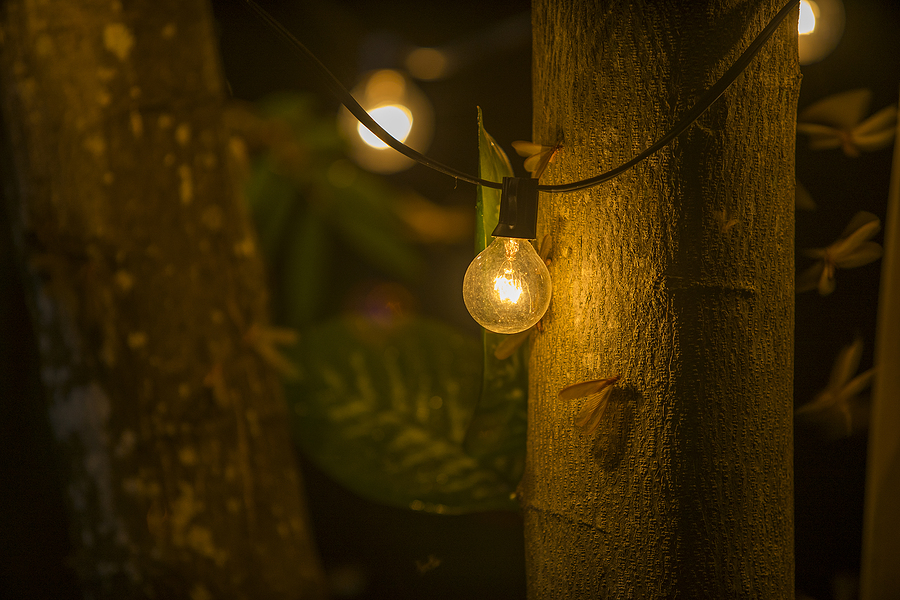
The strategic deployment of these specific LED colors allows for tailored lighting solutions, from general outdoor illumination with yellow LEDs to highly specialized applications requiring near-total insect invisibility with red LEDs, all while maintaining high energy efficiency inherent to LED technology.
Smart Lighting Systems for Pest Management
The integration of specific, insect-repelling light colors with smart home technology elevates pest management from a passive deterrent to an active, intelligent system. Smart lighting goes beyond simply changing a bulb; it encompasses interconnected devices, sensors, and intelligent control algorithms that optimize light output for various environmental conditions and user needs.
IoT Integration and Adaptive Lighting
Modern smart lighting systems leverage the Internet of Things (IoT) to create adaptive, dynamic environments. For insect deterrence, this means more than just a yellow bulb. Imagine outdoor lights that automatically switch to an insect-repelling spectrum (e.g., warm amber or even red) as dusk settles and insect activity rises, then revert to a brighter, whiter light only when human presence is detected or required for specific tasks.
IoT-enabled lights can integrate with environmental sensors that monitor factors like temperature, humidity, and even specific insect population densities (though this is more cutting-edge). Through a centralized hub or app, users can program schedules, activate “bug-off” modes, or even receive notifications and suggestions based on local pest forecasts. This level of automation ensures that the most effective light spectrum is used precisely when and where it’s needed, optimizing both insect deterrence and energy consumption. Furthermore, connectivity allows for over-the-air firmware updates, continuously improving the system’s performance and introducing new features based on ongoing research into insect phototaxis.
Energy Efficiency and Environmental Benefits
Beyond pest deterrence, smart lighting systems offer substantial energy efficiency and environmental advantages. LEDs are inherently more energy-efficient than traditional lighting sources, consuming a fraction of the power for the same lumen output. When coupled with smart controls, this efficiency is amplified. Lights can dim automatically, turn off when not needed, or adjust their intensity based on ambient light levels.
The environmental benefits extend beyond reduced electricity consumption. By effectively deterring insects without resorting to harmful chemicals, smart lighting solutions contribute to a healthier ecosystem. Reduced reliance on pesticides protects pollinators, beneficial insects, and other wildlife that might be inadvertently harmed. This chemical-free approach aligns with growing ecological concerns and offers a sustainable pathway for managing outdoor environments. Furthermore, the longevity of LED fixtures (often tens of thousands of hours) reduces waste associated with frequent bulb replacements, further cementing their environmental credentials.
Future Trends in Insect-Deterrent Lighting
The field of insect-deterrent lighting is dynamic, with ongoing research and technological advancements continually refining our ability to coexist with nature’s smaller inhabitants without undue disturbance. The future promises even more sophisticated solutions, moving beyond static colored lights to highly intelligent, adaptive systems.
Advanced Photonic Engineering
The next generation of insect-deterrent lighting will likely feature even more advanced photonic engineering. This includes the development of tunable LEDs that can precisely shift their spectral output across a wide range of wavelengths, not just switching between pre-set colors. Imagine a single fixture that can emit a bright, full-spectrum white light when needed, then seamlessly transition to a highly specific, custom-blended amber or even near-infrared spectrum to ward off particular insect species, all based on real-time data.
Further research into insect photoreceptors and neural pathways is uncovering nuances in their light perception that could lead to lights emitting specific, tailored wavelengths that are actively irritating or disorienting to bugs, rather than just being invisible. This could involve very narrow band wavelengths or even modulated light patterns that interfere with insect navigation or communication. New materials, such as organic LEDs (OLEDs) or quantum dot technologies, may also offer unprecedented control over light emission properties, enabling ultra-thin, flexible, and even more efficient insect-repelling light sources.

AI-Driven Lighting Optimization
Artificial Intelligence (AI) is poised to play a transformative role in future insect-deterrent lighting systems. AI algorithms can process vast amounts of data, including local weather patterns, seasonal insect migration data, historical pest activity, and even real-time video analytics, to predict insect presence and adjust lighting strategies proactively.
An AI-driven system could learn the specific species prevalent in a given area and dynamically optimize the light spectrum, intensity, and timing to be maximally effective against those particular pests. For instance, if mosquitoes are detected, the system might shift to a particular amber-red spectrum, while for moths, it might choose a different configuration. This level of personalized, adaptive control will move beyond simple scheduled changes to truly intelligent, responsive lighting environments. Moreover, AI can learn user preferences, balancing illumination needs with pest control, ensuring that comfort and visibility are maintained while minimizing unwanted insect visitors. This fusion of AI with advanced photonic technology heralds a future where our illuminated spaces are not just visually appealing, but intelligently managed for comfort, efficiency, and ecological harmony.
aViewFromTheCave is a participant in the Amazon Services LLC Associates Program, an affiliate advertising program designed to provide a means for sites to earn advertising fees by advertising and linking to Amazon.com. Amazon, the Amazon logo, AmazonSupply, and the AmazonSupply logo are trademarks of Amazon.com, Inc. or its affiliates. As an Amazon Associate we earn affiliate commissions from qualifying purchases.