
Decoding Color Temperature: The Kelvin Scale for Your Bathroom Ambiance
Choosing the right light bulb for your bathroom transcends mere brightness; it’s about crafting an environment that supports various daily routines, from invigorating morning preparations to relaxing evening wind-downs. At the heart of this selection process is understanding color temperature, measured in Kelvin (K). This metric dictates the “warmth” or “coolness” of the light emitted, significantly impacting mood, visual comfort, and the perceived accuracy of colors within the space. Modern LED technology offers unprecedented control over this crucial aspect, allowing homeowners to tailor their bathroom lighting with precision.

Warm White (2700K-3000K): Relaxation and Spa-like Feel
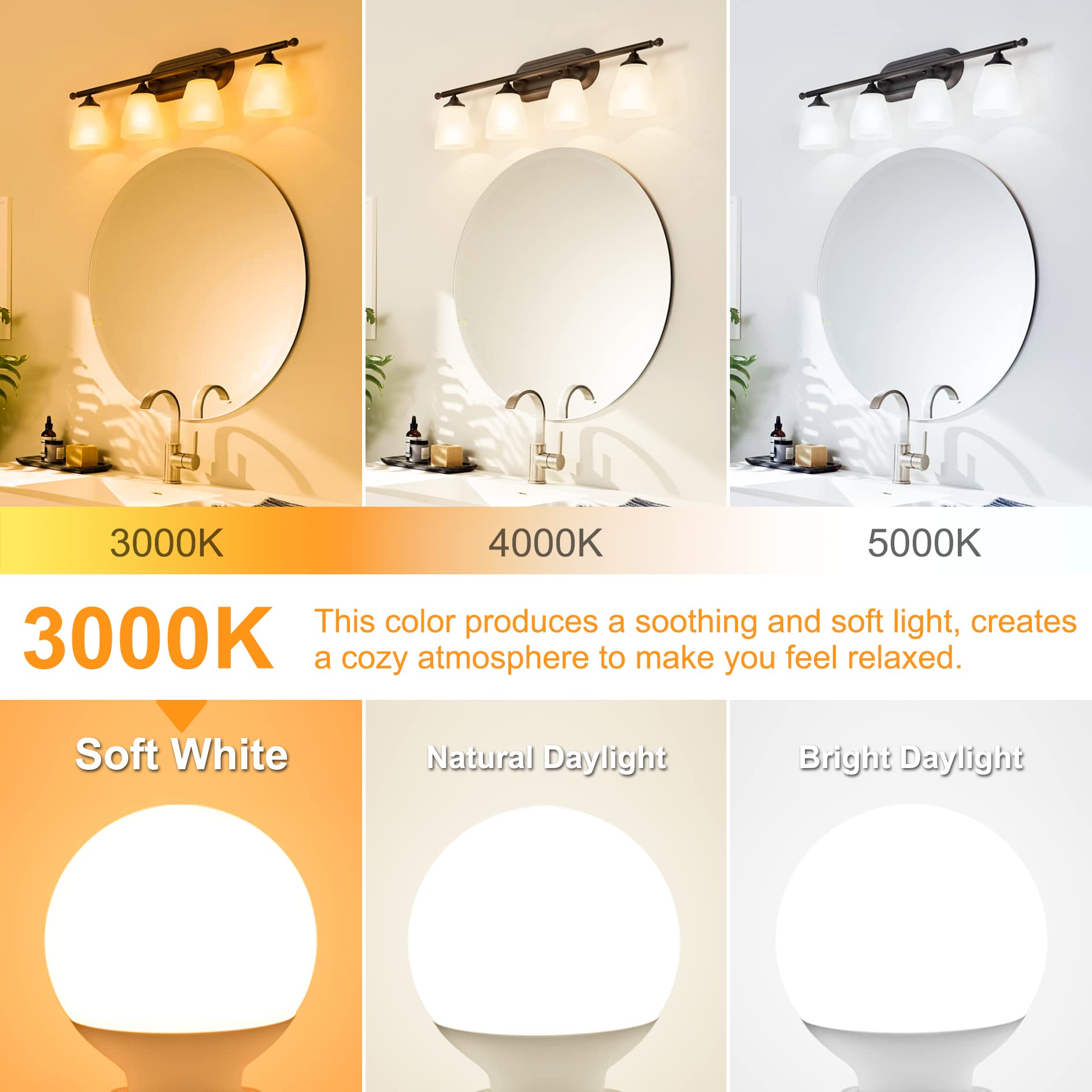
Bulbs in the 2700K to 3000K range emit a soft, yellowish-white light reminiscent of traditional incandescent bulbs. This “warm white” is ideal for creating a cozy, inviting, and spa-like atmosphere in your bathroom. It promotes relaxation and is particularly suitable for evening use, as its lower blue light content is less disruptive to the body’s natural sleep cycle. For bathrooms primarily used for unwinding with a bath or a calming shower, or in powder rooms where a softer, more intimate glow is desired, warm white is an excellent choice. However, for tasks requiring meticulous detail, such as applying makeup or shaving, this color temperature might not provide the crisp clarity needed.
Cool White (3500K-4100K): Versatility and Clarity
Stepping up the Kelvin scale to 3500K-4100K brings us to “cool white” or “neutral white” light. This range offers a more balanced, less yellow light that feels brighter and more energizing than warm white, without being overly stark. It’s a highly versatile choice for general bathroom illumination, providing good visibility for a wide range of tasks while maintaining a comfortable ambiance. Cool white can make a bathroom feel cleaner and more contemporary, and it’s a popular option for main overhead lighting in bathrooms that serve multiple purposes throughout the day. Its balanced spectrum offers improved clarity over warm white, making it a good compromise for those who need functionality but don’t want the clinical feel of higher color temperatures.
Daylight (5000K-6500K): Task Lighting and True Color Rendition
At the higher end of the spectrum, 5000K to 6500K light sources mimic natural daylight, emitting a crisp, blue-white light. “Daylight” bulbs are unparalleled for task-intensive areas where precise color rendition is paramount. This includes vanity lighting where applying makeup, styling hair, or shaving requires the most accurate visual feedback. The high Kelvin value ensures that colors appear true to life, preventing makeup misapplication due to distorted hues. While excellent for specific tasks, a bathroom illuminated solely by daylight temperature bulbs can sometimes feel too stark, sterile, or even cold, particularly in the evening. Strategic placement and potentially combining it with warmer ambient lighting or dimming capabilities are key to harnessing its benefits without sacrificing comfort.
Tunable White and RGB Options: The Ultimate Flexibility
The pinnacle of modern bathroom lighting technology lies in tunable white and full RGB (Red, Green, Blue) smart bulbs. Tunable white LEDs allow users to seamlessly adjust the color temperature from warm white to daylight, often directly from a smartphone app or voice command. This dynamic capability means you can have a bright, energizing 5000K light for your morning routine and effortlessly switch to a soothing 2700K for an evening soak. RGB bulbs further expand this versatility by offering millions of color options, enabling thematic lighting for parties or creating unique atmospheric effects. The integration of these technologies provides unparalleled control, adapting the bathroom’s ambiance to any time of day, mood, or activity, making them a premium tech choice for a personalized lighting experience.
Beyond Color Temperature: CRI and Lumens for Optimal Illumination
While color temperature sets the mood, two other critical technological specifications dictate the quality and effectiveness of light: Color Rendering Index (CRI) and Lumens. These metrics are crucial for ensuring that your bathroom lighting is not only aesthetically pleasing but also highly functional, especially in areas where visual accuracy is paramount.
The Critical Role of Color Rendering Index (CRI)
The Color Rendering Index (CRI) is a quantitative measure, on a scale of 0 to 100, of how accurately a light source reveals the true colors of objects compared to natural light. For a bathroom, a high CRI is not just a luxury; it’s a necessity. Imagine applying makeup under a low-CRI light; your foundation or blush might appear one color, only to look entirely different in natural daylight. This is a common issue with poor quality lighting.
For optimal bathroom illumination, especially around the vanity, aim for light bulbs with a CRI of 90 or higher. A high CRI ensures that skin tones look natural, makeup colors are accurately perceived, and the true hues of clothing and decor are faithfully reproduced. While most standard LED bulbs offer a CRI of 80, upgrading to 90+ makes a noticeable difference, creating a more realistic and visually accurate environment for personal grooming and aesthetic evaluation. This technological advancement in LED chips provides a tangible benefit to daily routines.
Lumens: The Measure of Brightness
Lumens measure the total amount of visible light emitted by a light source. Unlike watts, which measure energy consumption, lumens directly indicate brightness. The ideal lumen output for a bathroom depends on its size, ceiling height, and the specific lighting zones. As a general guideline, a typical 5×8 foot bathroom might require around 4000-8000 lumens for overall ambient lighting, distributed across multiple fixtures.
For task-specific areas like vanity lighting, you’ll need concentrated brightness, perhaps 800-1500 lumens directly at the mirror. It’s essential to avoid insufficient lumens, which can lead to shadowy areas and eye strain, or excessive lumens, which can create glare and an overly harsh environment. Modern LED technology allows for high lumen output with significantly less energy consumption than older incandescent bulbs, making it easier to achieve optimal brightness without concerns about energy bills or heat generation. Many smart bulbs also allow for adjustable lumen output, giving you control over the intensity.
Dimming Capabilities: Enhancing Functionality
The integration of dimming technology is a transformative feature for modern bathroom lighting. While a high lumen output is critical for tasks, the ability to dim the lights instantly provides flexibility that enhances both comfort and functionality. Dimmable LED bulbs, paired with compatible dimmers (often smart dimmers for advanced control), allow you to adjust the light intensity from bright task lighting to a soft, low glow for relaxation or nighttime navigation.
This technological advancement means one set of fixtures can serve multiple purposes: full brightness for intricate grooming in the morning, a moderate level for general use, and a subtle light for a late-night bathroom visit that won’t jolt you awake. For smart lighting systems, dimming can be automated through schedules or integrated into “scenes” (e.g., a “Relax” scene that dims lights to 20% and sets a warm color temperature), providing a seamless and highly personalized user experience.
Smart Lighting Integration: Elevating the Bathroom Experience
The convergence of lighting with smart home technology has revolutionized how we interact with and control our indoor environments. In the bathroom, smart lighting isn’t just a gimmick; it’s a powerful suite of tools that enhances convenience, promotes wellness, and optimizes energy usage. From basic app control to sophisticated automation, smart lighting systems represent a significant technological leap for personalized bathroom illumination.
Connectivity and Control: Wi-Fi, Bluetooth, and Hubs
Modern smart bulbs typically connect to your home network via Wi-Fi or Bluetooth, often integrating with a central hub (like Philips Hue Bridge) for extended functionality and stability. Wi-Fi bulbs offer direct connection to your router, enabling control from anywhere with an internet connection. Bluetooth bulbs are simpler for single-room setups, controlled directly from your phone within range. Hub-based systems provide robust connectivity for multiple devices, enable advanced automation, and often integrate seamlessly with various smart home ecosystems. Control is usually managed through a dedicated app, providing granular adjustments for brightness, color temperature, and color (for RGB bulbs), or through voice commands via smart assistants like Amazon Alexa, Google Assistant, or Apple HomeKit. This robust connectivity transforms a simple light fixture into an intelligent node in your smart home network.
Automated Routines and Scenes
One of the most compelling features of smart lighting is the ability to create automated routines and personalized “scenes.” Routines can be scheduled to align with your daily rhythm: gradually increasing brightness and shifting to a cool white (5000K) at 6 AM to help you wake up, then dimming and warming the light (2700K) as evening approaches. This can mimic natural circadian rhythms, positively impacting sleep and wakefulness.
Scenes allow you to pre-program specific lighting configurations for different activities. Imagine a “Makeup Mode” that sets your vanity lights to a bright 5500K with 95+ CRI, a “Relax Mode” that dims all lights to a soft 20% at 2700K, or a “Nightlight Mode” that activates a single, very dim warm white bulb. These configurations can be activated with a single tap on an app, a voice command, or even a smart switch, instantly transforming the bathroom’s ambiance to suit your needs.

Motion and Occupancy Sensors
Integrating motion or occupancy sensors with smart lighting takes convenience and energy efficiency to the next level. These sensors automatically detect when someone enters or leaves the bathroom and adjust the lighting accordingly. For instance, the lights can instantly turn on when you walk in and switch off a few minutes after you’ve left, preventing wasted energy.
In a smart setup, these sensors can be programmed to trigger specific light settings. A motion sensor might turn on a bright task light during the day but activate a very dim, warm nightlight during nighttime hours to avoid disrupting sleep. This hands-free operation is particularly useful in bathrooms, where wet hands might make touching switches less desirable, or for children and elderly individuals who benefit from automated illumination.
Health and Wellness Benefits: Circadian Lighting
Beyond convenience, smart lighting offers tangible health and wellness benefits, particularly through circadian lighting capabilities. Many smart systems allow for dynamic adjustment of color temperature and brightness throughout the day to mirror the sun’s natural cycle. In the morning, lights can be cooler and brighter to promote alertness and productivity. As the day progresses and evening approaches, the lighting gradually shifts to warmer, dimmer tones, reducing exposure to blue light that can suppress melatonin production and disrupt sleep.
For bathrooms, especially those without windows, this feature is invaluable. It helps regulate your internal body clock, supporting healthier sleep patterns and overall well-being. Waking up to a simulated sunrise in your bathroom, and winding down with warm, sunset-like hues, can significantly improve mood and energy levels, turning your bathroom into a proactive space for health management.
Strategic Placement and Fixture Considerations
Optimizing bathroom lighting goes beyond selecting the right bulb; it involves strategic placement and the choice of appropriate fixtures. Effective lighting design employs a layered approach, combining ambient, task, and accent lighting to create a functional, safe, and aesthetically pleasing environment. Understanding the technological implications of fixture types and their positioning is key to maximizing illumination performance.
Vanity Lighting: The Primary Focus
The area around the vanity mirror is arguably the most critical lighting zone in a bathroom, requiring precise and shadow-free illumination for tasks like makeup application, shaving, and hair styling. The best technological approach involves flanking the mirror with vertical sconces or light bars mounted at eye level. This method distributes light evenly across the face, minimizing harsh shadows under the chin, nose, and eyes that often occur with overhead-only lighting.
Alternatively, a horizontal light bar positioned directly above the mirror, slightly higher than eye level, can also be effective if it’s long enough to cover the width of the mirror and delivers ample lumens. Crucially, bulbs in these fixtures should have a high CRI (90+) and a color temperature suited for detailed tasks (e.g., 4000K-5500K), or be tunable white smart bulbs for maximum flexibility. The wattage equivalent (lumens) should be generous to ensure sufficient brightness, and dimmable LEDs are highly recommended for adaptability.
Shower and Wet Area Lighting
Lighting within the shower or wet area demands specialized fixtures due to safety regulations concerning moisture. Here, the technology focuses on ingress protection (IP) ratings. All fixtures in direct contact with water or exposed to spray must have a minimum IP44 rating, indicating protection against splashing water, with IP65 recommended for areas directly within the shower spray.
Recessed LED downlights are a popular and practical choice for shower areas. They provide unobtrusive, functional illumination. The color temperature here can align with the overall ambient lighting (e.g., 3500K-4000K for a clean, bright feel) or be integrated with smart lighting for color-changing capabilities, adding a therapeutic element to showers. Ensuring sufficient lumens is important for visibility and safety on wet surfaces.
Ambient and Accent Lighting
Ambient lighting provides overall illumination, preventing dark spots and creating a comfortable baseline brightness. Recessed LED ceiling lights are a common and effective solution, providing widespread, diffused light. Depending on the bathroom size, multiple fixtures may be needed, evenly spaced. Smart recessed lights offer the ultimate flexibility in adjusting brightness and color temperature to set the overall mood.
Accent lighting, while not strictly functional, adds depth, interest, and can highlight architectural features or artwork. This can include LED strip lighting tucked into cove ceilings, under cabinets (toe-kick lighting), or behind mirrors. These often employ RGB LEDs to introduce color accents, controlled via smart apps, enhancing the bathroom’s aesthetic appeal and offering a personalized touch for various occasions. Small, low-lumen LED puck lights can also be strategically placed for subtle accentuation.
Vent Fan with Integrated LED Lighting
A practical fusion of utility and illumination technology is the vent fan with integrated LED lighting. These units serve the dual purpose of removing humidity and odors while providing ambient or task lighting. Modern versions often come with energy-efficient LED modules that offer various color temperatures or even smart capabilities. Choosing a model with appropriate lumen output for the specific area it serves (e.g., above a toilet or in the center of a small bathroom) can reduce the need for additional fixtures, saving space and simplifying installation. The fan’s noise level and CFM (cubic feet per minute) rating should also be considered, but the integrated LED component offers a sleek, space-saving lighting solution.
Energy Efficiency and Longevity: The Modern LED Advantage
In the realm of bathroom lighting, the conversation about “what color light bulb” inevitably leads to the superior technology of Light Emitting Diodes (LEDs). Beyond aesthetic and functional considerations, the economic and environmental benefits of modern LED lighting are compelling, making them the default choice for any contemporary home. The advancements in LED technology have transformed them from niche products to ubiquitous, high-performance lighting solutions.
The Dominance of LED Technology
LEDs have emerged as the undisputed standard for lighting, largely due to their vastly superior energy efficiency and longevity compared to traditional incandescent and even fluorescent bulbs. LED bulbs consume up to 85% less energy than incandescents to produce the same lumen output. This reduction in power consumption translates directly into lower electricity bills, offering significant long-term financial savings for homeowners.
Furthermore, the operational lifespan of a quality LED bulb is astonishing, typically rated for 25,000 to 50,000 hours, or even more. In contrast, incandescents last around 1,000 hours, and CFLs (compact fluorescent lamps) around 8,000-10,000 hours. This exceptional longevity means fewer bulb replacements, reducing maintenance hassles and costs. LEDs also generate very little heat, enhancing safety in a moisture-prone environment like a bathroom and reducing the load on air conditioning systems. The technology has matured to offer excellent light quality, high CRI, and a wide range of color temperatures, making them versatile for every bathroom application.
Cost-Benefit Analysis of Smart and High-Quality LEDs
While the initial purchase price of smart LED bulbs or high-CRI, premium-grade LEDs can be higher than conventional bulbs, a comprehensive cost-benefit analysis reveals their superior value over time. The upfront investment is quickly recouped through substantial energy savings. For instance, replacing a 60W incandescent bulb with an 8W LED saves approximately 52W per hour of use. Over thousands of hours, this accumulates to significant savings, especially when multiplied across multiple fixtures in a bathroom.
Moreover, the extended lifespan of LEDs virtually eliminates the cost and inconvenience of frequent bulb replacements. Consider the labor involved in reaching high or difficult-to-access fixtures; with LEDs, this task becomes rare. Smart LEDs add further value through their ability to adapt to diverse lighting needs, reduce energy through automation (e.g., turning off automatically when a room is vacant), and offer dynamic control over ambiance, enhancing the overall user experience far beyond what basic bulbs can provide. These technological features translate into both tangible financial savings and intangible lifestyle benefits.
Environmental Impact
The adoption of LED lighting technology has a profound positive impact on the environment. The primary benefit is the dramatic reduction in energy consumption, which lowers the demand on power grids and subsequently decreases carbon dioxide emissions from power plants. By using less electricity, homes contribute less to global warming and air pollution.
Additionally, the extended lifespan of LED bulbs means fewer materials are consumed in manufacturing and fewer bulbs end up in landfills. Unlike CFLs, LEDs do not contain mercury, a toxic heavy metal, making their disposal safer and less environmentally damaging. The overall manufacturing process for LEDs is also becoming more eco-efficient. Choosing LED lighting for your bathroom is not just a smart economic decision; it’s a conscious step towards a more sustainable and environmentally responsible home.
aViewFromTheCave is a participant in the Amazon Services LLC Associates Program, an affiliate advertising program designed to provide a means for sites to earn advertising fees by advertising and linking to Amazon.com. Amazon, the Amazon logo, AmazonSupply, and the AmazonSupply logo are trademarks of Amazon.com, Inc. or its affiliates. As an Amazon Associate we earn affiliate commissions from qualifying purchases.