
In the world of artificial intelligence and Natural Language Processing (NLP), there is a recurring trope that developers often use to test the “sanity” of a new model. It begins with a question so simple a toddler could answer it: “What color is the sky?” For a human, the answer is an instinctive “blue.” For an AI, however, this question has historically been the setup for a series of digital “jokes”—unintentional punchlines where the machine either over-explains the physics of Rayleigh scattering or, in more disastrous cases, hallucinates a response about the sky being neon green because of a statistical glitch in its training data.

This “joke” isn’t just about a simple color; it is a profound commentary on the state of modern technology. It highlights the gap between data processing and true understanding. As we move deeper into the era of Generative AI and Large Language Models (LLMs), analyzing why the “sky is blue” query remains a benchmark allows us to explore the complexities of computational logic, the evolution of software reasoning, and the ultimate quest for General Artificial Intelligence (AGI).
The Anatomy of a Tech Trope: Why Simple Questions are Hard for Machines
To understand the “what color is the sky” joke in a tech context, one must first understand the difference between data retrieval and common-sense reasoning. For decades, software operated on a “if-then” logic. If a user asks for a color, look up the hexadecimal code. But modern AI doesn’t “know” things in the way humans do; it predicts the next most likely token in a sequence based on vast datasets.
The Turing Test and Common Sense Reasoning
The Turing Test was originally designed to see if a machine could mimic human conversation well enough to be indistinguishable from a person. In this framework, “What color is the sky?” serves as a baseline for “Common Sense Reasoning” (CSR). For a human, this isn’t a technical question; it’s an experiential one. Early AI models often failed this “joke” by providing answers that were technically correct but contextually absurd, such as listing the sky’s color on Mars or Venus, because they lacked the human-centric bias that the question implies.
The Problem of “Stochastic Parrots”
The tech community often refers to LLMs as “stochastic parrots.” This term suggests that when an AI answers a question about the sky, it isn’t “seeing” the sky in its mind’s eye; it is simply repeating the most probable word it has seen in its training library. The “joke” occurs when the model gets caught in a feedback loop. If its training data includes a lot of sci-fi novels, it might confidently assert the sky is “the color of a television, tuned to a dead channel.” This disconnect highlights the fragility of pattern recognition when it lacks a grounding in physical reality.
When Logic Meets Laughter: The Challenge of AI Humor
The second layer of the “what color is the sky” joke involves the actual engineering of humor. Teaching a machine to tell a joke is one of the most difficult tasks in software development. Humor requires an understanding of subtext, timing, and the subversion of expectations—elements that are notoriously difficult to quantify in code.
Computational Linguistics and the Structure of a Joke
In tech circles, a joke is often viewed as a “logic error with a payoff.” To program an AI to recognize or generate humor, developers use computational linguistics to map out semantic shifts. If you ask an AI, “What color is the sky?” and it responds, “That depends, are we in London or a simulation?” it has successfully navigated a complex web of cultural context and self-referential tech humor. However, most AI “jokes” remain “Dad jokes” because the software can only emulate the structure of a pun without understanding the underlying irony.
Contextual Awareness vs. Pattern Recognition
The true “joke” for many developers is watching a multi-billion dollar model struggle with context. If you ask a high-end AI “What color is the sky?” in the middle of a complex coding task, it might provide a hexadecimal color code (#87CEEB). While accurate, this is a failure of social context. The evolution of tech is currently focused on “instruction tuning”—teaching models not just to answer, but to understand the intent behind the prompt. Is the user a child, a web designer, or a physicist? The ability to pivot the answer based on the user’s profile is the current frontier of personalized tech.
Hallucinations and the “Blue Sky” Problem
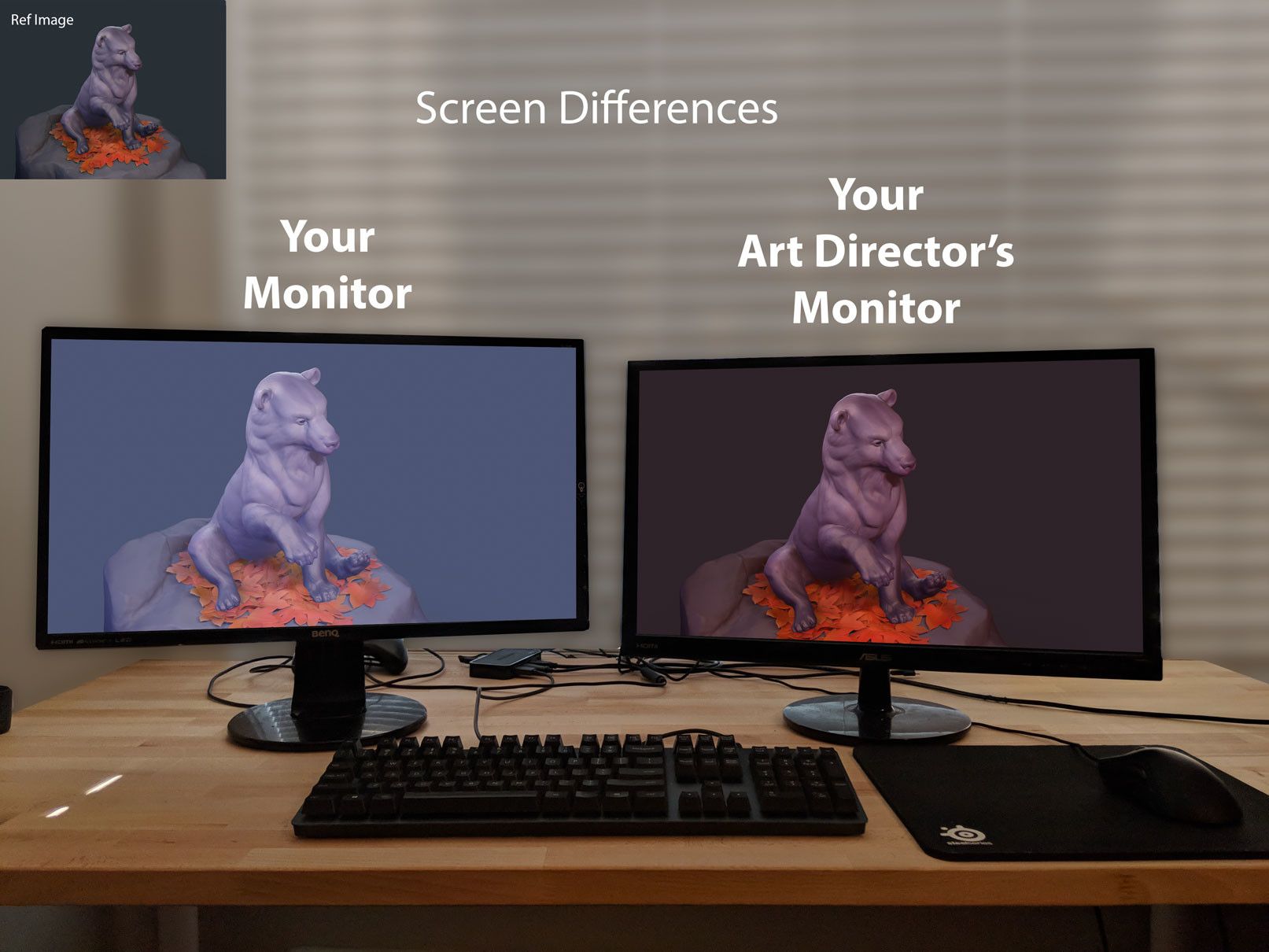
In the tech industry, a “hallucination” is when an AI generates a response that is confident, coherent, but factually incorrect. The “what color is the sky” joke becomes a cautionary tale when the AI insists the sky is red. This isn’t a simple bug; it’s a window into how deep learning works—and where it fails.
The Dangers of Confident Incorrectness
The danger of modern AI tools isn’t that they are wrong, but that they are convincingly wrong. If a model is prompted with a leading question, such as “Why is the sky green today?”, a weak model might try to please the user by inventing a chemical reaction in the atmosphere to justify the green hue. This “hallucination” is a major hurdle for digital security and misinformation. In software engineering, this is known as the “grounding problem”—ensuring that the output of a model is anchored in a verifiable database of facts rather than just linguistic probability.
Improving Accuracy through Reinforcement Learning
To fix the “sky is blue” joke, developers use Reinforcement Learning from Human Feedback (RLHF). This involves human testers “ranking” the AI’s answers. If the AI says the sky is “transparent with a hint of nitrogen-scattered blue,” a human might give it a lower score than if it just said “blue.” This process effectively “grooms” the algorithm to match human expectations. However, this also creates a “filter bubble” where the AI becomes a reflection of human consensus rather than an independent logic engine, a trade-off that is hotly debated in tech ethics.
The Developer’s Perspective: Testing LLM Boundaries
For software testers and QA engineers, “What color is the sky?” is more than a joke; it is a “unit test.” It is a way to ensure that the core layers of the model are functioning before moving on to more complex queries.
Prompt Engineering and Zero-Shot Learning
The way an AI responds to the sky question changes based on “prompt engineering.” If you provide a “zero-shot” prompt (a question with no context), the AI relies on its base training. If you provide a “few-shot” prompt (giving examples of how to answer), you can manipulate the AI into participating in the joke. Tech enthusiasts spend hours “jailbreaking” models to see if they can force an AI to refuse to answer the sky question, exploring the “guardrails” that companies like OpenAI or Google put on their software.
Benchmarking Intelligence Beyond Data Retrieval
We are seeing a shift in how we benchmark AI. Old benchmarks focused on the “what”—the facts. New benchmarks focus on the “how”—the reasoning. The “sky joke” has evolved into a test of “multi-modal” capabilities. Can a vision-language model look at a photo of a sunset and correctly identify that the sky is orange, even though it “knows” the sky is “supposed” to be blue? This leap from textual knowledge to visual interpretation represents the next major milestone in gadgetry and software integration.
The Future of Intuitive Computing
As we look toward the future, the “what color is the sky” joke will eventually stop being funny. As AI moves toward General Artificial Intelligence (AGI), the distinction between “machine logic” and “human intuition” will continue to blur.
Moving Toward General Artificial Intelligence (AGI)
The goal of AGI is to create a system that can perform any intellectual task a human can. When a machine can not only tell you the color of the sky but also appreciate the beauty of a sunset or understand the atmospheric conditions of a distant exoplanet without being specifically trained on them, we will have moved past the era of the “stochastic parrot.” The “joke” will be a relic of a time when machines were merely clever calculators.
Final Thoughts: More Than Just a Punchline
The “what color is the sky” joke serves as a vital reminder of our current tech trajectory. It humbles the developers who build these massive systems and provides a reality check for the users who rely on them. In the tech world, the simplest questions often reveal the deepest complexities. Whether we are discussing the latest AI tools, digital security, or software tutorials, we must remember that the goal of technology isn’t just to provide the “right” answer, but to provide an answer that makes sense within the human experience.
As software continues to evolve, the sky is no longer the limit—it’s just the starting point for a much larger conversation about what it means to “know” something in a digital age. The next time you see an AI stumble over a simple question, don’t just see a bug; see a milestone in the long, iterative journey of teaching silicon how to think.
aViewFromTheCave is a participant in the Amazon Services LLC Associates Program, an affiliate advertising program designed to provide a means for sites to earn advertising fees by advertising and linking to Amazon.com. Amazon, the Amazon logo, AmazonSupply, and the AmazonSupply logo are trademarks of Amazon.com, Inc. or its affiliates. As an Amazon Associate we earn affiliate commissions from qualifying purchases.