
The seemingly simple question, “What color is the polar bear’s fur?” has intrigued curious minds for generations. A quick glance might lead to the intuitive answer: white. Yet, this visual assessment, while understandable, belies a fascinating optical truth that modern technology is increasingly helping us to unravel and understand in unprecedented detail. Far from a mere biological anecdote, the polar bear’s fur serves as a compelling case study for how advanced imaging, artificial intelligence, and sophisticated data analysis tools move beyond human perception to reveal the intricate workings of the natural world. This journey into the true nature of the polar bear’s coloration is not just about correcting a common misconception; it’s a testament to how cutting-edge technology enhances scientific inquiry, offering insights that were once impossible to obtain.
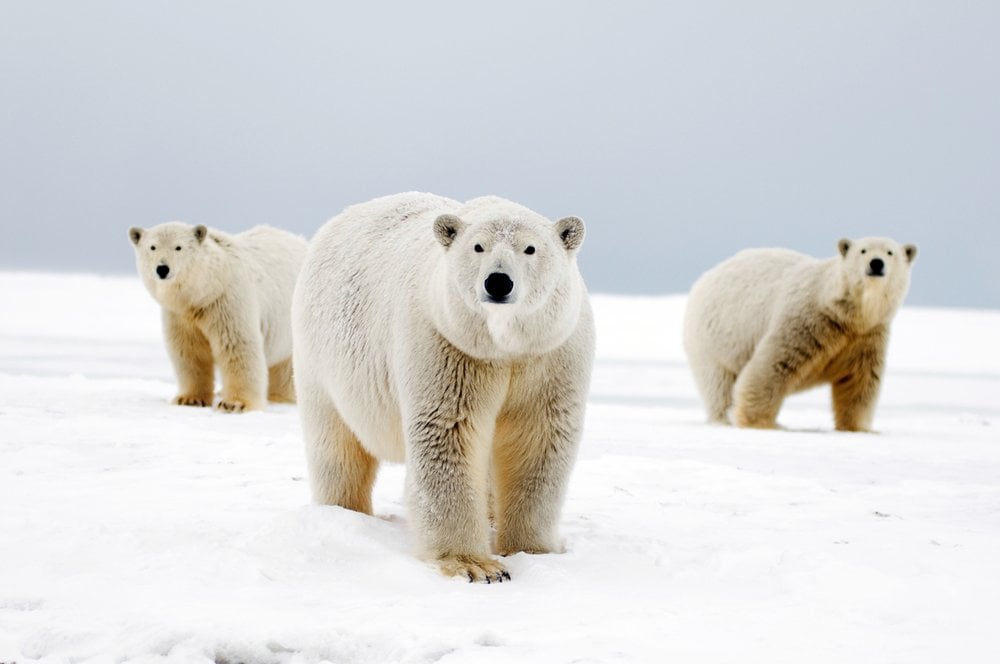
Our exploration will delve into how digital tools and technological innovations are revolutionizing our understanding of biological phenomena, using the polar bear’s unique coat as a prime example. We’ll examine how precise instrumentation, computational power, and smart algorithms transcend the limitations of the human eye, providing a granular view of structures and interactions that dictate appearance, function, and even survival in extreme environments.
Beyond the Naked Eye: Leveraging Advanced Imaging to Discern True Color
The initial step in moving past the “white” assumption is to realize that true color isn’t always what meets the eye. The perceived whiteness of the polar bear is a result of light interaction, not pigment. Advanced imaging technologies are crucial in dissecting this interaction, offering a window into the micro-architecture of the fur.
Spectroscopic Analysis and Microscopic Revelations
Traditional observation methods are limited by the visible light spectrum and the resolving power of the human eye. To truly understand the color — or lack thereof — of the polar bear’s fur, scientists turn to tools that operate at a much finer scale and across broader electromagnetic ranges.
Spectroscopic analysis plays a vital role. By exposing individual hairs to different wavelengths of light and analyzing how that light is absorbed, reflected, or transmitted, researchers can determine the material composition and optical properties of the fur. What these analyses consistently reveal is a striking absence of pigment. Unlike pigmented fur, which absorbs certain wavelengths and reflects others to produce a specific color, polar bear fur predominantly scatters all visible wavelengths of light. This is akin to how snow or ice appears white, even though water itself is clear. Spectrometers provide objective, quantifiable data that confirm this lack of intrinsic color, moving beyond subjective visual interpretation.
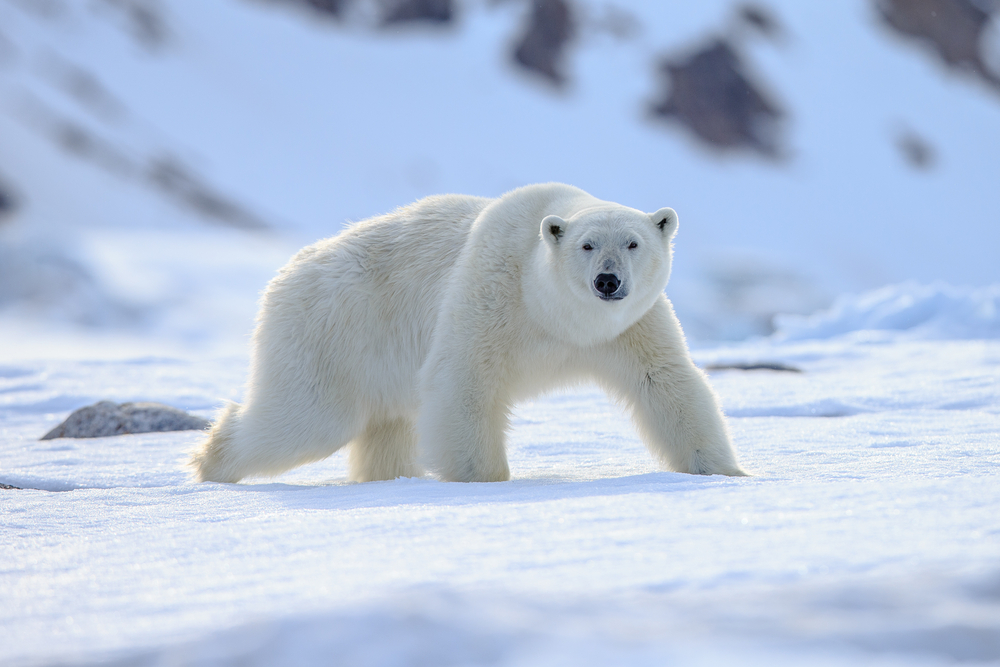
Complementing spectroscopy are microscopic revelations. High-resolution electron microscopes and powerful optical microscopes allow scientists to examine the structure of individual polar bear hairs at magnifications impossible with the naked eye. These observations show that each hair is not a solid strand but a hollow, transparent tube. These hollow cores, filled with air, are the key to the fur’s optical properties. When light hits these transparent, hollow structures, it is scattered and refracted multiple times by the air-filled cavities and the hair’s surface, effectively reflecting most of the incident light back to the observer. This diffuse reflection across the entire visible spectrum is what our brains interpret as white. The microstructural analysis provided by these imaging tools is indispensable in proving that the fur itself is, in fact, translucent or colorless, much like glass or ice.
Hyperspectral Imaging: Unmasking Environmental Interactions
Taking advanced imaging a step further, hyperspectral imaging offers an even richer dataset for understanding the polar bear’s fur. Unlike standard cameras that capture light in three broad bands (red, green, blue), hyperspectral cameras capture light across hundreds of narrow, contiguous spectral bands. This creates a detailed “spectral fingerprint” for every pixel in an image.
For polar bear research, hyperspectral imaging can be incredibly insightful. It allows scientists to analyze not just the visible light interaction, but also how the fur performs across the infrared spectrum, which is crucial for understanding its thermal properties and camouflage in varied lighting and snow conditions. By analyzing these spectral fingerprints, researchers can:
- Assess thermal efficiency: How well the fur absorbs and radiates heat, crucial for survival in Arctic environments. The hollow hairs trap air, acting as an excellent insulator. Hyperspectral data can quantify this thermal performance in detail.
- Evaluate camouflage effectiveness: While appearing white to us, the fur’s spectral signature might interact differently with the UV-sensitive eyes of prey animals or other predators. Hyperspectral analysis can help model this, providing a deeper understanding of its ecological role.
- Monitor fur health and environmental impact: Changes in the fur’s spectral properties could indicate stress, disease, or contamination from environmental pollutants, offering early detection capabilities for conservation efforts.
The granular data provided by hyperspectral imaging pushes our understanding far beyond simple color perception, delving into the functional and environmental interactions of the fur with unparalleled precision.
The Role of AI and Computational Models in Understanding Biological Optics
While advanced imaging provides the raw data, making sense of vast, complex datasets and predicting biological behaviors requires the sophisticated analytical power of Artificial Intelligence and computational modeling. These tools bridge the gap between observation and deep understanding, allowing scientists to simulate, predict, and interpret the intricate optical properties of the polar bear’s fur.
Algorithmic Analysis of Light Scattering
The phenomenon of light scattering by the hollow, transparent hairs of the polar bear is incredibly complex. Predicting exactly how light will behave under different angles, intensities, and environmental conditions requires sophisticated algorithms. This is where AI, particularly machine learning models, comes into play.
AI algorithms can be trained on vast datasets of imaging and spectroscopic data, learning the intricate relationships between hair structure, incident light, and scattered light patterns. For instance, deep learning models can analyze microscopic images of fur samples and simulate light propagation through them. By modeling principles of physics like Mie scattering (scattering by particles comparable to the wavelength of light) and geometrical optics, AI can:
- Quantify scattering efficiency: Determine precisely how effectively the hollow hairs scatter light across different wavelengths, confirming the mechanism behind the perceived whiteness.
- Predict appearance under varied conditions: Simulate how the fur would appear under different lighting (e.g., direct sunlight, overcast skies, dawn/dusk) or environmental factors (e.g., wet fur, snowy background), providing insights into its adaptive advantages.
- Identify structural irregularities: AI can also detect subtle variations in hair structure that might affect optical properties, potentially linking these to genetic factors, age, or environmental stressors.
This algorithmic analysis moves beyond simple observation to build predictive models that enhance our fundamental understanding of how biological structures manipulate light.
Predictive Modeling for Material Science and Biomimicry
The insights gained from studying the polar bear’s fur with AI and computational models extend beyond zoology; they hold immense potential for material science and biomimicry. The fur’s exceptional insulative and light-scattering properties are highly desirable characteristics for various engineering applications.
Computational models, often powered by AI, can simulate the performance of biomimetic materials inspired by polar bear fur. By understanding the optimal dimensions of the hollow hairs, their density, and their arrangement through simulation, engineers can design new materials with:
- Enhanced insulation: Creating lighter, more efficient insulating fabrics for extreme weather gear or building materials.
- Superior optical properties: Developing new reflective coatings, stealth materials, or even optical fibers that manipulate light in novel ways.
- Passive heating/cooling solutions: Designing surfaces that efficiently scatter sunlight to keep objects cool or trap solar radiation for warmth, without external power.
AI assists in iterating through countless design possibilities in virtual environments, accelerating the discovery and optimization of these bio-inspired materials, thus translating biological curiosity into technological innovation.
Digital Security and Data Integrity in Wildlife Research
The reliance on advanced technology for understanding phenomena like polar bear fur coloration necessitates robust digital security measures and a commitment to data integrity. The vast amounts of data collected are not just numbers and images; they represent invaluable scientific knowledge and crucial information for conservation.
Securing Sensitive Data from Remote Sensing
Modern wildlife research often involves deploying sophisticated remote sensing technologies – drones, satellite imagery, camera traps, and environmental sensors – all of which generate enormous volumes of data. This data can include precise location tracking of animals, behavioral patterns, environmental conditions, and detailed biological characteristics derived from imaging.
Securing this sensitive data is paramount. Potential threats range from accidental loss or corruption to malicious cyberattacks. Data breaches could compromise research findings, reveal sensitive locations of endangered species (making them vulnerable to poaching), or undermine conservation strategies. Robust digital security protocols are essential, including:
- Encryption: Protecting data in transit and at rest using strong encryption algorithms.
- Access control: Implementing strict permissions and multi-factor authentication to ensure only authorized personnel can access sensitive datasets.
- Secure cloud storage: Utilizing reputable cloud providers with strong security certifications for storing large datasets, often with redundant backups.
- Network security: Protecting research networks from intrusions, malware, and other cyber threats.
Ensuring the integrity and confidentiality of this data is not just a technical requirement but an ethical imperative for responsible scientific research and conservation.
Ethical AI in Biological Discovery
As AI becomes more integral to biological discovery, particularly in analyzing complex biological data, the ethical implications of its use come to the forefront. The power of AI to identify patterns and draw conclusions from massive datasets must be wielded responsibly.
Key ethical considerations for AI in biological research include:
- Algorithmic bias: Ensuring that the AI models are not inadvertently biased by skewed training data, which could lead to inaccurate or misleading biological interpretations. For instance, if image recognition models are primarily trained on certain lighting conditions, their performance might degrade in others, affecting analysis of fur color.
- Transparency and interpretability: Striving for AI models that are not “black boxes” but offer some degree of transparency into their decision-making processes. Understanding why an AI draws a certain conclusion about fur properties or environmental interactions is crucial for scientific validation and trust.
- Data privacy: When AI processes data that might inadvertently contain identifiable information (e.g., researchers’ locations, rare animal sightings), ensuring that privacy is protected.
- Responsible deployment: Ensuring that the insights derived from AI are used for beneficial purposes, such as conservation and scientific advancement, and not misused for harmful activities.
Adhering to principles of ethical AI ensures that these powerful tools contribute positively and reliably to our understanding of the natural world.
Bridging Tech Innovation and Ecological Insight
Ultimately, the technological journey into understanding “what color is the polar bear’s fur” serves a broader purpose: to deepen our ecological insight and foster more effective conservation efforts. The synergy between tech innovation and biological questions drives progress in both fields.

From Curiosity to Conservation: Tech’s Impact on Wildlife Understanding
The initial curiosity about the polar bear’s fur color, seemingly a trivial question, opens doors to profound scientific understanding, made possible by technology. What we learn about the fur’s structure, optical properties, and thermal insulation is not merely academic; it has direct implications for the animal’s survival in a rapidly changing Arctic environment.
Technological advancements, from remote sensing drones monitoring polar bear populations and their habitat to AI analyzing satellite imagery for ice cover changes, provide critical data for conservation strategies. Understanding the intricate details of their adaptation, like their remarkable fur, allows scientists to better predict how polar bears will cope with rising temperatures, shrinking ice, and altered prey availability.
- Monitoring populations: Drones equipped with high-resolution cameras and thermal sensors can non-invasively count and track polar bear populations, providing crucial demographic data.
- Habitat assessment: Satellite imagery, processed by AI, can track changes in sea ice extent and quality, directly impacting hunting grounds and migration routes.
- Health diagnostics: Advanced imaging and biochemical analysis, sometimes conducted via remote capture or even through AI analysis of observational data, can assess the health status of individuals, identifying stress markers or disease early.
These technological tools empower researchers and conservationists with the data and insights necessary to develop informed, evidence-based strategies to protect this iconic species and its fragile ecosystem. The question of fur color, therefore, evolves from a simple observation into a springboard for comprehensive ecological understanding, driven by the relentless march of technological innovation.
In conclusion, while the human eye perceives the polar bear’s fur as brilliantly white, the true story is far more complex and compelling. It’s a tale of translucent, hollow hairs, masterful light scattering, and extraordinary insulation – a biological marvel that technology is helping us to fully appreciate. From the precision of spectroscopic analysis and microscopy to the predictive power of AI and computational models, technology is not just answering our questions; it is redefining the very boundaries of biological discovery, transforming our curiosity into actionable insights for science and conservation alike.
aViewFromTheCave is a participant in the Amazon Services LLC Associates Program, an affiliate advertising program designed to provide a means for sites to earn advertising fees by advertising and linking to Amazon.com. Amazon, the Amazon logo, AmazonSupply, and the AmazonSupply logo are trademarks of Amazon.com, Inc. or its affiliates. As an Amazon Associate we earn affiliate commissions from qualifying purchases.