
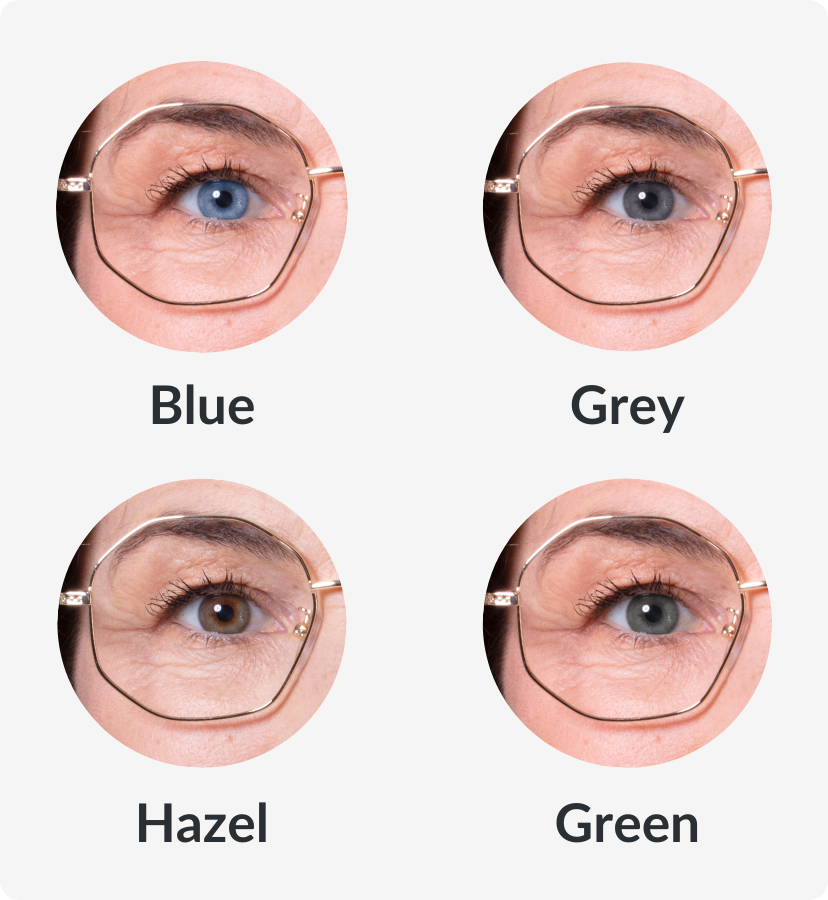
In the world of digital imaging and biometric security, the question “what color is hazel eye color?” is far more complex than a simple aesthetic observation. While a layperson might describe hazel as a mixture of green, gold, and brown, a technologist sees a high-dimensional data challenge. Hazel is not a solid hue but a phenomenon of light scattering and variable pigmentation. In the current landscape of AI-driven image generation and high-stakes biometric authentication, the ability to accurately define, render, and identify hazel eyes represents a significant frontier in optical technology and software engineering.

This article explores how modern technology decodes the complexity of hazel eyes, the challenges it poses to security algorithms, and the advanced rendering techniques used to replicate this unique ocular profile in digital environments.
The Science of Multi-Chromatic Identification in Biometrics
Biometric security relies on the uniqueness of the human iris. However, hazel eyes present a specific set of variables that challenge standard recognition software. Unlike blue or brown eyes, which exhibit more uniform light absorption, hazel eyes contain a moderate amount of melanin and are subject to significant Rayleigh scattering—the same physical principle that makes the sky appear blue.
Beyond Binary: Why Hazel Challenges Standard Recognition Algorithms
Traditional biometric systems often categorize eye color into broad buckets for indexing. Hazel, however, exists on a spectrum. From a data perspective, hazel is “noisy.” Depending on the ambient lighting conditions, a hazel eye might appear predominantly green in a 5000K light source (daylight) but shift toward amber or brown under 2700K incandescent lighting.
For developers of facial recognition software, this variability requires sophisticated “color constancy” algorithms. These algorithms must normalize the input data to ensure that a person’s identity remains verifiable regardless of the color temperature of the environment. If the software is too rigid, the shifting shades of a hazel iris can result in a False Rejection Rate (FRR) increase, particularly in mobile devices using RGB cameras for secondary authentication.
The Role of Near-Infrared (NIR) Imaging in Iris Mapping
To bypass the “hazel problem” in high-security environments, engineers utilize Near-Infrared (NIR) imaging. In the NIR spectrum, the visible colors of the iris—the greens and golds that define hazel—become less relevant. Instead, the camera captures the complex structural patterns of the iris stroma.
Because hazel eyes have a non-uniform distribution of melanin, the NIR sensors must be high-resolution to distinguish between pigmented spots (freckles or “nevi”) and the actual structural folds of the iris. This technical distinction is crucial for creating a biometric “hash” that is unique to the individual. For tech companies like Apple (FaceID) or Samsung, the goal is to map the physical topography of the hazel iris rather than its perceived color, ensuring that the “hazel” variability does not compromise security protocols.
Generative AI and the Challenge of Realistic Ocular Rendering
As we move deeper into the era of Generative AI and hyper-realistic digital twins, the digital recreation of hazel eyes has become a benchmark for graphical fidelity. In professional rendering engines like Unreal Engine 5 or in AI models like Midjourney and DALL-E, “hazel” is one of the most difficult textures to simulate accurately.
Simulating Rayleigh Scattering in Computer Graphics
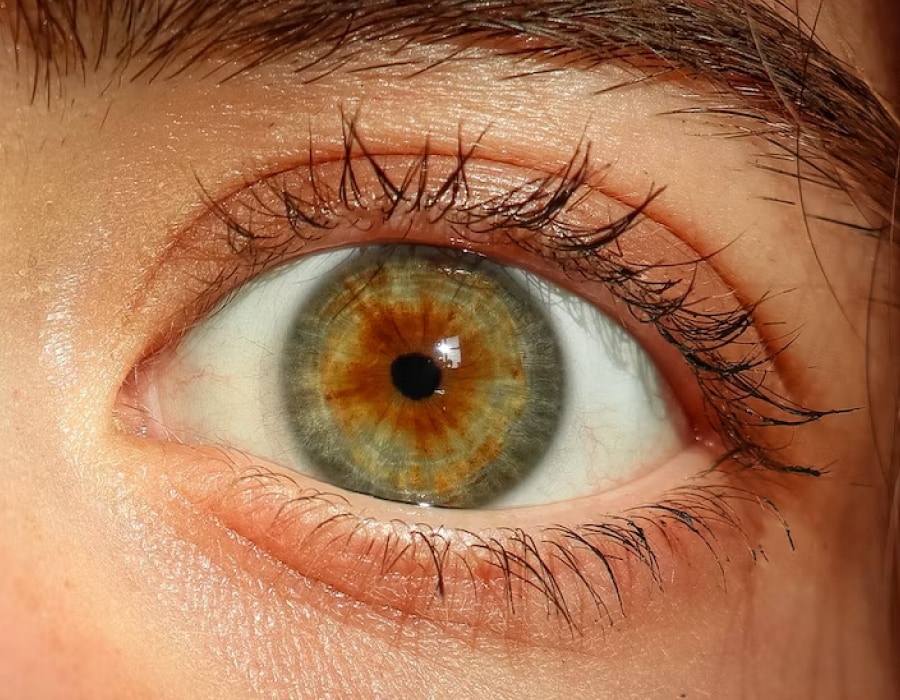
To truly answer “what color is hazel eye color” in a digital space, developers must use Subsurface Scattering (SSS) shaders. Hazel eyes are characterized by a “burst” of brown melanin around the pupil, which fades into green or gold toward the periphery.
In high-end CGI, simply applying a texture map is insufficient. Software must simulate how light photons enter the semi-transparent layers of the iris, bounce off the pigmented cells, and exit at different angles. This process, known as “path tracing,” allows the digital eye to exhibit the same shifting qualities as a biological hazel eye. Tech artists must program the “limbal ring”—the dark circle around the iris—to interact with the hazel center, creating a depth that traditional 2D rendering cannot achieve.
Training LLMs and Diffusion Models on Heterochromatic Data
For AI image generators, hazel is often a “hallucination” risk. Because “hazel” is a descriptive term rather than a specific wavelength, AI models trained on millions of images must learn the correlation between the word “hazel” and a specific pattern of pixel values.
Data scientists are currently working on “fine-tuning” models to understand the subtle gradients of hazel. This involves feeding the neural network datasets that include “hazel-green,” “hazel-brown,” and “amber-hazel” labels. The technical challenge lies in preventing the AI from defaulting to a muddy brown or a flat green. Achieving a “true” hazel in AI art requires the model to understand the relationship between secondary and tertiary colors within a circular aperture, a task that tests the limits of current latent diffusion architectures.
Health-Tech and the Future of Digital Eye Monitoring
Beyond security and aesthetics, the tech industry is leveraging the complex color profile of hazel eyes for medical diagnostics. The “hazel” spectrum is a rich source of data for wearable technology and telehealth platforms.
Smart Lenses and Pigmentation Tracking
The next generation of “smart” contact lenses is being designed not just for augmented reality (AR), but for health monitoring. For individuals with hazel eyes, these lenses use micro-sensors to monitor changes in iris pigmentation. Because hazel eyes are more susceptible to showing changes in color due to UV exposure or certain medications (such as prostaglandin analogs used for glaucoma), high-tech lenses can serve as an early warning system.
These devices use a combination of CMOS image sensors and low-power Bluetooth modules to transmit high-resolution data to a smartphone app. If the “green-to-brown” ratio in a hazel eye shifts beyond a predetermined baseline, the software can alert the user to consult an ophthalmologist.
Telehealth: Diagnosing Changes in Multicolored Irises
Telehealth apps are now incorporating “Computer Vision” to assist in remote ocular exams. For a physician, distinguishing between a natural brown spot in a hazel eye and a new growth (melanoma) is critical.
The software utilizes “edge detection” and “spectral analysis” to differentiate between the natural melanin clusters of a hazel iris and pathological changes. By analyzing the “hex codes” of the pixels in a user-submitted photo, these AI tools can provide a level of scrutiny that the human eye might miss during a standard video call. This marriage of color science and software engineering is revolutionizing how we monitor ocular health.
Privacy Implications of High-Resolution Iris Data
As our ability to define and digitize complex colors like hazel improves, so do the risks associated with biometric privacy. The very uniqueness that makes hazel eyes a “data-rich” asset also makes them a target for sophisticated spoofing or unauthorized tracking.
The Ethical Frontier of Biometric Hash Storage
When a person with hazel eyes registers their biometric data, they aren’t just giving a fingerprint; they are providing a high-resolution map of a multi-chromatic structure. The tech industry is currently debating how this data should be stored. “Biometric Hashing” involves converting the iris image into a string of code that cannot be reversed.
However, because hazel eyes are so complex, the “hash” needs to be more detailed than it would be for a blue-eyed person. This creates a technical disparity in data storage. Security engineers are working on “Zero-Knowledge Proofs” (ZKP) for ocular data, allowing a system to verify that “this is a hazel eye” without actually seeing or storing the image itself. This protects the user from “deepfake” recreation of their unique ocular profile.
Synthetic Data and the Mitigation of Bias
Finally, the tech community is addressing “algorithmic bias” in eye recognition. Historically, many systems were optimized for light-colored (blue/green) or dark-colored (brown) eyes, often failing to categorize hazel correctly. To fix this, developers are using “Synthetic Data”—AI-generated hazel eyes—to train systems. By creating millions of variations of hazel eyes in a virtual environment, engineers can ensure that their software is inclusive and accurate for all users, regardless of where they fall on the chromatic spectrum.
In conclusion, “what color is hazel eye color” is a question that sits at the intersection of physics, software engineering, and data ethics. In the tech world, hazel is not just a color; it is a complex, shifting dataset that continues to push the boundaries of what our sensors can capture and what our AI can create. As we move forward, the digital mastery of this multi-chromatic marvel will remain a key indicator of progress in the fields of biometrics, graphics, and health-tech.
aViewFromTheCave is a participant in the Amazon Services LLC Associates Program, an affiliate advertising program designed to provide a means for sites to earn advertising fees by advertising and linking to Amazon.com. Amazon, the Amazon logo, AmazonSupply, and the AmazonSupply logo are trademarks of Amazon.com, Inc. or its affiliates. As an Amazon Associate we earn affiliate commissions from qualifying purchases.