
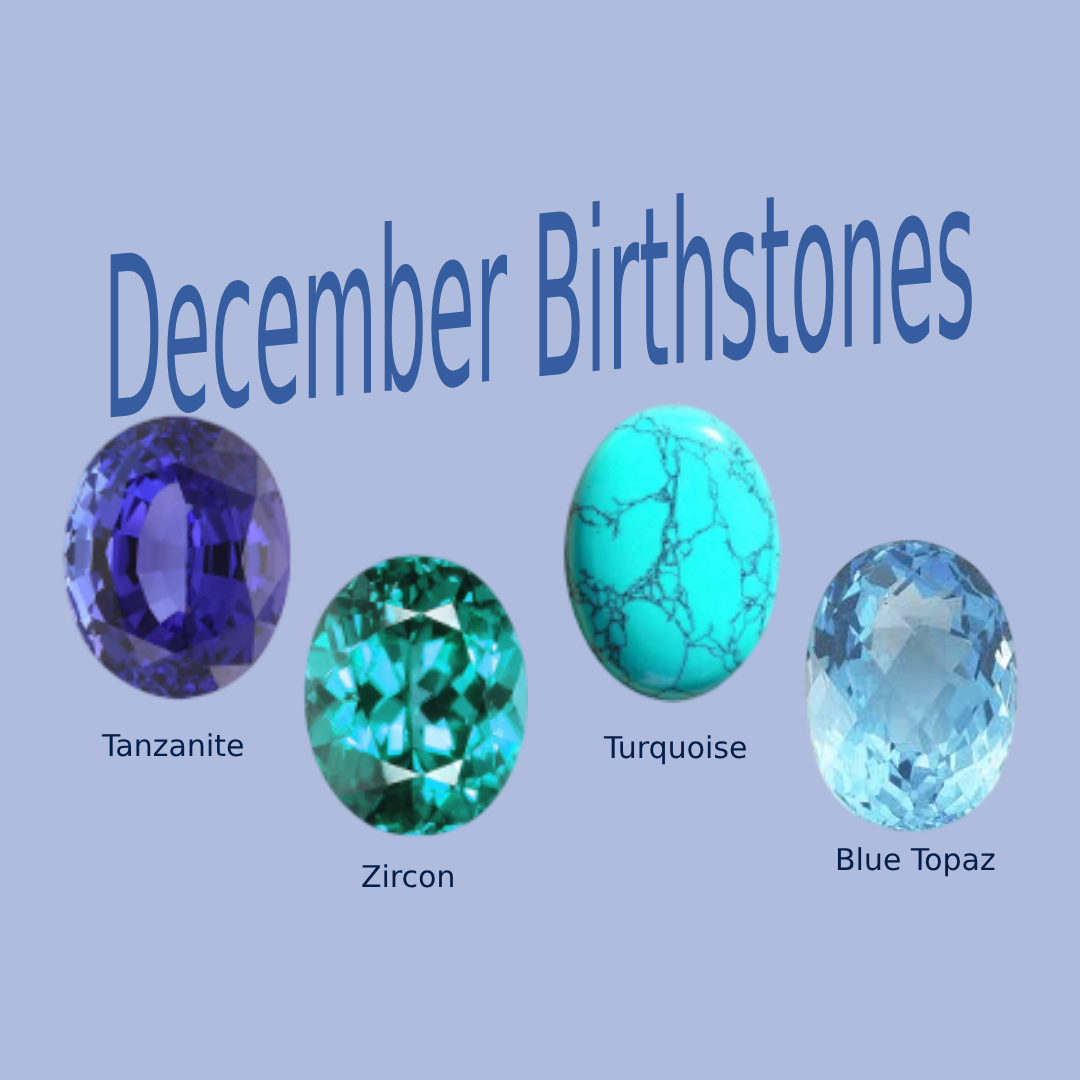
December stands out in the gemstone calendar, offering not one, but three distinct birthstones: Tanzanite, Zircon, and Turquoise. Each gem presents a unique spectrum of colors, histories, and, crucially, financial characteristics that savvy investors and discerning buyers must understand. While the initial query might simply be about their hues, delving deeper reveals how color, rarity, and market dynamics coalesce to determine their economic worth, making them fascinating subjects within personal finance and asset diversification.
Understanding December’s Birthstones: A Spectrum of Value
The choice of three birthstones for December reflects a rich geological diversity and consumer preference, each contributing differently to a potential portfolio of tangible assets. From the breathtaking blues of Tanzanite to the earthy tones of Zircon and the ancient allure of Turquoise, understanding their distinct properties is the first step in appreciating their financial implications.

Tanzanite: The Enigmatic Blue-Violet Gem
Discovered relatively recently in 1967 in Tanzania, Tanzanite quickly captivated the world with its extraordinary beauty. It is a variety of the mineral zoisite and is celebrated for its remarkable pleochroism, meaning it can display different colors when viewed from various angles. These colors typically range from vibrant blue to rich violet and occasionally hints of burgundy.
From an investment perspective, the most desirable and financially valuable Tanzanite exhibits a strong, vivid blue-violet hue, often enhanced through careful heat treatment. This intense saturation, coupled with its singular source in the Merelani Hills of Tanzania, contributes significantly to its rarity and market value. Its “one-mine stone” status makes it a compelling, albeit potentially volatile, asset. While the supply is limited, making it appealing to collectors and investors, its value can be influenced by mining operations and political stability in its region of origin. Investing in Tanzanite requires an appreciation for its unique geological story and the inherent risks associated with a non-diversified supply chain.
Zircon: The Brilliant Earth-Tone Contender
Zircon, one of the oldest minerals on Earth, is often mistakenly confused with cubic zirconia, a synthetic diamond simulant. However, natural Zircon is a genuine and beautiful gemstone with its own unique properties. It occurs naturally in a wide range of colors, including yellow, green, red, brown, and, most notably for December, blue. The vibrant blue Zircon, often achieved through heat treatment of brownish specimens, is particularly popular.
Financially, Zircon offers an accessible entry point into the world of colored gemstones. While perhaps not reaching the per-carat values of the rarest Tanzanite, its exceptional brilliance and fire – optical properties similar to diamond – make it an attractive option for value-conscious buyers. Its diversity in color also allows for a broader market appeal. Investors might look for natural, untreated specimens in unusual or highly saturated colors, which can command a premium. Its relative affordability, combined with its historical significance and natural beauty, positions Zircon as a robust asset for diversification without requiring a substantial capital outlay compared to some other rare gems.
Turquoise: The Ancient Sky Stone
Turquoise, an opaque mineral found in dry, barren regions, has been prized for millennia across various cultures for its captivating blue-to-green hues. The most highly valued Turquoise displays an intense, uniform “robin’s egg blue” color, often without any distracting matrix (the dark veins of host rock running through it). However, some collectors appreciate the natural patterns created by the matrix, especially from renowned sources like the Sleeping Beauty mine (now closed) or Persian mines.
The value of Turquoise is significantly influenced by its origin, color saturation, and the presence or absence of matrix. Rare, untreated Turquoise from historically famous mines can command substantial prices, especially in the collector’s market. While its investment potential might differ from transparent faceted gems like Tanzanite, its cultural significance and enduring appeal ensure a steady demand. As a tangible asset, high-quality Turquoise can hold or appreciate in value, especially if acquired from reputable sources with documented provenance. Its market is less about rapid appreciation and more about sustained cultural and aesthetic value, making it a stable, long-term asset, particularly in heritage collections.
Color as a Key Determinant of Financial Worth
For all gemstones, and particularly December’s birthstones, color is paramount. It is often the most significant factor influencing desirability and, by extension, market price. Understanding the nuances of color allows investors to identify gems with the highest potential value.
The “C” of Color: Quality, Rarity, and Price
In the realm of gemstones, the “4 Cs” (Color, Clarity, Cut, Carat Weight) are standard evaluation criteria. For December’s birthstones, “Color” often outweighs the other Cs in terms of financial impact.
- Tanzanite: The pinnacle of Tanzanite value lies in its intense, saturated blue-violet color. Gems displaying a strong dichroism (strong blue from one angle, strong violet from another) without appearing too dark or too light are highly prized. Weak color saturation or a grayish modifier significantly diminishes its worth. The rarer and more vivid the blue-violet, the higher the per-carat price.
- Zircon: While Zircon comes in many colors, for December, the vibrant blue is key. Intense, clear blue Zircon commands the highest prices within its category. Natural, untreated Zircon in rare and vivid colors (like a deep forest green or rich orange) can also fetch premium prices due to their rarity.
- Turquoise: The ideal “Persian blue” or “robin’s egg blue” is the gold standard for Turquoise. Stones with an even, intense color and minimal to no matrix are typically the most valuable. Variations towards green or lighter blue usually result in lower prices, unless the green hue is particularly vibrant and even, suggesting a distinct type of premium quality.
Rarity often intertwines with color. A unique or exceptionally vivid color that is scarcely found naturally will inevitably drive up demand and price, creating a strong investment case.
Market Demand and Color Trends
Beyond intrinsic quality, market demand significantly impacts the financial viability of specific gemstone colors. Fashion trends, celebrity influence, and broader cultural shifts can temporarily or even permanently elevate the popularity and price of certain hues.
For example, a sudden surge in blue jewelry on runways or in high-profile events can boost demand for high-quality blue Tanzanite or Zircon. Similarly, a renewed interest in ancient or tribal aesthetics might increase the market for certain types of Turquoise. While intrinsic rarity and beauty provide a foundational value, market trends introduce a dynamic element that investors must monitor. A stone bought at the peak of a trend might be harder to resell at a profit once the trend passes, underscoring the importance of long-term value assessment over fleeting fashion.
Investing in December’s Gems: Opportunities and Pitfalls
Treating gemstones as part of a financial portfolio requires due diligence, an understanding of market mechanics, and a realistic expectation of returns. While not as liquid as stocks or bonds, high-quality colored gems can serve as a hedge against inflation and a tangible asset.
Appraisal and Certification: Safeguarding Your Investment
For any significant gemstone purchase, especially for investment purposes, independent gemological certification is non-negotiable. Reputable laboratories such as the Gemological Institute of America (GIA), American Gem Society (AGS), or International Gemological Institute (IGI) provide objective assessments of a gem’s characteristics, including its color, clarity, cut, and carat weight, as well as identification of treatments.
This certification is crucial for:
- Verification of Authenticity: Ensuring the stone is natural and not a synthetic or imitation.
- Confirmation of Quality: Objectively grading the gem’s attributes, which directly correlate to its value.
- Establishing Value: Providing a basis for appraisal, insurance, and future resale.
Regular appraisals by certified gemologists are also vital to track the asset’s current market value for insurance purposes and to monitor potential appreciation or depreciation. Investing in uncertified stones, especially online or from unverified sources, introduces significant financial risk.
Market Liquidity and Resale Value
The liquidity of gemstones – how easily they can be converted to cash – varies considerably. High-quality, well-certified Tanzanite generally enjoys good liquidity due to its rarity and established market, though it’s still less liquid than most financial instruments. Zircon and Turquoise, particularly unique or historically significant pieces, can also find buyers, but the market might be more niche.
Resale value is rarely equivalent to the initial retail purchase price, which often includes significant markups. Factors affecting resale include:
- Condition of the Gem: Damage, chips, or poor repolishing can severely diminish value.
- Market Trends: As discussed, demand for specific colors or types can fluctuate.
- Documentation: Comprehensive certification and provenance records significantly aid resale.
- Channels: Selling through a reputable auction house or dealer might yield a better return than a quick private sale, but often involves commissions.
Investors should approach gemstones as long-term assets, understanding that quick profits are rare and that a substantial portion of the retail markup is usually lost upon resale.
Strategic Acquisition: Navigating the Gemstone Market
Acquiring December’s birthstones, whether for personal enjoyment, investment, or a combination, requires a strategic approach to sourcing and protecting the asset.
Direct Sourcing vs. Retail Channels
- Direct Sourcing (Wholesalers, Miners): Can offer better prices by cutting out retail markups. However, this channel demands significant expertise in gemology to accurately assess quality and identify potential treatments or fakes. It’s often suited for experienced buyers or those with trusted professional advisors.
- Reputable Retail Jewelers: While carrying a higher price tag, these establishments offer expertise, often provide their own guarantees, and typically deal in certified stones. They are a safer option for most consumers, offering peace of mind and professional guidance.
- Online Marketplaces: Offer a vast selection and competitive pricing but carry the highest risk of misrepresentation. Extreme caution, verification of seller reputation, and insistence on independent certification are crucial.
Due diligence is paramount regardless of the channel. Always ask for documentation, inspect the gem thoroughly, and, if possible, get a third-party opinion before finalizing a significant purchase.
Financing Your Gemstone Purchase
For substantial gemstone acquisitions, considering financing options is a part of prudent financial planning. Outright cash purchases are ideal, but for larger investments, alternatives exist:
- Layaway Plans: Many jewelers offer layaway, allowing you to pay over time without interest, securing the stone at its current price.
- Credit Cards: Useful for smaller purchases, but interest rates can quickly erode any potential investment gains if balances aren’t paid swiftly.
- Diversified Portfolio: Treating a high-value gemstone as a unique, tangible asset within a broader diversified portfolio can be a strategy, balancing it with more liquid investments.
It is rare for individual gemstones to be used as collateral for loans unless they are part of a much larger, highly appraised collection. Financial prudence dictates never overextending for a gemstone purchase; it should be an enhancement, not a burden, to your financial health.

Insurance and Storage: Protecting Your Asset
Once acquired, protecting your gemstone investment is critical.
- Insurance: High-value gemstones should be insured against loss, theft, or damage. This can often be done through a rider on your existing homeowner’s or renter’s insurance policy, or a separate specialized jewelry insurance policy. Ensure the policy covers the full appraised value and understand the terms regarding replacement or cash payout.
- Secure Storage: For stones not regularly worn, secure storage is essential. Home safes, especially fire-resistant and bolt-down models, offer a good level of protection. For extremely valuable pieces, a bank safe deposit box provides superior security.
By understanding the distinct color profiles, market values, and investment considerations associated with Tanzanite, Zircon, and Turquoise, buyers can make informed decisions that align with their financial goals, transforming the simple question of “what color” into a sophisticated exploration of asset management.
aViewFromTheCave is a participant in the Amazon Services LLC Associates Program, an affiliate advertising program designed to provide a means for sites to earn advertising fees by advertising and linking to Amazon.com. Amazon, the Amazon logo, AmazonSupply, and the AmazonSupply logo are trademarks of Amazon.com, Inc. or its affiliates. As an Amazon Associate we earn affiliate commissions from qualifying purchases.