
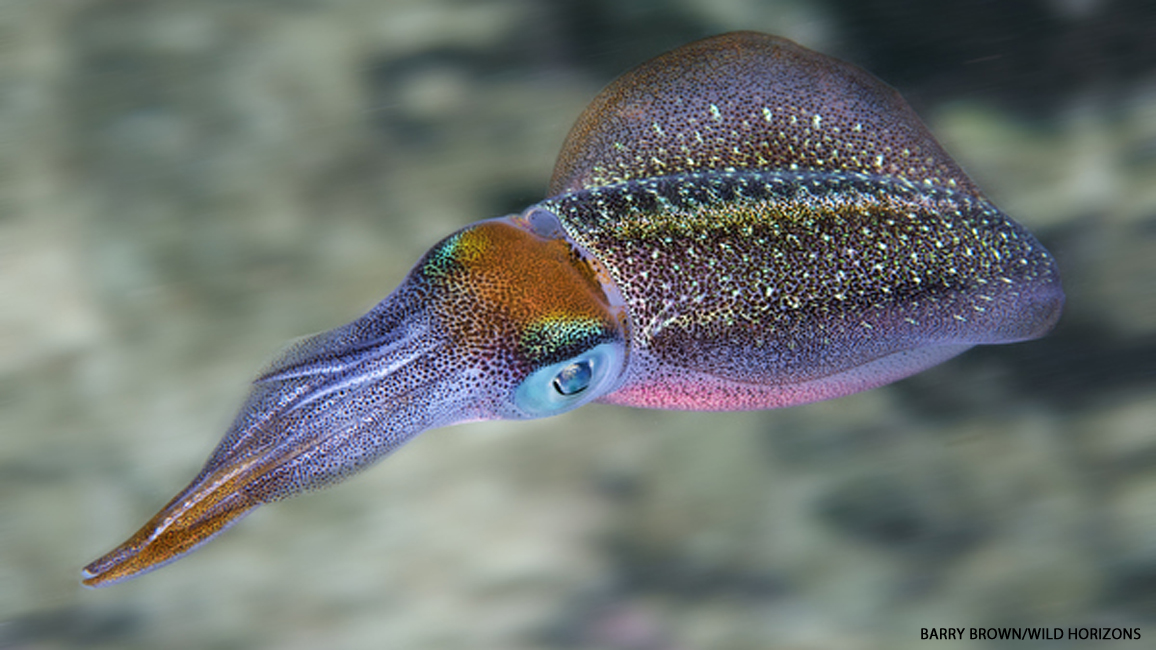
In the natural world, the question “what color is a squid?” is a trick question. A squid is not a single color; it is a dynamic, living canvas capable of shifting through a near-infinite spectrum of hues, patterns, and textures in milliseconds. While marine biologists have long marveled at this cephalopod capability, the technology sector is now looking to these creatures as the blueprint for the next generation of visual hardware. From ultra-efficient e-paper displays to advanced military “cloaking” materials, the squid’s unique biological architecture is driving a revolution in how we engineer color in the digital and physical worlds.
The Biological Pixel: Understanding the Squid’s Optical Architecture
To understand how technology is mimicking the squid, we must first look at the “hardware” found in their skin. Unlike the static pigments found in most terrestrial animals, squid skin operates much like a sophisticated liquid crystal display (LCD) or an organic light-emitting diode (OLED) screen. This biological system is comprised of three primary layers that function as organic pixels.
Chromatophores: The Pigment Actuators
The first layer consists of chromatophores—tiny, sac-like organs filled with pigment. Each chromatophore is surrounded by a ring of muscles. When the squid’s nervous system signals these muscles to contract, the pigment sac stretches wide, creating a visible “dot” of color. When the muscles relax, the sac shrinks into a microscopic point, making the color disappear. This is essentially a mechanical version of a digital sub-pixel. Tech researchers are currently studying these mechanical actuators to develop “soft” displays that do not rely on rigid glass or heavy power sources, but rather on the physical expansion and contraction of light-altering polymers.
Iridophores and Leucophores: Structural Color and Reflectivity
Beneath the chromatophores lie the iridophores and leucophores. These do not use pigment; instead, they use structural color. Iridophores contain stacks of proteins that reflect light at specific angles, creating iridescent blues, greens, and silvers. Leucophores act as broadband reflectors, scattering white light to provide a high-contrast background. In the world of display technology, this is the holy grail of “reflective” screens—displays that don’t need a backlight because they use ambient light to create vivid, high-contrast imagery, much like the Amazon Kindle’s Paperwhite technology but with the full-spectrum vibrancy of a living organism.
Bio-Mimicry in Display Technology: Beyond the Backlight
Current consumer electronics are dominated by emissive displays—screens that produce their own light. While effective, these displays are the primary battery drain for smartphones and laptops and are difficult to read in direct sunlight. The technology inspired by the squid’s color-changing abilities—often referred to as “cephalopod-inspired photonic materials”—seeks to solve these limitations.
The Rise of Reflective E-Paper
By mimicking the leucophores and iridophores, engineers are developing reflective color displays that use almost zero power when the image is static. In these systems, electrical charges move microscopic particles or change the orientation of thin films to reflect specific wavelengths of light. This mimics the squid’s ability to “turn on” color by simply shifting its internal structure. The result is a screen that is perfectly visible in the brightest sunlight, just as a squid remains visible (or invisible) in the shifting light of the ocean.
Flexible and Wearable Visual Interfaces
Because the squid’s color-changing mechanism is embedded in soft, flexible tissue, it provides a roadmap for the future of wearable tech. Traditional screens are rigid and prone to cracking. However, bio-inspired displays utilize stretchable polymers. Imagine a smartwatch that isn’t a block of metal and glass on your wrist, but a thin, fabric-like sleeve that changes color or displays notifications directly on the material. This shift from “device” to “integrated surface” is the primary goal of the soft electronics movement, heavily influenced by cephalopod dermatology.

Advanced Materials: Camouflage and Stealth Technology
The most immediate and high-stakes application of “squid color” is in the realm of digital security and military camouflage. In a tech-driven battlefield, being “invisible” doesn’t just mean blending into the trees; it means disappearing from infrared sensors, heat-seeking cameras, and multi-spectral scanners.
Adaptive Camouflage and the “Invisibility” Cloak
Researchers at institutions like UC Irvine and various defense labs have developed “squid skin” patches that can hide a person or vehicle from infrared cameras. These materials use a protein called reflectin—the same protein found in squid iridophores. By applying a small chemical or electrical trigger, the material can change how it reflects infrared light. To a thermal camera, the wearer simply vanishes, blending into the thermal background of the environment. This is the first step toward true “active camouflage,” where a surface can sense its surroundings via sensors and automatically adjust its color and pattern to match, effectively making it invisible to both the human eye and digital sensors.
Thermal Regulation through Photonic Crystals
Squids also use their skin to manage how they absorb energy. In tech, this is being translated into “smart windows” and building coatings. By using materials that mimic the squid’s ability to shift between reflective and absorptive states, engineers can create glass that automatically turns opaque or reflects heat during the hottest part of the day, then becomes transparent as the sun sets. This reduces the energy load on HVAC systems and represents a significant leap in sustainable architectural technology.
The Role of AI in Biological Color Synthesis
A squid’s color change is controlled by its complex nervous system, capable of processing massive amounts of environmental data to produce the perfect pattern. Replicating this in technology requires more than just the “skin”—it requires the “brain.” This is where Artificial Intelligence and Machine Learning enter the fold.
Neural Networks and Pattern Matching
For a piece of tech to truly mimic a squid, it must be able to “see” its environment and react. AI algorithms are currently being trained on thousands of hours of cephalopod footage to understand the logic behind their camouflage. When integrated into hardware, these neural networks can drive “smart skins” that autonomously adapt to their surroundings. This has profound implications for robotics, allowing autonomous machines to signal intent or blend into environments without human intervention.
Visual Communication and Soft Robotics
In the field of soft robotics, color is more than just a cover; it is a language. Squids use “chromatic pulses” to communicate with one another. Engineers are now building soft robots that use color-changing skins to provide visual feedback to human operators. For instance, a search-and-rescue robot might turn a bright, pulsing orange when it detects a human heartbeat, or a deep blue when its battery is low. This provides a natural, intuitive interface between humans and machines that bypasses the need for traditional screens or speakers.

Conclusion: The Future is Polychromatic
What color is a squid? It is the color of the future. The transition from static, power-hungry, and rigid technology to dynamic, efficient, and flexible systems is being built on the foundation of cephalopod biology. As we move closer to a world of integrated “smart” surfaces, the lessons we learn from the squid’s skin will define the next century of innovation.
We are moving toward an era where our gadgets will no longer be external tools, but adaptive skins—surfaces that can change their appearance, manage their energy, and communicate through the same mesmerizing dance of light and pigment that has allowed the squid to thrive in the depths of the ocean for millions of years. The intersection of marine biology and high technology is proving that the most advanced display in the world isn’t in a lab in Silicon Valley; it has been swimming in the sea all along.
aViewFromTheCave is a participant in the Amazon Services LLC Associates Program, an affiliate advertising program designed to provide a means for sites to earn advertising fees by advertising and linking to Amazon.com. Amazon, the Amazon logo, AmazonSupply, and the AmazonSupply logo are trademarks of Amazon.com, Inc. or its affiliates. As an Amazon Associate we earn affiliate commissions from qualifying purchases.