
The majestic eagle, a powerful emblem of freedom, strength, and soaring ambition, has graced the coinage of nations for centuries. Its presence on a coin is not merely decorative; it’s a profound statement of national identity, sovereignty, and economic might. For investors, collectors, and curious individuals alike, understanding “what coin has the eagle on it” opens a fascinating window into history, artistry, and the tangible world of financial assets. This exploration delves into the enduring symbolism of the eagle in numismatics, identifies prominent examples of eagle coins from around the globe, and provides insights into their value, collectibility, and role within a diversified financial portfolio.

The Enduring Symbolism of the Eagle in Numismatics
The eagle’s widespread adoption as a numismatic motif is rooted deeply in its symbolic power, resonating across cultures and civilizations. From ancient empires to modern republics, the bird of prey has consistently been chosen to represent core values that nations aspire to embody.
A Legacy of Power and Freedom
Historically, the eagle has been associated with supreme deities and rulers, symbolizing divine authority, military prowess, and imperial reach. The Roman legions carried standards topped with eagles, and this powerful imagery translated directly onto their coinage, asserting the empire’s dominance. In contemporary contexts, particularly in the United States, the bald eagle stands as an iconic symbol of freedom, independence, and democratic ideals. Its presence on a coin, therefore, isn’t just a design choice; it’s a declaration of a nation’s foundational principles and its place in the world. For individuals holding these coins, they represent not just a medium of exchange, but a piece of national heritage and the enduring values it enshrines.
Global Recognition and National Identity
Beyond its symbolic weight, the eagle serves as an easily recognizable mark of national identity. In an increasingly globalized financial world, where various currencies circulate, the distinctive image of an eagle can instantly signify a coin’s origin and the issuing authority. This helps maintain trust and legitimacy in financial transactions. The consistent use of the eagle across different denominations and series of a nation’s currency reinforces its brand identity, much like a corporate logo. For collectors, these national eagles offer a compelling narrative of each country’s unique journey and aspirations, making them key pieces in understanding global economic history.
Artistic Interpretation Through the Ages
The portrayal of the eagle on coins has evolved significantly over time, reflecting changes in artistic styles, minting technologies, and national narratives. From the highly stylized, almost abstract eagles of ancient Greece to the intricate, naturalistic depictions on modern bullion coins, each rendition offers a unique artistic interpretation. These variations add to the appeal for collectors, allowing them to trace artistic trends and historical periods through the evolution of the eagle motif. The artistry also plays a crucial role in a coin’s aesthetic appeal and, consequently, its desirability and secondary market value, especially for numismatic specimens where design complexity and execution are highly prized.
Prominent Eagle Coins from Around the World
While many countries feature eagles on their coinage, certain series stand out due to their historical significance, widespread recognition, and substantial market presence, particularly within the investment and collecting communities.
The Iconic American Eagle Series
Undoubtedly, the most recognizable eagle coins in the world are the American Eagle series issued by the United States Mint. These coins are flagship products for precious metals investors and collectors, renowned for their purity, reliability, and beautiful designs.
Gold American Eagle
First minted in 1986, the Gold American Eagle features Augustus Saint-Gaudens’ iconic “Lady Liberty” design on the obverse and a family of eagles on the reverse (designed by Miley Busiek), symbolizing strength and security. Available in 1 oz, 1/2 oz, 1/4 oz, and 1/10 oz denominations, these coins are struck in 22-karat gold and are legal tender, though their intrinsic metal value far exceeds their face value. They are a popular choice for investors looking to diversify their portfolios with tangible assets, offering a hedge against inflation and economic uncertainty.
Silver American Eagle
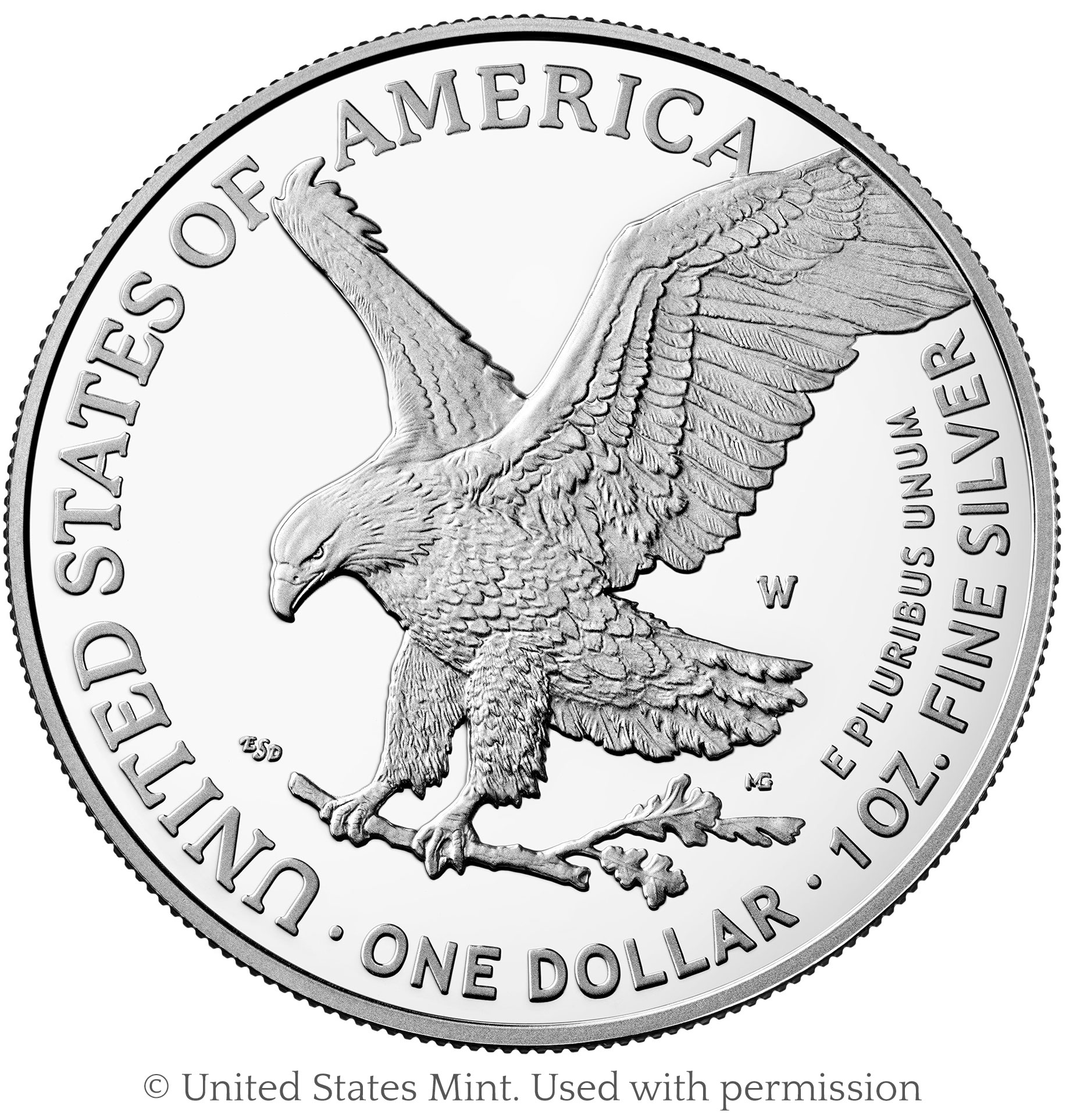
Also introduced in 1986, the Silver American Eagle is the official silver bullion coin of the United States. Its obverse displays Adolph A. Weinman’s “Walking Liberty” design, while the reverse features a heraldic eagle with a shield (updated with a new eagle design in 2021). Containing one troy ounce of 99.9% pure silver, the Silver Eagle is one of the most widely collected and invested-in silver coins globally. Its popularity stems from its purity, liquidity, and the powerful symbolism it carries, making it a cornerstone for both novice and seasoned precious metals investors.
Platinum and Palladium American Eagle
While less common than their gold and silver counterparts, the Platinum and Palladium American Eagles also feature distinct eagle designs. The Platinum Eagle, first released in 1997, showcases a soaring eagle on its reverse, emphasizing freedom and exploration. The Palladium Eagle, launched in 2017, features a similar obverse to the Mercury dime and an American eagle on the reverse, derived from Adolph A. Weinman’s “Winged Liberty” design. These provide additional options for investors seeking diversification within the platinum group metals market.
Historical and Contemporary US Coins
Beyond the dedicated bullion series, various circulating and commemorative US coins have prominently featured eagles throughout history, marking significant eras and national narratives.
The US Quarter and Half Dollar
The reverse of the circulating US Quarter Dollar has almost continuously featured an eagle since its inception, albeit with numerous design variations over the centuries. From the heraldic eagle of the early 20th century to the state-specific eagles of the 50 State Quarters program and the various national park designs, the eagle remains a constant. Similarly, the Half Dollar has often showcased eagles, notably on the Franklin Half Dollar (with its small eagle) and the Kennedy Half Dollar’s updated heraldic eagle. These everyday coins represent the most accessible way to interact with eagle iconography in American coinage.
Silver Dollars and Early Gold Coins
Historical US silver dollars, such as the Morgan Dollar and Peace Dollar, prominently feature eagles on their reverse, symbolizing American strength and peace, respectively. Early US gold coins, like the pre-1933 eagles ($10 gold coins) and double eagles ($20 gold coins), were magnificent examples of numismatic art, with various eagle designs reflecting the artistic trends of their time. These historical pieces are highly sought after by collectors for their rarity, precious metal content, and profound historical significance.
International Examples: Beyond US Borders
The United States is not alone in its appreciation for the eagle. Many other nations feature this iconic bird on their currency, reflecting similar national aspirations.
Mexico’s Libertad Series
Mexico’s Libertad bullion coin series, featuring the Winged Victory statue on the obverse, famously depicts a majestic eagle and serpent on the reverse, symbolizing the national coat of arms. These coins, available in gold and silver, are highly valued for their exquisite design and pure metal content, offering an alternative for international investors.

Germany’s Euro Coins
Before the Euro, the German Deutschmark often featured a stylized eagle (the “Bundesadler” or federal eagle). Even now, the German Euro coins for the 1 and 2 Euro denominations feature a modern rendition of the eagle, continuing this powerful symbol into the modern European currency framework.
Austrian Philharmonic Series
While not strictly an eagle, the Austrian Philharmonic silver and gold coins feature instruments of the Vienna Philharmonic Orchestra. However, the influence of the eagle as a European heraldic symbol is deeply ingrained in Austria’s history and general numismatic tradition, demonstrating the widespread prevalence of bird imagery in European coinage.
Understanding the Value and Collectibility of Eagle Coins
The value of an eagle coin can be complex, influenced by a multitude of factors that distinguish between its intrinsic metal content and its potential numismatic premium.
Bullion vs. Numismatic Value
A crucial distinction for anyone interested in eagle coins is understanding the difference between bullion value and numismatic value.
Bullion Value
This refers to the intrinsic value of a coin based solely on the market price of the precious metal it contains (gold, silver, platinum, palladium). For modern bullion coins like the American Gold and Silver Eagles, their value primarily tracks the spot price of their respective metals, plus a small premium to cover minting costs and dealer markups. These are typically purchased as an investment in the underlying commodity.
Numismatic Value
This value goes beyond the metal content. It accounts for a coin’s rarity, historical significance, condition, mint mark, errors, and demand from collectors. An old, rare, or perfectly preserved eagle coin, even if it contains only a small amount of precious metal, could command a price far exceeding its bullion value due to its collectibility. This is particularly true for historical US gold and silver dollars with eagle motifs, where specific dates, mint marks, and grades can dramatically impact their market price.
Key Factors Influencing Value
Several interconnected factors determine an eagle coin’s overall market value:
- Condition (Grading): The state of preservation is paramount. Coins are professionally graded on a scale (e.g., Sheldon scale from 1 to 70) by services like PCGS (Professional Coin Grading Service) and NGC (Numismatic Guaranty Corporation). A coin in Mint State (MS) 70 will be significantly more valuable than one in good (G) 4 condition, even if they are otherwise identical.
- Rarity: How many were minted? How many survive? Limited mintage figures and high attrition rates (coins lost, melted down, or damaged) drive up rarity and, consequently, value.
- Mintage: The specific year and mint location (indicated by a mint mark) can affect rarity. Some mints produced fewer coins or had specific issues that make their output more desirable.
- Historical Significance: Coins tied to pivotal historical events or featuring iconic designs often carry a premium due to their cultural and historical importance.
- Metal Purity and Weight: For bullion coins, the guaranteed purity (e.g., .999 fine silver) and weight are fundamental to their base value.
Investing in Eagle Coins: A Diversification Strategy
Investing in eagle coins, particularly bullion eagles, is a popular strategy for diversifying an investment portfolio. Precious metals often perform inversely to traditional financial assets like stocks and bonds, offering a hedge against economic downturns, currency devaluation, and inflation.
Precious Metals as a Safe Haven
Gold and silver eagles are considered “safe-haven” assets. During periods of geopolitical uncertainty or economic instability, investors often flock to precious metals, driving up their demand and price. This makes them a critical component for investors seeking to preserve wealth and mitigate risk.
Long-Term Holding and Liquidity
Modern bullion eagle coins are highly liquid assets, meaning they can be easily bought and sold globally through reputable dealers. This ease of transaction, combined with their universally recognized value, makes them an attractive long-term holding. While their value can fluctuate with market dynamics, many investors view them as a store of value that maintains purchasing power over extended periods.
Navigating the Market: Buying, Selling, and Authenticating Eagle Coins
Engaging with the market for eagle coins requires diligence and an understanding of best practices to ensure secure and profitable transactions.
Reputable Dealers and Online Platforms
When buying or selling eagle coins, always opt for reputable dealers. Look for establishments with a strong track record, positive reviews, and affiliations with professional numismatic organizations. Online platforms like APMEX, JM Bullion, Kitco, and authorized dealers for the US Mint (for current products) are excellent starting points for bullion. For numismatic coins, specialized auction houses and well-known coin shops offer greater expertise. Avoid unofficial channels or deals that seem “too good to be true,” as counterfeits are a persistent threat.
The Importance of Professional Grading
For collectible or numismatic eagle coins, professional grading by third-party services like PCGS (Professional Coin Grading Service) and NGC (Numismatic Guaranty Corporation) is crucial. These services encapsulate coins in tamper-evident holders (“slabs”) and assign a precise numerical grade, guaranteeing authenticity and condition. This independent assessment provides confidence for both buyers and sellers, often enhancing a coin’s market value and liquidity. While modern bullion coins are typically not graded unless they achieve perfect scores, historical or rare eagle coins greatly benefit from this process.
Protecting Your Investment: Storage and Security
Proper storage is essential to protect the value of your eagle coins. Store them in a secure, dry, and stable environment to prevent damage from moisture, handling, or theft. For significant collections or investments, consider a home safe, a safety deposit box at a bank, or a specialized precious metals depository. For coins in their original mint tubes or professionally graded slabs, maintain them in these protective containers. Insurance is also a critical consideration for valuable collections to safeguard against loss or damage.
The eagle’s enduring presence on coins worldwide is a testament to its powerful symbolism and the values it represents. From the iconic American Eagle series, serving as a pillar of precious metals investment, to historical pieces that tell tales of bygone eras, these coins offer a unique blend of artistry, history, and financial utility. Whether driven by a passion for collecting, a desire for portfolio diversification, or simply a curiosity about the world’s currencies, understanding “what coin has the eagle on it” reveals a rich and rewarding segment of the financial landscape.
aViewFromTheCave is a participant in the Amazon Services LLC Associates Program, an affiliate advertising program designed to provide a means for sites to earn advertising fees by advertising and linking to Amazon.com. Amazon, the Amazon logo, AmazonSupply, and the AmazonSupply logo are trademarks of Amazon.com, Inc. or its affiliates. As an Amazon Associate we earn affiliate commissions from qualifying purchases.