
The iconic open-world experience of Grand Theft Auto: San Andreas has captivated millions of players, immersing them in a sprawling, fictionalized version of the Golden State. For many, the game’s setting feels incredibly authentic, leading to a persistent question among fans and curious newcomers alike: what real-world city, or cities, inspired the vast and vibrant landscape of San Andreas? While the game presents a fictionalized entity, its design is undeniably rooted in a composite of Californian urban environments, drawing heavily from specific geographical, architectural, and cultural touchstones. Understanding these inspirations offers a deeper appreciation for the meticulous world-building that has made San Andreas a benchmark in gaming.
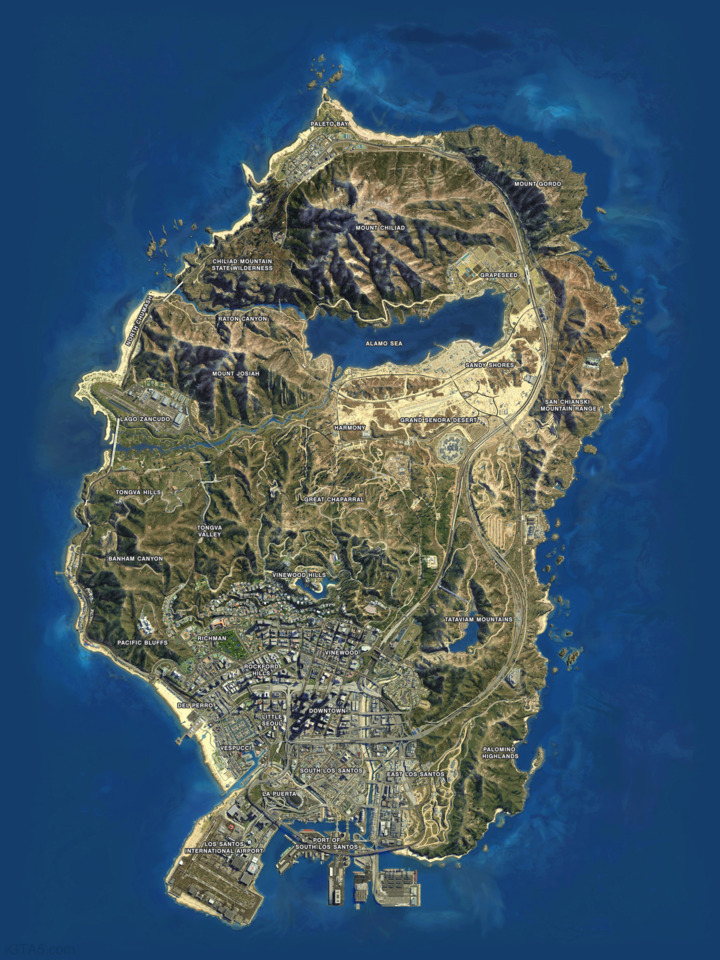
The Architectural and Geographical Tapestry of San Andreas
The creation of San Andreas’s world was a deliberate exercise in capturing the essence of California. Developers at Rockstar North meticulously studied the state’s diverse landscapes, from its bustling metropolises to its sprawling suburbs and arid interiors. This resulted in a fictional state that, while not a direct one-to-one replica, echoes the recognizable characteristics of several key Californian locales.
Los Santos: The Heartbeat of Southern California
The most prominent inspiration for San Andreas’s central city, Los Santos, is undeniably Los Angeles. This is not a subtle nod but a foundational element of the game’s design. The sprawling urban sprawl, the iconic palm trees lining the streets, the distinct architectural styles, and the pervasive sense of a car-centric culture are all hallmarks of Los Angeles.
Hollywood and Vinewood: The game’s “Vinewood” district is a clear homage to Hollywood. The iconic sign, the Walk of Fame (or “Vinewood Boulevard” in-game), and the general atmosphere of aspiring actors and the entertainment industry are directly lifted from the real-world Hollywood. The opulent mansions in the hills surrounding Vinewood are also reminiscent of the celebrity homes found in areas like Beverly Hills and the Hollywood Hills.
South Central and Grove Street: The game’s depiction of inner-city Los Angeles, particularly the areas inspired by South Central, is another crucial element. The vibrant street art, the distinct housing styles, the prevalence of gang culture, and the unique slang all contribute to a gritty authenticity that mirrors the realities of these neighborhoods. The iconic “Grove Street” where the protagonist Carl “CJ” Johnson begins his journey is a direct reflection of the types of residential streets found in these areas.
Economic Diversity and Social Stratification: Much like Los Angeles, Los Santos showcases a stark economic divide. From the affluent districts with towering skyscrapers and luxurious vehicles to the more impoverished areas struggling with crime and limited resources, the game captures the social stratification that defines large Californian cities. This duality is a core aspect of Los Santos’s identity.
The Influence of Freeways and Traffic: The extensive network of freeways crisscrossing Los Santos is a direct parallel to the real-life freeway system of Los Angeles, a city often defined by its traffic congestion. This emphasis on car culture and the constant flow of vehicles is a fundamental gameplay element, deeply ingrained in the experience of navigating the city.
San Fierro: A Northern Californian Mélange
Moving north within the game, the city of San Fierro serves as a distinct contrast to Los Santos, drawing its inspiration from the iconic city of San Francisco. While not as direct a parallel as Los Angeles to Los Santos, San Fierro captures the spirit and key features of its real-world counterpart.
The Bay and Bridges: The prominent bay that San Fierro is situated on, along with its numerous bridges, is a clear nod to the San Francisco Bay Area. The iconic “Gant Bridge” in the game is a thinly veiled representation of the Golden Gate Bridge, a defining landmark of San Francisco. The presence of ferries and the maritime influence are also consistent with San Francisco.
Hilly Terrain and Unique Architecture: San Fierro’s notoriously hilly topography is a defining characteristic that directly mirrors San Francisco’s geography. The steep inclines and winding streets present unique driving challenges, reminiscent of navigating the real city’s famous hills. The distinct Victorian-style architecture and the colorful residential buildings found in parts of San Fierro also echo the visual character of San Francisco’s neighborhoods.
Cultural Diversity and Bohemian Influences: San Francisco is renowned for its diverse cultural influences and its history as a hub for bohemian and counter-cultural movements. San Fierro incorporates elements of this, with its vibrant nightlife, its diverse population, and a general atmosphere that feels more laid-back and artsy compared to the relentless energy of Los Santos.
The Influence of the Dot-Com Boom: While more subtly integrated, the economic landscape of San Fierro also hints at the influence of Silicon Valley. The presence of tech-related businesses and the underlying sense of innovation and wealth generation, albeit in a fictionalized context, can be seen as a reflection of the technological boom that has characterized Northern California.
Las Venturas: The Glitter and Grit of Nevada
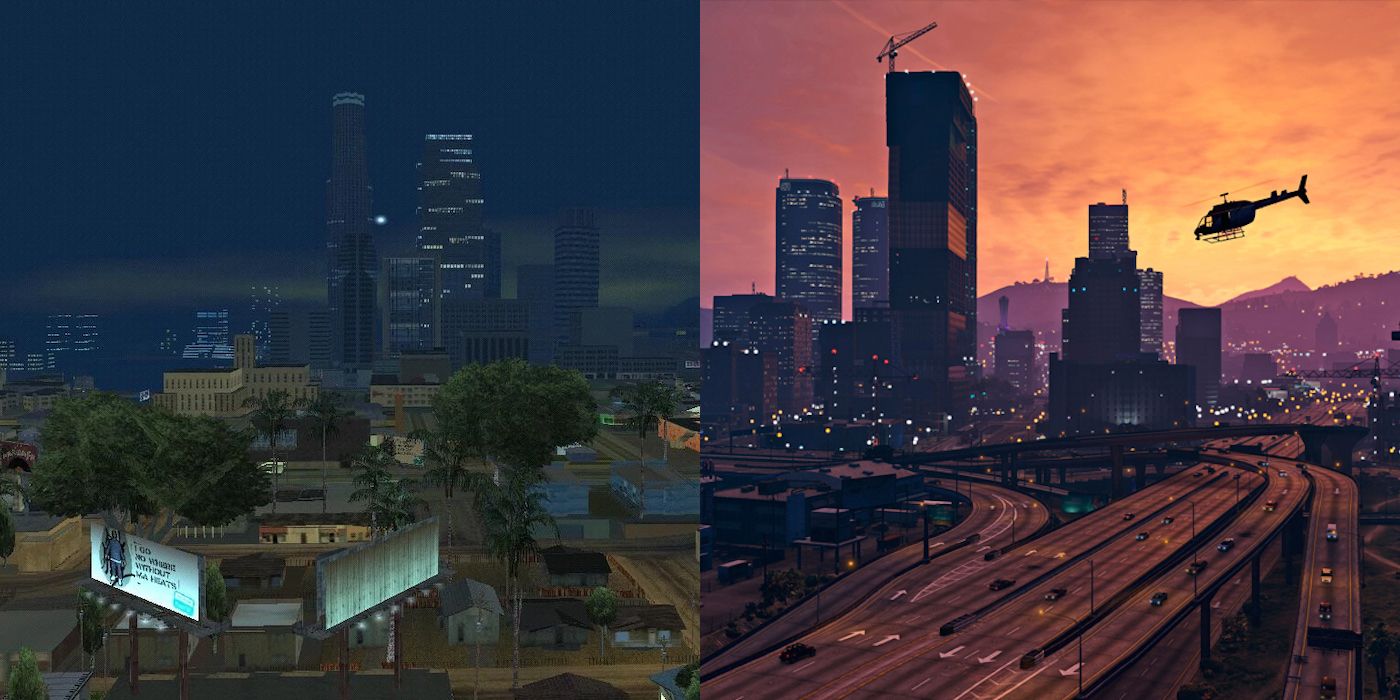
Completing the trio of major cities in San Andreas is Las Venturas, a stark departure from the Californian settings. This city is a clear and direct inspiration from Las Vegas, Nevada. Its purpose in the game is to introduce a different flavor of vice, ambition, and over-the-top spectacle.
The Strip and Casino Culture: The iconic “Strip” of Las Venturas, with its dazzling casinos, neon lights, and extravagant hotels, is an unmistakable representation of the Las Vegas Strip. The sheer opulence and the focus on gambling, entertainment, and themed resorts are core to Las Venturas’s identity, mirroring the essence of its real-world counterpart.
Gambling and the Underworld: Las Vegas is synonymous with gambling and the allure of quick riches, but it also has a historical association with organized crime. San Andreas leans into this by portraying Las Venturas as a city controlled by powerful criminal syndicates, adding a layer of intrigue and danger to the gameplay. The storylines often involve heists, betrayals, and power struggles within these criminal organizations.
The Desert Landscape: The surrounding environment of Las Venturas is characterized by arid desert plains, a faithful depiction of the Nevada desert that surrounds Las Vegas. This stark contrast to the urban environments of Los Santos and San Fierro provides a change of scenery and emphasizes the isolation and unique atmosphere of a desert city.
The Theme of Illusion and Escapism: Las Vegas is a city built on illusion and escapism, offering a temporary reprieve from the mundane. Las Venturas embodies this with its over-the-top aesthetics and its focus on entertainment and indulgence. It represents a different kind of aspiration, one driven by wealth and pleasure, distinct from the ambition found in the Californian cities.
Beyond the Cities: The Unifying Californian Experience
While Los Santos, San Fierro, and Las Venturas are the most obvious inspirations, the entire state of San Andreas is designed to evoke a broader sense of California. The game artfully blends elements that contribute to a cohesive, albeit fictional, representation of the Golden State.
The Rural Interludes and Suburban Sprawl
The vast expanses of countryside between the major cities are not just filler; they represent the diverse geography of California. Players will encounter rolling hills, agricultural areas reminiscent of the Central Valley, dusty desert towns that evoke the Mojave, and the dense, sprawling suburbs that characterize much of Southern California.
The Influence of Suburbia: The suburban areas in San Andreas, particularly those surrounding Los Santos, are a crucial element in capturing the Californian experience. These neighborhoods, with their tract housing, manicured lawns, and car-dependent infrastructure, are a familiar sight across the state. They provide a different pace of life and a distinct set of challenges and opportunities for the player.
The Rural Character: The rural areas are not simply empty spaces. They often feature small towns, ranches, and secluded communities that contribute to the diverse tapestry of California. These locales can offer unique gameplay opportunities, from off-road challenges to encounters with a different segment of society.

The Cultural Melting Pot and Social Commentary
California is a state known for its incredible diversity and its role as a melting pot of cultures. Grand Theft Auto: San Andreas reflects this by featuring a wide array of ethnic groups, subcultures, and social dynamics. The game, in its characteristic provocative style, often uses these elements to deliver social commentary.
Ethnic and Cultural Representation: The game features prominent representation of various ethnic communities, each with their own distinct neighborhoods, cultural practices, and social issues. This includes African American, Hispanic, Asian, and white communities, each contributing to the rich mosaic of San Andreas.
Gang Culture and Social Issues: San Andreas notably delves into the complexities of gang culture, a significant aspect of urban Californian life. The game explores the roots of gang violence, the pressures faced by those involved, and the impact on communities. While dramatized, these narratives draw from real-world issues that have shaped urban landscapes in California.
The Pursuit of the “American Dream”: At its core, San Andreas, like much of California, is about the pursuit of the “American Dream.” Whether it’s through legitimate means, criminal enterprise, or sheer luck, the characters are all striving for a better life. This theme, intertwined with the inspirations drawn from real Californian cities, creates a compelling and relatable narrative.
In conclusion, while San Andreas is a fictional creation, its world is deeply and deliberately rooted in the reality of California. The game masterfully blends architectural styles, geographical features, and cultural nuances from Los Angeles, San Francisco, and Las Vegas, among other inspirations, to create a vast and immersive experience. This meticulous attention to detail in replicating the spirit of these locations, rather than just their physical forms, is what makes San Andreas such a memorable and enduring title in the gaming world. The question of “what city is San Andreas based on” is best answered not with a single city, but with a rich tapestry of Californian inspiration, woven together to create a world that feels both familiar and uniquely its own.
aViewFromTheCave is a participant in the Amazon Services LLC Associates Program, an affiliate advertising program designed to provide a means for sites to earn advertising fees by advertising and linking to Amazon.com. Amazon, the Amazon logo, AmazonSupply, and the AmazonSupply logo are trademarks of Amazon.com, Inc. or its affiliates. As an Amazon Associate we earn affiliate commissions from qualifying purchases.