
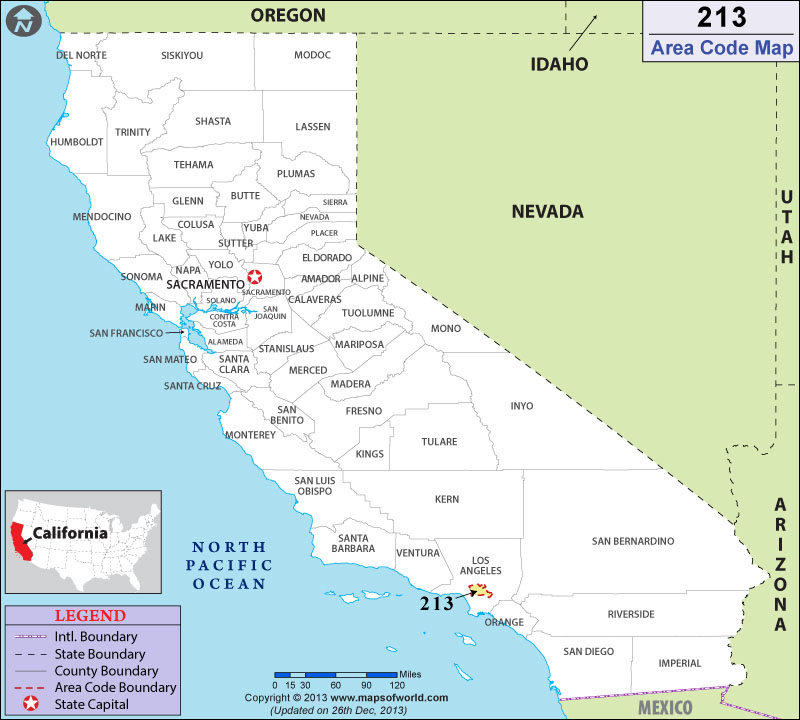
The 213 area code is more than just a sequence of three digits; it is a digital cornerstone of the North American Numbering Plan (NANP) and a primary identifier for the heart of Los Angeles, California. As the telecommunications landscape has shifted from manual switchboards to cloud-based Voice over IP (VoIP) systems, the 213 area code has remained a critical node in the global network. Understanding the technical infrastructure, the transition to virtualization, and the security implications surrounding this iconic prefix provides a comprehensive look at how urban connectivity functions in the 21st century.

The Architecture of an Icon: Understanding the 213 Area Code in the Digital Age
To understand what the 213 area code represents today, one must first look at the technical foundation upon which it was built. When the NANP was established in 1947 by AT&T and Bell Labs, 213 was one of the original 86 area codes. It was strategically assigned to Southern California, covering the entire region before being narrowed down specifically to Downtown Los Angeles and its immediate surroundings.
The Historical Foundation of the North American Numbering Plan
The assignment of area codes was originally dictated by the mechanics of rotary dialing. Numbers that were easier and faster to dial—those with lower digits—were assigned to the most populous metropolitan areas to reduce “pull time” on the rotary mechanism. This is why New York received 212, Chicago 312, and Los Angeles 213. From a technical standpoint, this was the first major attempt at large-scale network routing automation.
In the early days, routing a call to the 213 area code involved physical crossbar switches and mechanical relays. A call would travel through a hierarchy of switches: from the local office to a tandem office, and eventually through a regional toll center. Today, these mechanical processes have been entirely replaced by Electronic Switching Systems (ESS) and high-speed packet-switched networks.
How Signal Switching Defines Modern Connectivity
Modern telecommunications within the 213 area code rely on a complex interplay of hardware and software protocols. When a user dials a 213 number, the request is processed by a softswitch—a software-based device in a telecommunications network that manages call control logic.
This process involves Signaling System No. 7 (SS7), a set of telephony signaling protocols used to set up and tear down most of the world’s public switched telephone network (PSTN) telephone calls. In the dense urban environment of Los Angeles, the 213 exchange handles millions of these signals every hour. The efficiency of this routing is maintained through “Local Number Portability” (LNP) databases, which allow users to keep their 213 numbers even when switching carriers, a technical feat that requires constant synchronization between global telecommunications databases.
Virtual Presence: Leveraging the 213 Area Code through VoIP and SaaS
In the current technological era, an area code no longer requires a physical copper wire connected to a building in Downtown LA. The rise of Software-as-a-Service (SaaS) and VoIP technology has decoupled the 213 prefix from its geographic constraints, allowing it to function as a “virtual” asset for users worldwide.
The Transition from Analog Copper to Cloud-Based Numbers
The shift from the PSTN to the Internet Protocol (IP) network has revolutionized how we utilize area codes like 213. Through Session Initiation Protocol (SIP), voice data is converted into digital packets and transmitted over the internet. This allows technology companies to offer 213 “virtual numbers” to businesses that may be physically located thousands of miles away.
For a tech-driven enterprise, owning a 213 number is managed via a dashboard rather than a technician with a wire-stripper. The backend of these services involves high-availability data centers located within or near Los Angeles (often in carrier hotels like One Wilshire). These facilities house the servers that bridge the gap between the internet and the legacy telephone network, ensuring that a call to a 213 number reaches its digital destination with minimal latency.
The Infrastructure of Virtual Phone Systems
Virtual phone systems—such as those provided by RingCentral, Dialpad, or Twilio—utilize APIs to integrate 213 numbers into broader software ecosystems. This allows for features that were impossible with traditional landlines:
- Dynamic Routing: Calls to a 213 number can be programmed to route to different devices based on the time of day or the caller’s identity.
- AI Transcription: Integrated AI tools can transcribe calls to 213 numbers in real-time, providing searchable data for CRM systems.
- Unified Communications (UCaaS): The 213 number becomes a single point of contact for voice, video, and SMS, all synchronized across multiple devices via the cloud.

This “Software-Defined Telephony” means that the 213 area code is now a programmable interface, allowing developers to build custom communication workflows that leverage the geographic recognition of Los Angeles.
Digital Security and the 213 Area Code: Navigating Modern Threats
As the 213 area code remains highly recognizable, it has become a frequent target for malicious technical activities. The same digital tools that allow businesses to expand their reach also enable bad actors to exploit the numbering system through spoofing and automated “robocalling.”
Identifying Spoofing and Caller ID Manipulation
“Spoofing” is the practice of causing the telephone network to indicate to the receiver of a call that the originator is a station other than the true originating station. Scammers often use 213 caller IDs because they carry an air of legitimacy and urban authority. Technically, this is achieved by manipulating the “From” field in the SIP header during a VoIP call.
Because the traditional PSTN was built on a foundation of trust between a few major carriers, it lacked robust verification protocols. This allowed anyone with a SIP trunk and the right software to broadcast any caller ID they chose. For the 213 area code, this has led to a significant increase in “neighbor spoofing,” where a scammer uses a 213 prefix to call someone within the same region, hoping the local familiarity will encourage the recipient to answer.
AI-Driven Defense Systems for Enterprise Communication
To combat these threats, the telecommunications industry has implemented the STIR/SHAKEN framework. This is a suite of protocols (Secure Telephone Identity Revisited and Signature-based Handling of Asserted information using toKENs) designed to reduce caller ID spoofing.
Under STIR/SHAKEN, a call originating from a 213 number is digitally “signed” with a certificate of authenticity. As the call moves through the network, each carrier verifies the signature. If the signature is missing or invalid, the receiving carrier can flag the call as “Potential Spam” or block it entirely. Furthermore, modern security companies are using machine learning algorithms to analyze traffic patterns within the 213 exchange. By identifying “bursty” calling patterns typical of botnets, these AI systems can provide a layer of heuristic defense that static protocols cannot.
The Future of Urban Telephony: 5G, IoT, and Number Conservation
As we look toward the future, the 213 area code is being integrated into the next generation of wireless technology and the burgeoning Internet of Things (IoT). The scarcity of numbers within this historic code has also driven technical innovations in number conservation and “overlay” management.
The Role of Area Codes in the Internet of Things (IoT)
While area codes like 213 were traditionally for humans, they are increasingly being assigned to machines. Smart city infrastructure in Downtown Los Angeles—ranging from connected traffic lights to industrial sensors—requires unique identifiers for cellular connectivity.
However, because 213 is a “high-value” geographic code, engineers often prioritize using non-geographic or newer overlay codes (like 323 or 738) for IoT devices, reserving 213 for human-centric communication. This prioritization is managed by the North American Numbering Plan Administrator (NANPA), which uses sophisticated forecasting software to determine when an area code will reach “exhaustion”—the point where no more 10-digit numbers are available.
Next-Generation Connectivity in the Heart of Los Angeles
The deployment of 5G technology in the 213 area code zone represents a massive leap in bandwidth and a reduction in latency. In the dense urban canyons of Downtown LA, 5G utilizes “small cell” technology—compact base stations placed on streetlights and buildings—to provide high-frequency millimeter-wave coverage.
Technically, this means that a 213-linked device is no longer just connecting to a distant cell tower; it is interacting with a dense mesh of local nodes. This infrastructure supports “Edge Computing,” where data processing happens closer to the user. For a tech startup in the 213 area, this translates to lightning-fast data transfers and the ability to run complex applications that require real-time synchronization, such as augmented reality (AR) or autonomous vehicle navigation.
In conclusion, while “what city is 213 area code” has a simple answer—Los Angeles—the technical reality behind those three digits is a sprawling, sophisticated network of protocols, hardware, and digital security measures. From the mechanical relays of 1947 to the AI-verified 5G packets of today, the 213 area code continues to be a vital pulse in the world’s technological landscape.
aViewFromTheCave is a participant in the Amazon Services LLC Associates Program, an affiliate advertising program designed to provide a means for sites to earn advertising fees by advertising and linking to Amazon.com. Amazon, the Amazon logo, AmazonSupply, and the AmazonSupply logo are trademarks of Amazon.com, Inc. or its affiliates. As an Amazon Associate we earn affiliate commissions from qualifying purchases.