
Mary Wollstonecraft’s seminal work, A Vindication of the Rights of Woman, published in 1792, is not structured as a modern self-help guide or a finance textbook with a dedicated chapter titled “Women and Work.” Instead, her profound arguments for women’s education, reason, and independence are intrinsically woven throughout the entire text, forming a comprehensive philosophical case that underpins the very possibility of women achieving economic self-sufficiency and robust personal finance. For those seeking to understand her contributions to the historical discourse on women’s roles in labor and the economy, one must view her call for rational education as the foundational pillar for what we now understand as financial literacy, economic empowerment, and the pursuit of income-generating careers for women. Her entire treatise is, in essence, an argument for enabling women to become financially independent and contributing members of society, moving beyond the precariousness of economic dependency.
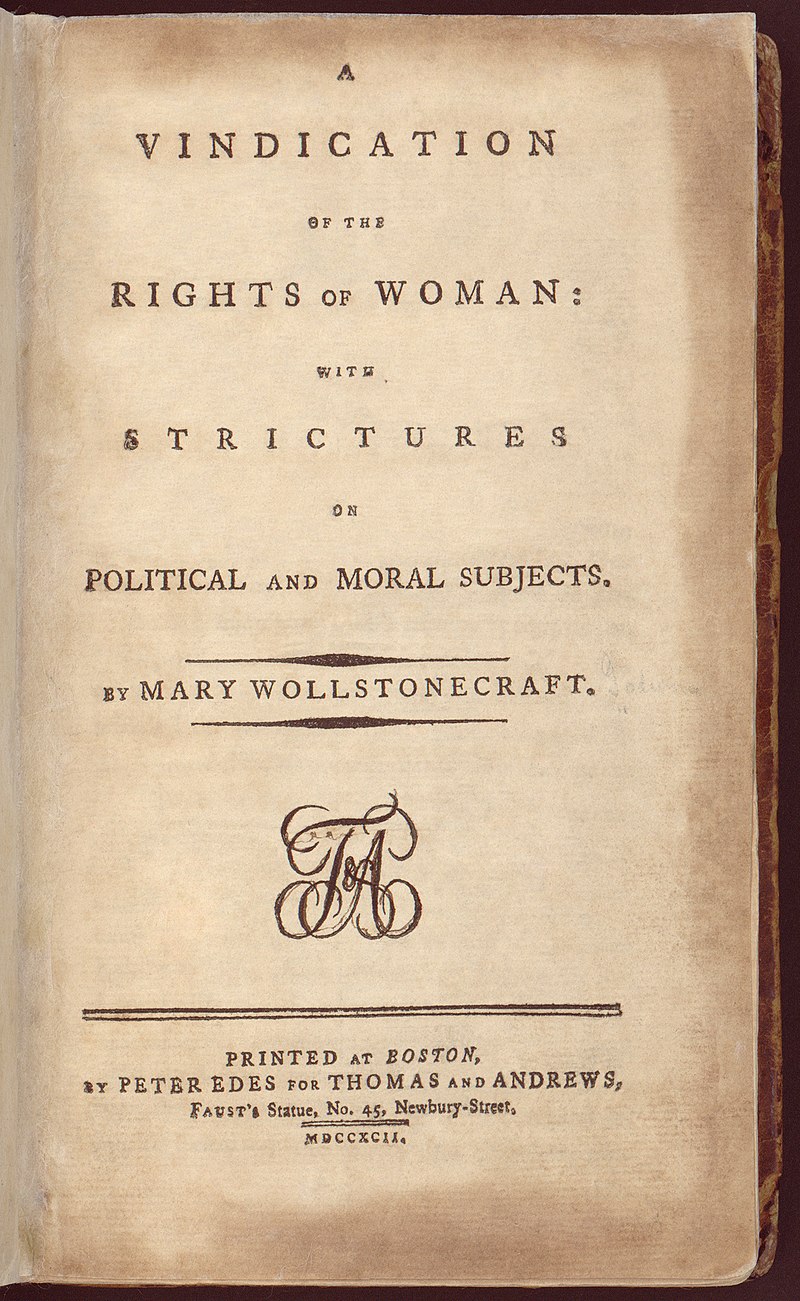
A Vindication of the Rights of Woman: A Foundation for Financial Autonomy
Wollstonecraft’s core argument posits that women are rational beings, not merely ornamental figures created for male pleasure. This assertion, radical for its time, directly challenges the societal norms that confined women to domestic spheres without opportunities for intellectual or professional development. Without proper education and the cultivation of reason, Wollstonecraft argued, women would remain perpetually dependent, their financial security entirely at the mercy of fathers, husbands, or brothers. This dependency is the antithesis of modern personal finance principles, which champion autonomy, self-reliance, and strategic wealth building.
Her advocacy for a comprehensive, national education for girls, identical to that offered to boys, was not solely for intellectual enlightenment. It was, crucially, a means to equip women with the skills and critical thinking necessary to engage in “useful” occupations, thereby generating their own income and securing their own economic futures. Chapters across A Vindication lay the groundwork for this understanding, demonstrating how the lack of education perpetuates a cycle of financial vulnerability and limited professional scope for women. She implicitly argues that a society that denies women the tools for self-support is inherently unjust and economically inefficient.
Economic Independence as a Cornerstone of Wollstonecraft’s Philosophy
Wollstonecraft understood that true liberty extended beyond the political realm into the economic. Her philosophy, when viewed through a financial lens, reveals a clear understanding of how economic dependency restricts women’s choices, limits their agency, and subjects them to a life of precariousness.
The Perils of Dependency and the Call for Rationality
Wollstonecraft rigorously critiques the prevailing educational system that trained women to be merely agreeable wives and mothers, emphasizing superficial accomplishments over substantive knowledge. In Chapter II, “The Prevailing Opinion of a Sexual Character Discussed,” and Chapter III, “The Same Subject Continued,” she dismantles the notion that women are inherently weaker or less rational than men. She argues that women’s apparent weaknesses are products of their deficient education and societal conditioning, which stunts their intellectual and moral growth. This lack of robust education directly translates into an inability to engage in skilled labor or professions, thus ensuring their economic reliance on men. From a financial perspective, this dependency meant women had little to no control over their own assets, income, or future, making them vulnerable to destitution upon widowhood, abandonment, or simply poor financial management by their male guardians. Her call for women to cultivate reason was a foundational argument for them to develop the judgment necessary for sound financial decision-making, rather than relying on others.
Challenging Societal Norms for Professional Access

Wollstonecraft subtly, yet powerfully, argues for women’s entry into professions previously dominated by men. While she doesn’t list specific careers or offer a “how-to” guide for entrepreneurial success, her arguments for women’s rationality and capacity for “usefulness” directly imply their eligibility for various trades and professions. In Chapter IX, “Of the Pernicious Effects Which Arise from the Unnatural Distinctions Established in Society,” she criticizes the societal structures that create artificial distinctions and limit opportunities based on gender. By advocating for women’s access to education and their right to cultivate their talents, she was, by extension, arguing for their right to earn a living, manage businesses, and contribute economically in ways that transcended the domestic sphere. This historical advocacy directly prefigures modern discussions about gender equality in the workplace, the gender pay gap, and the importance of diverse professional pathways for women to build wealth and achieve financial independence.
Chapters Illuminating the Intersection of Gender, Labor, and Livelihood
While no single chapter is explicitly dedicated to “women and work” as a modern employment guide, several sections of A Vindication of the Rights of Woman are particularly insightful for understanding Wollstonecraft’s perspective on women’s economic lives and their potential for financial agency.
- Chapter II, “The Prevailing Opinion of a Sexual Character Discussed,” and Chapter III, “The Same Subject Continued,” lay the groundwork by exposing how women’s lack of proper education and societal conditioning contributes to their perceived inferiority and, consequently, their economic dependence. She highlights how being taught to focus on superficial charm rather than substantive skills leaves them ill-equipped for any form of self-sufficiency.
- Chapter IV, “Observations on the State of Degradation to which Woman is Reduced by Various Causes,” delves into the societal mechanisms that limit women’s roles and opportunities, directly impacting their ability to engage in productive labor outside the home. She describes the detrimental effects of their confinement to a “gilded cage,” leading to intellectual stagnation and economic powerlessness.
- Chapter IX, “Of the Pernicious Effects Which Arise from the Unnatural Distinctions Established in Society,” broadens the critique to the societal structures that restrict women’s lives, including their professional and economic potential. This chapter implicitly argues for reforms that would open up pathways for women to contribute meaningfully to the economy.
- Chapter XII, “On National Education,” presents Wollstonecraft’s vision for a public, co-educational system designed to prepare all citizens, including women, for useful and productive lives. This is arguably one of the most direct calls for the kind of education that would enable women to enter professions, manage finances, and contribute economically to the state, fostering financial independence from an early age.
- Chapter XIII, “Some Instances of the Folly Which the Ignorance of Women Has Produced,” provides anecdotal evidence of the negative consequences of women’s lack of education and economic agency. These examples often highlight financial mismanagement, poor decision-making, and vulnerability stemming from their limited understanding of the world beyond domesticity, reinforcing the need for their active participation in economic life.
Modern Echoes: Wollstonecraft’s Legacy in Personal Finance and Economic Empowerment
Wollstonecraft’s arguments for women’s rationality and their right to “useful” education resonate profoundly with contemporary discussions in personal finance. Her work laid crucial theoretical groundwork for the feminist movement’s subsequent push for women’s entry into the workforce, equal pay, and financial literacy. The historical struggle for women to own property, open bank accounts, obtain credit, and enter professional fields – all essential components of modern personal finance and wealth building – can trace its philosophical roots, in part, to Wollstonecraft’s insistence on women’s inherent capacity for reason and their right to self-determination.
Her vision of educated, independent women directly translates into the modern aspiration for financial freedom: the ability to make informed financial decisions, invest for the future, build wealth, and navigate economic challenges without undue reliance on others. Her critique of dependency is a historical parallel to contemporary warnings against financial illiteracy and the dangers of not having personal savings, diverse income streams, or investment portfolios.

Cultivating Financial Agency: A Modern Interpretation of Wollstonecraft’s Vision
Wollstonecraft’s enduring message is one of empowerment through knowledge and agency. For the modern woman, this translates directly into the pursuit of financial literacy, strategic career planning, and active participation in the economy. Her emphasis on reason underscores the importance of data-driven financial decisions over impulsive ones, while her advocacy for education highlights the need for continuous learning about investments, budgeting, and market trends.
Her ideas implicitly encourage women to:
- Invest in themselves: Through education and skill development, which are direct pathways to higher earning potential and career progression.
- Demand equal opportunities: Advocating for fair pay and access to all professions, which directly impacts income and wealth accumulation.
- Cultivate financial independence: Ensuring the ability to support oneself and make independent financial decisions, regardless of marital or family status.
- Engage in informed decision-making: Applying rational thought to budgeting, saving, investing, and debt management, rather than relying on outdated norms or external control.
In conclusion, while one won’t find a chapter explicitly titled “Women and Work” in A Vindication of the Rights of Woman, Mary Wollstonecraft’s entire philosophical framework is an ardent plea for women’s economic empowerment. Her call for comprehensive education and the cultivation of reason is the fundamental “chapter” that addresses women’s ability to engage in meaningful work, achieve financial autonomy, and build a secure economic future, making her an indispensable, albeit historical, voice in the discourse of personal finance and economic equality.
aViewFromTheCave is a participant in the Amazon Services LLC Associates Program, an affiliate advertising program designed to provide a means for sites to earn advertising fees by advertising and linking to Amazon.com. Amazon, the Amazon logo, AmazonSupply, and the AmazonSupply logo are trademarks of Amazon.com, Inc. or its affiliates. As an Amazon Associate we earn affiliate commissions from qualifying purchases.