
The landscape of home entertainment has undergone a seismic shift, transitioning from the hardware-heavy era of coaxial cables and set-top boxes to the streamlined, software-defined world of Over-the-Top (OTT) streaming. At the forefront of this digital transformation is YouTube TV. More than just a collection of networks, YouTube TV represents a sophisticated integration of Google’s global cloud infrastructure and traditional broadcast media. Understanding what channels are on YouTube TV requires an exploration of how these digital signals are aggregated, processed, and delivered to millions of concurrent users with minimal latency.
For the modern consumer, the “channel lineup” is no longer a static list of frequencies; it is a dynamic, personalized interface powered by machine learning and high-speed data protocols. This guide provides a deep dive into the technical architecture of YouTube TV’s channel offerings, the specific networks available within its ecosystem, and the advanced software features that differentiate it from traditional cable providers.
The Core Lineup: Integrating Legacy Broadcast with IP-Based Delivery
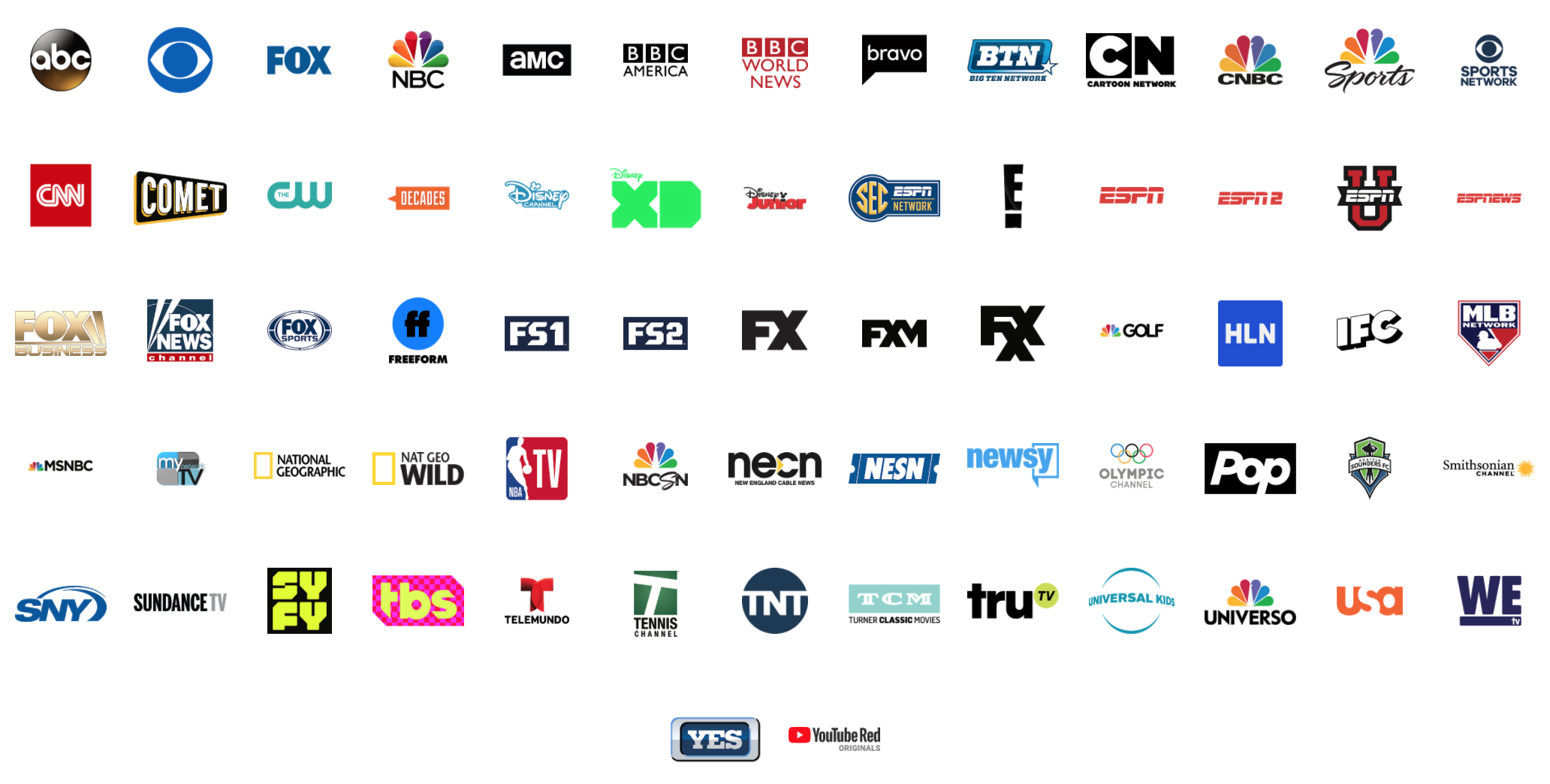
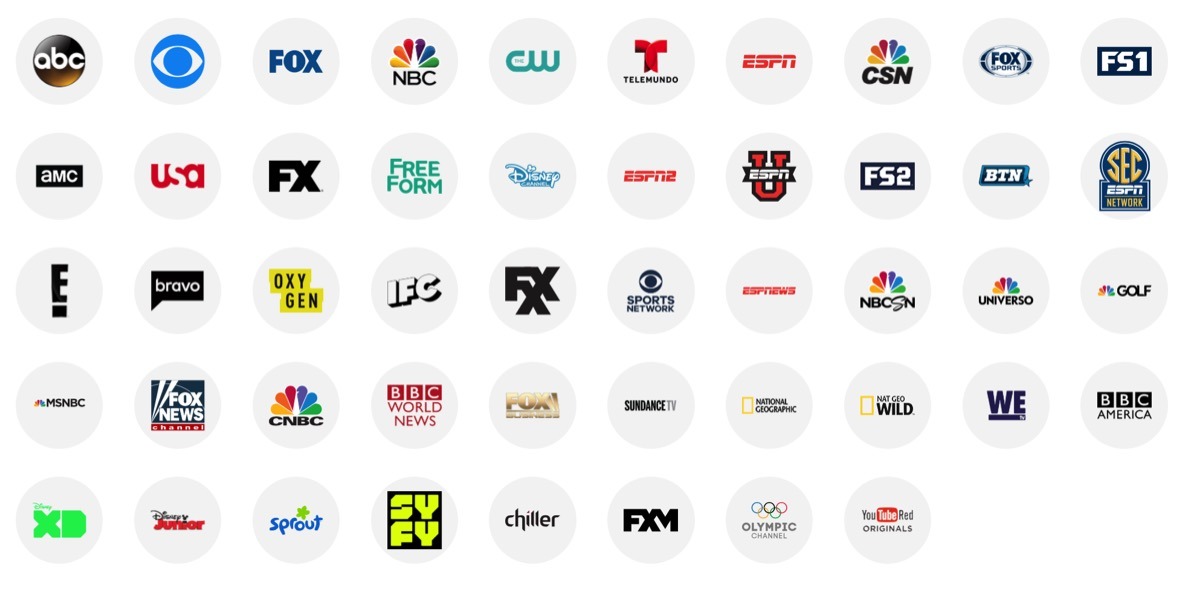
The primary appeal of YouTube TV lies in its “Base Plan,” which mirrors the comprehensive nature of a traditional cable subscription but operates entirely over an internet protocol (IP). The platform currently offers over 100 channels, encompassing local affiliates, national news, sports, and entertainment.
Local Affiliate Technology and Geo-Mapping
Unlike many “skinny bundle” streaming services that struggle with regional licensing, YouTube TV has successfully integrated local affiliates for ABC, CBS, NBC, and FOX in the vast majority of U.S. markets. This is achieved through sophisticated geo-IP mapping and GPS-based authentication. When a user logs in, the software identifies their designated market area (DMA) and dynamically populates the guide with the corresponding local news and weather stations. This ensures that users receive the same hyper-local content they would expect from a physical antenna, delivered via low-latency HLS (HTTP Live Streaming) or DASH (Dynamic Adaptive Streaming over HTTP) protocols.
The Standard Cable Portfolio
The Base Plan includes a heavy-hitting lineup of cable mainstays. In the realm of news, users have access to CNN, MSNBC, Fox News, and BBC World News. For general entertainment, the service includes high-bitrate streams of AMC, FX, TNT, TBS, and USA Network. From a technical standpoint, YouTube TV’s ability to maintain high-definition consistency across these varied networks is due to its robust transcoding engine. The platform takes raw satellite feeds from these broadcasters and re-encodes them into optimized formats (such as VP9 or H.264) to balance visual fidelity with bandwidth efficiency.
Sports Infrastructure: The Frontier of Low-Latency Streaming
For many tech-savvy viewers, the primary draw of YouTube TV is its sports catalog. The platform has positioned itself as the premier destination for live athletics, leveraging Google’s massive server capacity to handle the high-traffic surges associated with major sporting events.
National Sports Networks and 4K Plus
The base lineup includes ESPN, ESPN2, FS1, FS2, and the Big Ten Network. However, the true technical marvel is the “4K Plus” add-on. This feature allows for the streaming of select live events in Ultra-High Definition. Providing 4K content in a live environment is a significant engineering challenge, requiring massive throughput and advanced error correction to prevent buffering during crucial moments of a game.
NFL Sunday Ticket and Multiview Innovations
The acquisition of NFL Sunday Ticket was a milestone for YouTube TV, moving the most coveted sports package in the United States from satellite to the cloud. This transition required a complete overhaul of how “Multiview” technology is implemented. YouTube TV’s Multiview allows users to watch up to four different games simultaneously on a single screen. Unlike a local hardware-based solution where a device would have to decode four separate video streams, YouTube TV processes this on the server side. The cloud combines the feeds into a single stream before it reaches the user’s device, reducing the processing load on the consumer’s Smart TV or streaming stick.
Niche Add-ons and the Digital Marketplace Strategy
Beyond the Base Plan, YouTube TV functions as an aggregator for premium content, utilizing a “plug-and-play” API architecture that allows users to subscribe to additional networks without leaving the primary application interface.

Premium Networks and Seamless Integration
Users can augment their channel list with premium add-ons like Max (formerly HBO Max), Paramount+ with SHOWTIME, STARZ, and MGM+. The technical advantage here is the unified billing and interface. Instead of juggling multiple apps and login credentials, the YouTube TV software integrates these premium libraries directly into the “Home” and “Library” tabs. This is facilitated by deep-linking and federated identity management, allowing for a seamless transition between live linear TV and on-demand premium content.
Specialty Packs and International Content
For enthusiasts, the “Sports Plus” pack adds networks like NFL RedZone, BeIN Sports, and MAVTV. Furthermore, YouTube TV has expanded its linguistic reach with Spanish-language plans and international add-ons. These niche offerings are delivered through the same high-availability infrastructure as the main channels, ensuring that even lower-traffic networks benefit from the platform’s global Content Delivery Network (CDN).
Software Features: Enhancing the Viewing Experience
What truly defines “the channels” on YouTube TV is not just the content itself, but the software layer that surrounds it. The user experience is defined by features that were technically impossible with traditional analog or digital cable.
Unlimited Cloud DVR and Data Storage
The “Unlimited Cloud DVR” is perhaps the most significant technical differentiator for the service. Unlike physical DVRs with limited hard drive space, YouTube TV records programs to Google’s cloud servers. There is no limit on concurrent recordings, and recordings are kept for nine months. This requires an immense amount of storage and a complex indexing system to ensure that millions of users can access their specific “recordings” instantly. From a software perspective, the DVR isn’t necessarily creating a unique copy for every user; rather, it manages a system of pointers and permissions to the master broadcast stream stored in the data center.
AI-Driven Discovery and Personalization
YouTube TV leverages the same recommendation algorithms that power the main YouTube platform. The “Home” tab uses machine learning to analyze viewing habits, time of day, and trending topics to suggest channels and shows. If a user frequently watches the NBA on TNT, the algorithm will prioritize sports networks in the “Live” guide. This level of personalization transforms a list of 100+ channels into a curated experience tailored to individual technical and content preferences.
Real-Time Data Overlays
For sports and news, YouTube TV offers real-time data overlays. For instance, during a live basketball game, users can toggle a “Stats” view that pulls live API data from official sports databases, displaying player stats, box scores, and league standings as an overlay on the video feed. This synchronized metadata delivery requires millisecond-accurate timing to ensure the stats on the screen match the action in the video frame.
Security, Privacy, and Multi-Device Compatibility
As a tech-centric service, YouTube TV prioritizes secure access and cross-platform stability. The service supports up to six individual accounts per household, each with its own personalized recommendations and DVR library.
Authentication and DRM
Digital Rights Management (DRM) is a critical component of the channel lineup. Content providers require strict protections to prevent unauthorized copying. YouTube TV uses advanced encryption standards and Widevine DRM to ensure that high-value content is protected across all supported devices, from Android and iOS smartphones to specialized hardware like the Apple TV 4K or Roku Ultra.
Bandwidth Management and Adaptive Bitrate
To provide a smooth experience across varying internet speeds, YouTube TV employs Adaptive Bitrate Streaming (ABR). The player constantly monitors the user’s connection speed and fluctuates the video quality in real-time. This prevents the “spinning circle” of buffering by dropping to a lower resolution if the network becomes congested, then scaling back up to 1080p or 4K as soon as bandwidth stabilizes.
The Future of the Cloud-Based Channel Grid
The question of “what channels are on YouTube TV” is increasingly becoming a question of “what features can be integrated into the broadcast.” As we move further into the era of 5G and high-speed fiber optics, we can expect the YouTube TV channel lineup to become even more interactive. We are likely to see increased integration of social features, real-time betting interfaces, and even more immersive 4K/8K content.
By leveraging Google’s world-class technology stack, YouTube TV has successfully modernized the television experience. It has taken the familiar concept of the “channel” and rebuilt it for the internet age—making it more flexible, more personal, and significantly more powerful than the cable systems of the past. Whether you are looking for local news, international sports, or the latest cinematic releases, the channels on YouTube TV represent the pinnacle of current digital broadcast technology.
aViewFromTheCave is a participant in the Amazon Services LLC Associates Program, an affiliate advertising program designed to provide a means for sites to earn advertising fees by advertising and linking to Amazon.com. Amazon, the Amazon logo, AmazonSupply, and the AmazonSupply logo are trademarks of Amazon.com, Inc. or its affiliates. As an Amazon Associate we earn affiliate commissions from qualifying purchases.