
For decades, the question “what channel is NBC?” had a simple, localized answer. You turned a physical dial on a cathode-ray tube television to a single-digit number, and the signal was pulled from the air via a vacuum tube-powered tuner. Today, the answer to that same question is a complex intersection of software engineering, signal processing, and digital infrastructure. As we transition from traditional linear broadcasting to an era defined by Internet Protocol Television (IPTV) and Over-the-Top (OTT) streaming, the concept of a “channel number” has evolved from a physical frequency into a piece of metadata within a sophisticated software ecosystem.
Understanding where and how to find NBC requires more than a simple list of numbers; it requires an understanding of how modern technology maps content to your screen. Whether you are using a digital antenna, a cable box, or a high-end smart TV, the underlying technology determines your viewing experience.
The Evolution of Broadcast Tech: From Physical Frequencies to Virtual Mapping
In the analog era, a channel number corresponded directly to a specific radio frequency. NBC affiliates were assigned a “physical channel” that dictated which part of the electromagnetic spectrum they could occupy. However, the transition to digital broadcasting—specifically the adoption of the ATSC (Advanced Television Systems Committee) standards—changed the architecture of how we identify networks.
ATSC 1.0 and the Logic of PSIP Data
When the United States moved to digital broadcasting, the industry introduced a technology called PSIP, or Program and System Information Protocol. This is the technology that allows a local NBC station to appear as “Channel 4” on your television even if it is actually transmitting on the physical frequency for Channel 36.
The PSIP data acts as a digital label. It tells your TV’s internal tuner how to map the incoming data stream to a user-friendly “virtual channel.” This technological layer was essential for brand consistency, allowing legacy stations to keep their historical channel numbers while moving to more efficient parts of the digital spectrum. When you perform a “channel scan” on a modern TV, you are essentially asking your hardware to build a database of these PSIP labels.
ATSC 3.0 and the Rise of NextGen TV
The next frontier in NBC’s broadcast technology is ATSC 3.0, marketed as “NextGen TV.” Unlike previous iterations, ATSC 3.0 is built on an IP-based backbone—the same language used by the internet. This allows NBC affiliates to deliver 4K UHD resolution, High Dynamic Range (HDR) content, and even targeted emergency alerts.
For the viewer, the tech behind NextGen TV means that the “channel number” is becoming an entry point to a hybrid experience. A NextGen-compatible tuner can blend over-the-air signals with internet-delivered data, allowing for interactive features that were previously impossible. Finding NBC on a NextGen TV still involves a channel number, but the hardware is doing significantly more work in the background to stitch together a high-bandwidth digital stream.
Cable and Satellite Infrastructure: The Middleware Layer
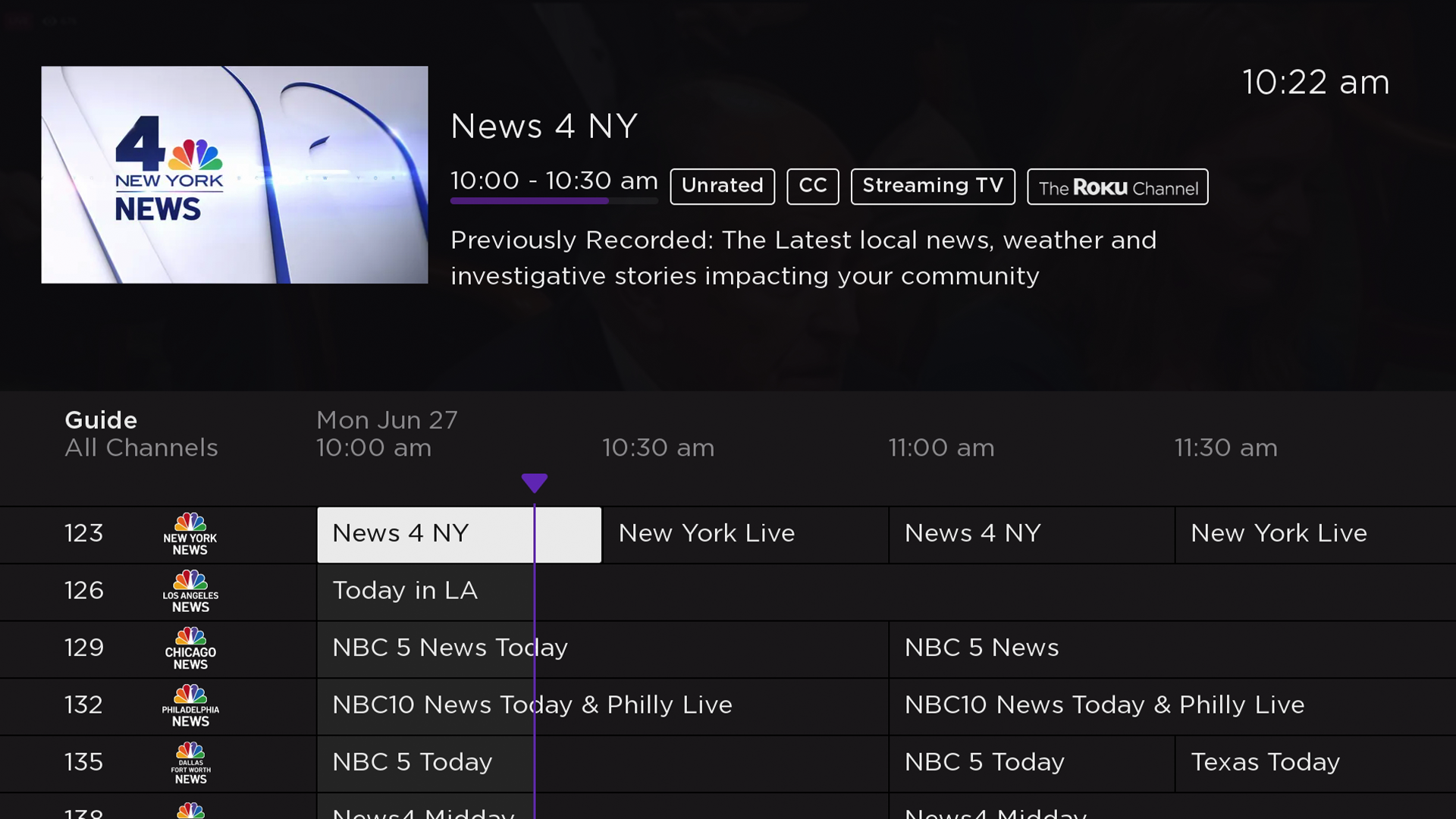
For those who do not use an antenna, the “channel number” for NBC is determined by the infrastructure of a Multi-channel Video Programming Distributor (MVPD), such as Comcast Xfinity, Spectrum, or DirecTV. In these systems, the channel number is not a broadcast frequency but a slot in a proprietary Electronic Program Guide (EPG).
Digital Tuning and Quadrature Amplitude Modulation (QAM)
Cable providers use a technology called QAM to transmit digital signals through coaxial or fiber-optic cables. Because cable providers have thousands of megahertz of bandwidth at their disposal, they can assign NBC to any number they choose. This is why NBC might be channel 4 in standard definition but channel 1004 in high definition.
The hardware in your home—the cable box or “Gateway”—acts as a specialized computer that decodes these QAM signals. Modern boxes are increasingly moving toward “All-IP” delivery, where the cable box functions more like a streaming device. In this environment, the “channel number” is purely a software construct designed for user familiarity, while the backend pulls a specific MPEG-4 or HEVC video stream from the provider’s local node.
The Role of the Electronic Program Guide (EPG)
The software interface you use to find NBC—the EPG—is a sophisticated database. It requires constant updates, delivered via a “hidden” data channel in your cable or satellite feed. This metadata includes not just the channel number, but also the show descriptions, start times, and thumbnails. The technology of the EPG is what allows for “Search” functions; when you type “NBC” into your remote, the software queries its local index and directs the tuner to the correct digital address, bypassing the need for the user to remember a specific number at all.

The Post-Channel Era: Streaming, IPTV, and Peacock
We are currently witnessing the gradual obsolescence of the channel number itself. As viewers migrate to “cord-cutting” solutions, the technology used to access NBC has shifted from hardware-based tuning to app-based streaming.
The Architecture of Peacock and OTT Delivery
NBCUniversal’s flagship streaming service, Peacock, represents a total departure from traditional channel architecture. There is no “channel number” for NBC on Peacock in the traditional sense. Instead, the platform uses a Content Delivery Network (CDN) to distribute video packets to users globally.
When you watch a live NBC feed on a streaming app, the technology involves “Adaptive Bitrate Streaming” (ABR). Unlike a broadcast signal that remains constant, an ABR stream monitors your home internet speed in real-time. If your bandwidth drops, the software automatically switches to a lower-resolution version of the NBC feed to prevent buffering. This is a far cry from the “ghosting” or “snow” of analog TV; here, the tech manages quality dynamically to ensure an uninterrupted experience.
IPTV and Virtual MVPDs
Services like YouTube TV, Hulu + Live TV, and FuboTV are known as Virtual MVPDs. They use IPTV technology to mimic the cable experience. These platforms often provide a “Live Guide” that restores the concept of a channel list. However, from a technical standpoint, selecting “NBC” on YouTube TV is identical to clicking a link on a website. The software sends a request to a server, which then begins a secure stream encrypted with Digital Rights Management (DRM) to protect the content.
The “number” in these apps is usually irrelevant. Instead, these platforms use algorithmic sorting. If you watch NBC frequently, the app’s software logic will move the NBC icon to the top of your interface. In this tech-driven environment, “where” NBC is found is determined by user behavior and machine learning rather than a fixed frequency.
Hardware Optimization: Enhancing the NBC Viewing Experience
To get the best possible version of NBC, the user must optimize their hardware stack. The “channel” is only as good as the technology used to display it.
Digital Antennas and Signal Processing
If you are pursuing an over-the-air (OTA) strategy, the quality of your NBC reception depends on the gain and directionality of your antenna. Modern digital antennas are designed to filter out interference from LTE and 5G signals, which can bleed into the broadcast spectrum. High-end tuners, like the SiliconDust HDHomeRun, take the NBC signal from the antenna and convert it into an IP stream that can be accessed by any device on your home network. This effectively turns a “dumb” broadcast signal into a private IPTV service.
Smart TV Operating Systems and Integration
The Operating System (OS) of your television—whether it’s Roku, webOS, Tizen, or Android TV—plays a critical role in how you access NBC. Modern TVs are designed with “Universal Search” capabilities. This allows the TV’s AI assistant to scan all your installed apps and your antenna input simultaneously.
When you ask your remote, “Find NBC,” the OS does the heavy lifting. It checks if there is a signal coming through the coax cable, checks if you have a subscription to an IPTV service, and checks the Peacock app. The tech has moved from “manual tuning” to “automated discovery.”

The Future of the “Channel” Concept
As we look toward the future, the question “what channel is NBC number” may eventually become an anachronism. We are moving toward a “content-first” rather than “channel-first” model. In this future, NBC is not a number, but a brand identity that exists across a fragmented digital landscape.
The technology of the future will likely involve even deeper integration of AI. We are already seeing “Fast Channels” (Free Ad-supported Streaming TV) where the software creates a linear-like experience out of on-demand content. For NBC, this means they can curate “channels” dedicated specifically to The Office or NBC News Now, which exist only as software-generated playlists.
Ultimately, the channel number is a legacy user interface element. While it remains a useful shorthand for millions of viewers, the underlying technology has moved on. Today, finding NBC is a testament to the power of digital convergence—where radio waves, fiber optics, and cloud computing meet to deliver a single, seamless stream of information and entertainment to your screen. Whether you find it on channel 4, channel 1004, or through an icon on a dashboard, the “channel” is now a digital destination in an infinitely expandable virtual world.
aViewFromTheCave is a participant in the Amazon Services LLC Associates Program, an affiliate advertising program designed to provide a means for sites to earn advertising fees by advertising and linking to Amazon.com. Amazon, the Amazon logo, AmazonSupply, and the AmazonSupply logo are trademarks of Amazon.com, Inc. or its affiliates. As an Amazon Associate we earn affiliate commissions from qualifying purchases.