
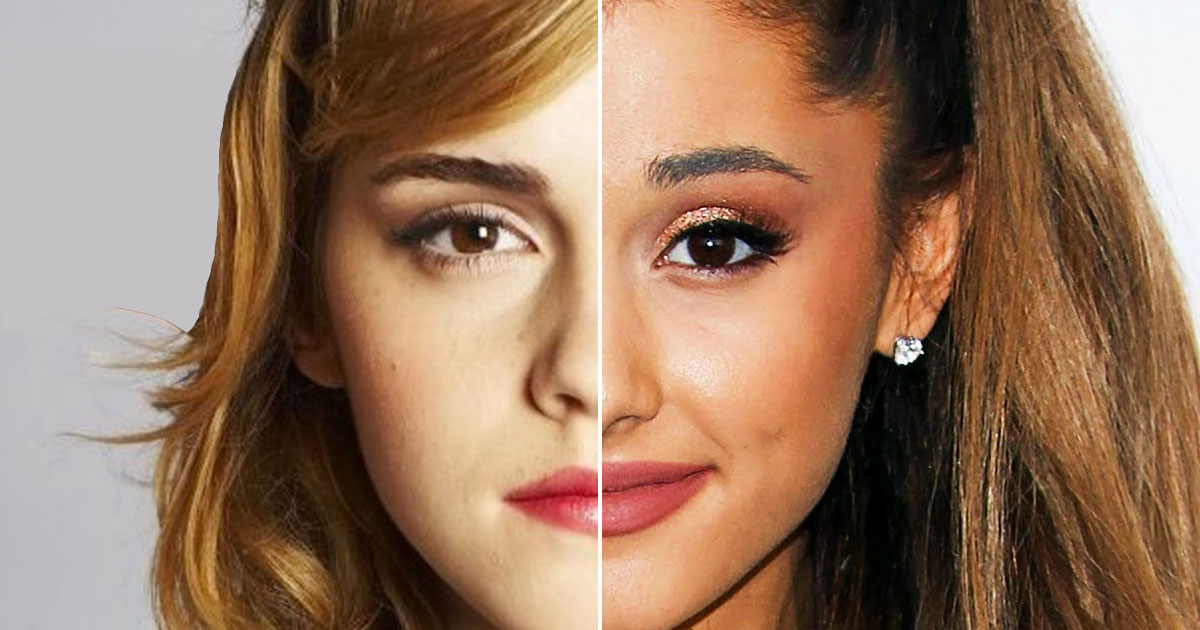
In the digital era, viral trends often mask sophisticated technological feats. What appears to the average user as a fleeting moment of social media entertainment—discovering their Hollywood doppelgänger—is actually a showcase of advanced computer vision, machine learning, and biometric data processing. The “What Celebrity Do You Look Like?” quiz has evolved from a simple randomizer into a complex application of Artificial Intelligence (AI) that mirrors the technology used in high-level security and autonomous systems. To understand how these tools function, one must look beneath the user interface and into the architecture of neural networks and facial recognition algorithms.
The Evolution of Facial Recognition and Computer Vision
The journey from manual image tagging to instantaneous celebrity matching represents a monumental shift in computer science. Computer Vision (CV) is the field of AI that enables computers and systems to derive meaningful information from digital images, videos, and other visual inputs. For a celebrity look-alike quiz to function, it must first “see” the user with the same structural understanding as a human, albeit through a mathematical lens.
From Basic Geometry to Deep Learning
Early iterations of facial recognition technology relied on “Eigenfaces” and geometric models. These systems would measure the distance between the eyes, the width of the nose, and the length of the jawline. While groundbreaking at the time, these methods were easily fooled by changes in lighting, head tilt, or facial expressions.
The modern quiz utilizes Deep Learning, a subset of machine learning inspired by the human brain’s neural structure. By using multi-layered neural networks, the software no longer looks for a simple list of measurements. Instead, it processes the image through dozens of layers, each extracting different levels of abstraction—from simple edges and colors to complex textures and eventually, the holistic “vibe” of a human face.
How Convolutional Neural Networks (CNNs) Process Facial Features
The backbone of most modern celebrity-matching apps is the Convolutional Neural Network (CNN). When a user uploads a photo, the CNN breaks the image down into a grid of pixels. The first layer might detect vertical or horizontal lines. The subsequent layers combine these lines into shapes, such as the curve of an eyebrow or the contour of a lip.
By the time the data reaches the final layers of the network, the AI has created a high-dimensional feature vector—a long string of numbers that represents the unique characteristics of that face. This “digital fingerprint” is then compared against a massive database of celebrity feature vectors to find the closest statistical match.
Mapping the Human Face: Landmark Detection and Vector Analysis
To achieve a high degree of accuracy, the software must perform “alignment and transformation.” This ensures that even if a user takes a selfie at an angle, the AI can normalize the image to a front-facing perspective. This process is known as facial landmarking.
Identifying Key Facial Landmarks
Most professional-grade facial recognition tools identify between 68 and 128 specific “nodal points” on the human face. These include the corners of the eyes, the tip of the nose, the peaks of the Cupid’s bow on the lips, and the outer edges of the chin.
By identifying these landmarks, the algorithm creates a “mesh” over the user’s face. This mesh is flexible; it allows the software to compensate for a smile, a frown, or a tilted head. Once the mesh is stabilized, the system extracts the “embeddings”—numerical representations of the face that are invariant to environmental factors like shadows or background noise.
The Role of Euclidean Distance in Celebrity Matching
Once the user’s face is converted into a vector (a point in a multi-dimensional mathematical space), the search begins. The database of celebrities is essentially a vast “constellation” of points in this same space.
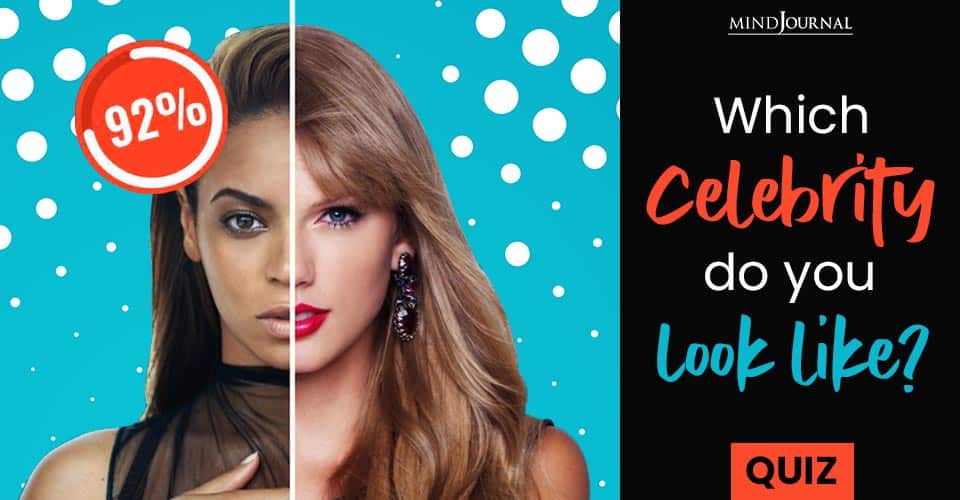
The algorithm calculates the “Euclidean distance” between the user’s vector and the vectors of thousands of celebrities. The smaller the distance between two points, the more similar the faces are perceived to be by the AI. When the quiz reveals a “95% match” with a specific actor, it is actually reporting a high degree of proximity between two mathematical coordinates in a high-dimensional feature space.
Data Privacy and Security in the Age of Biometric Entertainment
While the output of these quizzes is lighthearted, the underlying process involves sensitive biometric data. As facial recognition becomes more integrated into our daily tech stacks—from unlocking smartphones to authorizing bank transfers—the security architecture of “fun” apps has come under intense scrutiny by cybersecurity experts.
Edge Computing vs. Cloud Processing
One of the primary technical distinctions in these quizzes is where the processing occurs. High-performance apps often utilize “Cloud Processing,” where the image is sent to a powerful remote server to run the heavy CNN models. While this allows for more accurate matching against larger databases, it poses a privacy risk as the user’s biometric data leaves their device.
Conversely, many modern developers are moving toward “Edge Computing.” In this model, the AI model is optimized and compressed so it can run directly on the user’s smartphone hardware (using chips like Apple’s Neural Engine or Google’s Tensor). This is a significant tech trend because it ensures that the raw image and the resulting biometric vectors never leave the device, providing a “privacy-by-design” framework for the user.
Navigating the Ethical Implications of Facial Data Storage
The “Tech” behind these quizzes also involves data management and lifecycle policies. A professional and ethically built app must implement “hashing” for facial templates. Rather than storing an actual image of the user, the system stores a non-reversible mathematical hash. This ensures that even if the database is breached, the attacker cannot reconstruct the user’s face from the data. Furthermore, developers must navigate the General Data Protection Regulation (GDPR) and the California Consumer Privacy Act (CCPA), which treat biometric identifiers as “sensitive personal information” requiring strict storage and deletion protocols.
The Future of AI-Driven Personalization and Generative Content
The celebrity look-alike quiz is merely the “Hello World” of a much larger shift in personalized digital experiences. As AI models become more sophisticated, the line between static matching and dynamic generation is blurring.
Moving from Static Matching to Real-Time AR Overlays
The next generation of these tools leverages Augmented Reality (AR) to provide real-time feedback. Instead of uploading a static photo, users can open their camera, and the software applies “style transfer” in real-time. Using Generative Adversarial Networks (GANs), the app doesn’t just tell you that you look like a celebrity; it can morph your features into theirs using a live video feed. This requires immense computational power and low-latency processing, pushing the boundaries of what mobile GPUs can handle.
The Integration of Large Language Models (LLMs) in Personality Profiling
We are also seeing a convergence between Computer Vision and Natural Language Processing (NLP). Modern versions of these quizzes are beginning to incorporate Large Language Models to explain why a match was made. Instead of a simple percentage, the AI might generate a technical breakdown: “Your facial symmetry and ocular distance align with the Classical Hollywood archetype, specifically mirroring the bone structure of [Celebrity Name].”
This integration of multi-modal AI—where the system processes both visual data and textual context—marks the transition from simple pattern recognition to a more “reasoning-based” AI. It turns a 10-second interaction into a personalized technological narrative, demonstrating the power of modern software stacks to synthesize complex data into engaging, user-friendly insights.

Conclusion: The Sophistication Behind the Screen
The “What Celebrity Do You Look Like?” quiz is a masterclass in how complex technology can be democratized through a simple interface. What appears to be a digital toy is, in fact, powered by the same Convolutional Neural Networks, landmark detection algorithms, and biometric security protocols that define the modern tech landscape.
As we move forward, the techniques perfected in these viral apps will continue to bleed into more “serious” sectors, including medical diagnostics (detecting genetic conditions through facial features), advanced security, and personalized retail. By understanding the tech behind the quiz, we gain a clearer picture of an increasingly automated world where our physical traits are seamlessly translated into the universal language of data. In this context, finding your celebrity twin is not just a game; it is an interaction with the cutting edge of human-machine symbiosis.
aViewFromTheCave is a participant in the Amazon Services LLC Associates Program, an affiliate advertising program designed to provide a means for sites to earn advertising fees by advertising and linking to Amazon.com. Amazon, the Amazon logo, AmazonSupply, and the AmazonSupply logo are trademarks of Amazon.com, Inc. or its affiliates. As an Amazon Associate we earn affiliate commissions from qualifying purchases.