
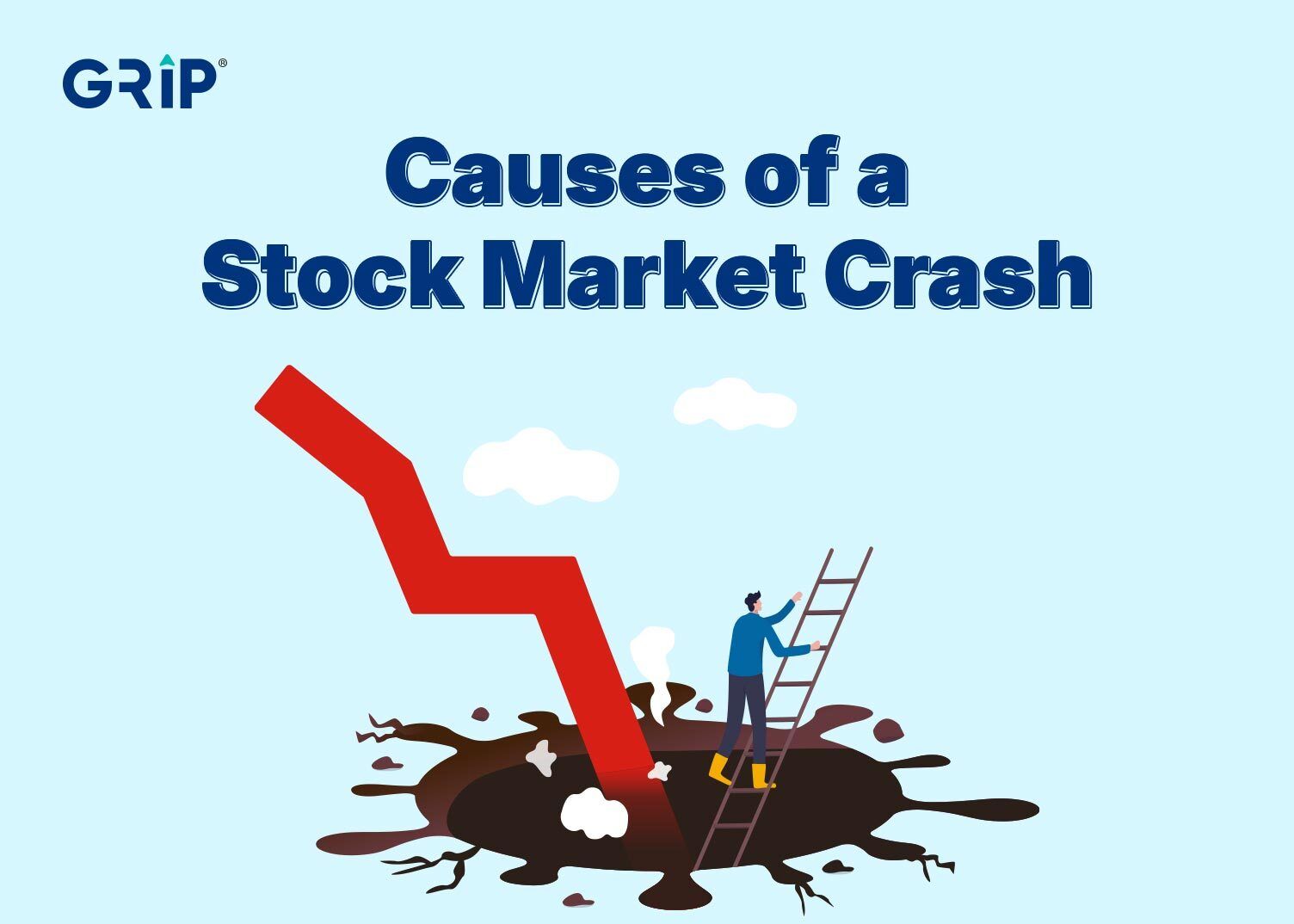
The stock market is often viewed as a barometer for economic health, a complex ecosystem where millions of participants trade ownership in companies based on expectations of future profitability. However, this ecosystem is periodically punctuated by periods of intense volatility and rapid devaluation known as market crashes. A stock market crash is generally defined as a sudden, dramatic decline in stock prices across a significant cross-section of a stock market, often resulting in a loss of paper wealth totaling trillions of dollars. While every crash is unique in its catalyst, they are rarely the result of a single isolated event. Instead, they are typically the culmination of economic imbalances, psychological shifts, and structural vulnerabilities that reach a breaking point. Understanding these underlying causes is essential for any investor looking to navigate the inherent risks of the financial markets.

Economic Imbalances and Macroeconomic Shifts
At its core, the stock market is driven by economic fundamentals. When the macro environment shifts unexpectedly or when long-standing imbalances become unsustainable, the foundation upon which stock valuations are built can begin to crumble.
Interest Rate Hikes and Monetary Policy
One of the most potent drivers of market corrections and crashes is the action taken by central banks, specifically regarding interest rates. In the United States, the Federal Reserve uses interest rates as a tool to control inflation and manage economic growth. When the economy overheats and inflation rises, the Fed increases rates to cool spending. This has a two-pronged effect on stocks. First, it increases the cost of borrowing for corporations, which can eat into profit margins and stall expansion plans. Second, it increases the “discount rate” used by analysts to value future cash flows. Since a stock’s value is essentially the present value of its future earnings, higher interest rates make those future earnings less valuable today, leading to lower stock prices. If the Fed raises rates too aggressively or if the market is caught off guard, it can trigger a mass sell-off.
Inflationary Pressures and Decreased Purchasing Power
Inflation is the silent killer of market stability. While moderate inflation is often a sign of a healthy, growing economy, hyperinflation or stagflation (inflation coupled with stagnant growth) creates deep uncertainty. When the costs of raw materials, labor, and energy rise faster than companies can pass those costs on to consumers, earnings reports begin to miss expectations. Furthermore, high inflation erodes the purchasing power of consumers, leading to lower demand for goods and services. When investors realize that the era of “easy growth” is over due to rising costs, they often rotate out of equities and into safer havens, creating downward pressure that can spiral into a crash.
Recessions and GDP Contraction
A stock market crash often serves as a precursor to or a result of a broader economic recession. A recession is typically defined by two consecutive quarters of negative Gross Domestic Product (GDP) growth. During these periods, corporate earnings generally decline across almost every sector. If investors begin to anticipate a recession, they will sell stocks in favor of cash or government bonds. The 2008 financial crisis is a prime example, where a collapse in the housing market led to a systemic banking failure, which in turn triggered a global recession and a massive stock market crash as the reality of a shrinking economy set in.
Market Sentiment and Behavioral Finance
While numbers and data points provide the framework for market movements, human psychology provides the fuel. The stock market is not always a rational machine; it is a reflection of the collective emotions—primarily fear and greed—of its participants.
The Bursting of Asset Bubbles
A “bubble” occurs when the price of an asset exceeds its intrinsic value by a wide margin, fueled by speculation and “irrational exuberance.” During a bubble, investors buy assets not because they believe the underlying business is sound, but because they expect to sell it to someone else at a higher price (the “Greater Fool Theory”). Eventually, the supply of buyers dries up, and the first sign of trouble causes a rush for the exits. The Dot-com bubble of the late 1990s is the textbook case. Investors poured money into internet startups with no path to profitability, driven by the fear of missing out (FOMO). When the reality of these companies’ financial situations became undeniable in 2000, the bubble burst, leading to a multi-year bear market.
Panic Selling and Herd Mentality
The human brain is wired for survival, which translates poorly to the world of investing. When prices begin to drop, fear often takes over. This fear is contagious. As more investors see their portfolio values decline, they sell to “protect what they have left,” which further drives down prices. This creates a feedback loop of panic selling. This herd mentality is a primary driver of the velocity of a crash. Unlike a slow decline, a crash is characterized by a lack of buyers; everyone is trying to sell at the same time, leading to a “liquidity vacuum” where prices must drop significantly before any buyer is willing to step in.
The Role of Overconfidence and Leverage
During long bull markets, investors often become overconfident and take on excessive risk, frequently in the form of leverage (borrowing money to buy stocks). While leverage magnifies gains on the way up, it accelerates losses on the way down. When stock prices drop to a certain level, brokers issue “margin calls,” requiring investors to either deposit more cash or sell their positions immediately. This forced selling happens regardless of the investor’s long-term outlook, adding massive sell pressure to an already declining market and often turning a minor correction into a full-scale crash.
Structural and Technical Triggers
In the modern era, the mechanics of how stocks are traded have become just as important as why they are traded. The rise of technology has introduced new risks that can exacerbate market volatility.
Algorithmic and High-Frequency Trading (HFT)
A significant portion of daily trading volume is now executed by computers running complex algorithms. These programs are designed to react to market movements in milliseconds. In many cases, these algorithms are programmed to sell when certain price thresholds are crossed. During a period of volatility, these automated systems can trigger a “cascading effect.” If one algorithm sells, it may drop the price enough to trigger another algorithm’s sell signal, and so on. This was famously seen during the 2010 “Flash Crash,” where the Dow Jones Industrial Average dropped nearly 1,000 points in minutes before recovering. While the recovery was quick, the event highlighted how technology can destabilize the market in an instant.
Passive Investing and ETF Rebalancing
The shift toward passive investing—buying index funds and ETFs rather than individual stocks—has changed market dynamics. When an index like the S&P 500 begins to fall, the ETFs tracking that index must sell the underlying stocks to match the outflows from investors. Because these ETFs hold the same large-cap stocks, the selling is concentrated in a few names, which can drag down the entire market. This “forced” selling by passive instruments can create a correlation where even healthy companies see their stock prices crushed simply because they are part of a widely held index.
Lack of Market Liquidity
Liquidity refers to the ease with which an asset can be bought or sold without affecting its price. In a stable market, there are always buyers and sellers. However, during a crash, liquidity often evaporates. Market makers—firms that provide liquidity by being ready to buy or sell—may pull back during extreme volatility to protect themselves from losses. When liquidity disappears, even a relatively small sell order can cause a massive move in price because there are no bids to absorb the sale. This lack of a “floor” is often what turns a bad day into a historic crash.
Black Swan Events and External Shocks
Sometimes, the cause of a market crash has nothing to do with interest rates or P/E ratios and everything to do with the unpredictable nature of the world. These are known as “Black Swan” events—highly improbable occurrences that have a massive impact.
Geopolitical Instability and War
Markets thrive on stability and predictability. Geopolitical conflicts, especially those involving major economies or oil-producing regions, introduce extreme uncertainty. A sudden war can disrupt global supply chains, skyrocket commodity prices, and force governments to shift spending toward defense. The uncertainty regarding how a conflict will end or escalate often leads investors to retreat from the stock market and move into “safe haven” assets like gold or U.S. Treasuries.
Global Health Crises and Pandemics
The COVID-19 pandemic in early 2020 provided a modern example of an external shock causing a crash. The market realized, almost overnight, that global commerce was going to grind to a halt. The uncertainty surrounding the virus, the duration of lockdowns, and the impact on corporate solvency led to the fastest 30% drop in market history. While the recovery was also record-breaking due to unprecedented government intervention, the initial crash was a pure reaction to an external, non-financial threat.
Natural Disasters and Energy Shocks
Significant natural disasters or sudden shifts in energy availability can also destabilize the market. For instance, a major earthquake in a manufacturing hub or a sudden spike in oil prices due to a pipeline failure can act as a catalyst. Because modern economies are so interconnected, a localized disaster can have global repercussions, affecting everything from shipping costs to the availability of essential components like semiconductors, which in turn hits the bottom lines of major publicly traded corporations.
Safeguarding Your Portfolio Against Volatility
While it is impossible to predict exactly when a crash will occur, understanding the causes allows investors to build more resilient portfolios. Navigating a crash requires a combination of strategic planning and emotional discipline.
Diversification and Asset Allocation
The most effective defense against a market crash is a well-diversified portfolio. Diversification involves spreading investments across different asset classes (stocks, bonds, real estate, commodities) and different sectors. While a market crash often sees all stocks go down, bonds and gold frequently hold their value or even rise as investors seek safety. By not having “all your eggs in one basket,” you reduce the risk that a single event will wipe out your entire net worth.
Maintaining an Emergency Fund and Liquidity
The most dangerous position to be in during a crash is being a “forced seller.” If you need money for living expenses and your only source of funds is a brokerage account that has just dropped 30%, you are forced to realize those losses. Maintaining a robust emergency fund in a high-yield savings account ensures that you can weather an economic downturn without having to sell your investments at the bottom of the market.

The Power of a Long-Term Perspective
Historically, every stock market crash has been followed by an eventual recovery and new all-time highs. For investors with a timeframe of decades rather than months, a crash is often more of an opportunity than a catastrophe. By staying the course and continuing to invest through “dollar-cost averaging,” investors can buy more shares when prices are low, which significantly boosts long-term returns when the market inevitably recovers. The key to surviving a crash is not timing the exit, but managing the emotional impulse to react to short-term chaos.
aViewFromTheCave is a participant in the Amazon Services LLC Associates Program, an affiliate advertising program designed to provide a means for sites to earn advertising fees by advertising and linking to Amazon.com. Amazon, the Amazon logo, AmazonSupply, and the AmazonSupply logo are trademarks of Amazon.com, Inc. or its affiliates. As an Amazon Associate we earn affiliate commissions from qualifying purchases.