
In the world of internal combustion technology, few phenomena are as dramatic or terrifying as a runaway diesel engine. It is a rare but catastrophic event where a diesel engine begins to accelerate uncontrollably, exceeding its designed RPM limits until it either seizes or suffers a mechanical failure of explosive proportions. For engineers, technicians, and automotive enthusiasts, understanding the technical nuances of this failure is essential for both prevention and the development of modern safety systems.
Unlike gasoline engines, which use a throttle plate to limit air intake, diesel engines are “unthrottled,” controlling speed primarily through fuel metering. This fundamental design choice is what makes them efficient, but it also creates the technological vulnerability that allows for a runaway scenario.
1. The Physics of the Feedback Loop: Mechanical Failure Points
At its core, a runaway diesel engine is a victim of a positive feedback loop. Because diesel engines operate on compression ignition rather than spark ignition, they are capable of burning almost any combustible substance that enters the combustion chamber. If the engine finds a fuel source other than the metered diesel from its injectors, the standard governor—the system designed to limit speed—becomes useless.
Turbocharger Seal Breaches
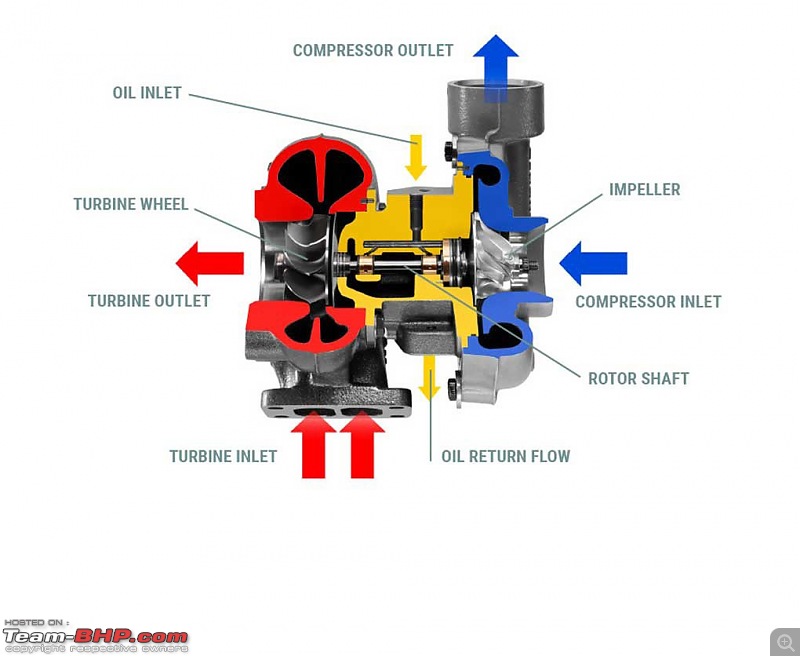
One of the most common technical causes of a runaway involves the turbocharger. In modern high-performance diesel tech, turbochargers use the engine’s own oil for lubrication and cooling. These units operate at incredibly high speeds and temperatures. If the internal seals of the turbocharger fail, pressurized engine oil can be forced into the intake manifold. Once this oil enters the cylinders, the engine treats it as fuel. As the engine burns the oil, it gains speed; as it gains speed, oil pressure increases, forcing even more oil through the broken seal. This is the definition of a mechanical feedback loop that the operator cannot stop by simply turning the key.
Excessive Crankcase Pressure and Blow-by
As diesel engines age, the mechanical tolerances between the piston rings and cylinder walls can widen. This leads to “blow-by,” where combustion gases leak into the crankcase. If the Crankcase Ventilation (CCV) system—a piece of tech designed to manage these gases—becomes clogged or fails, the resulting pressure can atomize the oil in the oil pan. These oil mists are then sucked back into the air intake. Much like the turbocharger failure, this provides an unregulated fuel source that bypasses the fuel injection system entirely.
Fuel Injection System Malfunctions
While less common in modern common-rail systems, mechanical fuel injection pumps can suffer internal failures where the rack (the component that controls fuel delivery) becomes stuck in the “full fuel” position. In this scenario, the engine is receiving the maximum amount of diesel regardless of driver input. While the engine is still running on its intended fuel, the technological failure of the governor means the engine will continue to accelerate until the physical limits of the metal components are reached.
2. Environmental Hazards: External Vapor Ingestion
In industrial and “Tech-Heavy” environments—such as oil refineries, chemical plants, or drilling sites—the threat of a runaway engine often comes from the atmosphere itself. This highlights a unique challenge in industrial engine design where the environment interacts dangerously with the machine’s intake system.
The Ingestion of Hydrocarbon Vapors
Diesel engines are often used to power the very equipment used to extract or process flammable gases. If a leak occurs in the vicinity, the engine’s massive air intake acts like a vacuum, pulling in concentrated hydrocarbon vapors (such as methane or propane). Because these vapors are mixed with the intake air, the engine begins to combust them. Since the engine’s RPM is controlled by the amount of fuel, and the “fuel” is now coming in through the air intake, the onboard Electronic Control Unit (ECU) loses all ability to throttle the engine.
The Limitations of Traditional Ignition Cutoffs
In a standard vehicle, turning the ignition to the “off” position cuts power to the fuel injectors or the ignition coils. However, in an external vapor ingestion scenario, the engine is no longer dependent on the fuel injectors. It will continue to run and accelerate even if the electrical system is completely shut down. This technological gap has led to the development of specialized “Emergency Shutdown” (ESD) systems specifically for engines operating in high-risk zones.
3. Digital Solutions: The Role of Sensors and ECUs
As we transition further into the era of “Smart Engines,” the role of software and digital monitoring in preventing mechanical runaway has become paramount. Modern diesel technology relies on a complex web of sensors to maintain a delicate balance between performance and safety.
Real-Time Telematics and Diagnostic Monitoring
Modern Electronic Control Units (ECUs) are programmed with “overspeed protection” algorithms. These systems constantly monitor the Crankshaft Position Sensor and Camshaft Position Sensor to track RPM. If the ECU detects an RPM surge that does not correlate with the accelerator pedal position, it can immediately trigger a series of defensive protocols. While the ECU cannot physically stop an engine from burning oil, it can at least shut down the primary fuel system to prevent adding “fuel to the fire.”
Predictive Maintenance Algorithms
The integration of AI and machine learning into fleet management tech has allowed for the prediction of runaway-inducing failures before they happen. By analyzing data trends—such as subtle drops in oil pressure, increases in turbocharger vibration, or deviations in manifold pressure—predictive software can alert technicians to a failing turbo seal weeks before a catastrophic runaway occurs. This shift from reactive repair to proactive data-driven maintenance is the frontline of modern industrial safety.
The Challenge of Legacy Systems
A significant portion of the global diesel fleet consists of “Legacy Tech”—engines built before the widespread adoption of sophisticated ECUs. These mechanical engines lack the digital oversight necessary to detect early-stage runaway. For these machines, the “technology” for prevention must be retrofitted, often involving mechanical sensors that trigger physical interventions.
4. Engineering Safeguards: Hardware for Emergency Intervention
When software fails or the fuel source is external, physical hardware must take over. The engineering community has developed several key pieces of technology designed to act as the “ultimate kill switch” for a diesel engine.
Positive Air Shutoff Valves (PASV)
The most effective way to stop a runaway diesel engine is to starve it of its most basic requirement: oxygen. A Positive Air Shutoff Valve is a butterfly-style valve installed in the air intake move. When an overspeed event is detected—either manually by the operator or automatically by an RPM sensor—the valve slams shut. This chokes the engine, creating a vacuum that instantly kills the combustion process, regardless of what fuel source (oil or vapor) is present. In many high-tech industrial sectors, PASVs are legally mandated.
Automated CO2 Suppression Systems
In stationary industrial applications, such as large-scale generators or marine engines, automated fire suppression tech is often repurposed for runaway prevention. These systems can flood the engine compartment or the intake manifold with Carbon Dioxide (CO2). By displacing the oxygen, the CO2 effectively “extinguishes” the engine’s internal combustion. This is a high-tier technological solution used in environments where manual intervention is too dangerous.
Smart Fuel Management Systems
Newer common-rail diesel tech uses piezoelectric injectors that can fire multiple times per combustion cycle. These systems are so precise that they can actually detect “pre-ignition” or irregular combustion patterns indicative of oil ingestion. Some experimental tech seeks to use these injectors to “counter-fire” or adjust timing in a way that creates internal resistance, potentially slowing the engine down enough for an air-stop valve to engage more effectively.
5. The Future of Diesel Tech: Moving Toward Fail-Safe Operations
The evolution of the diesel engine is moving toward a future where the “runaway” scenario is a relic of the past. This transition involves a combination of material science, digital integration, and redundant engineering.
Transition to Closed-Loop Monitoring
Future diesel technologies are incorporating “Closed-Loop” air management. By using electronically controlled throttles (similar to those in gasoline engines, but adapted for diesel durability), engineers can provide the ECU with the physical means to cut off air supply without needing a separate PASV. This integration of the air-throttle into the engine’s primary computer architecture simplifies the safety chain.
Synthetic Lubricants and Improved Seal Integrity
Material tech is also playing a role. The development of advanced fluoropolymer seals and high-temperature synthetic lubricants reduces the likelihood of the turbocharger failures that lead to oil ingestion. Furthermore, modern “dry-sump” oiling systems—often found in high-performance or heavy-duty tech—separate the oil reservoir from the crankcase, significantly reducing the risk of oil mist ingestion through the CCV system.

Conclusion: The Intersection of Hardware and Data
A runaway diesel engine remains one of the most vivid examples of what happens when mechanical systems escape their technological boundaries. However, through the lens of modern engineering, it is a solvable problem. By combining robust physical hardware—like air shutoff valves—with the “brainpower” of modern ECUs and predictive diagnostic software, the industry is creating a fail-safe environment.
As we continue to rely on diesel tech for global logistics, shipping, and power generation, the focus shifts from merely understanding what causes these events to mastering the technologies that prevent them. The goal is a seamless integration where the engine, its sensors, and its environment work in a digitally monitored harmony, ensuring that the power of compression ignition remains controlled, efficient, and, above all, safe.
aViewFromTheCave is a participant in the Amazon Services LLC Associates Program, an affiliate advertising program designed to provide a means for sites to earn advertising fees by advertising and linking to Amazon.com. Amazon, the Amazon logo, AmazonSupply, and the AmazonSupply logo are trademarks of Amazon.com, Inc. or its affiliates. As an Amazon Associate we earn affiliate commissions from qualifying purchases.