
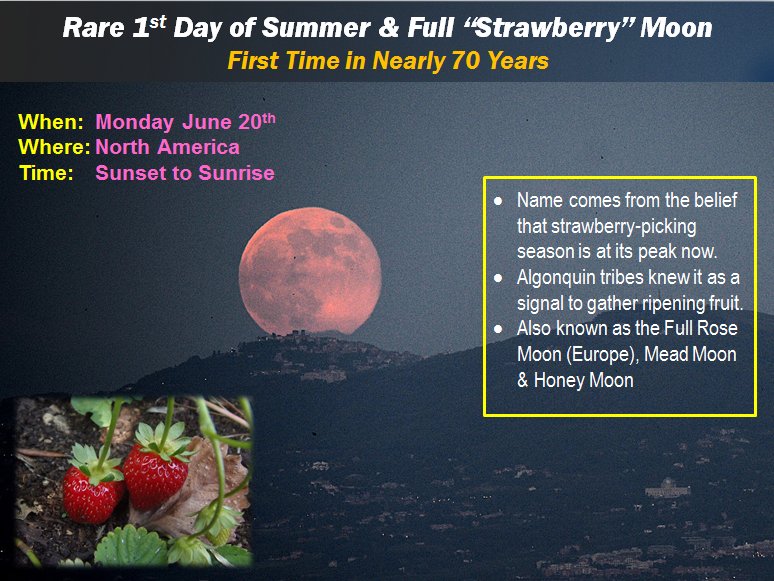
The Strawberry Moon is one of the most visually arresting celestial events of the year, appearing as a full moon in June that often carries a warm, amber, or reddish hue. While its name originates from indigenous traditions—specifically the Algonquin tribes who used the moon as a signal to harvest ripening wild strawberries—the “cause” of a Strawberry Moon in the modern era is understood through a sophisticated blend of orbital mechanics, atmospheric physics, and advanced imaging technology. In the tech sector, this event is more than a cultural milestone; it is a rigorous test for high-performance sensors, predictive algorithms, and global data-sharing networks.
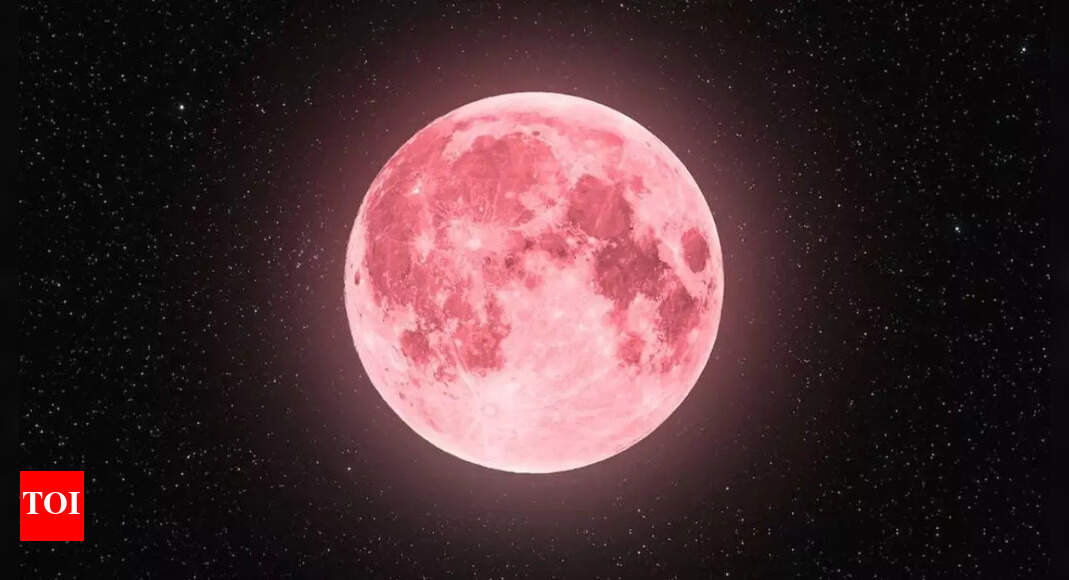
To understand what causes the Strawberry Moon, we must look beyond the naked eye and examine the hardware and software that allow us to track, measure, and capture this phenomenon with unprecedented precision.
The Optical Physics and Atmospheric Engineering of the Glow
From a purely technical standpoint, the color and brightness of the Strawberry Moon are dictated by the interaction of sunlight with Earth’s atmosphere and the specific positioning of the lunar orbit. This is not an intrinsic change in the moon’s surface, but rather a complex filtering process that can be mapped and simulated using modern optical engineering principles.
Rayleigh Scattering and Sensor Perception
The primary cause of the “strawberry” tint is a phenomenon known as Rayleigh scattering. As the June full moon often sits at a lower altitude in the sky for observers in the Northern Hemisphere, its light must travel through a thicker layer of the Earth’s atmosphere. This atmospheric density acts as a high-pass filter, scattering shorter wavelengths of light (blue and violet) and allowing longer wavelengths (red, orange, and yellow) to pass through.
In the world of digital imaging, this presents a unique challenge for CMOS (Complementary Metal-Oxide-Semiconductor) sensors. Engineers must design these sensors with specific Bayer filter patterns that can accurately interpret these shifted wavelengths without introducing excessive “chromatic noise.” Understanding how the atmosphere modifies the spectral power distribution of lunar light allows developers to create better “Auto White Balance” (AWB) algorithms for professional-grade cameras and smartphone software alike.
Refractive Indexing in Planetary Software
The “cause” of the moon’s apparent size and position is also influenced by atmospheric refraction. As light enters the Earth’s denser atmosphere from the vacuum of space, it bends. Software suites used by astronomers and satellite technicians use complex refractive indexing models to predict exactly where the moon will appear. These algorithms must account for local temperature, pressure, and humidity—variables that can change the “optical path length” and alter the moon’s visual clarity. For tech-focused observers, the Strawberry Moon is a case study in how environmental data must be integrated into visual processing software to achieve high-fidelity results.
Advanced Hardware: The Tools of Modern Lunar Observation
While the celestial mechanics of the Strawberry Moon have remained constant for millennia, our ability to observe and analyze them has been transformed by exponential leaps in hardware. The “cause” of our modern fascination with the event is largely driven by the democratization of high-end optical tech.
CMOS Sensor Evolution and Quantum Efficiency
To capture the subtle gradients of a Strawberry Moon, hardware must possess high Quantum Efficiency (QE)—the ability of a sensor to convert photons into electrons. Modern back-illuminated (BSI) CMOS sensors have revolutionized this process. By moving the circuitry to the back of the light-collecting layer, these sensors minimize light loss, allowing for the high dynamic range (HDR) necessary to capture the dark craters of the moon alongside its bright, atmospheric glow.
Furthermore, the reduction in “read noise” in latest-generation sensors allows for shorter exposure times. This is critical because, despite its slow appearance, the moon moves across the sky at a rate that can cause “motion blur” in high-resolution digital captures. The precision engineering of these sensors is what allows us to see the “cause” of the moon’s features—its basaltic plains and impact craters—even through the thick, hazy atmosphere of a June evening.
Smart Telescopes: The Integration of IoT and Optics
The rise of “Smart Telescopes” has changed the Strawberry Moon from a niche scientific observation into a synchronized global tech event. These devices integrate Internet of Things (IoT) connectivity with automated GoTo mounts and integrated internal cameras. Using Plate Solving technology—a process where the onboard computer takes a photo of the stars and compares it to a localized database—these telescopes can autonomously find and track the Strawberry Moon with sub-pixel accuracy.
This automation is powered by embedded Linux systems and ARM processors capable of handling real-time image processing. By removing the manual calibration once required for lunar tracking, these hardware advancements have shifted the focus from “finding” the moon to “analyzing” its data in real-time.
Software and Algorithms: Predicting the Strawberry Moon
What causes the Strawberry Moon to be predicted with such pinpoint accuracy? The answer lies in the computational power of ephemeris engines and orbital mechanics simulations.
Ephemeris Engines and High-Precision Computation
An ephemeris is a mathematical model that provides the positions of celestial bodies at specific times. Modern versions, such as the Jet Propulsion Laboratory’s (JPL) Development Ephemerides, use numerical integration of the equations of motion for the entire solar system. These engines factor in gravitational perturbations from other planets, the non-spherical shape of the Earth, and even relativistic effects.
For software developers, integrating these models into mobile apps or web tools requires efficient coding. Most “Moon Tracker” apps utilize C++ or specialized Python libraries like Astropy to process these massive datasets. This allows a user to know exactly when the “strawberry” hue will be at its peak based on their specific GPS coordinates—a feat of data processing that involves millions of calculations per second.
AI-Enhanced Image Stacking and Reconstruction
One of the most significant technological “causes” for the stunning images of the Strawberry Moon seen online is AI-driven post-processing. Because the Earth’s atmosphere is turbulent, a single photo of the moon is often blurry. Tech-savvy photographers use a process called “lucky imaging.”
Software algorithms analyze thousands of frames of video, selecting only the clearest segments where the atmosphere was momentarily still. AI models then “stack” these segments, using deconvolution algorithms to reverse the effects of atmospheric blur. Recently, Generative AI and neural networks have been trained on high-resolution maps from NASA’s Lunar Reconnaissance Orbiter (LRO). These models can “fill in” missing details in consumer-grade photos, creating a composite image that is technically superior to what the hardware could capture alone.
Connectivity and Data: The Digital Ecosystem of Celestial Events
The Strawberry Moon serves as a catalyst for massive spikes in global data traffic, highlighting the infrastructure that supports our digital world.
Satellite Infrastructure and Global Telemetry
The ability to view a Strawberry Moon in real-time from a location on the other side of the planet is made possible by high-bandwidth satellite constellations and fiber-optic backbones. When a telescope in the Canary Islands broadcasts a live stream of the June full moon, the data is compressed using H.265 (HEVC) or AV1 codecs to maintain 4K resolution while minimizing latency.
This telemetry is vital for professional researchers who use the Strawberry Moon as a calibration point for satellite sensors. Because the moon has a stable and known reflectance (its “albedo”), satellites like the GOES-R series use lunar observations to ensure their Earth-facing cameras are providing accurate color data. This technical calibration is essential for weather forecasting and climate monitoring.

Crowdsourced Data and Citizen Science Portals
Finally, the “cause” of our expanding knowledge regarding the Strawberry Moon is the rise of citizen science platforms. Websites and apps allow users to upload their lunar observations, including timestamped photos and local atmospheric data. This creates a massive, distributed sensor network.
Data scientists use this crowdsourced information to study “lunar occultation” and atmospheric trends over decades. Through API integrations and cloud computing, this raw data is transformed into actionable insights about our planet’s changing atmosphere. The Strawberry Moon, therefore, acts as a recurring “stress test” for our global data architecture, proving how effectively we can collect, store, and analyze information from millions of disparate nodes.
In conclusion, while the Strawberry Moon is a natural occurrence dictated by the mechanics of our solar system, our modern understanding of it is entirely tech-driven. From the CMOS sensors that capture its amber glow to the AI algorithms that sharpen its image, and the orbital engines that predict its arrival, the Strawberry Moon is a triumph of human engineering. It is a moment where the ancient cycle of the stars meets the cutting edge of digital innovation.
aViewFromTheCave is a participant in the Amazon Services LLC Associates Program, an affiliate advertising program designed to provide a means for sites to earn advertising fees by advertising and linking to Amazon.com. Amazon, the Amazon logo, AmazonSupply, and the AmazonSupply logo are trademarks of Amazon.com, Inc. or its affiliates. As an Amazon Associate we earn affiliate commissions from qualifying purchases.