
The devastating wildfires that swept through Lahaina and other parts of Maui in August 2023 represent more than just a natural disaster; they serve as a tragic case study in the intersection of aging infrastructure, technological limitations, and the escalating demands of climate change. While the immediate catalyst of the blaze was a combination of high winds from Hurricane Dora and exceptionally dry vegetation, a deep dive into the “how” and “why” reveals a complex web of technological failures and missed opportunities for innovation.
To understand what caused the Maui fires from a technical perspective, we must examine the vulnerabilities of the electrical grid, the limitations of current environmental monitoring systems, and the emerging technologies that could have—and perhaps should have—been in place to mitigate such a catastrophe.

The Vulnerability of the Grid: Hardware Failures and Circuit Logic
At the heart of the investigation into the Maui fires is the electrical distribution system. In many modern utility frameworks, technology acts as a safeguard. However, in the case of Maui, the legacy hardware in place became a primary point of failure.
The Physics of Arcing and Uninsulated Conductors
The most scrutinized technical cause of the fire involves the power lines managed by Hawaiian Electric. On the morning the fires began, data from smart sensors (where available) and video evidence suggested that high winds caused power lines to “slap” together or be knocked down by falling trees. In a modern technological setup, many distribution lines are insulated or “hardened.” However, much of Maui’s grid relied on bare copper or aluminum wires. When these wires come into contact with each other or the ground while energized, they create an electric arc—a discharge of plasma that reaches temperatures exceeding 6,000 degrees Fahrenheit. In the presence of invasive, tinder-dry grasses, this technological failure acted as an immediate ignition source.
The “Recloser” Dilemma and Automated Systems
A critical component of grid technology is the “recloser.” Think of a recloser as a high-tech circuit breaker for the power grid. When a fault is detected (like a branch hitting a wire), the recloser shuts off the power. However, many standard reclosers are programmed to “test” the line by sending power back through a few seconds later to see if the obstruction has cleared. While this prevents prolonged blackouts from temporary interference, in high-wind, high-fire-risk conditions, this automated technological logic can be deadly. If the “test” pulse hits a downed wire in dry grass, it sparks a fire. The lack of a “Fast Trip” setting—a software configuration that disables automatic reclosing during red-flag warnings—is a significant technological oversight that contributed to the disaster.
The Absence of Public Safety Power Shutoff (PSPS) Software
Unlike utility providers in California, such as PG&E, Hawaiian Electric did not have a robust Public Safety Power Shutoff (PSPS) protocol integrated into their operational software. PSPS is a data-driven strategy that uses predictive modeling to proactively de-energize high-risk circuits before they fail. The decision to cut power is complex, requiring real-time integration of wind speed data, humidity levels, and fuel moisture content. The technological gap here was the absence of a localized, high-resolution decision-support system that could have triggered a manual or automated shutdown of the Lahaina grid as wind speeds peaked.
Data Blind Spots: The Failure of Early Detection and Warning Systems
In the tech world, a system is only as good as its input data. In Maui, the failure to contain the fire was exacerbated by a “data desert”—a lack of real-time, granular information that could have alerted officials to the exact moment and location of ignition.
The Limitations of SCADA and IoT Integration
Supervisory Control and Data Acquisition (SCADA) systems are used by utilities to monitor the health of the grid. However, SCADA systems on older grids often provide only “macro” level data. They might show that a circuit is de-energized, but they won’t necessarily pinpoint the exact pole that snapped. The deployment of Internet of Things (IoT) sensors—specifically “Grid Monitoring” sensors that detect “partial discharge” or vibration on lines—could have provided early warnings of line stress before the lines actually broke. The lack of these edge-computing devices meant that the utility was reactive rather than proactive.
The Siren System and the Communication Breakdown
Maui possesses one of the largest outdoor public safety siren systems in the world. However, this technology was designed primarily for tsunamis. During the fire, the sirens remained silent. The technical reasoning provided was that officials feared the public would move toward the mountains (the standard tsunami response) and into the path of the flames. This highlights a failure in the “User Interface” of public safety: a binary alert system (on or off) lacks the nuance required for multi-hazard environments. Modern emergency tech is moving toward “Integrated Public Alert & Warning Systems” (IPAWS) that deliver geofenced, text-based instructions, but the reliance on legacy mechanical sirens proved to be a fatal technological mismatch for a fast-moving wildfire.
High-Resolution Weather Modeling in Microclimates
The meteorology behind the Maui fire was influenced by complex “downslope winds.” Standard weather models often lack the resolution to predict how wind behaves in specific valleys or around specific ridges. The failure to have high-density, automated weather stations (AWS) across the island meant that the “Flash Drought” conditions and the extreme localized wind gusts were not fully captured in the days leading up to the fire. Tech-driven disaster prevention requires hyper-local data to feed the algorithms that predict fire spread.
The Role of AI and Satellite Imagery in Post-Disaster Analysis
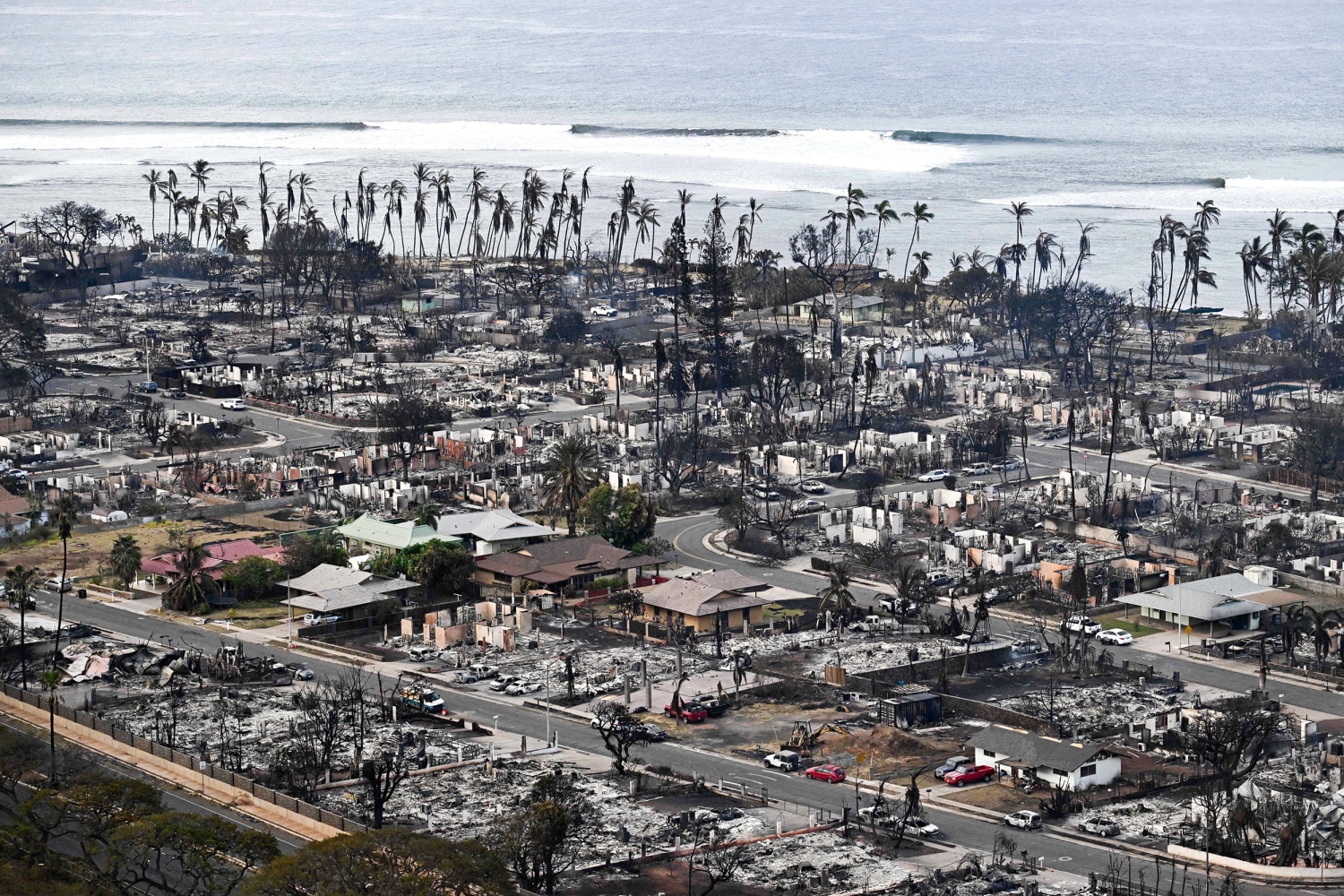
While technology failed to prevent the fire, it has been instrumental in the post-mortem analysis and is carving a path toward future prevention. Artificial Intelligence (AI) and remote sensing are now being used to reconstruct the event and develop “Digital Twins” of the island’s geography.
Machine Learning and Fire Behavior Forecasting
Modern fire science utilizes AI to run thousands of “Monte Carlo” simulations. By inputting the topography of Lahaina, the specific fuel loads (non-native grasses), and the wind vectors from that day, AI models can show exactly how the fire moved with such unprecedented speed. These models reveal that the fire’s “rate of spread” was faster than traditional human-calculated models could have predicted. Moving forward, integrating these AI models into dispatch centers would allow for real-time “evacuation modeling,” where software calculates the fastest routes based on live traffic data and predicted fire paths.
Satellite Infrared and Synthetic Aperture Radar (SAR)
In the hours following the ignition, satellite technology provided the only clear picture of the devastation. Infrared sensors on satellites like GOES-R can detect “thermal anomalies” (hotspots) even through thick smoke. However, the “latency” (the time between the satellite taking the image and the data reaching ground teams) is still a hurdle. The Maui fire underscored the need for a “Low Earth Orbit” (LEO) constellation of fire-detection satellites that can provide sub-minute updates, a technological frontier currently being explored by companies like Muon Space and FireSat.
LiDAR and Vegetation Management
One of the primary causes of the fire’s intensity was the proximity of dry brush to power poles. Utility companies are now using LiDAR (Light Detection and Ranging) mounted on drones or helicopters to create 3D maps of their infrastructure. AI algorithms then analyze the LiDAR data to identify “encroachment”—specifically, which trees or grasses are within a high-risk radius of a power line. This tech-driven maintenance replaces the old method of manual inspections, which are prone to human error and cannot cover the vast geographic areas of a state’s grid.
Hardening the Future: Technological Solutions for Resilient Infrastructure
To ensure that the events in Maui are not repeated, a fundamental shift toward “Resilience Tech” is required. This involves a complete overhaul of how we build, monitor, and defend our communities against environmental threats.
Undergrounding vs. Covered Conductors
The most obvious technological solution to prevent grid-ignited fires is “undergrounding”—moving power lines beneath the surface. While expensive, the “cost-benefit algorithm” changes when the liability of a multi-billion dollar disaster is factored in. For areas where undergrounding is geologically impossible, “Triple-Layer Covered Conductor” technology is an alternative. These are wires wrapped in specialized polymers that prevent sparks even if a tree falls on them or they touch another wire. Transitioning to these materials is a hardware-based solution to a recurring environmental problem.
Microgrids and Decentralized Energy
A significant technological trend in disaster-prone areas is the move toward “Microgrids.” By using localized solar arrays and large-scale battery storage (like the Tesla Megapack), communities like Lahaina could operate independently of the main long-distance high-voltage lines during high-risk weather. If the main grid needs to be shut down for safety, a microgrid can keep the lights on and the water pumps running, using localized, “hardened” infrastructure. This decentralization reduces the number of “points of failure” in a system.
Autonomous Firefighting and Robotics
The future of fire response lies in robotics. During the Maui fire, the heat and speed made it nearly impossible for human firefighters to reach the front lines safely. Emerging tech in the form of autonomous “fire-bots” and heavy-lift drones capable of dropping precision retardant could be stationed in high-risk zones. These systems, triggered by AI-linked thermal cameras, could theoretically begin suppression efforts within seconds of an ignition, long before human crews could arrive on the scene.

Conclusion: The Path Forward Through Technical Innovation
The fire in Maui was a “black swan” event that exposed the fragility of 20th-century technology in a 21st-century climate. The cause was not just a spark, but a series of systemic technological gaps: an uninsulated grid, a lack of smart shut-off software, insufficient IoT monitoring, and a legacy warning system.
However, the tragedy is also acting as a catalyst for a global shift in “Climate-Adaptive Technology.” By integrating AI-driven predictive modeling, hardening the physical grid with smart sensors, and embracing decentralized energy systems, we can create a world where a power line failure no longer results in the loss of an entire city. The lesson of Maui is clear: as the environment becomes more volatile, our technology must become more intelligent, more resilient, and more integrated. The goal is no longer just to respond to disasters, but to use the full weight of our technological capabilities to ensure they never start in the first place.
aViewFromTheCave is a participant in the Amazon Services LLC Associates Program, an affiliate advertising program designed to provide a means for sites to earn advertising fees by advertising and linking to Amazon.com. Amazon, the Amazon logo, AmazonSupply, and the AmazonSupply logo are trademarks of Amazon.com, Inc. or its affiliates. As an Amazon Associate we earn affiliate commissions from qualifying purchases.