
Purchasing a car is often one of the most significant financial decisions an individual or family makes, second only to buying a home. Yet, while much attention is paid to the purchase price, fuel efficiency, and maintenance costs, a critical and often overlooked financial component is car insurance. For many, especially new drivers, young adults, or those on a tighter budget, insurance premiums can represent a substantial ongoing expense, sometimes even overshadowing the car payment itself. The astute financial planner understands that the choice of vehicle profoundly impacts these premiums. Opting for the right car can translate into hundreds, if not thousands, of dollars in savings over the vehicle’s lifespan. This comprehensive guide will delve into the nuances of car insurance, highlight the vehicle characteristics that lead to lower premiums, and offer practical advice on how to make a financially savvy car choice for long-term savings.
Understanding the Financial Factors Influencing Car Insurance Premiums
Car insurance is a complex financial product, and insurers use sophisticated algorithms to assess risk and determine premiums. While individual driver characteristics play a significant role, the vehicle itself is a primary determinant of cost. Understanding these underlying factors is the first step towards making an informed financial decision.
Vehicle-Specific Risk Assessment
Insurers meticulously evaluate several aspects of a car to determine its risk profile and, consequently, its insurance cost. These are rooted in the financial implications of potential claims:
-
Cost of Repairs and Replacement: Cars with expensive, rare, or imported parts will naturally cost more to repair after an accident. Similarly, luxury or high-performance vehicles that are costly to replace if stolen or totaled will command higher premiums for comprehensive and collision coverage. Mass-market cars with abundant, standardized parts tend to be cheaper to fix.
-
Safety Ratings and Features: Vehicles that perform well in crash tests (e.g., those with high ratings from the Insurance Institute for Highway Safety – IIHS, or the National Highway Traffic Safety Administration – NHTSA) are less likely to result in severe injuries or fatalities for occupants. This reduces the financial liability for personal injury claims. Furthermore, advanced safety features like automatic emergency braking (AEB), lane-keeping assist, and blind-spot monitoring can either prevent accidents altogether or reduce their severity, leading to fewer claims and potentially lower premiums.
-
Theft Rates: Certain car models are statistically more attractive to thieves due to their popularity, ease of theft, or the value of their parts. Vehicles with high theft rates are considered higher risk, leading to increased comprehensive coverage costs. Conversely, cars with robust anti-theft systems or those less frequently targeted by criminals often benefit from lower premiums.
-
Engine Size and Performance: Insurers often correlate powerful engines and high-performance capabilities with aggressive driving and a higher likelihood of accidents. Sports cars or vehicles with large engines typically carry higher premiums than their more modest counterparts, even if the driver has a clean record. This is a purely statistical financial assessment of risk.
-
Age and Market Value of the Vehicle: The older a car gets, the less its market value. For comprehensive and collision coverage, which protect against damage to the vehicle itself, lower market value generally means lower premiums because the maximum payout for a total loss is reduced. This is why insuring a brand-new luxury sedan is significantly more expensive than insuring a 10-year-old economy car.
Policy-Specific Variables and Financial Choices
While the car itself is central, the type of coverage you choose and your financial decisions regarding deductibles also play a crucial role. Opting for higher deductibles (the amount you pay out-of-pocket before insurance kicks in) on comprehensive and collision coverage can significantly reduce your monthly or annual premium. This is a financial trade-off: you save money upfront but accept more risk in the event of a claim. Similarly, the extent of coverage (e.g., basic liability vs. full coverage) is a direct financial choice impacting your costs and protection.
Ideal Car Characteristics for Lower Insurance Costs
When budget is a primary concern, and affordable insurance is a goal, specific vehicle characteristics consistently emerge as financially advantageous. Focusing on these attributes during your car selection process can lead to substantial long-term savings.
Safety First: Low-Risk Vehicles
Cars designed with superior occupant protection and accident prevention in mind are typically cheaper to insure. This category includes vehicles that consistently earn top safety ratings from independent organizations. Look for cars that are recognized as “Top Safety Pick” or “Top Safety Pick+” by the IIHS, or those achieving 5-star overall safety ratings from NHTSA. These vehicles mitigate the financial risk of personal injury claims for insurers. Furthermore, a suite of advanced driver-assistance systems (ADAS) like forward collision warning, automatic emergency braking, and blind-spot monitoring can not only prevent accidents but may also qualify for specific discounts from some insurers, further enhancing their financial appeal.
Economical & Reliable: Repair and Replacement Cost Considerations
From an insurer’s perspective, a car that is inexpensive and easy to repair after an accident is a low-risk proposition. This often translates to mass-market vehicles from popular brands that have a broad network of service centers and readily available, affordable parts. Toyota, Honda, Hyundai, Kia, and Subaru often fall into this category. Their reputation for reliability also contributes positively, as fewer mechanical breakdowns (though often covered by warranty, the perception of robustness matters) can subtly influence an insurer’s risk assessment. Conversely, exotic or luxury brands with proprietary parts and specialized repair procedures will invariably lead to higher repair costs, which are factored into premiums.
Less Attractive to Thieves: Security and Theft Rates
Cars that appear on “least stolen” lists are inherently less risky for comprehensive coverage. Insurers analyze theft data meticulously. Vehicles equipped with robust standard anti-theft systems, such as engine immobilizers and alarm systems, may also qualify for discounts. Generally, family-oriented vehicles or those without a reputation for being easily stripped for parts tend to have lower theft rates. Avoiding models that are popular targets for organized theft rings can lead to noticeable savings on your comprehensive premium.
Moderate Performance: Engine Size and Type

The less “sporty” a car is, the cheaper its insurance typically will be. Vehicles with smaller, more fuel-efficient engines are statistically associated with less aggressive driving behavior and lower accident frequency and severity. Opting for a standard sedan, a compact SUV, or a minivan over a high-horsepower sports coupe or a large, powerful luxury SUV will almost always result in a lower premium. Insurers view moderate performance as a direct indicator of lower risk for collision and liability claims.
Top Vehicle Categories and Models Often Associated with Cheaper Insurance
While specific models can vary by year and region, certain vehicle categories consistently demonstrate characteristics that lead to more affordable insurance premiums. Focusing your search within these segments can be a smart financial strategy.
Compact Sedans & Hatchbacks
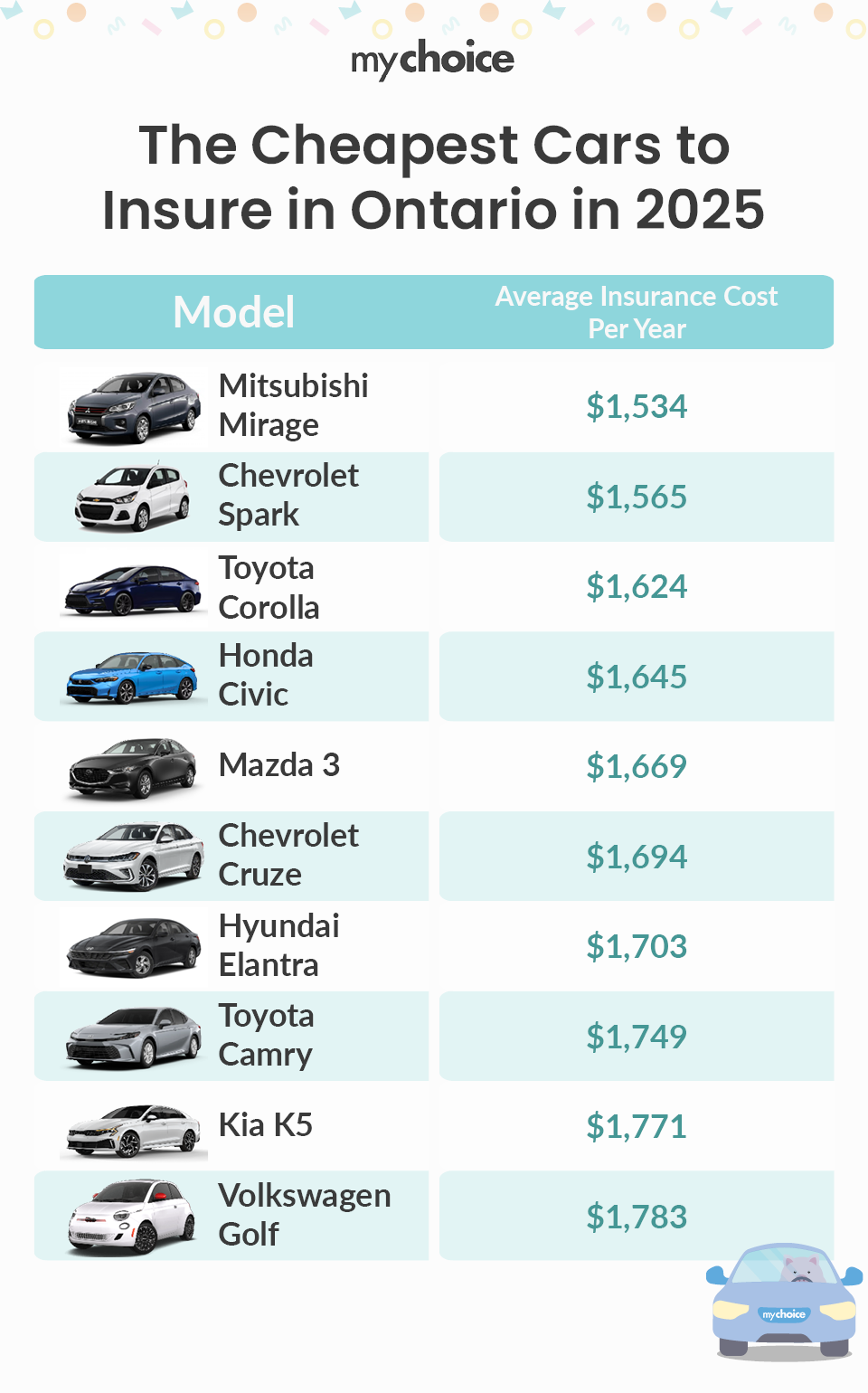
This category is often the champion of affordable insurance. Models like the Honda Civic, Toyota Corolla, Hyundai Elantra, and Mazda 3 are perennial favorites. They combine excellent safety ratings, widespread availability of parts, low theft rates, and moderate performance, making them ideal candidates. Their widespread appeal and long history of reliability contribute to their low-risk profile for insurers.
Small to Mid-Size SUVs
For those needing more space or a slightly higher driving position, small to mid-size SUVs can still offer competitive insurance rates. Vehicles such as the Honda CR-V, Toyota RAV4, Subaru Forester, and Mazda CX-5 balance practicality with strong safety features and moderate performance. They are often perceived as family-friendly vehicles driven responsibly, which translates to lower risk for insurers.
Minivans
Often overlooked in favor of SUVs, minivans like the Honda Odyssey, Toyota Sienna, and Chrysler Pacifica are typically some of the cheapest vehicles to insure. Their primary demographic is families, who are statistically safer drivers. Minivans are rarely stolen, offer excellent safety features, and their performance profile is inherently moderate, making them a low-risk option across all insurance categories.
Older, Well-Maintained Vehicles
Purchasing a car that is a few years old can also be a financially astute move for insurance. While newer cars often have better safety features, the depreciation of an older vehicle directly reduces the potential payout for comprehensive and collision claims. If a vehicle is 5-10 years old, its market value is significantly lower, which can drastically cut the cost of full coverage. For very old cars with minimal market value, some drivers opt for liability-only insurance, providing substantial savings, though at the cost of covering damage to their own vehicle.
Beyond the Car: Additional Financial Strategies for Reducing Insurance Costs
While choosing the right car is foundational, several other financial strategies can further reduce your insurance burden. A holistic approach to managing your personal finance includes optimizing your policy and your driving habits.
Optimizing Your Policy & Provider
-
Shop Around Aggressively: Never settle for the first quote. Compare rates from at least 3-5 different insurance providers (e.g., State Farm, GEICO, Progressive, Allstate, local brokers). Rates can vary dramatically for the exact same coverage.
-
Increase Your Deductibles: If you have an emergency fund capable of covering a higher deductible (e.g., $1,000 instead of $250), this can significantly lower your premiums. It’s a calculated financial risk that often pays off.
-
Bundle Policies: Many insurers offer discounts for bundling multiple policies, such as auto and home/renters insurance.
-
Inquire About All Discounts: Ask your insurer for a comprehensive list of available discounts. Common ones include good driver, low mileage, multi-car, anti-theft devices, good student, defensive driving course completion, and paying premiums annually.
-
Maintain a Clean Driving Record: This is arguably the most impactful long-term strategy. Avoiding accidents and traffic violations directly reduces your risk profile in the eyes of insurers, leading to lower premiums for years.
Financial Planning & Driver Education
-
Consider Telematics Programs: Many insurers offer usage-based insurance programs (e.g., through an app or a device plugged into your car) that monitor driving habits like speed, braking, and mileage. Safe drivers can earn substantial discounts. This is a direct financial reward for good driving.
-
Improve Your Credit Score: In many states, insurance companies use credit scores as a factor in determining premiums, as studies suggest a correlation between creditworthiness and likelihood of filing claims. A better credit score can lead to lower rates, reflecting a broader financial responsibility.
-
Take a Defensive Driving Course: Some states and insurers offer discounts for completing approved defensive driving courses, especially for younger or senior drivers. This not only saves money but also enhances safety.

Conclusion
Choosing “what car to get for cheap insurance” is a crucial financial decision that extends far beyond the dealership lot. By understanding the factors that influence premiums – from a vehicle’s safety ratings and repair costs to its theft vulnerability and performance – you can strategically select a car that minimizes your ongoing expenses. Prioritizing reliable, safe, and moderately performing vehicles, especially those in the compact sedan, small SUV, or minivan categories, provides a strong foundation for affordable insurance. Couple this informed vehicle choice with proactive financial strategies like shopping for quotes, bundling policies, and maintaining a clean driving record, and you empower yourself to save hundreds, if not thousands, of dollars, ensuring that your journey on the road is as financially smooth as it is safe.
aViewFromTheCave is a participant in the Amazon Services LLC Associates Program, an affiliate advertising program designed to provide a means for sites to earn advertising fees by advertising and linking to Amazon.com. Amazon, the Amazon logo, AmazonSupply, and the AmazonSupply logo are trademarks of Amazon.com, Inc. or its affiliates. As an Amazon Associate we earn affiliate commissions from qualifying purchases.