
For many, a car is the second largest purchase they’ll ever make, eclipsed only by a home. Yet, unlike a home which often appreciates, a car almost universally depreciates. Understanding which vehicles retain their value best isn’t just a curious statistic; it’s a critical financial decision that can save you thousands over the ownership period. Minimizing depreciation is a cornerstone of smart automotive budgeting, directly impacting your total cost of ownership and the equity you have to put towards your next vehicle.
Understanding the Silent Killer of Car Value: Depreciation
Depreciation is the single largest cost of car ownership, often outweighing fuel, insurance, and maintenance combined. Ignoring it is akin to throwing money away.
What is Depreciation?
In simple terms, depreciation is the loss in a car’s value over time. The moment a new car drives off the lot, it loses a significant portion of its initial price – sometimes as much as 10-20% in the first year alone. This loss continues, albeit at a slower rate, for several years. After five years, most cars will have lost 50-60% of their original value. This isn’t just theoretical; it’s the difference between what you pay for a new car and what you can sell it for later.
Why Depreciation Matters for Your Wallet
The impact of depreciation is felt when you sell or trade in your car. A car that holds its value well means a higher resale price, which translates directly into more cash back in your pocket or a larger down payment for your next vehicle. Conversely, a car with poor value retention will leave you with less equity, potentially putting you in an upside-down loan situation where you owe more than the car is worth. Financially astute buyers always consider future value, not just the initial purchase price.
Key Factors Influencing a Car’s Resale Value
Several variables coalesce to determine how well a vehicle will retain its value. Understanding these can guide your purchasing decisions.
Initial Purchase Price and Demand
While counterintuitive, a higher initial purchase price doesn’t always guarantee better value retention. However, vehicles with a strong initial demand, often due to limited supply or desirable features, tend to hold their value better. Market perception right out of the gate plays a crucial role.
Reliability and Reputation
Perhaps the most significant factor, a car’s reputation for reliability directly correlates with its resale value. Brands and models known for their robust engineering, minimal mechanical issues, and long-term durability command higher prices in the used market. Buyers are willing to pay a premium for peace of mind, knowing they won’t face exorbitant repair bills. This is where long-standing track records of quality shine.
Fuel Efficiency
In an era of fluctuating fuel prices and increasing environmental consciousness, fuel efficiency remains a critical determinant of value. Cars that offer impressive MPG figures are generally more attractive to used car buyers, particularly compacts, hybrids, and certain sedans, leading to better value retention.
Maintenance Costs and Parts Availability
Low maintenance costs and readily available, affordable parts contribute positively to a car’s long-term value. Vehicles requiring specialized, expensive parts or proprietary servicing can deter potential used buyers, pushing their market value down. Simple, common platforms tend to fare better.
Supply and Demand Dynamics
Economic principles of supply and demand are alive and well in the automotive market. Models with consistently high demand and controlled supply (e.g., certain popular trucks or performance models) tend to retain their value more effectively. Over-produced models or those in segments with declining interest may see sharper drops.
Technology and Features (Sometimes a Double-Edged Sword)
Advanced technology can be a draw, but it also carries risks. Cutting-edge features can quickly become outdated, and complex systems can be expensive to repair out of warranty. Simple, proven technology often ages better. However, essential modern features like infotainment systems, advanced safety features (ADAS), and connectivity are now expected and can positively influence value.
The Contenders: Car Segments and Brands with Strong Value Retention
While market conditions can shift, certain vehicle types and brands consistently outperform others in value retention metrics.
Trucks and SUVs: The Enduring Powerhouses
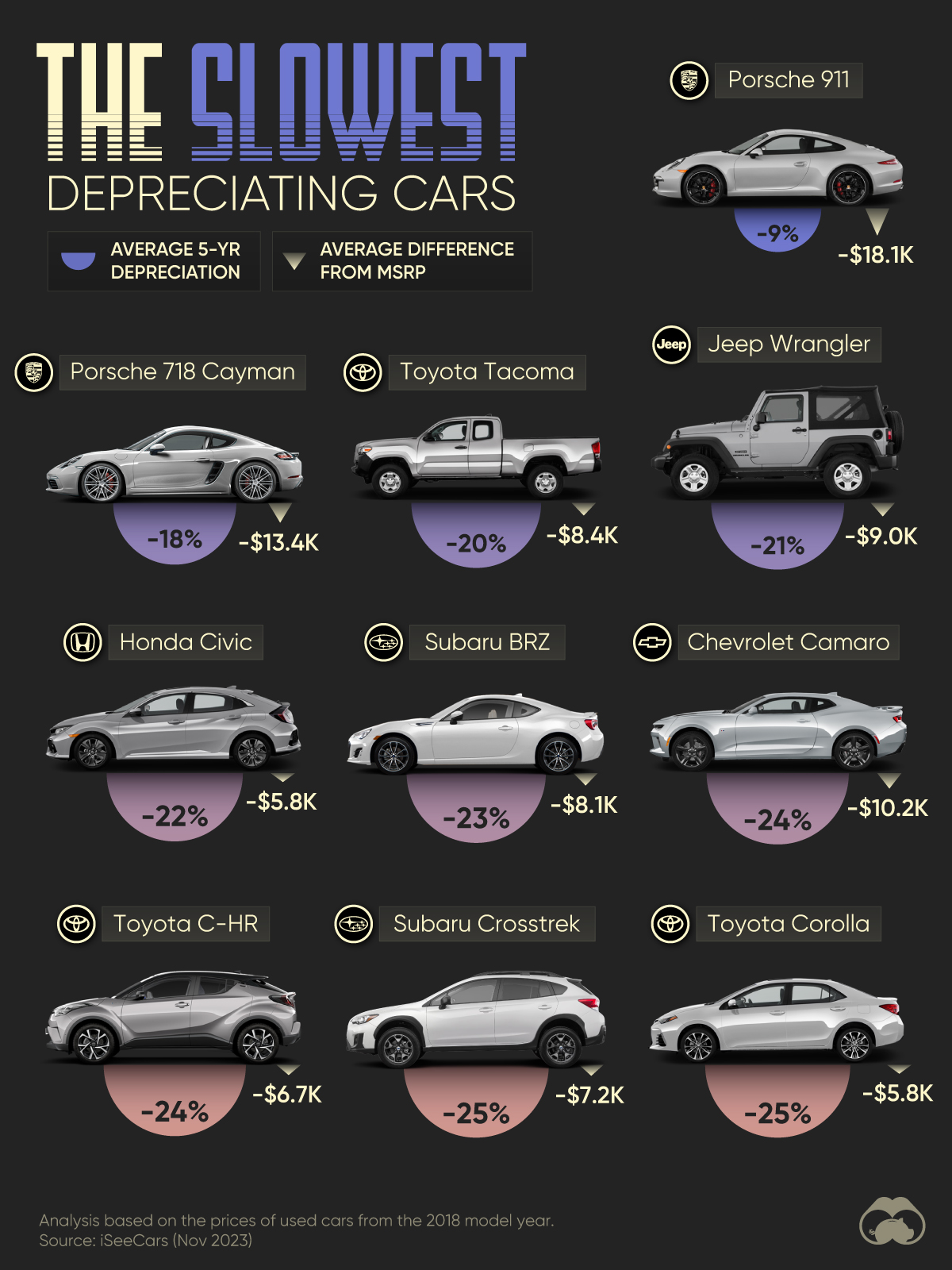
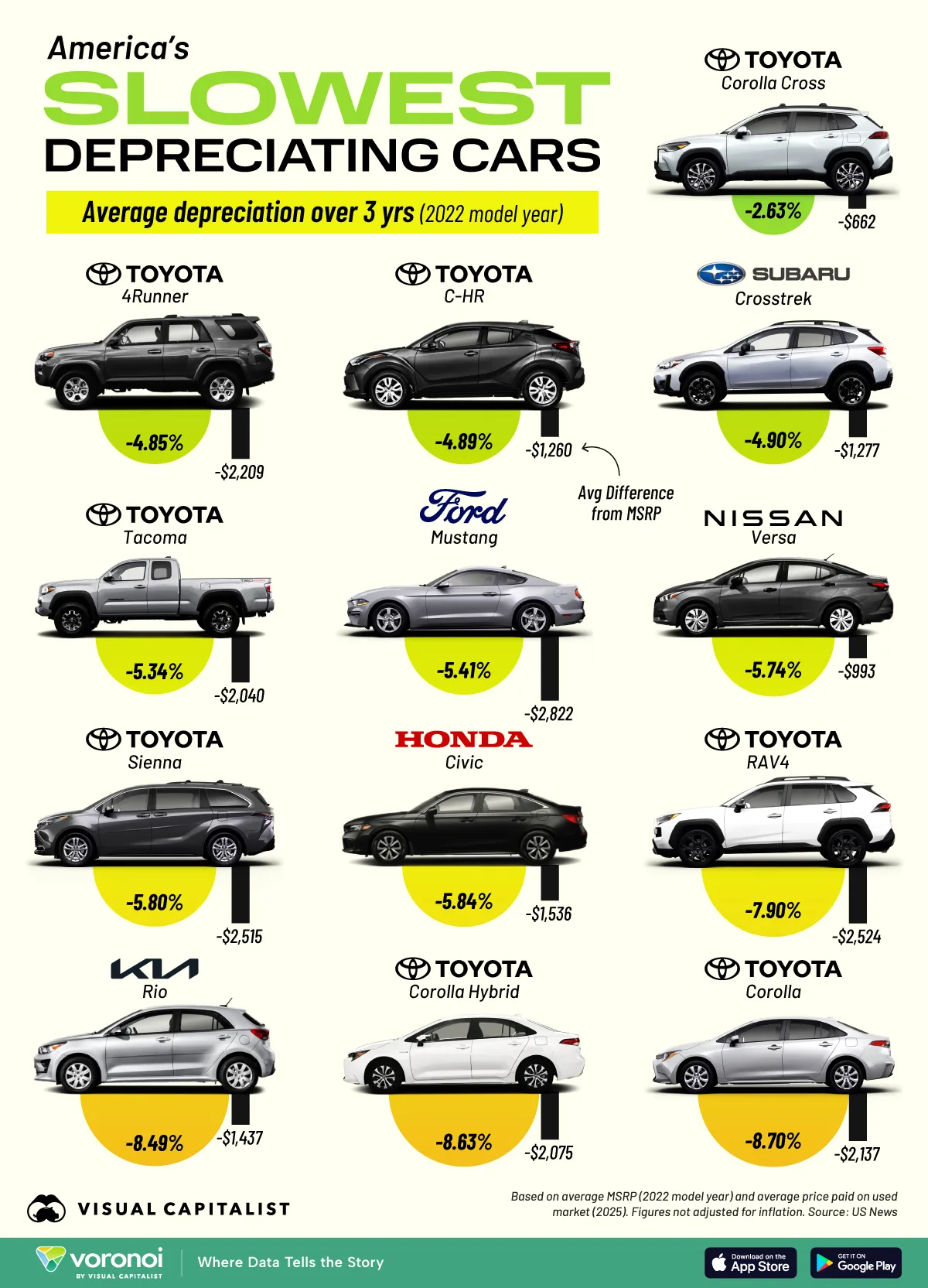
For years, full-size pickup trucks and mid-size SUVs have dominated value retention charts. Models like the Toyota Tacoma, Toyota 4Runner, Ford F-150, Chevrolet Silverado, and Jeep Wrangler consistently show strong resale values. Their utility, versatility, and often robust build quality make them highly desirable in both new and used markets, especially with ongoing trends favoring larger vehicles for families and work. Their ability to handle diverse tasks, from hauling to off-roading, broadens their appeal.
Certain Sports Cars and Performance Vehicles: Niche Appeal
While most performance cars depreciate quickly, a select few with strong brand heritage, limited production, or iconic status can defy the trend. Porsche 911s, specific Mustang or Corvette editions, and some JDM (Japanese Domestic Market) sports cars can hold their value exceptionally well, sometimes even appreciating. This is often due to their niche appeal, enthusiast following, and intrinsic collectibility rather than pure utility.
Specific Brands Known for Reliability
Japanese manufacturers, particularly Toyota and Honda, are perennial leaders in value retention thanks to their legendary reliability, low ownership costs, and widespread dealer networks. Subaru also consistently performs well, especially its AWD SUVs and wagons. More recently, some luxury brands like Porsche and Lexus have also shown strong value retention, particularly in their more popular models, owing to their reputation for quality and customer service.
Electric Vehicles: A Shifting Landscape
The EV market is still maturing, and depreciation has been a complex factor. Early EVs sometimes saw steep depreciation due to rapid technological advancements (battery range, charging speed) and government incentives that distorted initial pricing. However, as the market matures and battery technology stabilizes, some popular and efficient EV models are starting to show better value retention, especially those from established brands. Factors like battery degradation and replacement costs remain considerations for buyers.
Strategies to Maximize Your Car’s Resale Value
Beyond choosing a vehicle known for its value retention, there are proactive steps you can take throughout your ownership period to ensure you get the most money back when it’s time to sell.
Smart Buying Choices
Even before you own it, your choices impact future value. Opt for popular colors (silver, black, white, gray are safest bets), avoid overly customized or unique features that appeal to a smaller market, and consider packages that add desirable safety or convenience features without excessive cost. Higher trim levels often depreciate more in dollar terms, even if the percentage is similar.
Meticulous Maintenance and Service Records
This is paramount. A well-maintained vehicle with a complete service history (preferably from authorized dealerships or reputable independent shops) is worth significantly more. Keep all receipts, log books, and documentation. This proves to a potential buyer that the car has been cared for and reduces their perceived risk. Regular oil changes, tire rotations, and scheduled maintenance are not just for performance; they’re an investment in resale.
Keep it Clean and Damage-Free
Cosmetic condition dramatically affects buyer perception and, consequently, price. Regular washing, waxing, interior cleaning, and prompt repair of minor dents, scratches, or dings are crucial. A spotless interior, free of odors, stains, or excessive wear, is particularly appealing. Consider professional detailing before selling.
Mind the Mileage
While unavoidable, keeping mileage below the average for your vehicle’s age can significantly boost its value. Excessive mileage is a red flag for many buyers, implying more wear and tear and potentially higher future maintenance needs.
Strategic Timing for Selling
The time of year can also influence value. Convertibles might sell better in spring, while SUVs and AWD vehicles might fetch higher prices in fall or winter in certain climates. Selling before major redesigns of your model can also be advantageous, as the introduction of a new generation often depresses the value of the outgoing model.
Beyond the Sticker Price: Total Cost of Ownership
Ultimately, focusing on what car keeps its value the best is part of a broader financial strategy known as Total Cost of Ownership (TCO). TCO accounts for all expenses associated with a vehicle over its lifespan, including depreciation, fuel, insurance, maintenance, repairs, and taxes.
The Interplay of Depreciation, Insurance, and Fuel
A car that holds its value well may have slightly higher initial insurance premiums (due to its higher insured value), but this is often offset by its slower depreciation. Similarly, while a gas-guzzling truck might retain its value well, its higher fuel costs could significantly inflate its TCO compared to a more fuel-efficient sedan that depreciates faster in percentage but costs less to run daily. Smart financial decisions require a holistic view, balancing the upfront cost, long-term depreciation, and ongoing operational expenses to find the true best value for your personal finances.
aViewFromTheCave is a participant in the Amazon Services LLC Associates Program, an affiliate advertising program designed to provide a means for sites to earn advertising fees by advertising and linking to Amazon.com. Amazon, the Amazon logo, AmazonSupply, and the AmazonSupply logo are trademarks of Amazon.com, Inc. or its affiliates. As an Amazon Associate we earn affiliate commissions from qualifying purchases.