
In the pursuit of the title of the “fastest car in the world,” the automotive industry has transitioned from a race of pure mechanical horsepower to a sophisticated laboratory of high-tech innovation. While the casual observer might focus on the speedometer, the reality of achieving speeds in excess of 300 mph (480 km/h) is a triumph of software engineering, material science, and computational fluid dynamics. Today, the battle for speed is being fought between icons like the Koenigsegg Jesko Absolut, the Bugatti Chiron Super Sport 300+, and the Rimac Nevera.
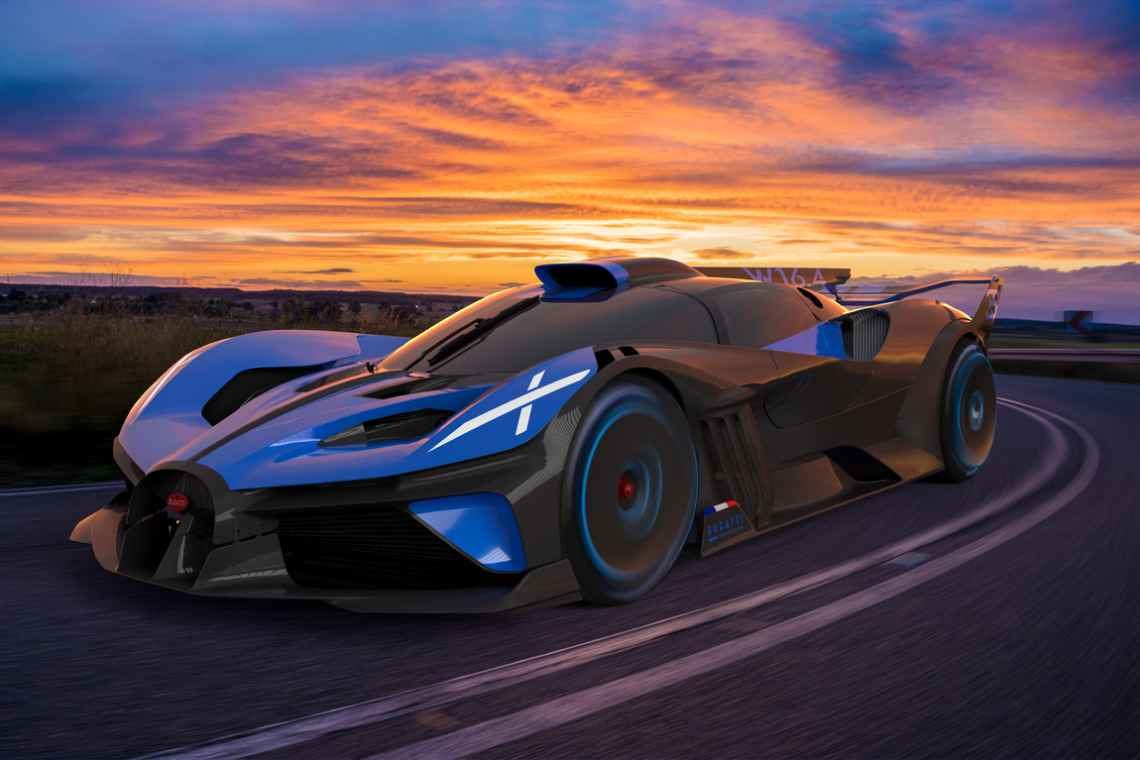
This technological arms race is no longer just about who can build the largest engine; it is about who can best harness the laws of physics through cutting-edge technology. From AI-driven traction control to the digital twinning of aerodynamic profiles, the fastest cars in the world are essentially supercomputers on wheels.
1. The Physics of Breaking Barriers: Aerodynamics and Material Science
At speeds exceeding 250 mph, the air ceases to be a passive medium and begins to behave like a viscous fluid, creating immense resistance. Overcoming this “wall of air” requires a technological approach to aerodynamics that rivals aerospace engineering.
Active Aerodynamics and Drag Reduction Systems (DRS)
To be the fastest car in the world, a vehicle must achieve two contradictory goals: high downforce for stability and low drag for top speed. The technology used to solve this is Active Aerodynamics. Modern hypercars utilize sensors and actuators that adjust the angle of the rear wing, front flaps, and even the ride height in real-time.
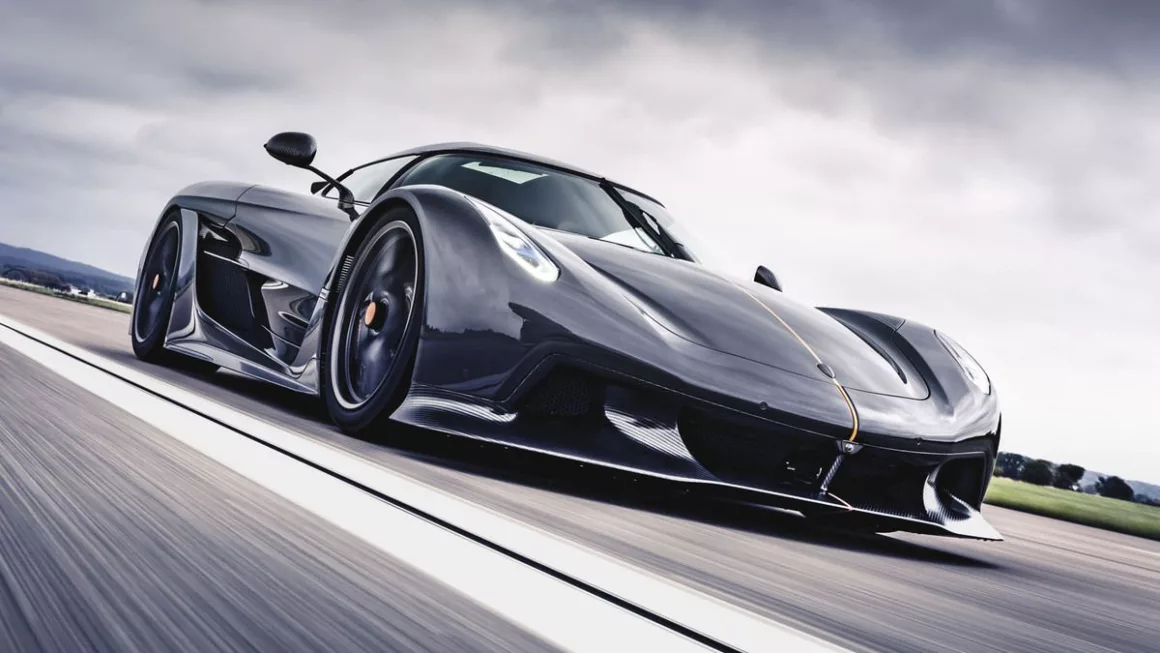
For instance, the Koenigsegg Jesko Absolut is designed specifically for a low-drag configuration. By removing the massive downforce-generating wing found on its track-focused sibling and replacing it with two rear fins—inspired by the F-15 fighter jet—engineers reduced the drag coefficient to a staggering 0.278. This allows the car to slice through the air with minimal resistance while maintaining high-speed directional stability.
Carbon Fiber Monocoques and Lightweight Composites
The relationship between mass and velocity is a fundamental tech challenge. The “fastest” cars utilize advanced material science to shed every possible gram without sacrificing structural integrity. The industry standard is the carbon fiber monocoque—a single-piece chassis that provides extreme rigidity.
However, the technology has evolved beyond standard carbon fiber. Manufacturers are now utilizing “Forged Composite” and specialized resin-transfer molding (RTM) processes to create parts that are thinner yet stronger than titanium. This tech allows for the integration of cooling ducts and aerodynamic channels directly into the bodywork, reducing the number of parts and further lowering the vehicle’s weight-to-power ratio.
2. The Heart of the Beast: Internal Combustion vs. Electric Propulsion
The debate over what makes a car the “fastest” has been disrupted by the arrival of the electric vehicle (EV) revolution. We are currently witnessing a technological crossroads where traditional internal combustion engines (ICE) meet high-voltage electric powertrains.
Turbocharged W16 Engines: The Pinnacle of Mechanical Engineering
The Bugatti Chiron Super Sport 300+ represents the zenith of internal combustion technology. Its 8.0-liter W16 engine utilizes four turbochargers in a two-stage configuration. The technological feat here isn’t just the power output (1,600 hp), but the thermal management required to keep the engine from melting.
Bugatti engineers developed a complex cooling system involving 10 radiators and a water pump that can circulate 800 liters of coolant per minute. The software governing the turbochargers must precisely manage air-to-fuel ratios at varying altitudes and temperatures to ensure that the engine provides a linear power curve, preventing sudden bursts of torque that would lose traction at 300 mph.
The Electric Revolution: Instant Torque and Battery Thermal Management
Representing the new tech vanguard is the Rimac Nevera. As the fastest-accelerating production car and a contender for top-speed records, the Nevera uses four independent surface-mounted permanent-magnet motors.

The core technology here is “All-Wheel Torque Vectoring.” Unlike a mechanical differential, Rimac’s software calculates the optimal torque for each individual wheel 100 times per second. This digital precision allows the car to maintain grip and stability that no mechanical system could ever match. Furthermore, the development of 120kWh battery packs capable of discharging massive amounts of energy without overheating is a breakthrough in chemical engineering and liquid-cooling technology.
3. Software-Defined Performance: The Role of AI and Digital Control
In the modern era, the driver is no longer the sole arbiter of a car’s performance. The “fastest” cars are now software-defined, relying on millions of lines of code to translate raw power into record-breaking velocity.
ECU Tuning and Predictive Gearbox Management
The Electronic Control Unit (ECU) is the brain of the hypercar. In vehicles like the Hennessey Venom F5, the ECU manages everything from the precision of the fuel injectors to the “shifting logic” of the gearbox.
Advanced transmission technology, such as Koenigsegg’s Light Speed Transmission (LST), uses a multi-clutch system governed by software that can predict the next gear change. Instead of moving through gears sequentially (6th to 7th), the software can jump from 7th gear directly to 4th gear in milliseconds if it senses the need for optimal power delivery. This “Ultimate Power on Demand” (UPOD) technology ensures that the engine is always in its most efficient power band for maximum speed.
Real-Time Data Acquisition and Performance Optimization
During high-speed runs, these cars function as mobile data centers. Using a suite of high-resolution sensors, they monitor tire pressure, surface temperature, G-forces, and aerodynamic lift. This data is fed into an onboard computer that makes micro-adjustments to the suspension and engine mapping.
For example, when Bugatti tests for top speed at the Ehra-Lessien track, the car is often equipped with telemetric sensors that transmit data back to a team of engineers in real-time via satellite. This allows for “over-the-air” adjustments or immediate feedback to the driver regarding the health of the tires—which are the most critical “hardware” component at 300 mph. At these speeds, tires like the Michelin Pilot Sport Cup 2 must be X-rayed to ensure structural perfection, as the centrifugal force at 300 mph is equivalent to several tons of weight pulling on the rubber.
4. The Next Frontier: Solid-State Batteries and Synthetic Fuels
As we look toward the future of the world’s fastest cars, the tech industry is pivoting toward sustainability without sacrificing the pursuit of speed. The next generation of records will likely be set using emerging energy technologies.
Overcoming the Weight Penalty of Current EV Tech
The primary technological hurdle for electric hypercars is the “weight-to-energy” ratio. Current lithium-ion batteries are heavy, which hinders top speed due to rolling resistance and heat buildup. The next breakthrough will be the implementation of solid-state batteries. These offer higher energy density and faster discharge rates with significantly less weight. Once this technology matures, electric hypercars will likely surpass the 300 mph mark with ease, as they will no longer be burdened by the mass of current battery cooling systems.
Sustainable Speed: Carbon-Neutral Internal Combustion
For brands committed to the visceral experience of an engine, the focus has shifted to synthetic fuels (e-fuels). Companies like Porsche and Koenigsegg are investing in “Vulcanol” and other carbon-neutral fuels. The technology involves capturing CO2 from the atmosphere and combining it with hydrogen produced via renewable energy.
This allows high-performance engines to continue operating in a world with strict emissions standards. From a tech perspective, this requires recalibrating engine sensors and fuel injection systems to handle the different combustion properties of synthetic fuels, ensuring that the pursuit of the “fastest car” remains compatible with global environmental goals.
Conclusion
The quest to determine “what car is the fastest car in the world” has evolved into a showcase of the most advanced technology on the planet. Whether it is the computational power required to manage four electric motors or the material science needed to prevent a tire from disintegrating at 300 mph, the hypercar industry is the ultimate testing ground for innovation.
As we move forward, the integration of AI, the perfection of solid-state power, and the refinement of active aerodynamics will continue to push the boundaries of what is possible. The title of “world’s fastest” is no longer just a trophy for a manufacturer; it is a testament to the human ability to master physics through the medium of technology.
aViewFromTheCave is a participant in the Amazon Services LLC Associates Program, an affiliate advertising program designed to provide a means for sites to earn advertising fees by advertising and linking to Amazon.com. Amazon, the Amazon logo, AmazonSupply, and the AmazonSupply logo are trademarks of Amazon.com, Inc. or its affiliates. As an Amazon Associate we earn affiliate commissions from qualifying purchases.