
In the landscape of modern animation, few characters embody the intersection of cutting-edge engineering and digital evolution as precisely as Jackson Storm. Introduced as the primary antagonist in Pixar’s Cars 3, Storm is not merely a rival racer; he is a manifestation of the technological shift currently transforming the automotive industry. To answer the question of “what car is Jackson Storm,” one must look beyond a simple make and model and instead analyze the sophisticated software, aerodynamic principles, and materials science that define the “Next-Gen” era of performance.
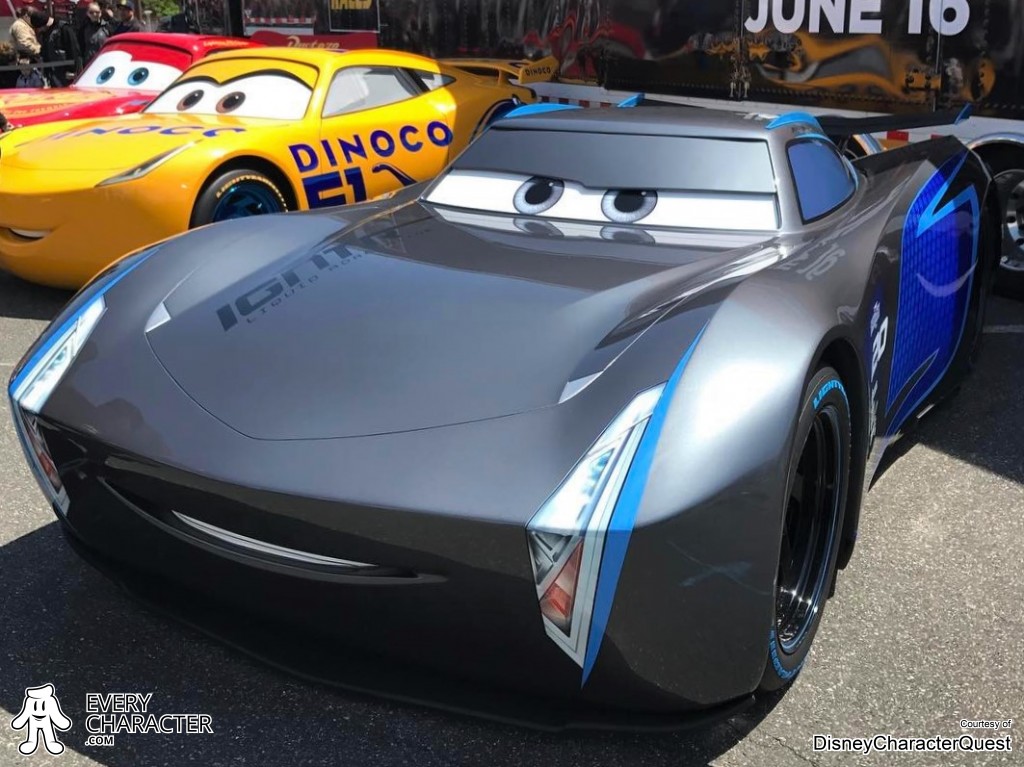
Jackson Storm represents a paradigm shift where data-driven design replaces traditional mechanical intuition. He is the cinematic personification of a high-tech hypercar, built not in a garage with grease and wrenches, but in a sterile laboratory through simulation and algorithmic optimization.
1. Digital Design and Aerodynamic Supremacy
Jackson Storm’s physical form is a masterclass in modern Computational Fluid Dynamics (CFD). Unlike the rounded, stock-car aesthetic of the previous generation, Storm features sharp angles, aggressive venting, and a silhouette designed to slice through air resistance with surgical precision.
The Science of Low Drag Coefficients
The core of Storm’s technological advantage lies in his “ultra-low profile.” In the world of high-performance tech, the drag coefficient ($C_d$) is a critical metric. Storm is designed with a ground-hugging chassis that minimizes the air flowing beneath him, effectively creating a vacuum that “sucks” the car to the pavement. This use of ground-effect aerodynamics is a direct nod to the technology seen in modern Formula 1 cars and Le Mans prototypes. His body is constructed from a hybrid of carbon fiber and metal composites, ensuring maximum rigidity with minimum weight—a hallmark of contemporary aerospace and automotive engineering.
Active Aero and Adaptive Surfaces
One of the most striking tech features of the Next-Gen racers is their ability to manipulate airflow in real-time. Jackson Storm utilizes active aerodynamics, where rear spoilers and front splitters adjust their angles based on speed and cornering forces. This is managed by onboard sensors that process environmental data thousands of times per second, ensuring that the car maintains optimal downforce without sacrificing top-end velocity.
2. The Power of Simulation: Training in the Virtual Realm
The most significant technological divide between Jackson Storm and his predecessors is the methodology of preparation. While older racers rely on track time and “feel,” Storm is a product of high-fidelity simulation and artificial intelligence.
Advanced Racing Simulators
Storm spends the majority of his training time inside a multi-million dollar motion-platform simulator. These machines utilize the same tech found in professional pilot training and elite-level motorsport. By recreating every bump, wind gust, and tire-grip variation of a specific track in a digital environment, Storm can run thousands of laps before his tires ever touch real asphalt. This “Digital Twin” technology allows his engineering team to test various configurations and strategies without the mechanical wear and tear of physical testing.
AI and Data Telemetry
Every move Jackson Storm makes is recorded and analyzed by an integrated AI system. Telemetry data—ranging from tire temperature to engine mapping—is streamed in real-time to his crew. This feedback loop allows for instantaneous adjustments. In the tech world, this is known as “Big Data Analytics” applied to performance. Storm doesn’t just drive; he executes a mathematically optimized path dictated by the processing of millions of data points.
3. The Propulsion System: A New Era of Power
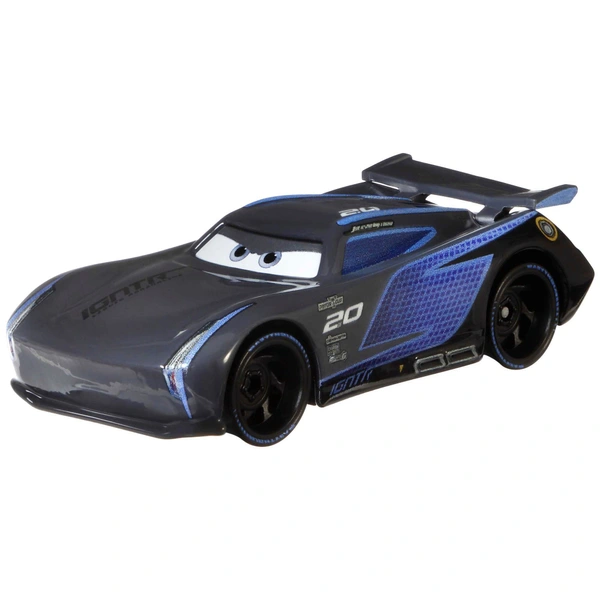
To compete at the highest level of Next-Gen racing, Storm’s internal components are as advanced as his exterior. While the film identifies his engine as a high-performance V-8, the implementation is far from traditional.
Electronic Fuel Injection and Engine Mapping
Storm’s powertrain is governed by a sophisticated Electronic Control Unit (ECU) that features multiple “power maps.” Depending on the race conditions—be it a long straightaway or a technical sequence of turns—the engine’s timing, fuel delivery, and rev limits can be altered on the fly via software updates. This level of digital control ensures that the engine operates at its peak efficiency, delivering roughly 850 horsepower with a 0–60 mph acceleration time of less than 3.6 seconds.
The Potential for Hybridization
While not explicitly stated as an EV, Storm’s design language borrows heavily from the “electrification” movement in the tech-auto sector. His silent, menacing idle and instantaneous torque delivery mirror the characteristics of high-performance hybrids like the Porsche 918 Spyder or the McLaren P1. The integration of high-capacity capacitors or Kinetic Energy Recovery Systems (KERS) is a logical extension of the technology Storm represents, allowing him to harvest energy under braking and deploy it as a power boost during overtakes.
4. The Digital Cockpit: UI/UX in High-Speed Environments
The interface through which Jackson Storm perceives the world is a far cry from the analog gauges of the past. His internal systems represent the pinnacle of User Interface (UI) and User Experience (UX) design within the automotive tech space.
Heads-Up Displays (HUD) and Augmented Reality
Storm’s “vision” is supplemented by an advanced HUD that overlays critical racing lines, competitor positions, and mechanical health directly onto his field of vision. This is a real-world tech trend currently migrating from fighter jets to high-end consumer vehicles. By using Augmented Reality (AR), Storm can see the “perfect line” on the track, calculated by his onboard computers to ensure he hits every apex with millimeter precision.
Neural Integration and Sensory Feedback
In the context of the Cars universe, the distinction between the car and the driver is blurred. From a technological standpoint, this represents the ultimate goal of “Human-Machine Interface” (HMI). Storm’s chassis is equipped with haptic feedback sensors that allow him to “feel” the limits of adhesion more acutely than any human driver could. This seamless integration of software and physical sensation is what allows him to maintain such high speeds through corners that would cause a traditional car to lose control.
5. Real-World Inspiration: The Cars That Built a Storm
While Jackson Storm is a fictional creation, his design is a “Frankenstein’s Monster” of the most advanced tech currently available in the automotive world. To truly understand what car he is, we must look at the real-world tech icons that inspired his aesthetic and mechanical DNA.
The Nissan Concept 2020 Vision Gran Turismo
Perhaps the closest visual and technological relative to Storm is the Nissan Concept 2020 Vision Gran Turismo. This car was designed specifically for the digital world of gaming before being built as a physical concept. It features the same aggressive “V-Motion” styling, advanced carbon fiber construction, and focus on extreme aerodynamics that define Jackson Storm.
The Lykan Hypersport and the Future of Hypercars
Elements of the W Motors Lykan Hypersport—famed for its integrated jewelry and advanced holographic displays—can also be seen in Storm’s DNA. The focus on luxury meets extreme tech is a hallmark of the modern hypercar. Furthermore, the influence of the Ford GT’s aerodynamic buttresses and the Lamborghini Veneno’s sharp, radar-deflecting angles are evident in Storm’s silhouette. He is a composite of the “Bleeding Edge”—a vehicle that exists at the very limit of what is currently possible with modern manufacturing and digital design.

Conclusion: The Legacy of a Digital Athlete
Jackson Storm is more than a character in an animated movie; he is a conceptual roadmap of the future of automotive technology. He represents a world where software is as important as steel, where simulations are as vital as the track, and where data is the ultimate fuel.
In answering “what car is Jackson Storm,” we find that he is a “Next-Gen” custom-built racer that draws from the best of modern tech: the aerodynamics of a Le Mans prototype, the brain of a supercomputer, and the soul of an AI. As we move closer to a reality defined by autonomous racing, electric hypercars, and augmented reality driving, Jackson Storm stands as a fascinating, high-tech precursor to the vehicles we will see on our roads—and racetracks—in the decades to come. He is the embodiment of the digital revolution, reminding us that in the race of technology, the finish line is always moving.
aViewFromTheCave is a participant in the Amazon Services LLC Associates Program, an affiliate advertising program designed to provide a means for sites to earn advertising fees by advertising and linking to Amazon.com. Amazon, the Amazon logo, AmazonSupply, and the AmazonSupply logo are trademarks of Amazon.com, Inc. or its affiliates. As an Amazon Associate we earn affiliate commissions from qualifying purchases.