
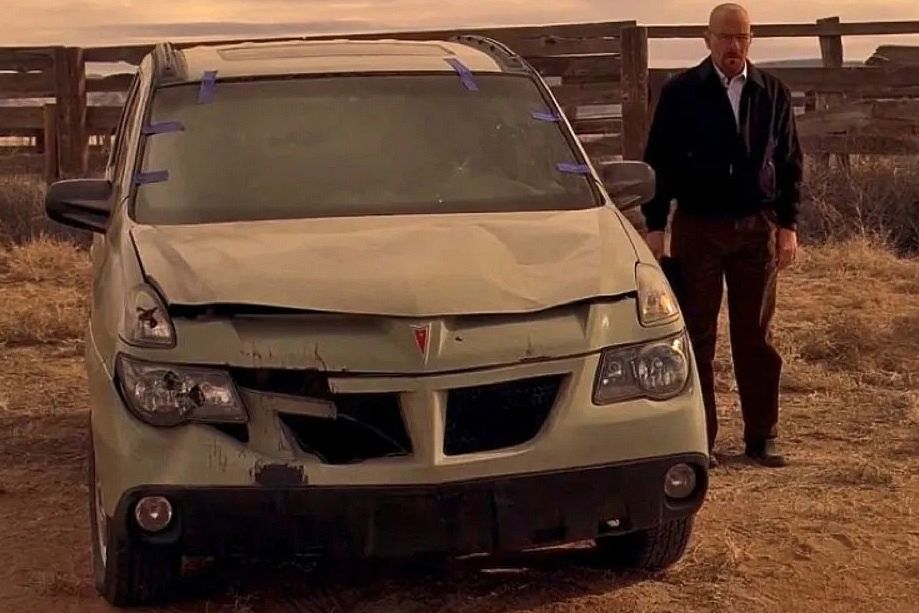
In the pantheon of television history, few visual symbols are as instantly recognizable as the fern-green 2004 Pontiac Aztek driven by Walter White in the AMC series Breaking Bad. To the casual viewer, it is a quirky, perhaps slightly ugly car that serves as a reliable prop. To a brand strategist, however, the car is a masterclass in visual communication, semiotics, and the consequences of a failed corporate identity.
The story of Walter White’s car is actually two stories: the real-world failure of the Pontiac brand to position a “lifestyle” vehicle, and the fictional success of a production team using that failure to brand a character. Understanding why Walter White drove an Aztek—and why he eventually traded it in—offers profound insights into brand alignment, market perception, and the power of visual storytelling in corporate strategy.

The Pontiac Aztek: A Case Study in Brand Misalignment
To understand the branding of Walter White, one must first understand the brand tragedy of the Pontiac Aztek. Launched in 2001, the Aztek was intended to be General Motors’ bold entry into the crossover market. It was designed to appeal to “active” Gen Xers—people who hiked, biked, and camped. On paper, the brand strategy was sound; in execution, it became a cautionary tale.
Design by Committee: The Dilution of Vision
The primary reason the Aztek failed as a brand was “design by committee.” In an attempt to make the vehicle everything to everyone—a minivan, an SUV, and a camper—GM’s design team created a disjointed aesthetic that lacked a cohesive identity. In branding, clarity is king. When a product tries to satisfy too many conflicting stakeholders, the brand identity becomes fractured. The Aztek’s plastic cladding and awkward proportions were the physical manifestation of a brand that had lost its “North Star.”
The Gap Between Brand Promise and Consumer Perception
Pontiac marketed the Aztek as “quite possibly the most versatile vehicle on the planet.” They featured it on the hit show Survivor, attempting to link the car to a brand of ruggedness and adventure. However, the market perceived it as the opposite: a symbol of aesthetic confusion and suburban compromise. This disconnect between what a brand says about itself and what the consumer feels is the “Brand Integrity Gap.” For Walter White, this gap was the perfect metaphor for his own life at the start of the series—a man who was promised greatness but delivered mediocrity.
Character Branding: The Aztek as the Ultimate “Anti-Brand”
In marketing, we often focus on “aspirational branding”—products that make us feel wealthier, cooler, or more successful. But there is also “associative branding,” where a product is used to signal a specific socioeconomic status or psychological state. The selection of the Aztek for Walter White was a deliberate choice to use a “failed brand” to define a “failed man.”
Symbolism of the Mundane: Establishing the “Beta” Identity
When we first meet Walter White, his brand is “Invisible Professional.” He is a brilliant chemist relegated to teaching high school and working at a car wash. The Aztek reinforces this brand identity perfectly. Because the car was widely ridiculed in the real world as one of the “ugliest cars ever made,” it immediately signaled to the audience that Walter was a man who had given up on his own image. He wasn’t driving a classic car or a sensible Honda; he was driving a vehicle that the world had rejected.
The Color Palette of Invisibility
The specific color of Walter’s Aztek—a muted, washed-out green—was not a factory-standard color. The production team intentionally dulled the paint to make it look “sad.” In brand strategy, color psychology is vital. While a vibrant red signals power and passion, this “washed-out” green signaled stagnation and decay. The car served as a visual anchor, ensuring that the “Walter White Brand” remained rooted in the mundane, even as his secret life began to escalate.
The Heisenberg Pivot: Strategic Rebranding and the Power Shift
One of the most significant moments in the series’ brand narrative occurs when Walter White officially “retires” the Aztek. As he fully embraces his alter ego, Heisenberg, his personal brand requires a total overhaul. A brand is a promise of an experience, and the experience Walter was now providing—that of a ruthless drug kingpin—could no longer be contained within a dented Pontiac crossover.
Trading the Aztek for the Chrysler 300 SRT8
The transition from the Pontiac Aztek to a black Chrysler 300 SRT8 is a classic example of “repositioning.” The Chrysler 300, with its boxy, aggressive stance and high-performance engine, communicates power, authority, and menace. By selling his Aztek for a mere $50 and leasing the Chrysler, Walter performed a “brand pivot.” He moved from a brand of “utility and compromise” to a brand of “dominance and luxury.”
Aggressive Aesthetics and Market Dominance
In the world of corporate identity, a rebrand often follows a shift in leadership or a change in mission. For Walter, the mission had changed from “survival” to “empire building.” The Chrysler 300 is often called the “poor man’s Bentley,” providing a look of high-end corporate power. This shift in his “visual assets” (his car, his hat, his glasses) allowed him to command respect in rooms where the Aztek would have invited ridicule. This teaches us that for a brand to be effective, every touchpoint—from the CEO’s vehicle to the company logo—must align with the desired market position.
Strategic Lessons for Modern Brand Management
The story of Walter White’s car is more than a trivia point for television fans; it is a repository of strategic lessons for business leaders and marketers. Whether you are managing a personal brand or a global corporation, the alignment of your “vehicle”—the medium through which you deliver your message—is critical.
Authenticity vs. Aspiration
The Aztek was authentic to Walter White’s initial struggle, but it wasn’t aspirational. In branding, you must decide which of these two poles you are playing toward. If your brand is built on “relatability,” you lean into the “Aztek” qualities of your product: the imperfections and the reality. If your brand is built on “luxury” or “excellence,” you must eliminate those imperfections. Walter White’s downfall began when his “aspirational brand” (Heisenberg) could no longer coexist with his “authentic brand” (the family man).
The Cost of Consistency
A brand is only as strong as its consistency. For several seasons, Walter White’s consistency was his invisibility. The Aztek was a vital part of that. When he broke that consistency by buying a flashy car, he alerted his enemies (and the DEA) that his brand had changed. In business, if you change your brand identity too abruptly without a corresponding change in your core values or infrastructure, you risk “brand rejection” from your loyal customer base.
Visual Cues as Market Signals
Every choice a company makes—the font on their website, the interior design of their office, the cars in their fleet—acts as a market signal. The Aztek signaled “low threat” and “low status.” The Chrysler signaled “high threat” and “high status.” When auditing a brand, leaders must ask: “What does our ‘Aztek’ say about us?” Are there elements of your business that are signaling the wrong message to your stakeholders?

Conclusion: The Legacy of a Brand Icon
Ultimately, the Pontiac Aztek became an icon not because of its success as a product, but because of its success as a symbol. It is the rare case where a “bad” brand was used to create a “good” story. By the end of the series, the Aztek had become so synonymous with Walter White that its real-world reputation began to shift. It was no longer just a design failure; it was a piece of cultural history.
For brand strategists, the lesson is clear: identity is not just about aesthetics; it is about narrative. The cars Walter White drove were not just transportation; they were his brand identity in motion. From the disjointed, committee-driven failure of the Aztek to the aggressive, singular vision of the Chrysler 300, his journey reminds us that in the world of branding, you are exactly what you drive—and what you drive tells the world exactly who you intend to be.
aViewFromTheCave is a participant in the Amazon Services LLC Associates Program, an affiliate advertising program designed to provide a means for sites to earn advertising fees by advertising and linking to Amazon.com. Amazon, the Amazon logo, AmazonSupply, and the AmazonSupply logo are trademarks of Amazon.com, Inc. or its affiliates. As an Amazon Associate we earn affiliate commissions from qualifying purchases.