
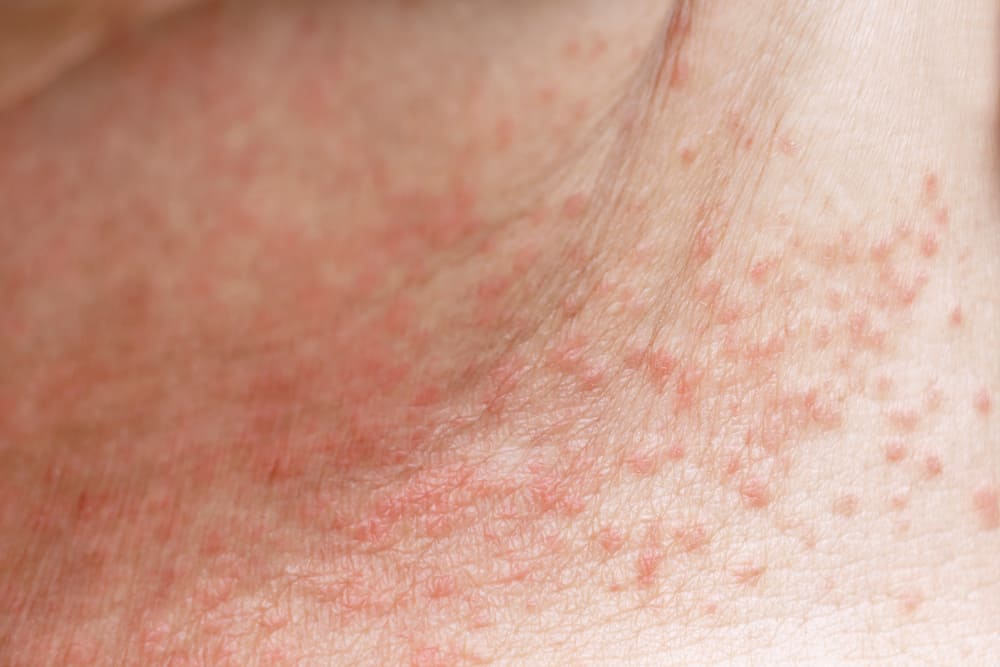
In the lexicon of modern engineering, “heat rash” is a metaphor for one of the most persistent challenges facing the technology sector: thermal saturation. Just as the human body reacts to excessive heat and blocked sweat glands with a painful rash, high-performance hardware reacts to thermal buildup with performance throttling, component degradation, and eventual system failure. In an era where Artificial Intelligence (AI), high-frequency trading, and 4K rendering demand unprecedented levels of computational power, the question of “what can you use for heat rash” takes on a technical urgency. To keep our digital infrastructure from breaking out in a metaphorical rash of errors and hardware fatigue, we must look toward advanced cooling architectures, sophisticated thermal interface materials, and innovative software-level power management.

The Hardware “Heat Rash”: Identifying Thermal Throttling and Component Stress
Before we can treat the heat rash of a high-performance system, we must understand why it occurs. In the world of silicon, heat is the byproduct of electrical resistance. As billions of transistors flip on and off within a microprocessor, they generate thermal energy that must be dissipated to prevent the delicate circuitry from warping or melting.
The Mechanics of Heat in Modern Silicon
Modern CPUs and GPUs are designed with a “Thermal Design Power” (TDP) rating, which indicates the maximum amount of heat a cooling system must dissipate under a workload. However, as we shrink process nodes down to 3nm and 2nm, the power density—the amount of heat generated per square millimeter—increases exponentially. This concentration of heat can lead to “hot spots” on the die, a technical form of heat rash where specific sectors of the chip reach critical temperatures while others remain cool. If this heat isn’t moved away from the silicon immediately, the chip’s internal logic will trigger a “throttle,” intentionally slowing down clock speeds to prevent physical damage.
Symptoms of a Digital Heat Rash: Lag and System Crashes
To the end-user, the symptoms of a technical heat rash are unmistakable. It begins with “thermal throttling,” where a device that was running smoothly suddenly experiences a drop in frame rates or processing speed. In more severe cases, excessive heat leads to system instability, manifested as the “Blue Screen of Death” (BSOD) or spontaneous reboots. Over the long term, consistent overheating leads to “electromigration,” a process where the atoms in the metal interconnects of a chip shift due to high current density and temperature, eventually causing permanent circuit failure. Understanding these symptoms is the first step in applying the correct “topical” and structural treatments.
Advanced Cooling Systems: Topical Treatments for Overheated Tech
When a device suffers from persistent thermal issues, the first line of defense is the cooling solution. Much like a cooling ointment for a skin rash, these technologies are designed to draw heat away from the sensitive surface and disperse it into the surrounding environment.
Liquid Cooling vs. Air Cooling: Choosing Your Ointment
For decades, air cooling was the standard remedy for hardware heat. By using aluminum or copper fins and high-speed fans, heat was moved via convection. However, air is a relatively poor conductor of heat. For high-performance “heat rash” in gaming rigs and enterprise servers, liquid cooling has become the preferred treatment. Liquid cooling systems use a pump to circulate a coolant—usually distilled water mixed with anti-corrosive agents—through a “water block” seated directly on the processor. Water has a much higher thermal capacity than air, allowing it to absorb and transport heat far more efficiently to a radiator, where it is then exhausted from the system.
Phase-Change Materials and Thermal Pastes
The most critical “topical” application in hardware maintenance is the Thermal Interface Material (TIM). No matter how flat a metal heatsink looks, at a microscopic level, there are pits and valleys. When a heatsink is placed on a CPU, air—which acts as an insulator—gets trapped in these gaps. Thermal paste, often infused with silver or ceramic particles, fills these gaps to ensure 100% contact. For extreme cases, engineers use “Liquid Metal” or phase-change materials that transition from solid to liquid as the chip warms up, providing superior thermal conductivity that can drop temperatures by 10 to 15 degrees Celsius instantly.
Industrial-Scale Remedies: Managing Heat in Data Centers and AI Clusters

While an individual laptop might get a “rash,” a data center can suffer a full-blown thermal epidemic. As companies like NVIDIA release power-hungry H100 and B200 GPUs for AI training, the traditional methods of cooling server rooms are becoming obsolete.
Immersion Cooling: The Ultimate Bath for Servers
One of the most radical treatments for large-scale hardware heat rash is “Single-Phase” or “Two-Phase” Immersion Cooling. In this setup, entire server racks are submerged in a specialized dielectric fluid—a liquid that does not conduct electricity but is incredibly efficient at conducting heat. As the components generate heat, the fluid absorbs it directly. In two-phase systems, the liquid actually boils, turning into a vapor that rises to a cooling coil, condenses, and falls back into the tank. This eliminates the need for fans entirely, reducing energy consumption by up to 90% and allowing for ultra-dense hardware configurations that would melt in a traditional air-cooled environment.
Precision Air Conditioning (PAC) and Airflow Optimization
For data centers not yet ready for immersion, “Cold Aisle/Hot Aisle” containment remains the standard prescription. By physically isolating the cold air intake from the hot air exhaust, engineers prevent “recirculation,” where a server accidentally sucks in the hot air exhausted by the machine next to it. Precision Air Conditioning units (PACs) monitor humidity and temperature at the rack level, ensuring that the environment stays within the “Goldilocks zone” (typically 18°C to 27°C) to prevent hardware fatigue.
The Role of Software: Digital Remedies for Thermal Management
Not all solutions for hardware heat rash are physical. Sometimes, the best way to treat a rash is to change the behavior that caused it. Software-level thermal management uses AI and telemetry to proactively manage heat before it reaches a critical threshold.
AI-Driven Health Analytics and Telemetry
Modern enterprise hardware is equipped with hundreds of thermal sensors. AI-driven management software, such as Intel’s Dynamic Tuning Technology or various data center infrastructure management (DCIM) tools, analyzes this data in real-time. By predicting when a workload will cause a spike in temperature, the software can proactively spin up fans or shift the computational load to a different server in a cooler part of the building. This “load balancing” prevents any single piece of hardware from developing a thermal rash.
Undervolting and Power Scaling
For mobile tech and laptops, “undervolting” is a popular community-driven remedy for heat. By slightly reducing the voltage supplied to a CPU while maintaining the same clock speeds, users can significantly reduce heat output without sacrificing performance. Similarly, operating systems use “DVFS” (Dynamic Voltage and Frequency Scaling) to constantly adjust the power draw based on the current task. By being “smarter” about how energy is consumed, devices can stay cool even under moderate stress.
Future-Proofing Hardware Against Thermal Damage
As we look toward the future of technology, the materials and methods we use to treat “heat rash” are evolving. We are moving beyond simply “moving heat” to designing materials that don’t let heat build up in the first place.
Graphene and the Next Generation of Heat Dissipation
Graphene is often hailed as a “wonder material” for its incredible thermal conductivity. Researchers are currently developing graphene-based heat spreaders that are thinner and more efficient than copper or aluminum. By integrating graphene into the substrate of the smartphone or the backplate of a tablet, manufacturers can create devices that stay cool to the touch even during intensive tasks like 5G streaming or mobile gaming.
Solid-State Cooling and the End of Moving Parts
Perhaps the most exciting development in treating technical heat rash is the advent of solid-state cooling, such as those developed by companies like Frore Systems. These “AirJet” chips use ultrasonic vibrations to move air across a heat spreader at high speeds without the need for traditional, bulky fans. This allows for paper-thin devices that have the thermal headroom of a much larger computer, effectively curing the “heat rash” issue for the next generation of ultra-portable tech.
In conclusion, while “heat rash” might be a biological term, its application in the tech world highlights the most significant bottleneck in modern computing: heat. Whether through the application of high-performance thermal pastes, the adoption of liquid immersion cooling, or the implementation of AI-driven power management, the tech industry has a robust pharmacy of solutions to keep our digital world running cool and efficient. As workloads grow and chips become denser, our “treatments” must continue to evolve, ensuring that heat remains a manageable byproduct rather than a destructive force.
aViewFromTheCave is a participant in the Amazon Services LLC Associates Program, an affiliate advertising program designed to provide a means for sites to earn advertising fees by advertising and linking to Amazon.com. Amazon, the Amazon logo, AmazonSupply, and the AmazonSupply logo are trademarks of Amazon.com, Inc. or its affiliates. As an Amazon Associate we earn affiliate commissions from qualifying purchases.