
The decision of what business to open is rarely about a single “eureka” moment. Instead, it is a calculated intersection of market demand, capital efficiency, and long-term scalability. In an era defined by rapid economic shifts and the democratization of global trade, the modern entrepreneur must look beyond simple passion projects. To build a venture that offers true financial freedom, one must analyze the “Money” aspect of the business: its cash flow potential, its overhead requirements, and its ability to generate a high return on investment (ROI).
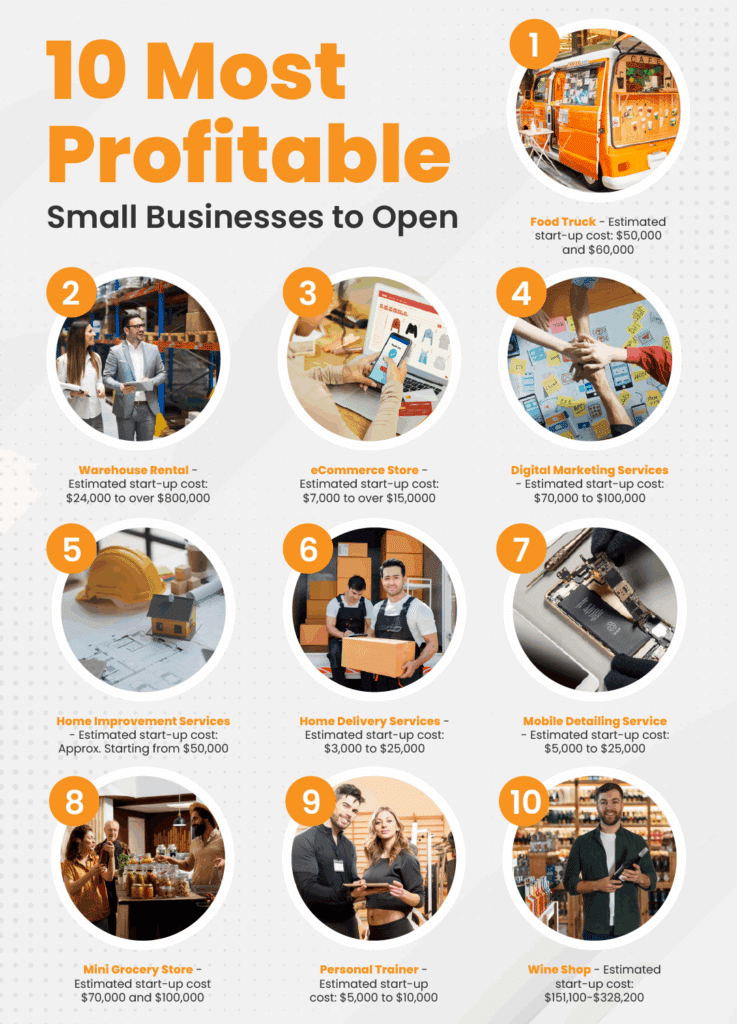
Whether you are looking to pivot from a traditional 9-to-5 or seeking to diversify your investment portfolio with an active enterprise, the choice of industry dictates your financial ceiling. This guide explores the most lucrative business models to open today, focusing on sectors that prioritize high margins and sustainable growth.
Service-Based Side Hustles: Low Overhead, High Returns
For many aspiring business owners, the primary barrier to entry is capital. This is why service-based models remain the most accessible and financially prudent businesses to open. By leveraging existing expertise, you eliminate the need for inventory, warehousing, and complex supply chains, allowing for a near-instantaneous path to profitability.
Consulting and Specialized Professional Services
In a complex global economy, specialized knowledge is a high-value commodity. Consulting businesses—ranging from financial advisory and tax strategy to supply chain optimization—carry some of the highest profit margins in the business world. When you open a consultancy, your primary “cost of goods sold” is your time.
The financial beauty of this model lies in its scalability through value-based pricing rather than hourly billing. By solving high-stakes problems for other businesses, a consultant can command fees that far outstrip the operational costs of a home office and a few software subscriptions. As the business grows, the transition from a solo practitioner to an agency model allows for the delegation of tasks, transforming active work into a scalable corporate asset.
The Booming Creator Economy Support Niche
While many focus on becoming “influencers,” the real money is often found in the “picks and shovels” of the creator economy. Businesses that provide essential services to digital content creators—such as specialized video editing, scriptwriting, talent management, or digital rights administration—are seeing unprecedented growth.
These are high-yield businesses to open because they tap into the marketing budgets of both individuals and major brands. From a financial perspective, these services are often recurring. Retainer-based contracts provide the predictable cash flow necessary to reinvest in better equipment or additional staff, creating a stable financial foundation that many transactional businesses lack.
Scalable Digital Infrastructure and Online Income Streams
If your goal is to decouple your income from your time, digital infrastructure represents the gold standard of modern business ownership. These models require an initial investment of time or capital but offer the potential for exponential growth with minimal incremental costs.
SaaS (Software as a Service) for Micro-Niches
You do not need to build the next global social media platform to have a successful software company. Some of the most profitable businesses to open are “Micro-SaaS” ventures—software tools that solve a specific, painful problem for a very narrow audience.
Financially, SaaS is highly attractive due to the subscription revenue model. Monthly Recurring Revenue (MRR) allows for precise financial forecasting and increases the valuation of the business should you choose to sell it. Because the cost of duplicating software is virtually zero, once you surpass your “break-even” point (the cost of development and hosting), almost every dollar of revenue becomes pure profit.
Digital Real Estate: Content Platforms and Affiliate Ecosystems
Building a content-rich website or a specialized digital community is akin to developing digital real estate. By consistently producing high-value information, these businesses attract traffic that can be monetized through various streams: affiliate marketing, sponsored content, and display advertising.

The financial strategy here is “compounding interest.” A well-written article or a comprehensive guide can generate revenue for years after it is published. For the entrepreneur focused on “Money,” this represents a diversified portfolio of income-generating assets. Unlike a physical storefront, a digital platform is open 24/7 and serves a global audience, removing the geographical limitations on your earning potential.
The Future of E-Commerce: Specialized Physical Product Brands
While the “dropshipping” craze of the previous decade has matured, the opportunity to open a physical product business remains robust—provided you focus on branding and proprietary value. The most successful e-commerce businesses today are those that control their margins by moving away from commodity goods toward specialized, high-demand niches.
Sustainable and Eco-Conscious Consumer Goods
There is a significant financial trend moving toward “conscious capitalism.” Consumers are increasingly willing to pay a premium for products that are ethically sourced, plastic-free, or carbon-neutral. Opening a business in the sustainability sector allows you to occupy a high-price-point niche where margins are protected from the “race to the bottom” seen in general retail.
From a business finance perspective, sustainable brands often enjoy higher customer loyalty and lower churn. This reduces the Long-Term Cost of Acquisition (CAC) and increases the Lifetime Value (LTV) of the customer, which are the two most critical metrics for any product-based business.
Health and Wellness Technology Integration
The intersection of physical products and the wellness industry is a multi-billion dollar frontier. Businesses that offer high-quality fitness equipment, specialized nutritional supplements, or recovery tools are tapping into a demographic that views health as a non-negotiable investment.
When considering what business to open in this space, look for “consumables”—products that customers need to reorder regularly. Whether it is a subscription box of organic supplements or replacement parts for wellness gadgets, the goal is to build a recurring revenue loop into a physical product framework. This provides the cash flow stability usually reserved for service or software industries.
Financial Considerations and Risk Mitigation Strategies
Opening a business is an exercise in risk management. No matter how promising an industry looks on paper, the financial execution determines the ultimate success or failure of the venture. A professional approach to “Money” involves more than just tracking sales; it involves deep financial planning.
Assessing Capital Requirements and Cash Flow
The most common reason new businesses fail is not a lack of customers, but a lack of cash. Before deciding what business to open, perform a rigorous “burn rate” analysis. How much capital is required to reach the point of self-sufficiency?
Service-based businesses usually have the lowest “runway” requirements, while manufacturing or SaaS may require significant upfront investment before a single dollar is earned. Understanding your “Cash Conversion Cycle”—the time it takes for an investment in labor or inventory to return to your bank account as revenue—is vital. A business with a fast cycle is much easier to fund and scale organically than one that ties up capital for months at a time.

Diversifying Income Streams Within Your New Venture
A truly resilient business does not rely on a single source of revenue. As you plan your new venture, consider how to layer different “Money” models. For example, a professional who opens a consulting firm (Service) might eventually launch an online course (Digital Product) or write a book (Passive Income).
This diversification protects the business from market volatility. If one segment of the economy slows down, another can provide the necessary cushion. From a financial standpoint, this turns a “business” into a “financial ecosystem.” By thinking like an investor as much as an operator, you ensure that the business you open today becomes a lasting pillar of wealth for the future.
In conclusion, the question of “what businesses to open” is best answered by looking at where the most efficient movement of capital occurs. By choosing models with high margins, recurring revenue potential, and low relative overhead, you position yourself not just as a business owner, but as a master of your financial destiny. Whether you choose the path of expert services, digital infrastructure, or premium products, the focus must remain on the bottom line: creating value that the market is eager to pay for, in a way that remains profitable and sustainable for years to come.
aViewFromTheCave is a participant in the Amazon Services LLC Associates Program, an affiliate advertising program designed to provide a means for sites to earn advertising fees by advertising and linking to Amazon.com. Amazon, the Amazon logo, AmazonSupply, and the AmazonSupply logo are trademarks of Amazon.com, Inc. or its affiliates. As an Amazon Associate we earn affiliate commissions from qualifying purchases.