
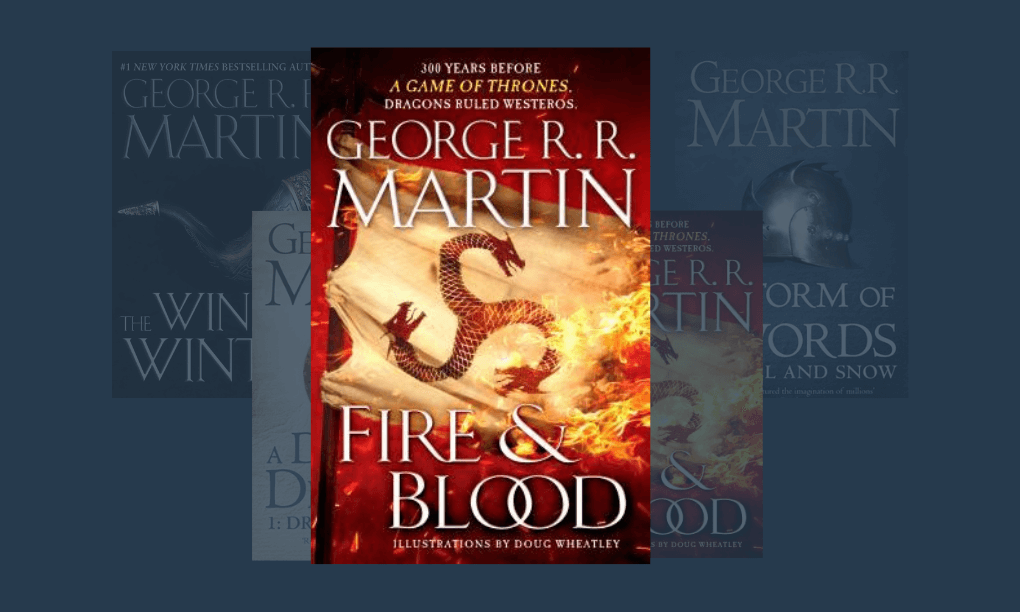
In the modern landscape of entertainment, a television show is rarely just a show; it is a flagship product within a multi-billion dollar intellectual property (IP) portfolio. When audiences ask, “What book is House of the Dragon based on?” they are identifying the foundational document of a massive brand ecosystem. The answer—Fire & Blood by George R.R. Martin—serves as more than just a narrative guide. From a brand strategy perspective, it is the “Brand Bible” that allows Home Box Office (HBO) to scale the Game of Thrones universe into a sustainable, multi-generational franchise.
Understanding the relationship between the source material and the screen adaptation offers a masterclass in brand expansion, corporate identity, and the strategic management of creative assets.
The Blueprint of a Franchise Brand: Fire & Blood as Narrative Architecture
To understand the branding behind House of the Dragon, one must first understand the unique nature of its source material. Unlike the A Song of Ice and Fire novels, which are written as traditional first-person POV narratives, Fire & Blood is written as a scholarly history book by a fictional Archmaester.
From Narrative to Framework: How Fire & Blood Differs from ASOIAF
In branding terms, the shift from a traditional novel to a “history” book represents a shift from a product-specific focus to a framework-based strategy. Fire & Blood provides the structural outlines of the Targaryen dynasty without the granular internal monologues found in the original series. This provides the “brand architects”—the showrunners and writers—with a flexible framework. They have the core milestones (the brand pillars) but have the creative “white space” to innovate within the execution.
This is a critical lesson in brand strategy: a strong brand requires clear non-negotiables (the historical events of the book) while allowing for localized or medium-specific adaptations to ensure the final product resonates with a modern audience.
The Importance of Lore as a Brand Asset
Lore is the “equity” of a fantasy brand. For House of the Dragon, the “book” serves as a repository of historical credibility. In a crowded marketplace where every streaming service is looking for its own “tentpole” IP, having a dense, established history creates a barrier to entry for competitors.
The lore contained within Fire & Blood creates a sense of “brand depth.” When consumers feel that a world has a history that extends beyond what is shown on screen, their loyalty to the brand increases. They aren’t just watching a show; they are engaging with a legacy. For HBO, the book provides the “provenance” necessary to justify the high production costs and marketing spend.
Rebranding the Seven Kingdoms: Managing the Legacy of a Global Titan
The transition from Game of Thrones to House of the Dragon was not merely a creative choice; it was a high-stakes rebranding exercise. Following the divisive conclusion of the original series, the “Westeros” brand faced a crisis of consumer confidence.
Overcoming the “Finale Fatigue”
Every major brand faces a period of decline or a “product failure.” For the Game of Thrones franchise, the eighth season was a brand volatility event. To launch House of the Dragon, the strategy had to pivot. By basing the show on Fire & Blood—a book that focuses on the peak of Targaryen power—the brand was able to return to its core “Value Proposition”: high-stakes political intrigue, complex character dynamics, and the spectacle of dragons.
The brand strategy here was “Back to Basics.” By leaning heavily into the iconography of the Targaryen sigil and the ancestral history documented in the book, HBO successfully re-engaged the “core” brand enthusiasts while signaling to the “casual” consumer that the show was a fresh start.
Consistency vs. Innovation in Visual Branding
A successful brand extension must feel both familiar and new. House of the Dragon utilizes the visual language established by its predecessor (the “Brand Guidelines”)—such as the design of the Iron Throne, the musical motifs of Ramin Djawadi, and the gritty, cinematic realism—while introducing new elements.

The “book” provides the justification for these changes. Because Fire & Blood takes place 172 years before the birth of Daenerys Targaryen, the brand has the “creative license” to show a more opulent, functional King’s Landing. This is a strategic way to refresh the brand’s visual identity without alienating the existing customer base. It is the equivalent of a legacy automotive brand like Porsche updating the 911; the silhouette remains the same, but the internal technology and aesthetic flourishes evolve to meet contemporary standards.
Intellectual Property Management and Multi-Platform Synergy
The decision to adapt Fire & Blood is a calculated move in long-term IP management. In the “Streaming Wars,” the value of a brand is measured by its “stickiness”—how long a subscriber stays within the ecosystem.
The Role of George R.R. Martin as a Brand Architect
In corporate terms, George R.R. Martin serves as the Chief Creative Officer (CCO) of the Westeros brand. His involvement provides the “seal of authenticity” that is vital for brand trust. When a brand is based on a specific creator’s work, that creator becomes a brand ambassador.
By basing the series on a completed (or at least, more structured) historical text like Fire & Blood, HBO mitigated the risk of running out of “raw materials,” a problem that plagued the later seasons of Game of Thrones. This ensures “supply chain stability” for the content, allowing the brand to plan multiple seasons and even potential spin-offs with a clear roadmap.
Global Market Positioning: Why Fantasy is a High-Value Brand
From a marketing perspective, the world established in Martin’s books is a “Global Brand.” The themes of power, inheritance, and family conflict are universal, allowing the brand to transcend cultural and linguistic barriers.
High-fantasy brands based on dense literary works (like The Lord of the Rings or the Harry Potter series) command higher market valuations because they offer “lifestyle” potential. The brand extends into gaming, apparel, collectibles, and theme park experiences. House of the Dragon, by grounding itself in the “historical” text of Fire & Blood, provides the granular detail needed to fuel these ancillary brand channels. Each dragon mentioned in the book is a potential product; each house sigil is a piece of merchandise.
Lessons for Modern Brand Strategy from House of the Dragon
The success of House of the Dragon as an adaptation offers several insights that can be applied to brand strategy in any industry, from tech to luxury goods.
Storytelling as a Core Brand Value
Whether you are selling a software-as-a-service (SaaS) product or a fantasy television series, the “story” is your most valuable asset. The book Fire & Blood is the “Why” behind the “What.” It explains the origins, the motivations, and the values of the characters.
In corporate branding, businesses that can articulate their “origin story” with the same depth and consistency as a George R.R. Martin novel often see higher levels of brand equity. A brand with a history is a brand with a soul.
Strategic Prequels: Expanding the Product Line
The choice to produce a prequel rather than a sequel is a classic “Product Line Extension” strategy. A sequel moves the brand forward into the unknown, which carries significant risk. A prequel, however, leverages the existing knowledge of the consumer to deepen their relationship with the brand’s past.
By answering the question “What book is House of the Dragon based on?” HBO points the consumer back to the source material, creating a “Content Loop.” The show drives book sales, and the book drives interest in the show. This synergy is the hallmark of a sophisticated brand ecosystem.
Conclusion: The Power of the Source Material
At its heart, House of the Dragon is a testament to the power of a strong foundation. The book Fire & Blood provided the intellectual and creative capital necessary to revive one of the world’s most significant media brands.
For brand strategists, the lesson is clear: identity is built on history. Whether that history is the “lore” of a fantasy world or the “heritage” of a century-old corporation, the source material dictates the trajectory of the brand. By respecting the “book” while innovating for the future, a brand can achieve the rarest of feats—becoming a “Lindy” asset that remains relevant and valuable for decades to come.
aViewFromTheCave is a participant in the Amazon Services LLC Associates Program, an affiliate advertising program designed to provide a means for sites to earn advertising fees by advertising and linking to Amazon.com. Amazon, the Amazon logo, AmazonSupply, and the AmazonSupply logo are trademarks of Amazon.com, Inc. or its affiliates. As an Amazon Associate we earn affiliate commissions from qualifying purchases.