
Securing a mortgage is arguably the most significant financial commitment the average individual will make in their lifetime. Even a marginal difference in interest rates—as small as 0.25%—can result in tens of thousands of dollars in savings or costs over the life of a 30-year loan. As the global economy navigates a landscape of fluctuating inflation and central bank interventions, identifying which banks offer the best mortgage rates requires a nuanced understanding of the lending market, the types of institutions available, and the personal financial metrics that drive lender behavior.
Finding the “best” rate is not a static pursuit; it is a dynamic process influenced by the secondary bond market, federal monetary policy, and the internal liquidity needs of individual financial institutions. To secure the most favorable terms, borrowers must look beyond the marquee advertisements and delve into the specific advantages offered by different tiers of banking institutions.
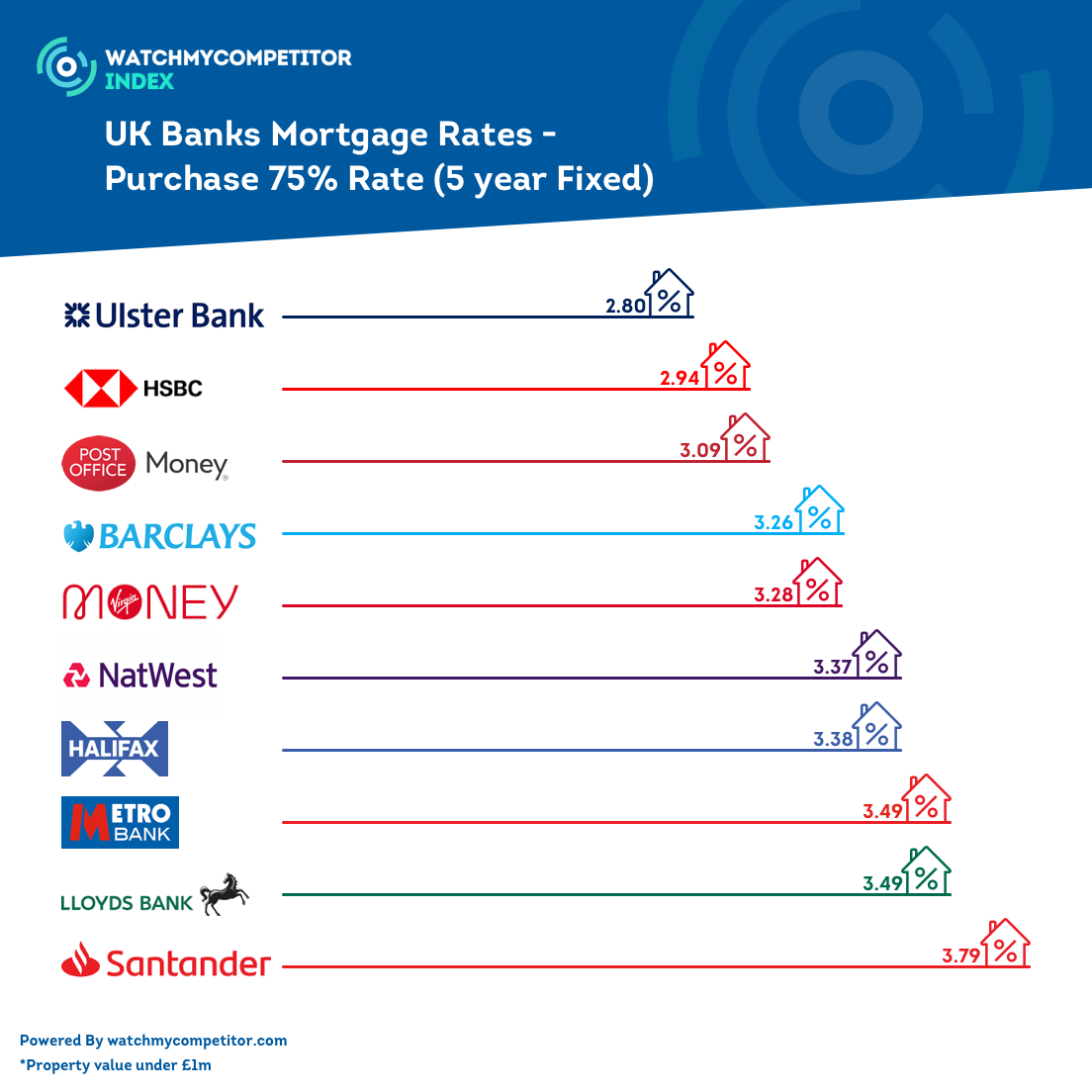
The Landscape of Mortgage Lending: Where to Start Your Search
The mortgage market is far from a monolith. It is composed of diverse players ranging from global financial powerhouses to localized community credit unions. Each type of institution has a different risk appetite and cost structure, which directly impacts the rates they pass on to consumers.
National Commercial Banks
Large-scale national banks, such as JPMorgan Chase, Bank of America, and Wells Fargo, are often the first stop for prospective homeowners. These institutions possess massive balance sheets and can offer a high degree of stability. One of the primary advantages of working with a national bank is the potential for “relationship pricing.” If you already hold significant assets in a checking, savings, or investment account with a major bank, they may offer a reduction in your mortgage rate—sometimes between 0.125% and 0.50%—to keep your business within their ecosystem.
However, large banks often have stricter underwriting criteria. Because they process such high volumes of loans, they tend to prefer “box-ready” borrowers with high credit scores and conventional down payments. If your financial situation is non-standard, these institutions might not offer the most flexible or competitive rates.
Digital-First and Online Lenders
In the last decade, digital-first lenders like Rocket Mortgage, Better.com, and SoFi have revolutionized the industry. By eliminating the overhead associated with physical branch locations, these entities can often offer lower interest rates and reduced origination fees. Their primary value proposition is speed and transparency.
Digital lenders utilize sophisticated algorithms to provide “instant” pre-approvals and streamlined documentation processes. For a borrower with a straightforward financial profile, online lenders frequently provide the most competitive “headline” rates. The caveat is that these lenders often sell their loans on the secondary market immediately, meaning your servicer may change shortly after closing.
Credit Unions and Regional Banks
Credit unions are member-owned, non-profit cooperatives. Because they do not have to answer to shareholders, they can often return profits to their members in the form of lower interest rates. Regional banks and credit unions are particularly competitive for borrowers who may fall slightly outside the traditional lending “box.” They often keep loans on their own books (portfolio lending) rather than selling them, which gives them more flexibility in setting rates for unique properties or jumbo loans that exceed conforming limits.
Top Financial Institutions for Competitive Rates
While the specific “best” rate changes daily, certain institutions consistently rank at the top of the market due to their business models and targeted demographics.
Best for Relationship Discounts: Citigroup and Chase
For high-net-worth individuals or those with significant liquid assets, Citigroup and Chase are often unbeatable. Their tiered relationship programs are designed to reward loyalty. For instance, a borrower with $250,000 in combined assets might see a meaningful reduction in their fixed-rate mortgage. This strategy allows the bank to capture the borrower’s entire financial life, from their mortgage to their retirement accounts.
Best for First-Time Homebuyers: Guild Mortgage and Fairway
Institutions like Guild Mortgage specialize in government-backed loans, such as FHA, VA, and USDA loans. While these might not always have the lowest absolute interest rate compared to a 20% down conventional loan, they offer the best rates for the specific risk profile of a first-time buyer. Their expertise in navigating down-payment assistance programs can often offset a slightly higher rate by reducing the total cash required at closing.

Best for Low Fees: Ally Bank and SoFi
Ally and SoFi have gained massive market share by focusing on the “all-in” cost of the loan. While some banks lure customers with a low interest rate only to pad the closing costs with junk fees, these digital-first institutions prioritize a clean fee structure. SoFi, in particular, caters to high-earning young professionals who may have high student debt but also high income potential, offering them rates that traditional banks might reserve only for those with zero debt.
Factors That Determine the Rate You Actually Receive
The rates you see advertised on bank websites are “teaser rates,” usually reserved for borrowers with a 780+ credit score and a 20% down payment. To understand what rate a bank will actually offer you, you must evaluate your own financial profile through the eyes of a lender.
Credit Score and Debt-to-Income Ratio
Your FICO score is the single most influential factor in your mortgage rate. Lenders categorize borrowers into “buckets.” A borrower with a 760 score might receive a rate that is a full percentage point lower than a borrower with a 620 score. Similarly, your Debt-to-Income (DTI) ratio—the percentage of your gross monthly income that goes toward paying debts—tells the bank how much risk they are taking. Most banks prefer a DTI below 36%, though some will go up to 43% or higher for a premium on the interest rate.
Loan-to-Value (LTV) and Down Payments
The more “skin in the game” you have, the lower your rate will be. A 20% down payment (80% LTV) is the industry standard to avoid Private Mortgage Insurance (PMI) and secure competitive pricing. However, some banks offer “sweet spots.” Occasionally, an 85% LTV might have a slightly better rate than an 80% LTV because the presence of mortgage insurance actually reduces the bank’s risk, though the borrower pays the insurance premium.
Loan Term and Type
The choice between a 15-year and a 30-year fixed-rate mortgage is a choice between lower interest and lower monthly payments. A 15-year mortgage almost always carries a lower interest rate—often 0.50% to 1.0% lower—because the bank’s capital is at risk for a shorter period. Additionally, Adjustable-Rate Mortgages (ARMs) have regained popularity in high-rate environments. These offer a lower “introductory” rate for 5, 7, or 10 years, which can be a savvy move if the borrower expects to sell or refinance before the rate adjusts.
Strategies to Secure the Lowest Possible Rate
Identifying the right bank is only half the battle. To truly optimize your mortgage, you must employ specific financial strategies during the application process.
Buying Down the Rate with Points
Discount points are essentially prepaid interest. One point equals 1% of the loan amount. By paying points at closing, you can “buy down” your interest rate for the life of the loan. This is an investment calculation: you must determine the “break-even point”—how many months of lower payments it will take to recover the upfront cost of the points. In a high-rate environment, if you plan to stay in the home for ten years or more, buying points can be a highly effective way to secure a rate that is lower than the market average.
The Power of the Rate Lock
Mortgage rates can fluctuate multiple times in a single day based on movements in the 10-year Treasury yield. Once you find a rate you are comfortable with, it is vital to secure a “rate lock.” Most banks offer a 30- to 60-day lock for free, while longer locks may require a fee. A “float-down” provision is even better—it locks your rate but allows you to take advantage of a lower rate if the market drops before you close.
Comparison Shopping and Negotiation
The Consumer Financial Protection Bureau (CFPB) has found that borrowers who get at least three quotes save an average of $3,500 over the first few years of their loan. Banks are businesses, and their loan officers have some discretion. If Bank A offers you a 6.5% rate and Bank B offers 6.7%, you can take Bank A’s Loan Estimate to Bank B and ask them to match or beat it. Often, banks will waive certain fees or shave a few basis points off the rate to win a high-quality borrower.
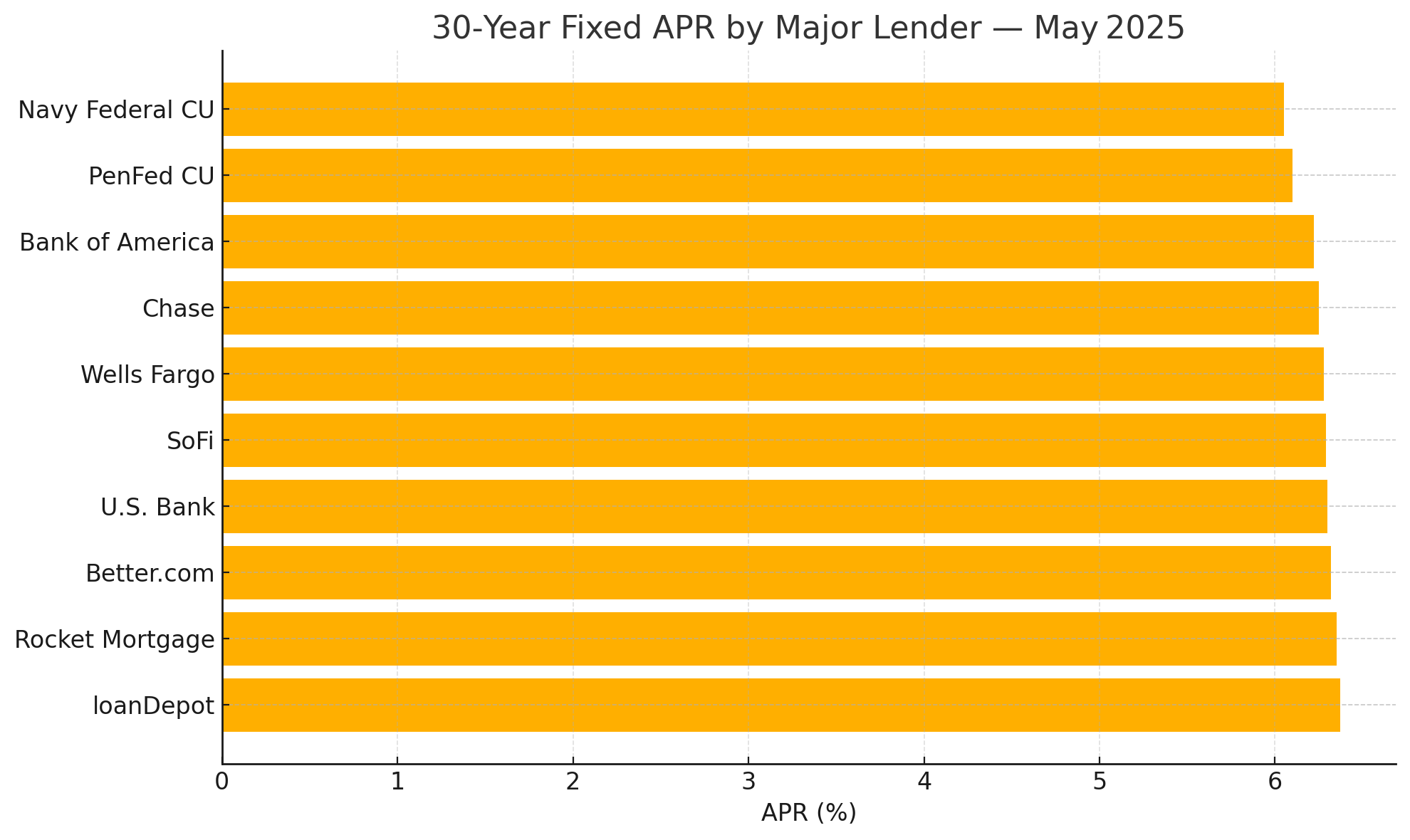
Making the Right Choice for Your Long-Term Wealth
Ultimately, the bank with the “best” mortgage rate is the one that aligns with your total financial strategy. For some, the best rate is the absolute lowest APR, regardless of the lender’s name. For others, it is a slightly higher rate from a local bank that offers superior service and the ability to manage all finances under one roof.
When evaluating lenders, look beyond the interest rate. Consider the Annual Percentage Rate (APR), which includes the interest rate plus broker fees, points, and other credit charges. The APR provides a more accurate picture of the total cost of borrowing. In today’s complex financial environment, the best mortgage is not just about the monthly payment—it is about minimizing the total interest paid over time and ensuring the loan structure supports your broader goals of equity building and wealth preservation. By understanding the motivations of different banking institutions and optimizing your own financial profile, you can navigate the market with the confidence of an informed investor.
aViewFromTheCave is a participant in the Amazon Services LLC Associates Program, an affiliate advertising program designed to provide a means for sites to earn advertising fees by advertising and linking to Amazon.com. Amazon, the Amazon logo, AmazonSupply, and the AmazonSupply logo are trademarks of Amazon.com, Inc. or its affiliates. As an Amazon Associate we earn affiliate commissions from qualifying purchases.