
For decades, overdraft fees have been a contentious and often painful aspect of personal banking. These charges, levied when consumers spend more money than they have in their account, can quickly accumulate, trapping individuals in a cycle of debt and disproportionately affecting those with lower incomes and less financial cushion. However, the financial landscape is undergoing a significant transformation. Driven by consumer demand, regulatory pressure, and the innovative spirit of challenger banks, a growing number of financial institutions are now offering checking accounts with no overdraft fees, signaling a monumental shift towards more transparent and consumer-friendly banking.

This article delves into the evolving world of fee-free banking, exploring why overdraft fees have become obsolete, identifying the key players—both traditional and digital—that are leading the charge, and outlining what consumers should consider when choosing an account that prioritizes their financial well-being over punitive charges. Navigating these options effectively can empower individuals to avoid unnecessary expenses, build greater financial resilience, and take control of their banking experience.
The Shifting Landscape of Overdraft Fees
Understanding the origins and impact of overdraft fees is crucial to appreciating the current movement towards their abolition. For many years, these fees represented a significant revenue stream for banks, but their economic and social costs to consumers have become increasingly clear.
Understanding Overdraft Fees and Their Impact
An overdraft occurs when a transaction — such as a debit card purchase, ATM withdrawal, or bill payment — exceeds the available balance in a checking account. In response, banks typically process the transaction and then charge a fee, often ranging from $30 to $35 per occurrence. While seemingly small in isolation, these fees can quickly compound. A single purchase, when combined with a series of subsequent small transactions that also trigger overdrafts, can lead to hundreds of dollars in fees within a matter of days. This cycle disproportionately affects vulnerable populations, including students, low-income individuals, and those living paycheck to paycheck, for whom these fees represent a significant financial burden that can further destabilize their finances. Studies have consistently shown that a small percentage of bank customers bear the majority of overdraft fees, highlighting the regressive nature of these charges.
Regulatory Pressure and Consumer Demand
The tide began to turn with increasing scrutiny from consumer advocacy groups and regulatory bodies. Organizations like the Consumer Financial Protection Bureau (CFPB) have repeatedly highlighted the predatory nature of excessive overdraft fees, pushing for greater transparency and fairer practices. Their research has underscored how these fees disproportionately harm financially vulnerable households and contribute to financial instability. This regulatory spotlight, combined with a growing consumer demand for more transparent and ethical banking practices, created fertile ground for change. Customers, tired of being caught off guard by unexpected charges, began actively seeking alternatives that offered clearer terms and fewer penalties for minor financial missteps.
The Rise of Fee-Friendly Banking Models
In response to both market demand and regulatory pressure, the banking sector has seen the emergence of two primary models challenging the status quo of overdraft fees. Firstly, a wave of digital-first challenger banks and FinTech companies built their business models around the promise of fee-free banking, including the complete elimination of overdraft fees. Their agile, tech-driven approach allowed them to innovate rapidly and attract customers disillusioned with traditional banking. Secondly, even some long-established traditional banks, recognizing the competitive threat and the shift in consumer sentiment, have begun to re-evaluate their policies, introducing accounts with no overdraft fees or significantly reducing their charges. This dual-pronged evolution is rapidly making fee-free banking a mainstream expectation rather than a niche offering.
Key Players Offering No Overdraft Fees
The good news for consumers is that there is an ever-expanding list of financial institutions that have embraced the no-overdraft-fee model. These range from innovative digital-only platforms to established banks adapting to the modern financial landscape.
Challenger Banks and FinTech Innovators
Digital-first banks and FinTech companies have been at the forefront of the no-overdraft-fee movement. Their streamlined operations and technology-centric approach allow them to offer highly competitive terms.
-
Chime: One of the pioneers in this space, Chime offers its “SpotMe” feature, which allows eligible members to overdraw their account up to a pre-set limit without fees. This limit typically starts at $20 and can increase up to $200 with responsible use and direct deposits. Chime focuses on providing a mobile-first banking experience with early direct deposit and other user-friendly features.
-
Varo Bank: As a fully licensed national bank, Varo is FDIC-insured and committed to helping customers improve their financial health. It offers a no-fee checking account with no monthly maintenance fees, no minimum balance requirements, and, crucially, no overdraft fees. Varo also provides “Advance,” a cash advance feature that allows eligible customers to borrow up to $250 without interest if repaid on time.
-
SoFi Money: SoFi, known for its lending products, also offers an excellent checking and savings account with no monthly fees, no minimum balance, and no overdraft fees. It provides a high-yield savings component, early access to direct deposit, and a comprehensive suite of financial tools within a single app.
-
Current: Current offers a checking account with “Overdrive” protection, allowing eligible members to overdraw up to $200 without fees. The account also boasts early direct deposit, budgeting tools, and cashback rewards.
-
Revolut/N26 (US Market Considerations): While primarily popular internationally, these global FinTechs have made inroads into the U.S. market, offering accounts with minimal or no fees, including often no overdraft charges, focusing on global money management and transparent pricing.
Traditional Banks Adapting
While challenger banks led the charge, several traditional banks have recognized the importance of eliminating overdraft fees to remain competitive and customer-centric.
-
Ally Bank: As an online-only bank, Ally has long been a leader in offering customer-friendly terms. It boasts no monthly maintenance fees, no minimum balance requirements, and, notably, no overdraft fees on its checking accounts. Ally automatically declines transactions that would overdraw an account if funds are insufficient, preventing fees altogether, or uses an optional “Overdraft Transfer Service” to pull funds from a linked savings account if available (with no fee).
-
Capital One: In a significant move in 2021, Capital One announced it would eliminate all overdraft fees and non-sufficient fund (NSF) fees for its consumer checking account customers. This bold step from a major traditional bank sent a clear signal to the industry about the future of banking.
-
PNC Bank: Through its “Virtual Wallet” checking accounts, PNC offers “Low Cash Mode,” which provides customers with real-time alerts and up to 24 hours to cover an overdraft before a fee is charged. While not a blanket elimination of all overdraft fees across all products, it represents a substantial mitigation strategy aimed at helping customers avoid charges.
-
Bank of America, JP Morgan Chase, Citibank: While these banking giants have not universally eliminated overdraft fees across all their checking products, they have introduced specific account types or features designed to help customers avoid these charges. For example, some offer “SafeBalance” or “Clear Access” accounts with no overdraft fees (transactions are simply declined), or provide grace periods and small dollar overdraft options to mitigate the impact. It’s crucial for customers to carefully review the specific account terms and conditions offered by these large banks.
Credit Unions: A Historically Fee-Friendly Option
Credit unions, by their nature as non-profit cooperative financial institutions, often prioritize member well-being over profit. Many credit unions have historically offered lower fees, including more forgiving or nonexistent overdraft policies. While they may not always have the same cutting-edge digital features as some FinTechs, their community focus and commitment to financial education make them a strong contender for those seeking fee-free banking with a personal touch. Consumers should explore local credit unions to understand their specific offerings, as policies can vary.
Beyond Overdrafts: What to Look For in a Fee-Free Bank Account
While eliminating overdraft fees is a major step towards better banking, it’s essential to look at the bigger picture when choosing a financial institution. A truly fee-friendly account goes beyond just one type of charge.
Hidden Fees and Account Minimums
An account advertised as “no overdraft fees” might still carry other charges that can erode your savings. Scrutinize the fee schedule for:
-
Monthly Maintenance Fees: Many banks charge a monthly fee if you don’t meet certain criteria (e.g., minimum balance, direct deposit amount).
-
ATM Fees: Charges for using out-of-network ATMs can add up. Look for banks that offer extensive fee-free ATM networks or ATM fee reimbursements.
-
Foreign Transaction Fees: If you travel internationally, ensure your debit card doesn’t levy extra fees on purchases made abroad.
-
Wire Transfer Fees: While less common for everyday transactions, these can be costly if you ever need them.
-
Paper Statement Fees: Some banks charge for physical statements, encouraging digital-only interaction.

Always read the fine print to understand all potential costs associated with an account.
Interest Rates and Account Features
A checking account that offers no fees and pays a competitive interest rate on your balance is a powerful combination, allowing your money to grow even when it’s easily accessible. Beyond interest, consider:
-
Early Direct Deposit: Many challenger banks offer access to your paycheck up to two days early.
-
Budgeting Tools and Insights: Integrated budgeting features, spending trackers, and financial insights within the banking app can be invaluable.
-
Mobile Banking Capabilities: A robust, user-friendly mobile app for deposits, transfers, bill payments, and managing alerts is a must-have in today’s digital age.
-
Bill Pay and Zelle/P2P Transfers: Ensure the account supports convenient ways to pay bills and send money to friends and family.
-
Savings Integration: Seamless integration with a high-yield savings account can simplify money management and encourage savings.
FDIC Insurance and Security
Regardless of a bank’s fee structure or innovative features, ensuring the security of your funds is paramount. Always confirm that your chosen bank is FDIC-insured (for traditional banks and FinTechs partnered with an FDIC-insured institution) or NCUA-insured (for credit unions). This insurance protects your deposits up to $250,000 per depositor, per insured bank, in the event of the institution’s failure. Furthermore, investigate the bank’s security protocols, including encryption, fraud monitoring, and multi-factor authentication, to protect your personal and financial information.
Strategies for Managing Your Money Without Overdrafts
Even with a no-overdraft-fee account, practicing sound money management principles is essential to maintain financial health and avoid liquidity issues.
Proactive Budgeting and Tracking
The most fundamental strategy is to always know how much money you have available.
-
Create a Budget: Track your income and expenses to understand where your money goes.
-
Monitor Your Balance Regularly: Check your account balance frequently through your mobile app or online banking, especially before making large purchases.
-
Automate Bill Payments Wisely: Schedule automatic payments for recurring bills, ensuring funds are available on the payment date.
-
Reconcile Transactions: Periodically compare your bank statement with your own records to catch discrepancies and ensure accuracy.
Setting Up Account Alerts
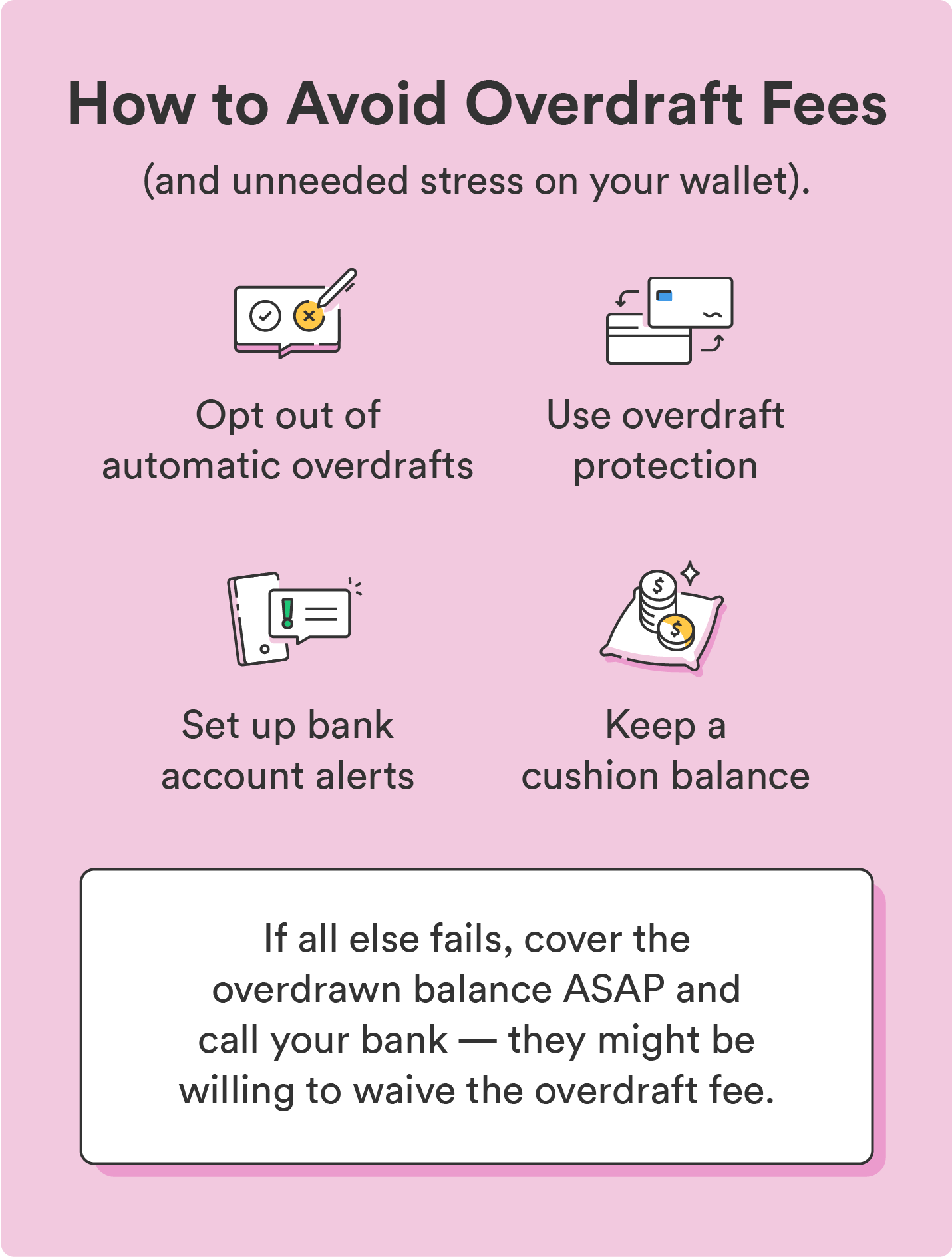
Most banks offer customizable alerts that can serve as an early warning system.
-
Low Balance Alerts: Set up alerts to notify you when your account balance falls below a certain threshold.
-
Large Transaction Alerts: Receive notifications for any transaction over a specific amount, helping you monitor for unauthorized activity.
-
Daily Balance Updates: Some banks can send you a daily summary of your account balance.
These alerts can provide crucial real-time information, helping you avoid accidental overspending.
Linking to Savings or Credit Lines
For an additional layer of protection, consider linking your checking account to other financial products.
-
Automatic Transfers from Savings: Many banks allow you to link a savings account so that if your checking account is about to be overdrawn, funds are automatically transferred from savings to cover the transaction (often without a fee).
-
Overdraft Line of Credit: Some banks offer an overdraft line of credit. While it typically involves interest charges, it can be a less expensive alternative to a standard overdraft fee if used sparingly. Understand the terms and interest rates before relying on this option.
Building an Emergency Fund
The ultimate defense against unexpected expenses that could lead to an overdraft is a robust emergency fund. Ideally, this fund should cover 3-6 months of essential living expenses, stored in a separate, easily accessible savings account. An emergency fund acts as a financial buffer, ensuring that unforeseen costs like medical emergencies, car repairs, or job loss don’t force you into an overdraft situation or compromise your financial stability.
The Future of Fee-Free Banking
The trend towards eliminating overdraft fees is not just a fleeting fad; it represents a fundamental shift in how banks are expected to operate and interact with their customers.
Continued Innovation and Competition
The competition among financial institutions to attract and retain customers will continue to drive innovation in fee structures and account features. Challenger banks will push the envelope with new technologies and customer-centric models, while traditional banks will be compelled to adapt further, offering more transparent and beneficial products. This competition is a win for consumers, leading to more choices and better terms. We can expect to see further integration of budgeting tools, AI-powered financial advice, and personalized insights becoming standard features in fee-free accounts.
Empowering Financial Health
The elimination of overdraft fees contributes significantly to the broader goal of empowering financial health and inclusion. By removing a major source of financial stress and punitive charges, banks are helping consumers avoid debt traps and retain more of their hard-earned money. This allows individuals, particularly those with modest incomes, to build savings, plan for the future, and achieve greater financial stability. Fee-free banking fosters a relationship built on trust and mutual benefit, rather than one defined by penalties.
Conclusion
The question “what bank has no overdraft fees?” is no longer a search for a rarity but an exploration of an increasingly common and beneficial banking option. The days of exorbitant overdraft fees are gradually receding, replaced by a growing movement towards transparent, customer-friendly financial services. From agile challenger banks like Chime and Varo to traditional giants like Capital One and Ally, consumers now have a wealth of choices for accounts that prioritize their financial well-being.
By carefully researching your options, scrutinizing all potential fees, and understanding the full suite of features offered, you can select a bank that not only eliminates overdraft charges but also provides the tools and support necessary to manage your money effectively. Embracing fee-free banking is a crucial step towards taking control of your financial future, fostering greater stability, and ensuring that your money works for you, not against you. The power to choose a better banking experience is now firmly in the hands of the consumer.
aViewFromTheCave is a participant in the Amazon Services LLC Associates Program, an affiliate advertising program designed to provide a means for sites to earn advertising fees by advertising and linking to Amazon.com. Amazon, the Amazon logo, AmazonSupply, and the AmazonSupply logo are trademarks of Amazon.com, Inc. or its affiliates. As an Amazon Associate we earn affiliate commissions from qualifying purchases.