
In the modern era of digital influence and personal branding, we often look to Silicon Valley CEOs or social media moguls for blueprints on how to build a lasting public identity. However, one of the most sophisticated examples of brand strategy resides in the early 20th century. Amelia Earhart was not merely a pilot; she was a pioneer of personal branding who understood that in a competitive, male-dominated marketplace, “awards” were the ultimate currency of credibility.
When we ask, “What awards did Amelia Earhart win?” we are essentially asking how she validated her brand to a global audience. Her accolades served as the “trust signals” that allowed her to transcend the cockpit and become a fashion designer, an author, a public speaker, and a perennial symbol of courage. This article explores the strategic importance of Earhart’s awards and how they served as the foundation for one of the most enduring corporate and personal identities in history.
The Architecture of an Icon: Awards as Brand Validation
In branding, “social proof” is the concept that people will follow the lead of credible organizations or experts. For Amelia Earhart, awards were the physical manifestation of social proof. At a time when women were often dismissed as “hobbyists” in aviation, Earhart’s trophies and medals functioned as professional certifications that proved her “product”—her skill and bravery—was world-class.
The Distinguished Flying Cross: Establishing Authority
The most significant “seal of approval” in Earhart’s portfolio was the Distinguished Flying Cross. Awarded by the United States Congress, she was the first woman ever to receive it. From a brand strategy perspective, this was a “Category King” moment. By securing an award previously reserved for men, she successfully repositioned her brand from “female flyer” to “aviation authority.” This award provided the legislative and military backing her brand needed to secure high-value sponsorships and speaking engagements.
The Legion of Honor: International Market Expansion
A brand that thrives only in its home country is limited. To become a global icon, Earhart needed international validation. Following her 1932 solo transatlantic flight, the French government bestowed upon her the Cross of the Knight of the Legion of Honor. This accolade was crucial for her brand’s “global distribution.” It signaled to European markets that Earhart was a figure of diplomatic and cultural significance, not just an American daredevil. This international acclaim allowed her brand to stay relevant in the fashion houses of Paris and the social circles of London.
National Geographic Society Gold Medal: The Ultimate Trust Signal
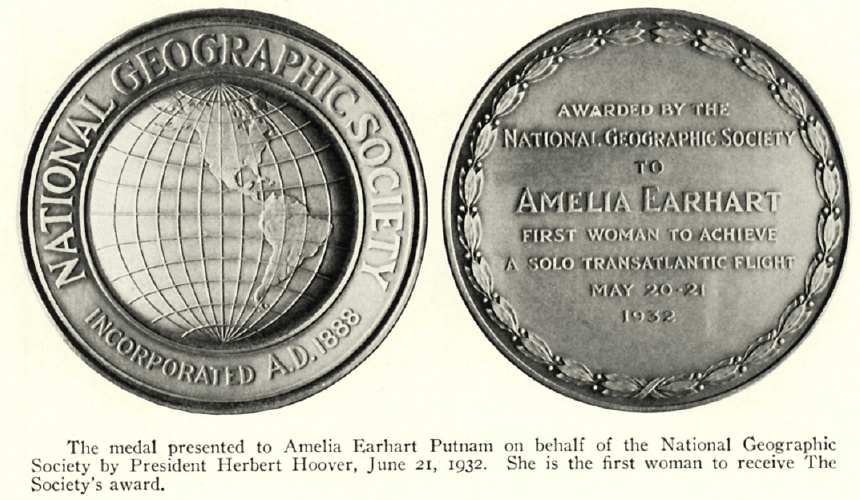
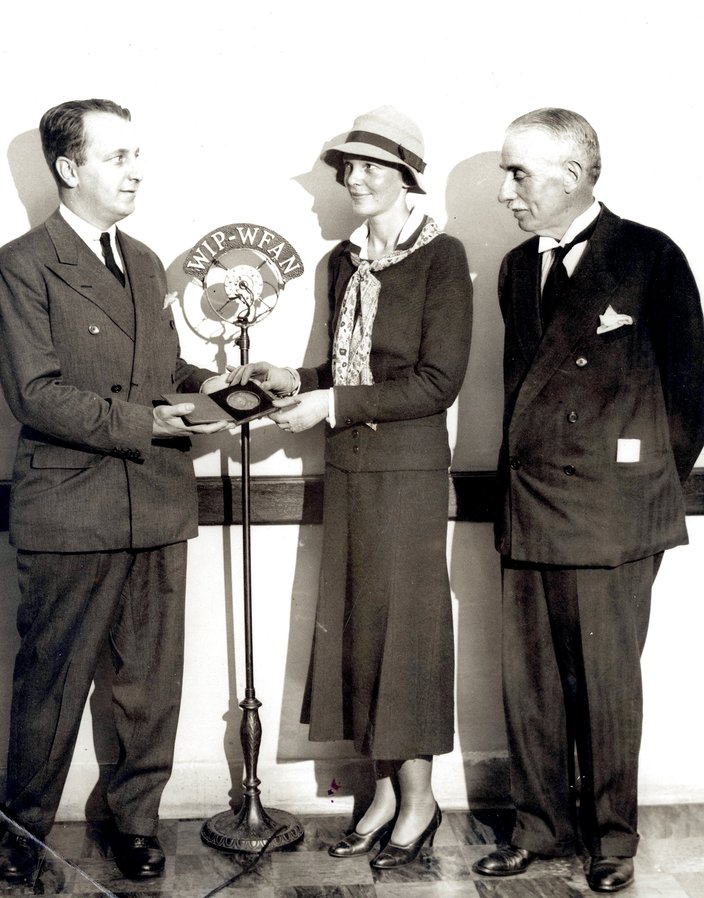
Perhaps no organization in the 1930s carried more intellectual weight than the National Geographic Society. When President Herbert Hoover presented Earhart with the Society’s Special Gold Medal, it served as the ultimate endorsement of her brand’s “educational and scientific” value. This prevented her from being pigeonholed as a mere entertainer or “stunt flyer.” It elevated her brand to the level of “Explorer,” a niche that commanded higher respect and longer-term brand equity.
Leveraging Recognition for Market Influence
A brand is only as good as its ability to monetize and influence. Amelia Earhart and her manager (and husband), George Putnam, were masters at converting her “award-winning” status into tangible market assets. They understood that her medals were the “features,” but the “benefit” was the inspiration and empowerment she sold to the public.
From Cockpit to Catalog: The Fashion Line and Endorsements
Earhart used her status as an award-winning pilot to launch a functional clothing line for “women who live actively.” This was a brilliant brand extension. Because she had the “awards” to prove she was a practitioner, her fashion brand had immediate “street cred.” She didn’t just put her name on labels; she designed clothes with aviation-inspired features—like specialized pockets and durable fabrics—that reflected her brand’s core values of utility and freedom. Her awards served as the “Quality Assurance” stamp for every product she endorsed, from Lucky Strike cigarettes (which she strategically used to fund her flights) to Horlick’s Malted Milk.
Public Speaking and the “Expert” Persona
In the 1930s, the “revenue stream” for a personal brand was often the lecture circuit. Earhart’s awards were the primary selling point for these engagements. Promoters could bill her as the “Most Decorated Woman in Aviation.” This allowed her to command premium fees. During her talks, she didn’t just discuss flying; she spoke about the “brand of the modern woman,” advocating for female independence and professional parity. Her accolades gave her the “earned media” platform to influence public policy and corporate hiring practices.
Strategic Differentiation in a Male-Dominated Industry
In any crowded market, differentiation is key to survival. Earhart faced the daunting task of competing in a field where the “incumbents”—men like Charles Lindbergh—held most of the market share. She used her accolades to carve out a unique selling proposition (USP) that was both gender-specific and universally respected.
The “First Woman” Narrative as a Brand USP
Earhart’s awards were often tied to “firsts.” First woman to fly solo across the Atlantic; first person to fly solo from Hawaii to California. In brand marketing, being “The First” is one of the most powerful positions a brand can hold. It creates an immediate association in the consumer’s mind. By consistently winning awards for being the “first,” Earhart effectively “owned” the concept of female pioneering in the public consciousness. She became the “category leader” for women in STEM (Science, Technology, Engineering, and Math) before the term even existed.
Managing the Media: The Role of George Putnam as “CMO”
No discussion of the Earhart brand is complete without mentioning George Putnam. If Amelia was the “product,” Putnam was the Chief Marketing Officer. He was instrumental in ensuring that every award she won was publicized in the most prestigious outlets. He treated her career like a series of product launches, where the “award” was the climax of the campaign. This strategic management of her public image ensured that her brand remained “premium” and never drifted into the “discount” territory of minor celebrities.
The Legacy Brand: Maintaining Relevance Post-Career
The true test of a brand’s strength is its longevity. Decades after her disappearance, the Amelia Earhart brand remains one of the most recognizable in the world. This is partly due to the “mythology” surrounding her, but also due to the rock-solid foundation of the awards she accumulated during her life and those bestowed posthumously.
Posthumous Awards and Immortalizing the Image
Even after 1937, the “Earhart Brand” continued to collect accolades. From being inducted into the National Aviation Hall of Fame to receiving the Presidential Medal of Freedom posthumously, these honors serve to “re-verify” her brand for new generations. In the world of branding, this is known as “legacy maintenance.” These honors ensure that the brand identity remains consistent: she is forever the “Queen of the Air,” a symbol of the “can-do” spirit that defines the American brand identity.
Lessons for Modern Personal Branding
What can today’s entrepreneurs and creators learn from Amelia Earhart’s “award strategy”?
- Seek Third-Party Validation: Don’t just claim you are an expert; earn the certifications or awards that prove it.
- Repurpose Your Accolades: Use your achievements as a springboard into new markets (as Earhart did with fashion).
- Own a Niche: Find a “first” or a unique angle that allows you to become the “Category King” of your specific field.
- Consistency is Key: Earhart’s brand was always about courage and independence. Every award she accepted aligned perfectly with those core values.
In conclusion, when we look back at what awards Amelia Earhart won, we are seeing the building blocks of a masterfully crafted brand strategy. Her medals were not just jewelry for the ego; they were the strategic tools used to dismantle gender barriers, secure financial independence, and build a legacy that shows no signs of fading. She remains a case study in how to use professional excellence to create a “Brand for the Ages.”
aViewFromTheCave is a participant in the Amazon Services LLC Associates Program, an affiliate advertising program designed to provide a means for sites to earn advertising fees by advertising and linking to Amazon.com. Amazon, the Amazon logo, AmazonSupply, and the AmazonSupply logo are trademarks of Amazon.com, Inc. or its affiliates. As an Amazon Associate we earn affiliate commissions from qualifying purchases.