
For the majority of households, a vehicle is the second-largest purchase they will ever make, trailing only the acquisition of a home. Because cars are depreciating assets that require constant upkeep, savvy consumers view the purchase not just through the lens of aesthetics or performance, but through the lens of financial risk management. This is where the manufacturer’s warranty becomes a critical tool. A robust warranty is essentially an insurance policy against catastrophic mechanical failure, protecting your personal cash flow and ensuring that your investment doesn’t turn into a financial liability.
In this guide, we will analyze which auto manufacturers offer the best warranties from a “Money” perspective, evaluating how these programs impact the total cost of ownership, resale value, and long-term financial planning.
The Financial Impact of a Comprehensive Vehicle Warranty
To understand which manufacturer has the “best” warranty, one must first understand the financial utility of these contracts. A warranty is not merely a promise of quality; it is a legal commitment that shifts the financial risk of manufacturing defects from the consumer to the corporation.
Mitigating Out-of-Pocket Expenses
The primary financial benefit of a long-term warranty is the stabilization of your monthly budget. Modern vehicles are essentially computers on wheels, and the cost of repairing advanced components—such as infotainment systems, sensor suites for driver assistance, or dual-clutch transmissions—can easily exceed $3,000 to $5,000. For a family living on a structured budget, an unexpected $4,000 repair bill can lead to high-interest credit card debt or the liquidation of emergency savings. A manufacturer that offers an extensive “Bumper-to-Bumper” warranty effectively caps your maintenance risk for the duration of the term.
Long-Term Resale Value and Asset Protection
A warranty also serves as a value-added feature when it comes time to sell or trade in the vehicle. If a warranty is transferable to a second owner, it increases the asset’s liquidity and market value. Buyers are willing to pay a premium for a used vehicle that still carries two or three years of factory protection because it eliminates the “lemon risk” associated with private-party sales. Consequently, choosing a brand with a transferable, long-duration warranty is a strategic move to preserve the residual value of your investment.
Evaluating the Industry Leaders: Who Offers the Most Financial Protection?
When we look at the current automotive landscape, the competition for the “best” warranty is fierce, but a few manufacturers consistently provide the highest financial security for their customers.
The 10-Year/100,000-Mile Club: Hyundai, Kia, and Mitsubishi
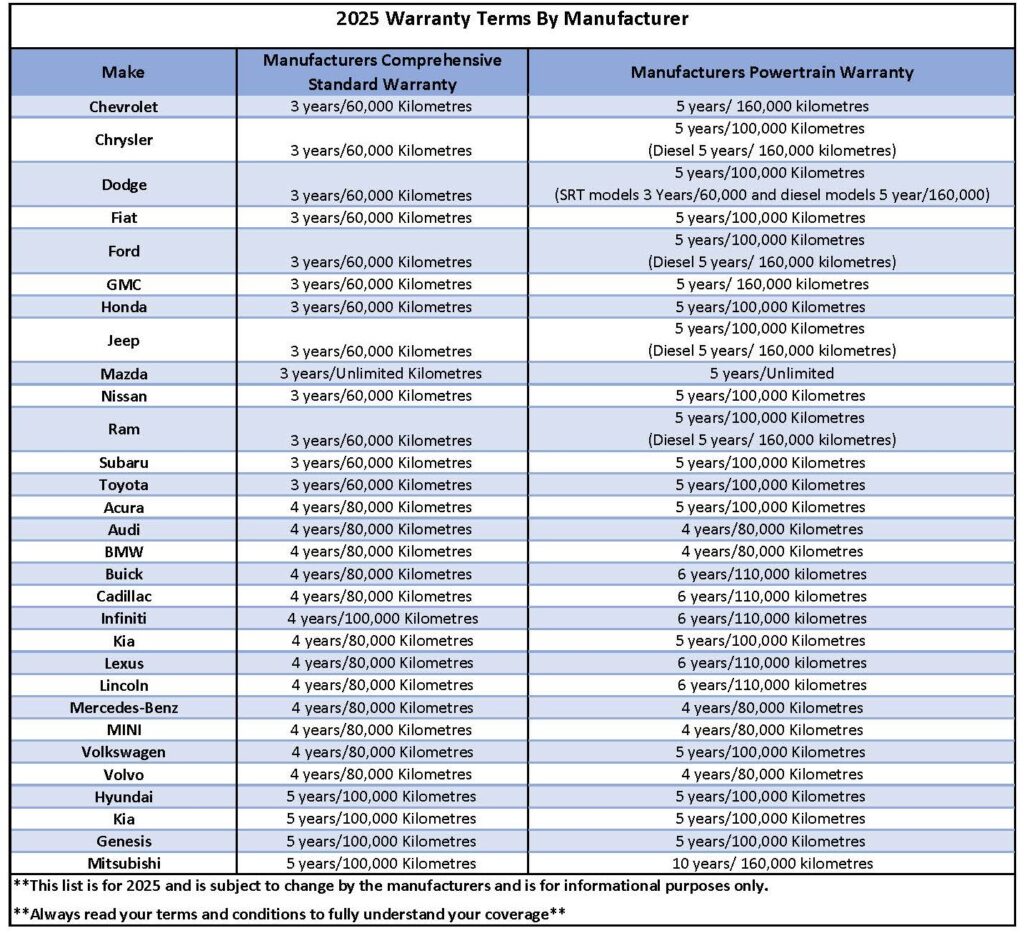
For over two decades, the Hyundai Motor Group (which includes Hyundai, Kia, and Genesis) has set the gold standard for financial protection in the automotive industry. Their “America’s Best Warranty” package includes a 10-year/100,000-mile limited powertrain warranty and a 5-year/60,000-mile new vehicle limited warranty.
From a financial planning perspective, this is a massive advantage. If you finance a car for 72 months (six years), a Hyundai or Kia ensures that you will likely never have to pay for a major engine or transmission failure while you are still making car payments. Mitsubishi offers a similar 10-year/100,000-mile powertrain coverage, which makes their vehicles highly attractive for budget-conscious buyers who intend to keep their cars for a decade or more.
Luxury and Premium Coverage: Genesis and Lincoln
In the luxury sector, Genesis stands out by combining the 10-year powertrain warranty of its parent company (Hyundai) with premium service perks. They offer 3 years or 36,000 miles of complimentary scheduled maintenance. When you calculate the cost of synthetic oil changes, filter replacements, and inspections over three years, this represents a direct cash saving of approximately $600 to $1,200.
Lincoln also provides a competitive edge for high-net-worth individuals or business owners through their “Black Label” program, which includes pickup and delivery for service and extended premium maintenance. While the upfront cost of these vehicles is higher, the “cost of ownership” is smoothed out by these comprehensive coverage plans.
The EV Edge: Federal Mandates vs. Manufacturer Extras
If you are considering an Electric Vehicle (EV), the warranty landscape changes. By federal law in the United States, all EV batteries must be warranted for at least 8 years or 100,000 miles. However, some manufacturers go further. Brands like Rivian and Tesla offer varying degrees of coverage, but the real “Money” move is looking at manufacturers that guarantee a certain percentage of battery capacity (usually 70%). This protects the owner against “battery degradation,” which is the single largest factor in EV depreciation.

Beyond the Sticker Price: Hidden Financial Clauses in Warranties
A warranty is only as good as its fine print. To truly maximize the financial benefits, an owner must understand the limitations that could lead to a claim being denied.
Inclusion and Exclusion Lists: The “Wear and Tear” Trap
Many consumers confuse a “Bumper-to-Bumper” warranty with a maintenance-free existence. Financially, it is important to budget for “wear and tear” items which are almost never covered. This includes tires, brake pads, windshield wipers, and light bulbs. If you are choosing a manufacturer based on warranty, check if they offer a “wear item” period. Some brands, like Subaru and Mazda, offer limited coverage for brake pads or wiper blades for the first year or 12,000 miles—a small but notable financial reprieve.
The Cost of Voiding a Warranty
From a personal finance standpoint, “voiding” a warranty is a catastrophic error. Manufacturers require strict adherence to maintenance schedules to keep the warranty in force. If you skip two years of oil changes and your engine fails, the manufacturer is not legally obligated to pay for the replacement. To protect your investment:
- Keep Meticulous Records: Even if you use an independent mechanic, keep every receipt.
- Avoid Unauthorized Modifications: Aftermarket performance chips or suspension lifts can give a manufacturer legal grounds to deny a claim related to the drivetrain or chassis.
Transferability and the “Second Owner” Penalty
This is a crucial “Money” tip: Some of the best warranties are restricted to the original owner. For example, Hyundai’s famous 10-year/100,000-mile powertrain warranty often shrinks to a 5-year/60,000-mile warranty for the second owner. If you are buying a used car, do not assume the original warranty carries over in full. Always verify the transfer terms, as this significantly impacts the “value” of the used vehicle purchase.
Strategic Decision-Making: How to Factor Warranties into Your Personal Budget
When deciding which car to buy, the warranty should be treated as a line item in your Total Cost of Ownership (TCO) calculation.
The Total Cost of Ownership (TCO) Calculation
To find the true financial impact, compare two vehicles:
- Vehicle A: $30,000 with a 3-year/36,000-mile warranty.
- Vehicle B: $32,000 with a 10-year/100,000-mile warranty.
While Vehicle B costs $2,000 more upfront, the “risk-adjusted cost” may be much lower. If you plan to own the car for 7 years, Vehicle A leaves you “uninsured” for 4 years. If a major repair occurs in year 5, Vehicle B suddenly becomes the cheaper option. For those who prioritize financial stability, paying a slight premium for a better warranty is a form of affordable insurance.
To Extend or Not to Extend? (Extended Warranties)
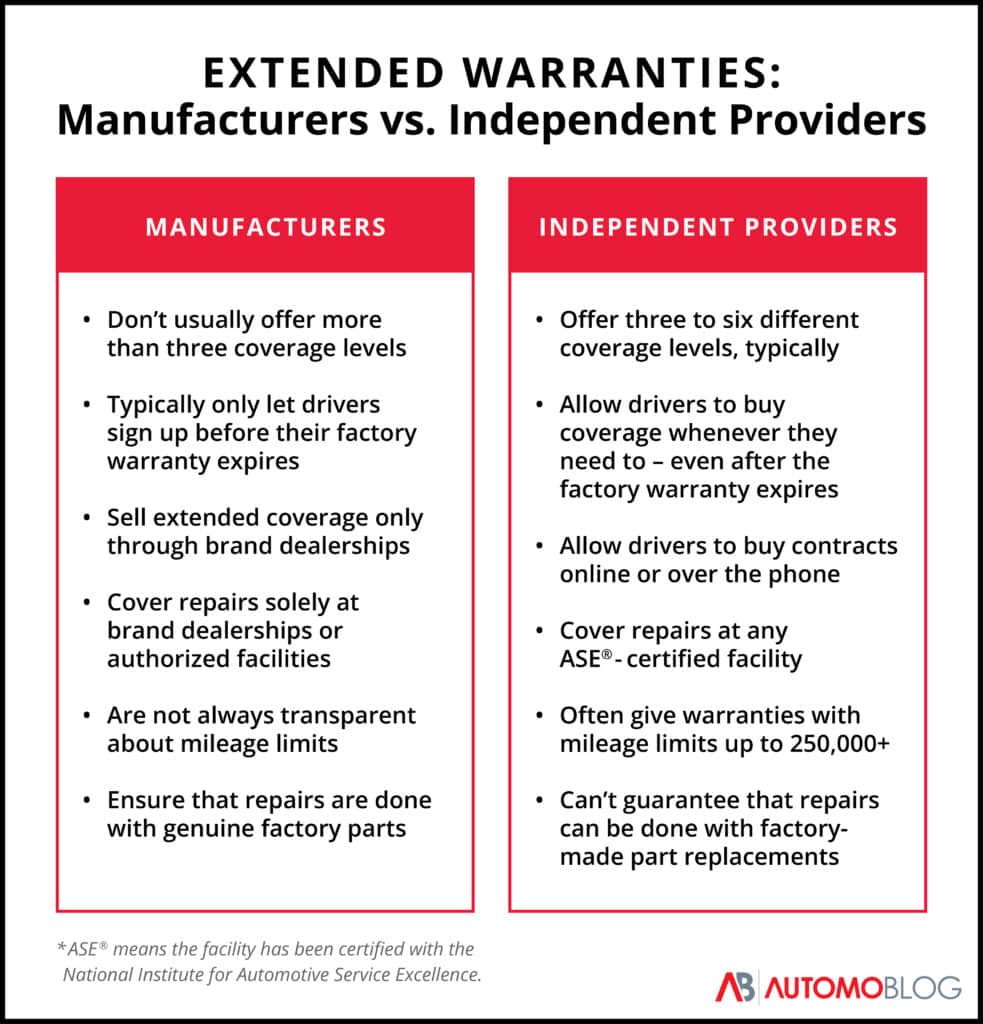
Often at the point of sale, the finance manager will offer an “Extended Warranty” or “Service Contract.” From a financial perspective, these are high-margin products for the dealership.
- When to decline: If you are buying a brand known for extreme reliability (like Toyota or Honda) and you have a healthy emergency fund, you are likely better off “self-insuring” (saving the money you would have spent on the warranty in a high-yield savings account).
- When to consider: If you are buying a complex German luxury vehicle or a first-generation model of a new EV, an extended warranty can act as a hedge against high labor rates and expensive parts.
Conclusion: The Financial Winner
If the goal is to maximize financial protection and minimize the risk of unbudgeted expenses, Hyundai, Kia, and Genesis remain the clear winners. Their 10-year powertrain coverage and 5-year bumper-to-bumper terms provide a decade of relative financial certainty.
However, the “best” warranty is also dependent on your holding period. If you trade in your car every three years, a 10-year warranty offers little personal benefit compared to a brand that offers free scheduled maintenance during those first three years (like BMW or Toyota).
Ultimately, a vehicle warranty is a financial tool. By choosing a manufacturer with aggressive coverage and adhering strictly to the maintenance requirements, you transform a potentially volatile expense into a predictable, manageable part of your long-term financial plan. In the world of personal finance, predictability is often just as valuable as the asset itself.
aViewFromTheCave is a participant in the Amazon Services LLC Associates Program, an affiliate advertising program designed to provide a means for sites to earn advertising fees by advertising and linking to Amazon.com. Amazon, the Amazon logo, AmazonSupply, and the AmazonSupply logo are trademarks of Amazon.com, Inc. or its affiliates. As an Amazon Associate we earn affiliate commissions from qualifying purchases.