
In the world of business finance and personal accounting, depreciation is often hailed as a powerful tool for tax strategy and asset management. By allowing a business to spread the cost of a tangible asset over its useful life, depreciation reduces taxable income and reflects the economic reality of wear and tear. However, not every item purchased for a business or investment portfolio qualifies for this accounting treatment. Understanding what assets cannot be depreciated is just as critical as knowing which ones can. Misclassifying an asset can lead to significant errors in financial reporting, missed tax opportunities, or even audits from regulatory bodies.
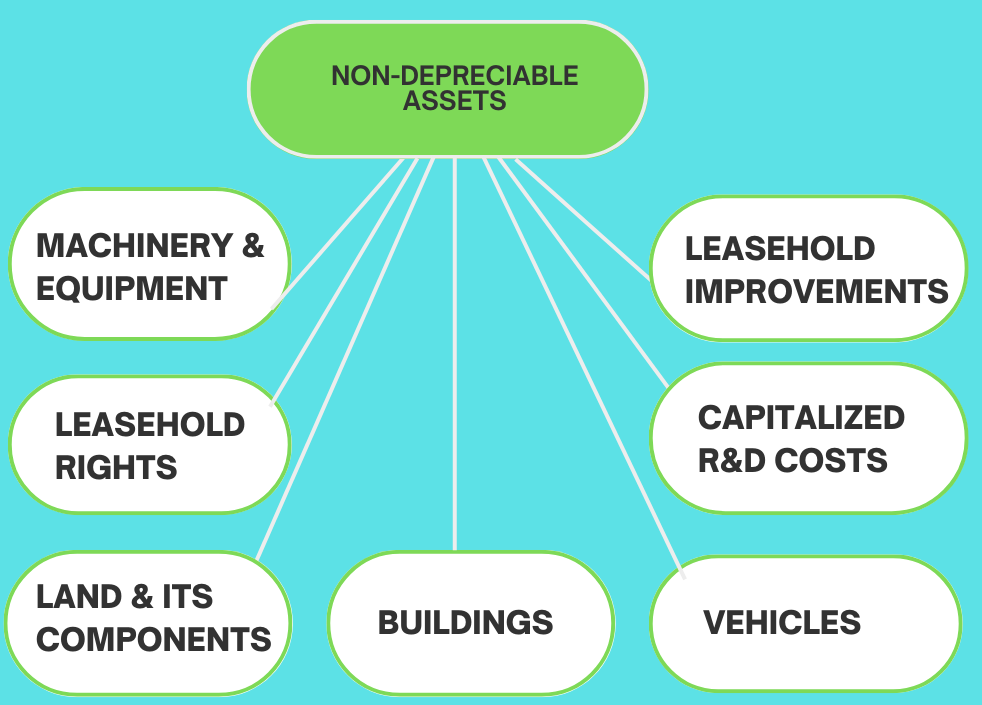
To navigate the complexities of capital expenditures, one must look beyond the purchase price and evaluate the nature, purpose, and lifespan of the asset in question. Generally, for an asset to be depreciable, it must be used in business or for the production of income, have a determinable useful life of more than one year, and be something that wears out, decays, gets used up, becomes obsolete, or loses value from natural causes. When these criteria are not met, the asset is considered non-depreciable.
The Permanence of Land: Why Real Estate Is Divided
Perhaps the most common misconception in business finance is that all real estate is depreciable. While the buildings, fences, and parking lots situated on a piece of property can be depreciated over time, the land itself is a primary exception to the rule.
The Logic of Infinite Life
From an accounting perspective, depreciation is the systematic allocation of the cost of an asset over the period it provides value. The fundamental reason land cannot be depreciated is that it has an indefinite useful life. Unlike a tractor that eventually breaks down or a roof that eventually leaks, land does not wear out, get used up, or become obsolete in the eyes of the law. It remains in existence regardless of how many decades pass. Because there is no “end date” to the utility of land, there is no logical timeframe over which to spread its cost.
Improvements vs. the Raw Earth
It is vital for business owners to distinguish between “land” and “land improvements.” While you cannot depreciate the raw earth, you can depreciate the enhancements made to it. For example, if a company purchases a lot to build a new warehouse, the cost of the dirt and the location remains on the books at its original value (the cost basis). However, the cost of landscaping, installing a sidewalk, or paving a parking lot—often referred to as land improvements—can be depreciated. These additions have a determinable lifespan (usually 15 years under current tax codes) and will eventually require replacement. Proper bookkeeping requires a clear split in the purchase price between the non-depreciable land and the depreciable structures or improvements.
Inventory and Assets Held for Sale
In the “Money” niche of business finance, cash flow is king. One might assume that because inventory is a physical asset that costs money, it should be depreciated. However, the accounting treatment for inventory is diametrically opposed to that of capital assets.
The Purpose of the Asset
The IRS and general accounting principles (GAAP) dictate that the intent behind the purchase determines the tax treatment. If an asset is purchased with the primary intention of being sold to customers in the ordinary course of business, it is classified as inventory. Inventory is never depreciated. Instead, the cost of inventory is recovered through the “Cost of Goods Sold” (COGS) at the moment the sale occurs. If a car dealership buys twenty sedans to sell on the lot, those cars are inventory. If that same dealership buys one sedan for the owner to use as a company vehicle for three years, that specific car becomes a depreciable capital asset.
Consumables and Short-Term Supplies
Another category of assets that cannot be depreciated includes items that are consumed within a single year. To be depreciable, an asset must have a “useful life” exceeding one year. Small tools, office supplies, stationery, and cleaning materials are considered current expenses. These are written off entirely in the year they are purchased. Attempting to depreciate a $50 stapler over five years would not only be a violation of accounting standards but would also create an administrative nightmare for the finance department. The rule of thumb in business finance is: if it’s gone or sold within twelve months, it’s an expense, not a depreciable asset.
Intangible Assets and the Distinction of Amortization
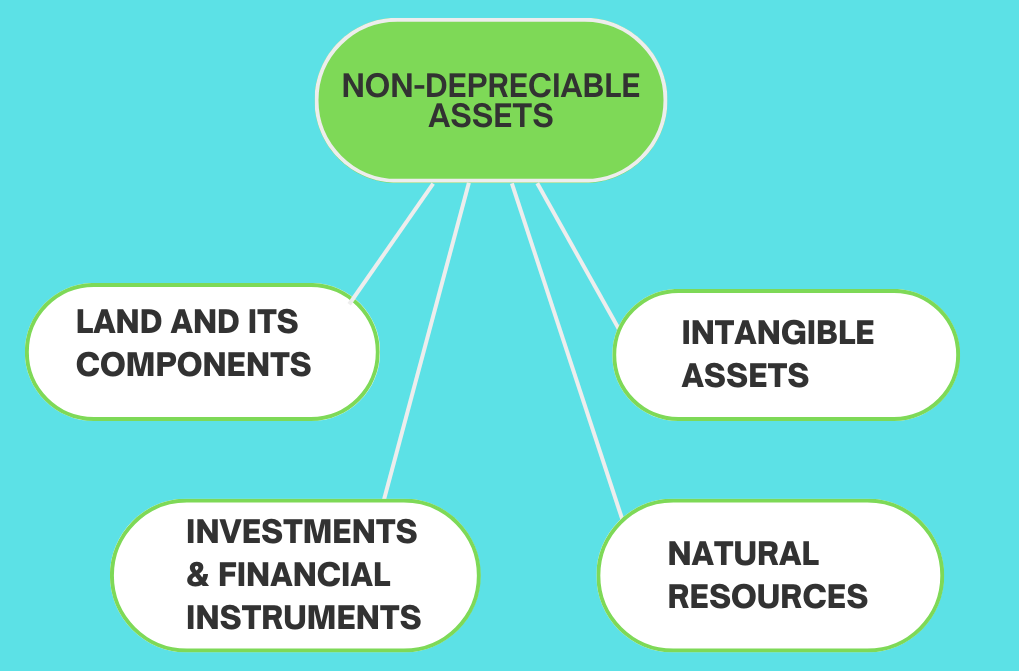
While tangible assets like machinery are depreciated, intangible assets occupy a unique space in financial management. While some intangibles can be “written off,” they do not follow the rules of depreciation, and some cannot be reduced in value at all.
Amortization vs. Depreciation
It is a common linguistic error to say a patent is being “depreciated.” In reality, intangible assets with a finite life—such as patents, copyrights, and franchises—are “amortized.” Amortization is the process of expensing the cost of an intangible asset over its legal or useful life. While the financial effect on the bottom line is similar to depreciation, the underlying mechanism is different. If an asset has no physical form, it cannot “wear out” in a mechanical sense, and thus falls outside the scope of depreciation.
Assets with Indefinite Useful Lives: Goodwill and Trademarks
The most complex non-depreciable assets are those with an indefinite lifespan. “Goodwill” is a classic example. When one company acquires another for more than the fair market value of its physical assets, the excess is recorded as goodwill. Under current standards, goodwill is not depreciated or even regularly amortized. Instead, it stays on the balance sheet at its original value unless it is found to be “impaired.” Similarly, certain trademarks and brand names that are expected to last forever are not depreciated. If the asset does not have a predictable expiration date or a period of utility that can be measured, it remains a permanent fixture on the financial statement at its cost basis.
Collectibles, Antiques, and Appreciating Assets
In the realm of personal finance and investment, many individuals purchase assets hoping they will increase in value. This expectation of appreciation is often the very reason these assets cannot be depreciated.
The Requirement of Value Loss
Depreciation is fundamentally a recognition of a loss in value over time. Therefore, if an asset is expected to increase in value or maintain its value indefinitely due to its rarity or historical significance, it generally does not qualify for depreciation. Antiques, fine art, and rare collectibles fall into this category. For instance, a desk used in an office is a depreciable piece of furniture. However, a 17th-century French antique desk used in that same office may be considered a collectible. Because the antique is expected to appreciate or at least maintain its value due to its age and craftsmanship, the authorities often rule that it does not have a “determinable useful life” and thus cannot be depreciated.
Investments and Financial Instruments
Financial assets such as stocks, bonds, and mutual funds are staples of any “Money” focused portfolio. While these are certainly assets, they are never depreciated. The value of a stock may fluctuate wildly, but the cost of the investment is only recognized for tax purposes when the asset is sold—a process known as realizing a capital gain or loss. Unlike a piece of machinery that loses value as it produces widgets, a share of stock represents a claim on future earnings and does not “wear out” through use.
Strategic Financial Planning and Compliance
Understanding which assets are non-depreciable is not merely an academic exercise; it is a cornerstone of strategic financial planning and tax compliance. Misidentifying these assets can lead to skewed profit margins and legal complications.
Impact on Tax Liability and Cash Flow
For a business owner, depreciation is a “non-cash expense.” It reduces the profit shown on a tax return without requiring an actual outflow of cash in that year, which preserves liquidity. When an asset is non-depreciable (like land), the business cannot use it to lower its tax bill year-over-year. This makes the “after-tax” cost of land higher than the “after-tax” cost of a building. Financial advisors often point this out when helping clients decide whether to buy or lease property. Being aware of the non-depreciable nature of certain investments allows for more accurate forecasting of future tax liabilities and net cash flow.
Maintaining Accurate Records for Audits
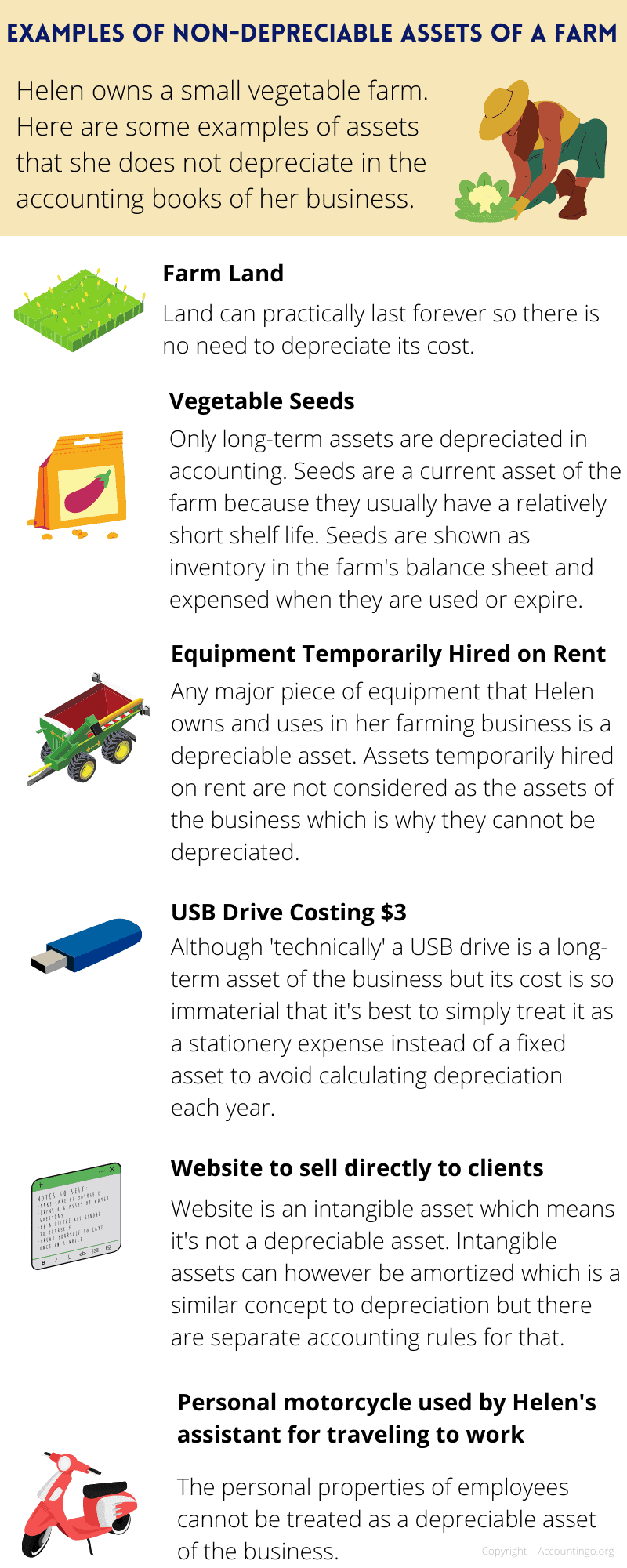
Finally, the categorization of assets is a high-priority area for auditors. Regulatory agencies look closely at “mixed-use” assets—property that could be either personal or business. Personal-use assets, such as your primary residence or a personal-use vehicle, cannot be depreciated. If a business owner attempts to depreciate a personal asset by claiming it as a business expense, they risk heavy penalties. By maintaining a rigorous distinction between depreciable capital, non-depreciable land, inventory, and personal property, a taxpayer builds a “defensible” balance sheet. In the world of money and business finance, clarity and compliance are the ultimate safeguards of wealth.
aViewFromTheCave is a participant in the Amazon Services LLC Associates Program, an affiliate advertising program designed to provide a means for sites to earn advertising fees by advertising and linking to Amazon.com. Amazon, the Amazon logo, AmazonSupply, and the AmazonSupply logo are trademarks of Amazon.com, Inc. or its affiliates. As an Amazon Associate we earn affiliate commissions from qualifying purchases.