
In the high-stakes environment of a professional interview, every question is an opportunity to reinforce your personal brand. However, few prompts induce as much anxiety as the classic inquiry: “What is your greatest weakness?” For many, this feels like a trap designed to expose flaws and disqualify candidates. Yet, when viewed through the lens of brand strategy, this question is not about self-deprecation; it is a critical moment for brand positioning.
In the world of corporate identity and marketing, a brand’s strength is often defined by its transparency and its ability to evolve. Similarly, your personal brand is not a static image of perfection but a dynamic narrative of growth and self-awareness. Mastering the answer to your weaknesses is about demonstrating a sophisticated understanding of your professional identity and proving that you possess the strategic mindset to manage your own development.

The Brand Narrative: Why “Weakness” is a Marketable Opportunity
In traditional marketing, brands that acknowledge their limitations while highlighting their commitment to improvement often garner higher levels of consumer trust. This is known as the “pragmatic brand” approach. When an interviewer asks about your weaknesses, they are essentially asking for a stress test of your personal brand. They want to see if your professional persona is built on a foundation of honesty or if it is a hollow facade.
Shifting from Vulnerability to Authenticity
Authenticity is the cornerstone of a premium personal brand. If you claim to have no weaknesses, you signal a lack of self-awareness, which is a significant brand liability. A well-crafted weakness answer demonstrates that you are an introspective professional who understands your own “product specifications.” By identifying a genuine area for growth, you move away from being a generic “perfect candidate” and toward being a relatable, high-potential asset. This shift transforms a moment of perceived vulnerability into a powerful display of authentic leadership.
The Psychology of the Honest Brand
Psychologically, humans are wired to be skeptical of anything that seems too good to be true. In brand strategy, this is why customer reviews with a 4.5-star rating often convert better than those with a perfect 5.0. A small, acknowledged flaw makes the surrounding strengths more believable. By providing a thoughtful answer to the weakness question, you provide “social proof” that your strengths—your core brand pillars—are also genuine. You are telling the employer that you have the integrity to acknowledge where you stand today and the ambition to define where you will be tomorrow.
Crafting Your Signature Answer: The Brand Evolution Framework
To protect and enhance your personal brand, your answer must follow a strategic framework. You cannot simply list a failure; you must present a narrative of evolution. This is similar to how a legacy brand might address a dip in market share by announcing a comprehensive “rebranding” or “innovation” phase.
Selecting a “Growth-Oriented” Weakness
Your choice of weakness should be strategic. It must be significant enough to be real, but not so fundamental that it undermines your ability to perform the core functions of the role. Think of this as a “version update.” You are identifying a feature that is currently under development.
For instance, if you are a data-driven marketer, your weakness might be public speaking or presenting complex data to non-technical stakeholders. This is a “growth-oriented” weakness because it is a skill that can be developed and does not negate your primary value proposition as a data expert. It positions you as a specialist who is actively working to become a more effective communicator.
The Action-Result Loop: Proving Development
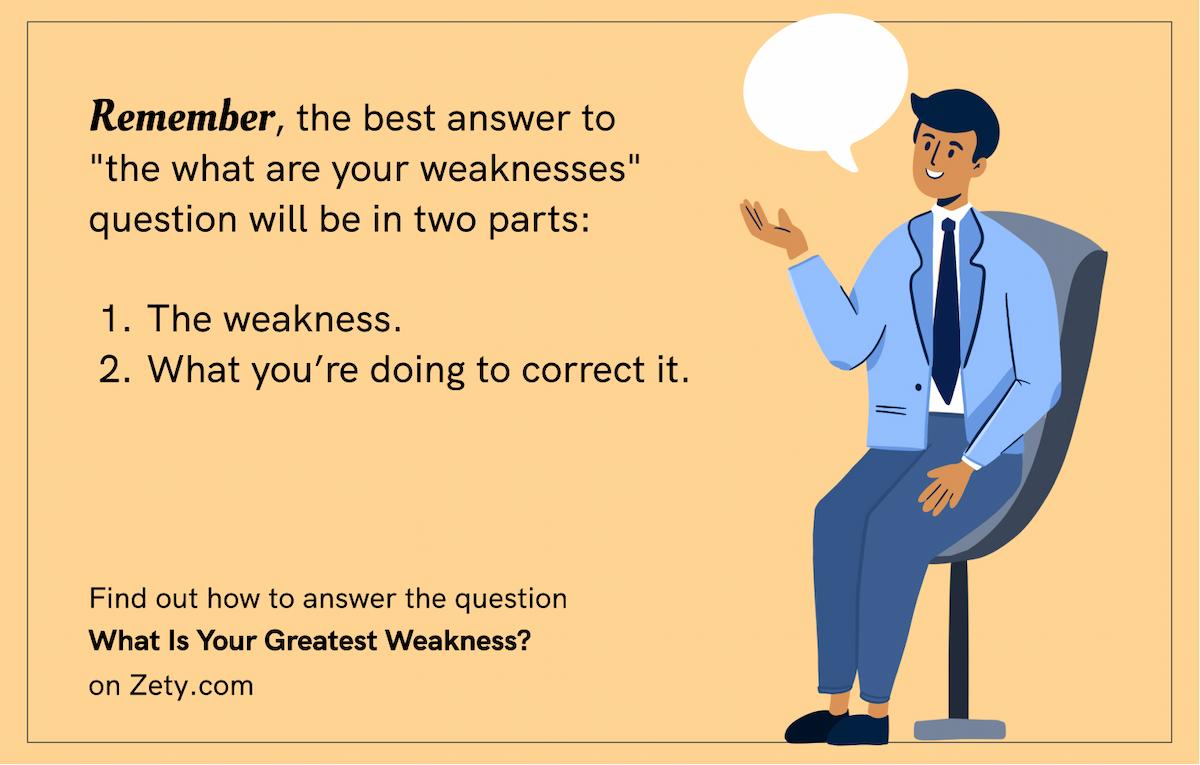
A brand is defined not by what it says, but by what it does. Your answer must move quickly from the “what” (the weakness) to the “how” (the steps you are taking to improve). This is the “Action-Result Loop.”
- Acknowledge: State the weakness clearly and concisely.
- Contextualize: Explain how you identified this weakness (e.g., through feedback or self-reflection).
- Action: Describe the specific steps you are taking to mitigate it (e.g., taking a course, using a new software tool, seeking a mentor).
- Result: Share the progress you have made so far.

By following this loop, you reinforce a brand identity centered on “continuous improvement,” which is one of the most sought-after traits in the modern corporate world.
Industry-Specific Brand Positioning
Your personal brand exists within a specific market context. Therefore, your weakness answer should be tailored to the industry standards and expectations of your niche. How a creative director answers this question should differ significantly from how a CFO or a project manager handles it.
The Creative Professional: Balancing Perfectionism and Output
In creative industries, the brand is often built on quality and vision. However, a common “brand flaw” in this space is an obsession with detail that can lead to missed deadlines. If this is your reality, your brand strategy should focus on how you have implemented systems to balance high-quality output with operational efficiency. You might explain how you use agile project management tools to ensure your creative process remains within the necessary “brand guardrails” of time and budget. This shows that you are not just an artist, but a professional who understands the business side of creativity.
The Leadership Brand: Delegating for Scale
For those in management or executive roles, the personal brand is focused on scale and impact. A common weakness at this level is the tendency to “micro-manage” or struggle with delegation. To frame this as a brand evolution, you can describe how you realized that your personal “bandwidth” was becoming a bottleneck for the team’s growth. Explain how you have shifted your brand from being a “doer” to being a “multiplier,” investing time in training your direct reports so that you can focus on high-level strategy. This answer aligns perfectly with the corporate identity of a scalable, visionary leader.
Avoiding Brand Damage: What Not to Say
Just as a poorly executed marketing campaign can alienate a target audience, a poorly chosen weakness answer can permanently damage your professional reputation. There are several “brand traps” that candidates often fall into, which can make them appear insincere or incompetent.
The Cliché Trap: Why “Workaholic” Dilutes Your Value
In the past, candidates were often advised to use “fake” weaknesses like “I work too hard” or “I’m a perfectionist.” In today’s sophisticated job market, these answers are seen as brand-diluting clichés. They suggest that you are either hiding something or that you lack the depth to understand your own professional limitations. Furthermore, being a “workaholic” is no longer the badge of honor it once was; modern corporate cultures value sustainability and efficiency. Claiming to work too much can signal a lack of prioritization skills—a major brand de-valuer.
Irrelevant Weaknesses: Maintaining Professional Focus
Another common mistake is sharing a weakness that is entirely unrelated to the professional sphere. While telling a story about how you struggle with “cooking” or “remembering to water your plants” might seem endearing, it does nothing to build your professional brand. Every word in an interview should serve the purpose of positioning you as the ideal candidate for the role. Keep your weaknesses within the professional domain to ensure your brand narrative remains focused and relevant to the “customer” (the employer).
Long-Term Brand Equity: Turning Feedback into a Competitive Edge
Your personal brand is a lifelong project. The way you handle weaknesses shouldn’t just be an “interview trick”; it should be a core component of your professional philosophy. High-equity brands are those that are constantly innovating based on market feedback.
Continuous Improvement as a Brand Pillar
When you view your weaknesses as areas for “product development,” you foster a growth mindset that serves you well beyond the interview. Incorporating feedback into your brand strategy allows you to pivot when necessary. For example, if the market shifts and a certain technical skill becomes a requirement, your brand should be the first to adapt. By being open about what you don’t know, you create the space to learn it faster than your “fixed-mindset” competitors.
From Interview Answer to Professional Reputation
Ultimately, your goal is to build a reputation as someone who is self-aware, proactive, and exceptionally capable of self-management. This reputation becomes a powerful part of your brand equity. When colleagues and supervisors know that you are someone who acknowledges gaps and fills them, they are more likely to trust you with high-level responsibilities. In the long run, the “weakness answer” is not just about getting the job; it is about establishing a brand identity of excellence and adaptability that will carry you through your entire career.
By treating the “What is your weakness?” question as a strategic brand exercise, you transform a potentially negative interaction into a masterclass in professional positioning. You prove that you are not just a candidate with skills, but a sophisticated personal brand that is self-aware, resilient, and constantly evolving toward greatness.
aViewFromTheCave is a participant in the Amazon Services LLC Associates Program, an affiliate advertising program designed to provide a means for sites to earn advertising fees by advertising and linking to Amazon.com. Amazon, the Amazon logo, AmazonSupply, and the AmazonSupply logo are trademarks of Amazon.com, Inc. or its affiliates. As an Amazon Associate we earn affiliate commissions from qualifying purchases.