
In the sophisticated world of equity markets, investors often look beyond standard common stocks to find instruments that offer higher leverage, unique strategic advantages, or specialized entry points into emerging companies. One such instrument is the stock warrant. While often overshadowed by its more famous cousin, the exchange-traded option, the stock warrant is a critical tool in corporate finance and a potentially lucrative vehicle for the disciplined investor. Understanding what warrants are, how they function, and how they differ from other derivatives is essential for anyone looking to build a diversified and professional-grade investment portfolio.
Understanding the Fundamentals of Stock Warrants
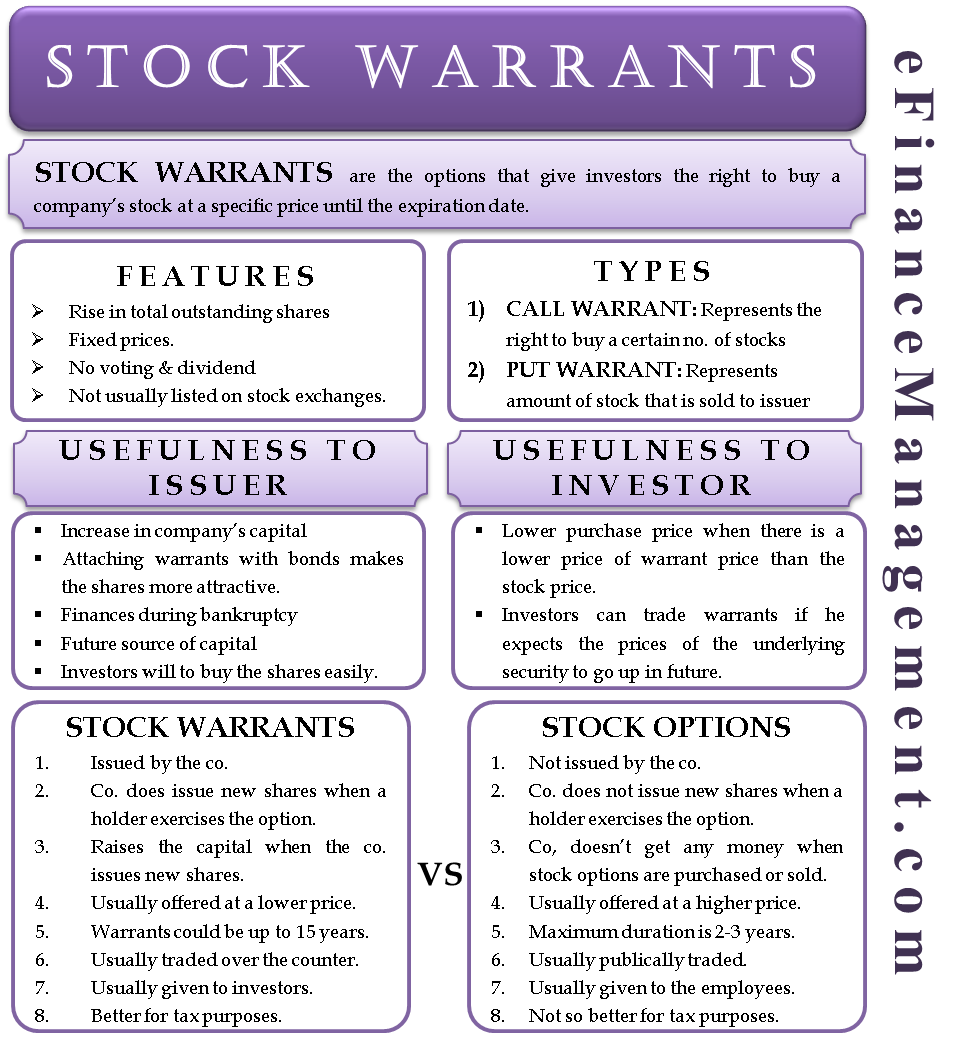
At its most basic level, a stock warrant is a derivative security that gives the holder the right—but not the obligation—to purchase a specific number of shares of a company’s stock at a predetermined price within a specific timeframe. This predetermined price is known as the “strike price” or “exercise price,” and the timeframe ends on the “expiration date.”
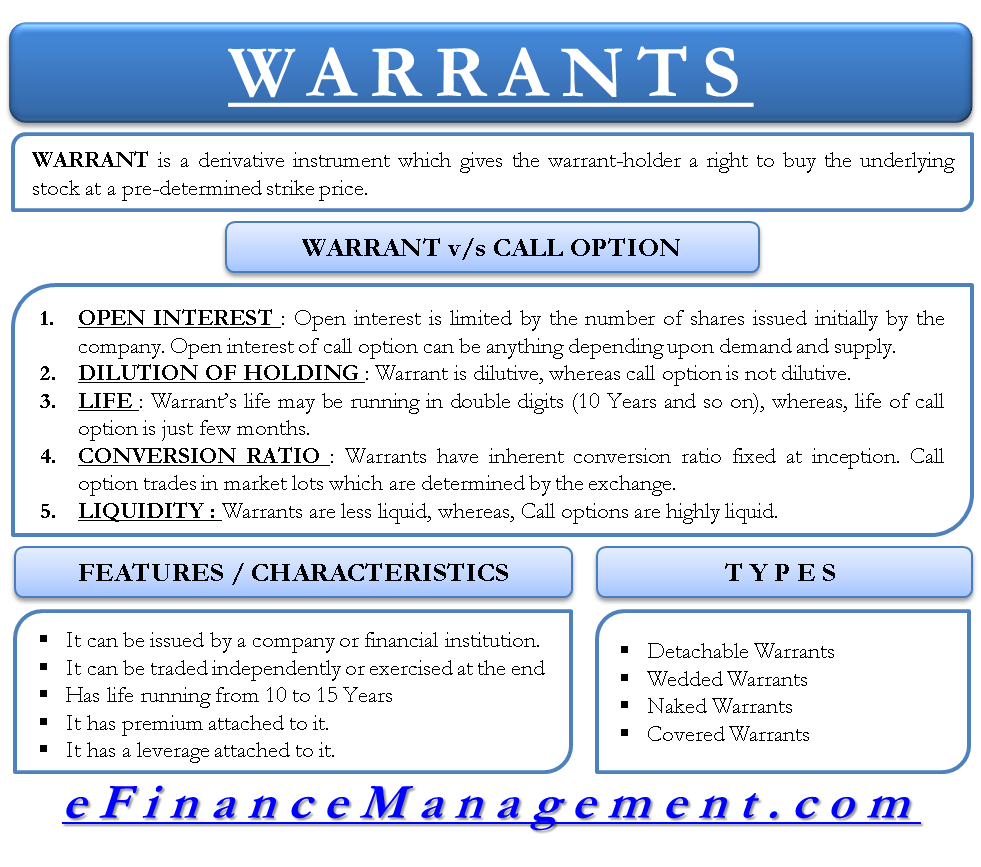
While this definition sounds remarkably similar to a call option, the structural origins of a warrant are fundamentally different. A stock warrant is issued directly by the company itself, rather than being a contract created by two independent traders on an options exchange. When an investor exercises a warrant, they purchase the shares directly from the issuing corporation.
Key Terminology and Mechanics
To navigate the warrant market effectively, one must master the specific vocabulary associated with these instruments:
- The Strike Price: This is the fixed price at which the warrant holder can buy the underlying stock. For example, if a warrant has a strike price of $10, the holder can purchase a share for $10 regardless of whether the current market price is $15, $50, or $100.
- The Expiration Date: Warrants have much longer lifespans than standard options. While options typically expire within months, warrants often last for five to ten years. Once this date passes, the warrant becomes worthless.
- The Conversion Ratio: This dictates how many warrants are needed to purchase a single share of stock. While a 1:1 ratio is common, some warrants may require two or three units to purchase one share.
- Intrinsic Value and Time Value: Like all derivatives, a warrant’s price is composed of its intrinsic value (the difference between the stock price and the strike price) and its time value (the premium investors pay for the potential of future price increases before expiration).
The Critical Difference: Dilution
The most significant distinction between warrants and options lies in the concept of dilution. When an exchange-traded option is exercised, the shares are simply transferred from one investor to another; the company’s total number of outstanding shares remains unchanged. However, when a warrant is exercised, the company issues new shares to fulfill the obligation. This increases the total share count, which can dilute the earnings per share (EPS) and the ownership percentage of existing shareholders. This is a vital consideration for fundamental analysts evaluating a company’s capital structure.
Why Companies Issue Warrants and Why Investors Buy Them
The issuance of warrants is rarely a random event; it is a strategic move used by corporations to manage their capital and attract specific types of investment. Similarly, for the investor, warrants offer a risk-reward profile that common stock cannot match.
The Corporate Perspective: Sweeteners and Capital Raising
Companies, particularly startups or firms in high-growth phases, often use warrants as “sweeteners” to make their debt offerings or preferred stock more attractive to institutional investors.
- Lowering Interest Costs: By attaching warrants to a bond issue (creating what is known as a “unit”), a company can often offer a lower interest rate. Investors are willing to accept less guaranteed income in exchange for the “upside” potential offered by the warrants if the company’s stock price skyrockets.
- Future Capital Infusion: Warrants represent a source of potential future capital. When holders exercise their warrants, they pay the strike price directly to the company. This provides a secondary influx of cash years after the initial offering, which can be used for expansion, debt repayment, or research and development.
- Attracting Venture Capital: In private equity and venture capital circles, warrants are frequently used to provide early-stage backers with an incentive to take on the high risk of a fledgling enterprise.
The Investor Perspective: Leverage and Low Capital Outlay
For the individual or institutional investor, the primary allure of a warrant is leverage. Because warrants typically trade at a fraction of the price of the underlying stock, an investor can control a large number of shares with a relatively small amount of capital.
Consider a scenario where Company A’s stock is trading at $20. A warrant with a strike price of $15 might trade for $6. If the stock price rises to $30 (a 50% increase), the intrinsic value of the warrant jumps to $15. If the warrant’s market price tracks this intrinsic value, the investor sees a 150% return on their $6 investment. This magnified volatility allows for significant gains, though it equally magnifies the risk of loss if the stock price fails to exceed the strike price.
The Different Types of Warrants
Not all warrants are created equal. They are categorized based on how they are issued, how they are traded, and what rights they confer to the holder.
Detachable vs. Non-Detachable Warrants
This is the most common classification in the public markets.
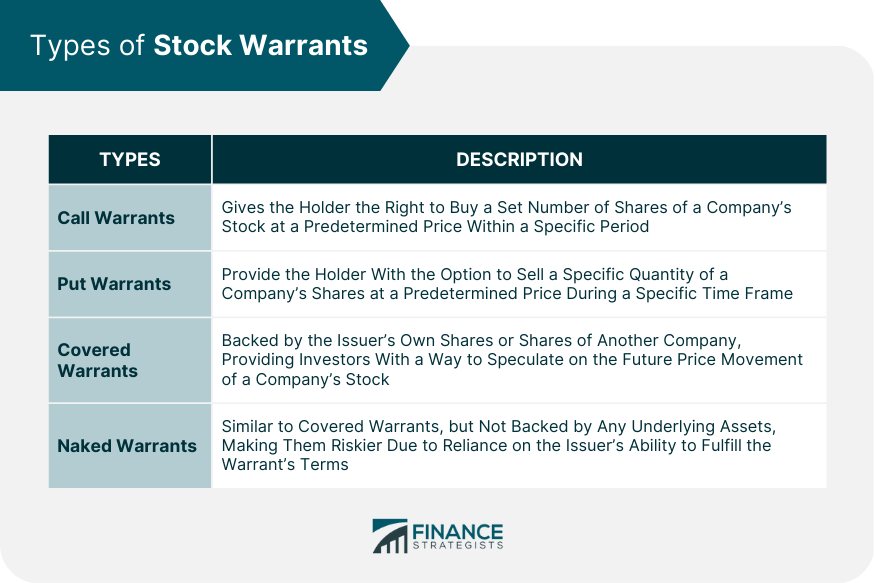
- Detachable Warrants: These are issued as part of a security bundle (like a bond) but can be separated and traded independently on an exchange. Most warrants that individual investors encounter in their brokerage accounts are detachable.
- Non-Detachable Warrants: These are “stuck” to the underlying security. To exercise or sell the warrant, the holder must also move the bond or preferred stock to which it is attached.
Call Warrants vs. Put Warrants
While the vast majority of warrants are “call” warrants (the right to buy), some companies issue “put” warrants. A put warrant gives the holder the right to sell shares back to the company at a specific price. These are often used by companies as a form of “shareholder rights plan” or to protect investors against a significant downturn in price during a specific corporate action.
Equity Warrants vs. Covered Warrants
- Equity Warrants: These are the standard warrants issued by the company itself.
- Covered Warrants: These are slightly more complex. They are issued by financial institutions (like investment banks) rather than the company. The “issuer” already owns the shares or has the means to acquire them. From the investor’s perspective, they function similarly to equity warrants, but they do not result in the issuance of new shares and therefore do not cause dilution.
Assessing Risks and Calculating Value
Investing in warrants requires a more analytical approach than simply buying common stock. Because they are wasting assets (they expire), the element of time is a constant headwind for the holder.
The Impact of Volatility and Time Decay
The value of a warrant is highly sensitive to the volatility of the underlying stock. Higher volatility increases the probability that the stock will hit or exceed the strike price, thus making the warrant more valuable. Conversely, as the expiration date approaches, the “time value” of the warrant erodes. This is known as “Theta” in the world of Greeks. If a stock remains stagnant, a warrant will steadily lose value as its remaining lifespan shortens, even if the company’s fundamentals remain strong.
The Dilution Factor in Valuation
Sophisticated investors use adjusted versions of the Black-Scholes model to value warrants. Unlike options pricing, warrant pricing must account for the fact that the exercise of the warrant will increase the number of shares outstanding. This dilution effectively reduces the value of each share, which in turn reduces the potential value of the warrant. If a company has a massive amount of warrants “in the money,” the eventual exercise of those warrants can act as a ceiling on the stock price.
Liquidity Risk
Warrants are often less liquid than common stocks. This means there can be a wide “bid-ask spread,” making it expensive to enter and exit positions. In some cases, an investor might find it difficult to sell a large position of warrants without significantly moving the market price. It is crucial to check average daily trading volumes before committing significant capital to a specific warrant issue.
Strategic Integration into a Portfolio
Warrants are not merely for speculation; they can serve specific roles in a well-constructed financial plan.
Speculative Growth and Hedging
An investor who is extremely bullish on a high-growth sector—such as biotech or renewable energy—might use warrants to gain exposure to several companies without tying up large amounts of cash. This allows for a “basket” approach to high-risk investing. On the flip side, put warrants can be used as a hedge to protect a portfolio against a decline in a specific sector or a specific company where the investor holds a large amount of common stock.
Cash Management
Because warrants require less capital than stocks, an investor can maintain a large exposure to the equity markets while keeping a higher percentage of their portfolio in cash or fixed-income instruments. This provides a “buffer” for the portfolio while still allowing for participation in a bull market.
Tax and Exercise Considerations
It is important to note that holding a warrant does not grant the rights of a shareholder. Warrant holders do not receive dividends, and they do not have voting rights. To gain these benefits, the warrant must be exercised into common stock. From a tax perspective, the treatment of warrants can be complex, often depending on whether they were granted as compensation or purchased on the open market. Generally, the lapse of a warrant is treated as a capital loss, while the sale of a warrant is treated as a capital gain or loss.
In conclusion, stock warrants are a versatile and powerful instrument for the modern investor. They offer the potential for extraordinary returns through leverage and provide companies with a flexible tool for capital management. However, they are not without their complexities. The risks of dilution, time decay, and lack of liquidity require a disciplined and informed approach. By mastering the mechanics of warrants, an investor adds a sophisticated layer to their financial toolkit, allowing them to navigate the markets with greater precision and strategic depth.
aViewFromTheCave is a participant in the Amazon Services LLC Associates Program, an affiliate advertising program designed to provide a means for sites to earn advertising fees by advertising and linking to Amazon.com. Amazon, the Amazon logo, AmazonSupply, and the AmazonSupply logo are trademarks of Amazon.com, Inc. or its affiliates. As an Amazon Associate we earn affiliate commissions from qualifying purchases.