
In the world of personal finance, the name “Vanguard” carries a weight that few other institutions can match. Often referred to in the plural—”vanguards”—by those entering the investment space, the term primarily refers to The Vanguard Group, Inc., an American registered investment advisor that has fundamentally altered the landscape of global finance. To understand what Vanguards are is to understand the history of the democratized stock market, the birth of the index fund, and a unique corporate structure that prioritizes the individual investor over corporate shareholders.
For decades, the financial industry was a playground for the wealthy and the institutional elite, characterized by high commissions, hidden fees, and complex products designed to benefit the broker more than the client. The emergence of Vanguard signaled a shift toward transparency and cost-efficiency. Today, whether you are a seasoned portfolio manager or someone opening their first Roth IRA, the influence of Vanguard’s philosophy likely touches your financial life.
The Origins and Philosophy of the Vanguard Group
To truly grasp what Vanguard represents, one must look at its inception in 1975 and the revolutionary spirit of its founder, John C. “Jack” Bogle. Bogle didn’t just want to start another investment firm; he wanted to challenge the very foundations of how money was managed.
The Vision of John C. Bogle
Jack Bogle is often hailed as the “patron saint” of the individual investor. His core realization was simple yet profound: in the world of investing, you get what you don’t pay for. He recognized that high management fees and aggressive trading costs were the primary reasons most active managers failed to beat the market over the long term. By creating a firm focused on low-cost, long-term holding, Bogle sought to give the “little guy” a fair shake at building wealth. His philosophy was built on the idea of “common sense” investing—avoiding the lure of market timing and stock picking in favor of capturing the broad growth of the economy.
The Mutual Ownership Structure
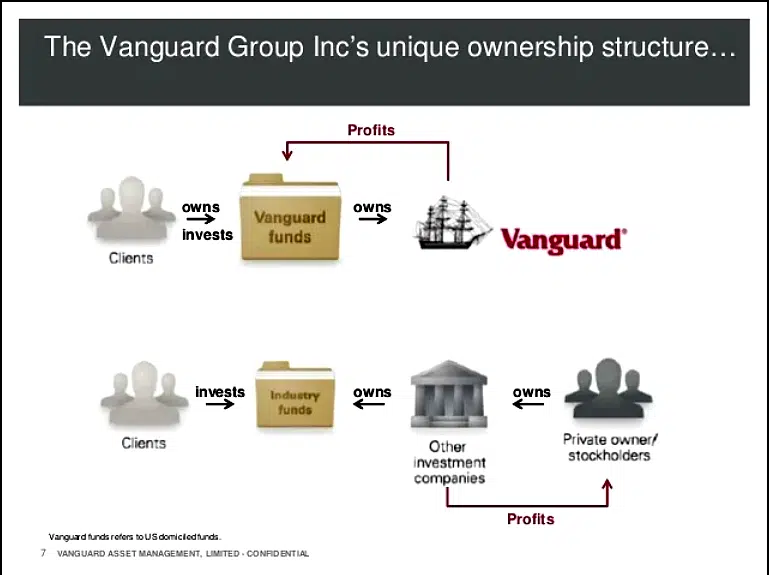
What makes Vanguard unique among the giants of Wall Street (like BlackRock or Fidelity) is its corporate structure. Most investment firms are either publicly traded or privately owned by a small group of partners. In both cases, the firm’s goal is to generate profit for its owners. Vanguard, however, is a mutual company. It is owned by its funds, and the funds, in turn, are owned by their shareholders—the investors.
This means that there are no outside owners demanding a cut of the profits. Any “profit” the company makes is reinvested into the business to lower the cost of managing the funds. This creates a virtuous cycle where, as Vanguard grows, its expenses go down, and those savings are passed directly back to the investors in the form of lower expense ratios.
Core Investment Strategies: The Power of Indexing
The hallmark of the Vanguard brand is the index fund. While index funds are now a staple of almost every retirement plan, they were once considered “un-American” by the financial establishment because they sought to track the market rather than beat it.
Low-Cost Leadership and Expense Ratios
In the “Money” niche, the term “expense ratio” is king. It represents the percentage of your investment that goes toward paying the fund’s operating expenses. While a 1% or 1.5% fee might seem small, over a 30-year investing horizon, such fees can eat away nearly half of an investor’s potential wealth due to the loss of compounding interest.
Vanguard’s average expense ratio is significantly lower than the industry average. By automating the investment process through indexing—where a computer simply buys all the stocks in a particular benchmark like the S&P 500—Vanguard eliminated the need for highly-paid “star” fund managers and the expensive research teams that support them. This lean operational model is the engine behind their success.
Passive vs. Active Management
The debate between passive and active management is central to understanding Vanguard’s products. Active management involves experts trying to pick “winning” stocks or time the market to outperform a benchmark. Passive management, Vanguard’s specialty, involves “buying the haystack” rather than looking for the needle.
Vanguard argues that because the market is generally efficient, it is nearly impossible for any single person to consistently outperform the collective wisdom of all investors after accounting for fees and taxes. By adopting a passive strategy, Vanguard investors accept the market return, which historically has been more than enough to build significant wealth over time, provided costs are kept to a minimum.
Navigating the Vanguard Ecosystem: Accounts and Products

For the modern investor, “Vanguards” usually refers to the specific vehicles used to grow money: Mutual Funds and Exchange-Traded Funds (ETFs). Understanding the difference between these is crucial for effective portfolio construction.
Mutual Funds and ETFs
Vanguard’s traditional Mutual Funds, such as the famous VTSAX (Total Stock Market Index Fund), are designed for long-term investors. They are priced once at the end of the trading day and often require a minimum initial investment (typically $3,000 for “Admiral Shares”).
In contrast, Vanguard’s ETFs (Exchange-Traded Funds), like VTI (the ETF version of the total stock market), can be traded throughout the day like individual stocks. ETFs have become incredibly popular because they often have no minimum investment requirement (you can buy a single share) and offer high tax efficiency. Both vehicles follow the same underlying low-cost, index-tracking philosophy, allowing investors to choose the format that best fits their trading style.
Brokerage Services and Retirement Planning
Beyond just selling funds, Vanguard operates as a full-service brokerage. They provide the “financial plumbing” needed for various life stages. This includes:
- Individual Retirement Accounts (IRAs): Traditional and Roth IRAs for tax-advantaged savings.
- 401(k) Administration: Many corporate employers use Vanguard to manage their employee retirement plans.
- 529 Plans: Tax-advantaged accounts specifically for education savings.
- Target Date Funds: A “set it and forget it” solution where the fund automatically shifts from aggressive stocks to conservative bonds as the investor nears retirement age.
The “Vanguard Effect”: How They Changed the Financial Industry
The influence of Vanguard extends far beyond its own client base. The firm’s relentless pursuit of lower fees forced a phenomenon economists call “The Vanguard Effect.”
Driving Down Costs for All Investors
When Vanguard proves that it can offer a high-quality S&P 500 index fund for a 0.03% expense ratio, competitors like Fidelity, Charles Schwab, and BlackRock are forced to lower their prices to remain competitive. This price war has resulted in billions of dollars staying in the pockets of everyday investors rather than being siphoned off by Wall Street firms. Even if you do not have a Vanguard account, you are likely benefiting from the downward pressure they have placed on industry fees.
Democratizing Access to the Stock Market
Before the rise of index-based vanguards, the stock market was often viewed as a gambling den or a complex machine only accessible to those with significant capital and professional advisors. By simplifying the investment process—buying the whole market and holding it—Vanguard democratized wealth creation. It moved the focus from “speculation” to “ownership.” It empowered teachers, nurses, and small business owners to participate in the growth of the world’s largest corporations with the same efficiency as a multi-millionaire.
Is Vanguard Right for You? Considerations for Your Portfolio
Despite their dominance, Vanguard is not a one-size-fits-all solution. Depending on your tech preferences and investment goals, there are nuances to consider.
Minimum Investment Requirements
One hurdle for new investors is the minimum entry requirement for many of Vanguard’s best mutual funds. While their ETFs allow you to start with the price of one share, their premier “Admiral Shares” mutual funds often require $3,000 or more to start. For someone just starting their “Side Hustle” or “Online Income” journey with only $50 or $100 a month, this can be a barrier compared to “robo-advisors” or apps that allow fractional share investing.
User Interface and Digital Experience
In an era of sleek, gamified fintech apps, Vanguard’s digital presence is often described as “utilitarian.” Their website and mobile app are built for long-term investors who check their accounts quarterly, not for day traders who need real-time data and high-speed execution. If you value a cutting-edge user experience with social features and advanced technical charting, Vanguard’s interface might feel dated. However, for the disciplined investor, this lack of “flash” is often seen as a feature, not a bug, as it discourages the impulsive trading that typically leads to lower returns.
Conclusion: The Legacy of a Financial Revolution
When we ask “What are vanguards?” we are ultimately asking about the tools of financial freedom. The Vanguard Group transformed the “Money” niche from a high-barrier, high-cost industry into one where the individual’s interests are placed at the center of the business model.
By prioritizing the index fund, maintaining a mutual ownership structure, and relentlessly cutting costs, Vanguard has provided a roadmap for building long-term wealth. For the modern investor, “Vanguard” is more than just a company; it is a philosophy of patience, discipline, and the belief that the simplest path to financial success is often the most effective. Whether you utilize their funds or simply benefit from the lower fees their competition now offers, the “Vanguard” movement remains the gold standard for personal finance in the 21st century.
aViewFromTheCave is a participant in the Amazon Services LLC Associates Program, an affiliate advertising program designed to provide a means for sites to earn advertising fees by advertising and linking to Amazon.com. Amazon, the Amazon logo, AmazonSupply, and the AmazonSupply logo are trademarks of Amazon.com, Inc. or its affiliates. As an Amazon Associate we earn affiliate commissions from qualifying purchases.