
For decades, the name Vanguard has been synonymous with a revolution in personal finance and investing. While the term “vanguard” literally means the leading position in an army or movement, within the financial world, it refers to The Vanguard Group – a colossal investment management company that profoundly reshaped how millions approach wealth building. Far from just another brokerage firm, Vanguard stands out due to its unique ownership structure, unwavering commitment to low-cost index investing, and a philosophy deeply rooted in prioritizing the investor above all else. Understanding “what are Vanguard” is to grasp not just a company, but a powerful movement that empowered everyday investors, democratized access to diversified portfolios, and relentlessly drove down investment costs across the entire financial industry.
At its core, Vanguard is an American investment adviser based in Malvern, Pennsylvania, managing trillions of dollars in assets. It offers a vast array of mutual funds, exchange-traded funds (ETFs), brokerage services, educational resources, and financial planning guidance. But to truly appreciate its significance, one must delve into its origins, operational model, and the lasting impact it has had on the global investment landscape, making sophisticated investing accessible and affordable for everyone from first-time savers to seasoned financial professionals.
The Vanguard Group: A Legacy of Innovation and Investor Focus
The story of Vanguard is inextricably linked to its visionary founder, John C. Bogle. Often hailed as the “father of index investing,” Bogle launched The Vanguard Group in 1975 with a radical idea that challenged the very foundations of the active fund management industry. His premise was simple yet profound: instead of trying to beat the market, investors would do better by simply owning the market at the lowest possible cost. This philosophy, initially met with skepticism and even ridicule, eventually blossomed into a financial powerhouse and a cornerstone of modern investment strategy.
A Unique Ownership Structure: The Mutual Company Model
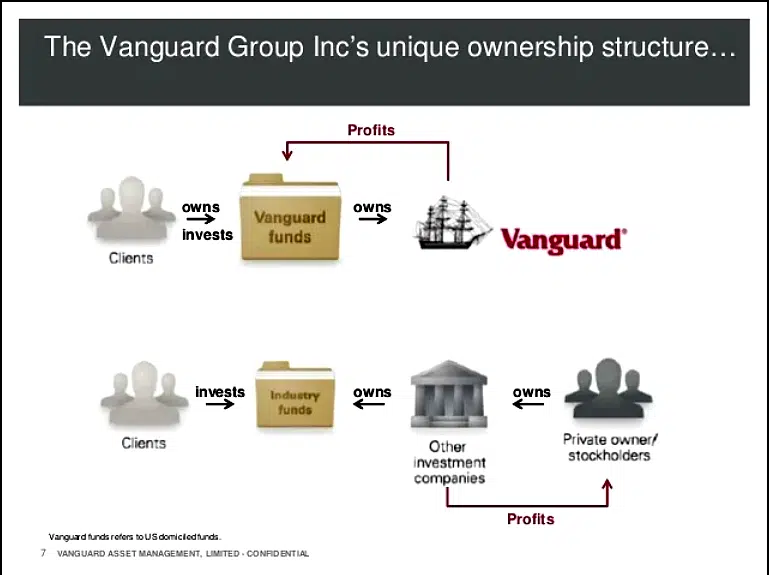
One of the most defining characteristics of Vanguard, and central to its ability to offer exceptionally low costs, is its distinctive ownership structure. Unlike most publicly traded investment firms that are owned by external shareholders, Vanguard is structured as a “mutual” company. This means it is owned by its funds, which, in turn, are owned by their investors. There are no outside shareholders dictating profit margins or demanding ever-increasing returns.
This structure eliminates the inherent conflict of interest often found in traditional fund companies, where the profit motive of the management company can sometimes diverge from the best interests of fund shareholders. At Vanguard, the interests are aligned: any profits generated by the company are reinvested to benefit the fund shareholders, primarily through lower expense ratios. This mutual ownership model is the direct pipeline to the low-cost advantage that Vanguard champions, ensuring that the company’s focus remains squarely on maximizing investor returns by minimizing fees.
John C. Bogle’s Vision: The Genesis of Index Investing
John Bogle’s foundational insight was based on the observation that over the long term, very few actively managed funds consistently outperform their respective market benchmarks after factoring in fees and expenses. He championed the idea that investors should embrace market-cap-weighted index funds, which simply aim to replicate the performance of a broad market index (like the S&P 500) rather than trying to pick winning stocks or time the market.
Bogle argued that this passive approach offers several key advantages: lower costs due to minimal trading and research, superior diversification by owning a broad basket of securities, and predictable performance that mirrors the market’s overall return. His commitment to this “common sense” approach to investing, often summarized as “stay the course” and “costs matter,” laid the groundwork for Vanguard’s enduring success and profoundly influenced the global investment community. The first index fund for individual investors, the Vanguard 500 Index Fund, launched in 1976, was initially derided as “Bogle’s Folly” but is now one of the largest and most successful funds in history.
Core Investment Offerings: A Diverse Portfolio for Every Investor
Vanguard’s product lineup is extensive, designed to cater to a wide spectrum of investment goals, risk tolerances, and asset allocation preferences. While famous for its index-tracking products, the firm also offers a range of other investment vehicles and services.
Vanguard Index Funds: The Cornerstone of Low-Cost Diversification
At the heart of Vanguard’s appeal are its index funds, available both as traditional mutual funds and as exchange-traded funds (ETFs). These funds are designed to track the performance of specific market indexes, offering broad diversification and typically charging minuscule expense ratios. Whether an investor wants exposure to the entire U.S. stock market (like VTSAX or VTI), international equities (VTIAX or VXUS), U.S. bonds (VBTLX or BND), or a more specialized sector, Vanguard provides an index fund solution.
The benefits of these funds are numerous: they offer instant diversification across hundreds or thousands of securities, eliminate the need for costly active management, and benefit from tax efficiency (especially ETFs due to their unique creation/redemption mechanism). For many investors, a simple portfolio consisting of a few Vanguard index funds forms the backbone of their long-term wealth-building strategy.
Actively Managed Funds: A Targeted Approach with Vanguard’s Oversight
While Vanguard’s reputation is built on indexing, it also offers a selection of actively managed mutual funds. These funds employ professional managers who select individual securities with the aim of outperforming a benchmark. However, consistent with Vanguard’s ethos, these actively managed funds are typically structured with lower expense ratios compared to the industry average.
Vanguard’s approach to active management is distinct: it often utilizes external advisory firms with proven track records, employing a multi-manager strategy to mitigate risk and enhance diversification even within its actively managed offerings. This allows investors who prefer a more hands-on approach, or believe in the value of skilled management in certain market segments, to still benefit from Vanguard’s cost-conscious philosophy.
Retirement Solutions: Guiding Investors Towards Financial Freedom
Vanguard is a popular choice for retirement savings, offering a comprehensive suite of products and accounts designed to help individuals plan and save for their golden years. This includes traditional and Roth IRAs, SEP IRAs, SIMPLE IRAs, and a significant presence in employer-sponsored plans like 401(k)s and 403(b)s.
One of their most popular retirement solutions is the Target-Date Fund series (e.g., Vanguard Target Retirement 2045 Fund). These “fund of funds” automatically adjust their asset allocation over time, becoming more conservative as the investor approaches their target retirement date. This “set it and forget it” approach provides a professionally managed, diversified portfolio that adapts to an individual’s changing risk profile, making retirement planning simpler and more accessible for millions.
The Vanguard Advantage: Why Investors Choose Vanguard
Millions of investors worldwide choose Vanguard as their partner in financial growth, drawn by a compelling combination of benefits that set the firm apart in a competitive industry.

Unparalleled Low Costs: Minimizing Expense Ratios for Maximized Returns
The single most powerful advantage of Vanguard funds is their exceptionally low expense ratios. An expense ratio is the annual fee charged as a percentage of your investment to cover the fund’s operating expenses. While seemingly small, even a difference of 0.5% or 1% in annual fees can compound significantly over decades, eroding a substantial portion of an investor’s total returns.
Vanguard’s mutual ownership structure and commitment to indexing allow it to consistently offer some of the lowest costs in the industry. This means more of an investor’s money stays invested and grows over time, directly translating into greater wealth accumulation. Bogle famously said, “In investing, you get what you don’t pay for,” underscoring the profound impact of minimizing fees on long-term financial success.
Diversification and Risk Management: Spreading Investments Effectively
Vanguard’s emphasis on broad market index funds inherently promotes superior diversification. By owning thousands of stocks or bonds through a single fund, investors significantly reduce the specific risk associated with any one company or sector. This broad exposure helps smooth out returns and provides resilience against market volatility.
Furthermore, Vanguard offers a variety of asset classes (stocks, bonds, domestic, international) and tools like target-date funds that facilitate prudent asset allocation. This enables investors to construct portfolios tailored to their individual risk tolerance and time horizon, effectively managing risk while pursuing long-term growth.
Transparency and Simplicity: Empowering Investors with Clear Information
Vanguard has always championed transparency, providing clear and concise information about its funds, strategies, and costs. Its investment approach is straightforward and easy for individual investors to understand, cutting through the jargon and complexity often associated with financial products.
This commitment to simplicity empowers investors to make informed decisions, fostering a sense of control and confidence in their financial journey. The company’s educational resources, articles, and financial planning tools further support this mission, helping investors develop a solid understanding of fundamental investment principles.
Building a Portfolio with Vanguard: Practical Steps and Strategies
For those looking to leverage Vanguard’s offerings, the process is designed to be accessible and straightforward, built on principles that prioritize long-term success over short-term speculation.
Starting Your Investment Journey: Opening an Account and Funding Options
Opening an investment account with Vanguard typically involves a few simple steps. Investors can choose from various account types, including individual taxable brokerage accounts, joint accounts, or tax-advantaged retirement accounts like IRAs. The process usually involves providing personal information, linking a bank account for funding, and selecting the desired account type. Minimum initial investments vary by fund, though many popular ETFs can be purchased for the price of a single share through a brokerage account, making them highly accessible. Vanguard’s direct mutual funds often have higher minimums (e.g., $3,000).
Selecting the Right Investments: From Broad Market Index Funds to Specialized ETFs
Choosing the right Vanguard investments often begins with determining one’s asset allocation – the mix of stocks and bonds appropriate for their risk tolerance and financial goals. For many, a diversified portfolio can be built with just two or three broad market index funds, such as a U.S. Total Stock Market Index Fund, an International Stock Index Fund, and a Total Bond Market Index Fund.
Alternatively, for those seeking ultimate simplicity, a single Vanguard Target Retirement Fund or a Vanguard LifeStrategy Fund offers a fully diversified and automatically rebalancing portfolio. More experienced investors might delve into sector-specific ETFs or actively managed funds to refine their exposure. The key is to select funds that align with a long-term strategy rather than chasing short-term trends.
Long-Term Investing Principles: Patience, Consistency, and Rebalancing
Vanguard’s philosophy is deeply rooted in time-tested investment principles. Patience is paramount; market fluctuations are inevitable, and successful investing means staying the course through ups and downs. Consistency, through regular contributions (dollar-cost averaging), helps average out purchase prices and build wealth steadily. Finally, periodic rebalancing ensures the portfolio maintains its desired asset allocation. For instance, if stocks have performed exceptionally well, rebalancing might involve selling a small portion of appreciated stocks to buy more bonds, bringing the portfolio back to its target mix. These disciplined practices, combined with Vanguard’s low-cost funds, form a powerful engine for long-term financial success.
Beyond Investing: Vanguard’s Impact on the Financial Industry
Vanguard’s influence extends far beyond its direct client base, having instigated significant shifts across the entire financial services industry.
Driving Down Costs Across the Industry: The “Vanguard Effect”
Perhaps Vanguard’s most profound impact is what’s often termed the “Vanguard Effect.” By consistently offering funds with ultra-low expense ratios, Vanguard compelled its competitors to lower their fees to remain competitive. This trickle-down effect has benefited investors across the board, saving them billions of dollars annually in investment costs. This competitive pressure has forced many actively managed funds to justify their higher fees or risk losing assets to lower-cost index alternatives. Vanguard’s relentless focus on costs fundamentally reshaped the pricing structure of the investment management industry, making investing more affordable for everyone.

Promoting Financial Literacy and Investor Education
True to its investor-centric mission, Vanguard has also been a leading advocate for financial literacy and investor education. Through its extensive online resources, articles, white papers, and financial advisors, the company strives to demystify investing and empower individuals with the knowledge needed to make sound financial decisions. This commitment aligns with John Bogle’s belief that informed investors are better investors, fostering a culture of understanding and prudence in personal finance.
In conclusion, “what are Vanguard” is not merely a question about a company; it’s an inquiry into a transformative force in the world of money and investing. From its revolutionary mutual ownership structure and the pioneering spirit of John C. Bogle to its expansive range of low-cost index funds and its enduring influence on industry practices, Vanguard has fundamentally democratized investing. By consistently putting the investor first, minimizing costs, and championing a common-sense approach to wealth building, Vanguard continues to be a crucial pillar for millions striving for financial security and independence.
aViewFromTheCave is a participant in the Amazon Services LLC Associates Program, an affiliate advertising program designed to provide a means for sites to earn advertising fees by advertising and linking to Amazon.com. Amazon, the Amazon logo, AmazonSupply, and the AmazonSupply logo are trademarks of Amazon.com, Inc. or its affiliates. As an Amazon Associate we earn affiliate commissions from qualifying purchases.