
In an era defined by rapid technological advancement, where our homes are becoming smarter, our data more secure, and our daily lives increasingly streamlined, one fundamental aspect remains paramount: safety. Amidst the myriad of gadgets designed for convenience and connectivity, devices engineered to protect life and property stand out as indispensable. Chief among these are smoke detectors, silent sentinels that provide an early warning against one of the most destructive forces known to humankind – fire. Understanding the underlying technologies that power these vital devices is not just an exercise in technical curiosity; it’s a critical step towards making informed decisions about our personal and collective safety, aligning perfectly with the digital security and technology trends aspects of modern living.
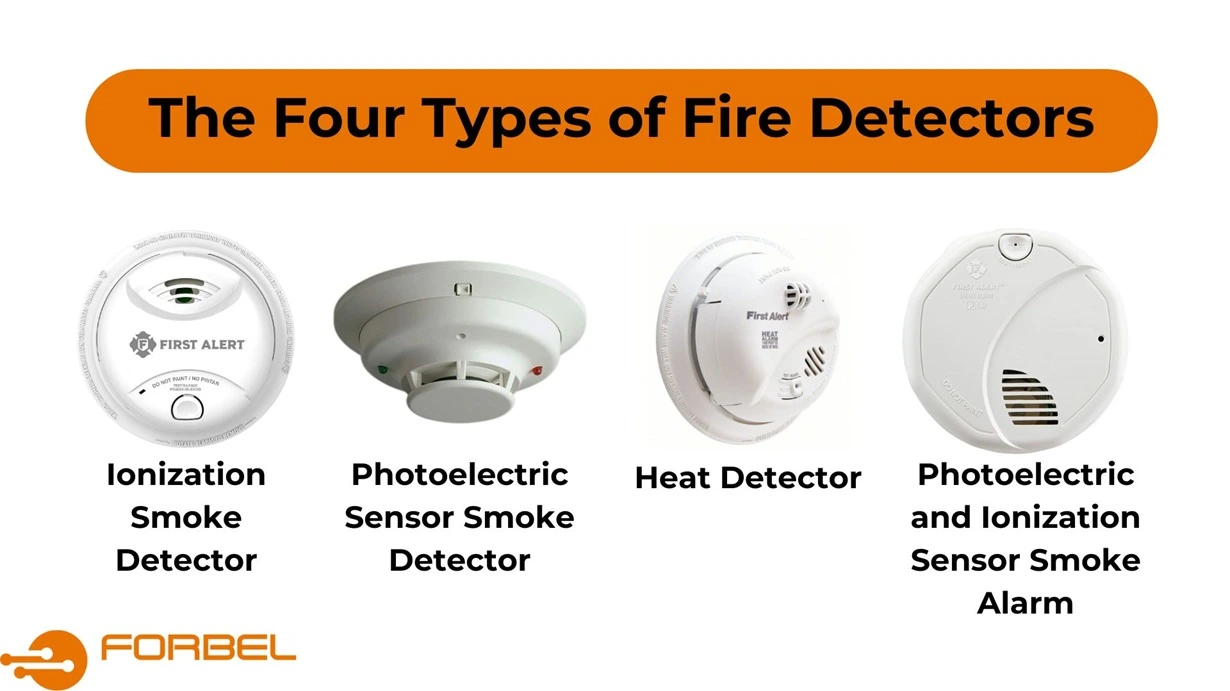
The market offers a range of smoke detection solutions, but at their core, two primary technologies have dominated the landscape for decades: ionization smoke detectors and photoelectric smoke detectors. While both serve the same life-saving purpose, they operate on distinct principles, making each uniquely suited to detect different types of fires. Delving into their mechanisms, advantages, and limitations reveals the nuanced world of fire safety engineering, showcasing how different technological approaches can tackle a common threat, a testament to innovative problem-solving in the tech sphere.
The Indispensable Role of Smoke Detection in Modern Safety
The concept of early fire detection is as old as the discovery of fire itself, evolving from basic human observation to sophisticated electronic systems. In today’s interconnected world, where smart homes and IoT devices are becoming the norm, smoke detectors have transcended their traditional role to become integral components of comprehensive safety ecosystems. They are no longer just standalone alarms but often integrated systems that can alert homeowners via smartphones, trigger other smart devices, and even notify emergency services automatically. This evolution underscores their critical place within “Technology Trends” and “Digital Security,” extending protection beyond the immediate vicinity of the alarm.
The statistics surrounding fire incidents are stark. Fires cause billions of dollars in property damage annually and, more tragically, lead to thousands of fatalities. The overwhelming majority of these deaths are due to smoke inhalation, not burns, highlighting the critical need for early smoke detection. A working smoke alarm can cut the risk of dying in a home fire by half. This profound impact on life, property, and peace of mind makes understanding the technology behind these devices not merely academic but a matter of practical necessity. For businesses, the reliability of such safety technology also plays a crucial role in “Brand Strategy” and “Corporate Identity,” demonstrating a commitment to safety for employees and customers, and mitigating financial risks that could impact “Business Finance” and “Reputation.”
Historically, smoke detection has come a long way from rudimentary heat sensors. The advent of ionization and photoelectric technologies marked a significant leap forward, offering more sensitive and rapid detection capabilities. Each technology addresses specific fire characteristics, leading to a need for a deeper understanding to ensure optimal protection.
Type 1: Ionization Smoke Detectors – The Speedy Sentinel
Ionization smoke detectors have long been a common sight in homes and businesses, recognized for their cost-effectiveness and their ability to quickly detect fast-flaming fires. Their technological foundation, while somewhat complex, is remarkably effective for specific fire types, making them a cornerstone of fire safety for decades. These detectors represent a clever application of physics and nuclear science to a critical safety need.
How Ionization Detectors Work: A Glimpse into Atomic Safety
The core of an ionization smoke detector is a small chamber containing two electrically charged plates and a tiny amount of radioactive material, typically Americium-241. This radioactive source emits alpha particles, which ionize the air molecules between the plates, creating a small, continuous electric current. Think of it as a miniature, controlled electrical circuit operating within the detector.
When smoke from a fire enters this chamber, the smoke particles disrupt the flow of these charged ions. These particles attach to the ions, neutralizing them and effectively reducing the current between the plates. The detector continuously monitors this current. A significant drop in the current signals the presence of smoke, triggering the alarm. This mechanism makes ionization detectors highly sensitive to the microscopic particles produced by fast-flaming fires – those that consume combustible materials rapidly and produce a lot of heat but often invisible or faint smoke initially. Examples include fires involving paper, wood, or flammable liquids.
Advantages and Limitations for Diverse Environments
Advantages:
- Rapid Response to Fast-Flaming Fires: Ionization detectors are exceptionally good at detecting the small, rapidly moving smoke particles characteristic of fast-flaming fires. This quick response can be crucial in preventing such fires from escalating, giving occupants more time to evacuate.
- Cost-Effective: Historically, ionization detectors have been less expensive to manufacture than photoelectric detectors, making them a more budget-friendly option for widespread installation, an important “Personal Finance” consideration for homeowners.
- Ubiquity: Due to their longevity in the market and affordability, they are widely available and commonly found in many residential and commercial settings.
Limitations:
- Susceptibility to Nuisance Alarms: A significant drawback of ionization detectors is their tendency to trigger false alarms from cooking fumes (e.g., burnt toast, steam) or other non-threatening sources. The particles from these activities can mimic actual smoke, disrupting the ionization current and causing the alarm to sound, leading to frustration and sometimes even residents disabling their alarms, which poses a serious safety risk.
- Less Effective with Smoldering Fires: While excellent for flaming fires, ionization detectors are slower to respond, or may not respond at all, to smoldering fires. These fires, often originating from upholstered furniture or electrical wiring, produce larger, visible smoke particles and less heat, which are not as readily detected by the ionization process.
- Radioactive Material: Although the amount of Americium-241 is minuscule and considered safe under normal conditions, the presence of radioactive material raises concerns for some individuals regarding disposal and environmental impact. Strict regulations govern the manufacturing and disposal of these devices, falling under aspects of “Digital Security” and responsible “Technology Trends.”
Ionization detectors are often recommended for areas where fast-flaming fires are a primary concern, such as living rooms or areas where highly flammable materials might be stored. However, their limitations, especially regarding nuisance alarms and smoldering fire detection, often lead experts to recommend them as part of a more comprehensive detection strategy.
Type 2: Photoelectric Smoke Detectors – The Silent Watchman
Contrasting with their ionization counterparts, photoelectric smoke detectors excel at detecting fires that smolder slowly, producing large amounts of visible smoke before bursting into flames. Their operational principle is entirely different, relying on light rather than radiation, making them a crucial complementary technology in holistic fire safety plans.
The Principle of Light Scattering: Illuminating the Threat
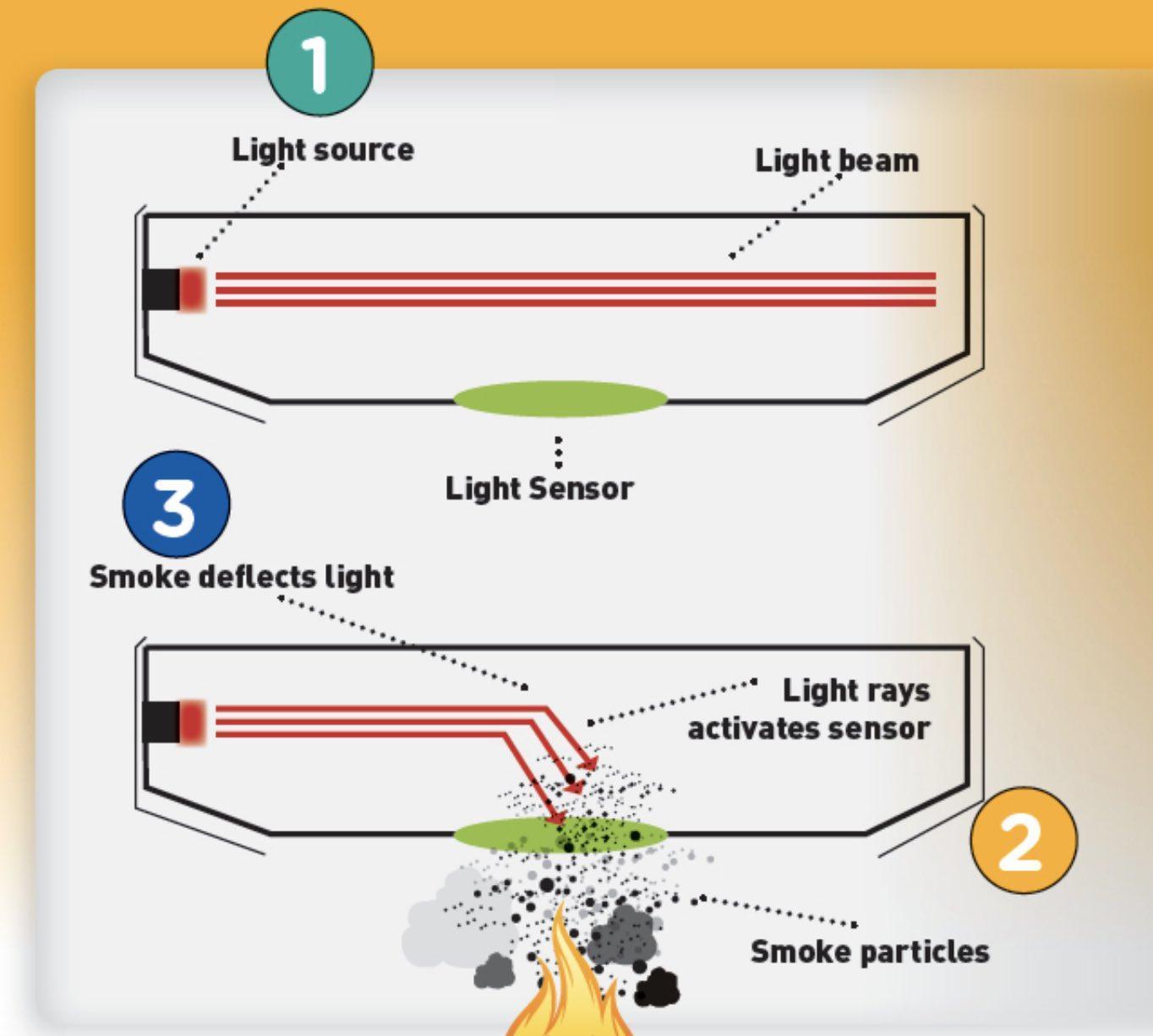
A photoelectric smoke detector contains a chamber with a light source (typically an LED) and a light-sensitive sensor (photocell), positioned at an angle to each other. In a clear-air environment, the light beam from the LED travels straight across the chamber and does not strike the sensor. It’s a carefully calibrated system designed to remain inactive under normal conditions.
When smoke enters the chamber, its particles scatter the light beam. Some of this scattered light is redirected towards the sensor, triggering it. The amount of light detected by the sensor corresponds to the density of the smoke. This optical sensing method makes photoelectric detectors particularly adept at identifying the larger, often visible smoke particles characteristic of smoldering fires. These fires, which can burn for hours before igniting, are often generated by materials like foam mattresses, PVC wiring, or upholstered furniture, producing thick, dark smoke without a significant flame initially.
Optimized Placement and Performance Considerations
Advantages:
- Superior Detection of Smoldering Fires: This is the primary strength of photoelectric detectors. Their ability to quickly identify the visible smoke from smoldering fires provides crucial early warning, allowing more time for evacuation and potentially preventing the fire from fully developing.
- Fewer Nuisance Alarms: Compared to ionization detectors, photoelectric alarms are far less prone to false alarms from common household activities like cooking fumes or steam. Their design requires more substantial smoke particles to trigger, reducing frustrating false alerts and improving user “Productivity” by not causing unnecessary interruptions.
- Recommended by Fire Safety Experts: Due to the prevalence of smoldering fires in residential settings and their less frequent false alarms, fire safety organizations often recommend photoelectric smoke detectors for general home use, particularly in bedrooms and near sleeping areas.
Limitations:
- Slower Response to Fast-Flaming Fires: While excellent for smoldering fires, photoelectric detectors can be slower to react to fast-flaming fires that produce smaller, less visible smoke particles. This doesn’t mean they won’t detect such fires, but their response time might be slightly longer than an ionization detector in these specific scenarios.
- Potentially Higher Cost: Historically, photoelectric detectors have been slightly more expensive than ionization models, though the price difference has narrowed considerably with manufacturing advancements. For those managing “Personal Finance,” this might be a minor consideration, but the added safety often justifies the cost.
Photoelectric smoke detectors are ideally suited for bedrooms, hallways, and living areas where upholstered furniture and electronics are common, as these are typical sources of smoldering fires. Their reduced susceptibility to nuisance alarms also makes them a preferred choice for kitchens, provided they are placed at a safe distance from cooking appliances to avoid legitimate smoke from heavy cooking.
Beyond the Basics: Integrating and Evolving Smoke Detection
While ionization and photoelectric represent the two core technologies, the world of smoke detection hasn’t stood still. Modern advancements are pushing the boundaries, integrating these foundational principles with smart technology, multi-sensor approaches, and enhanced user experiences to create more comprehensive and reliable safety solutions. This evolution exemplifies the broader “Technology Trends” and “AI Tools” shaping our digital lives.
The Rise of Combination Detectors and Smart Technologies
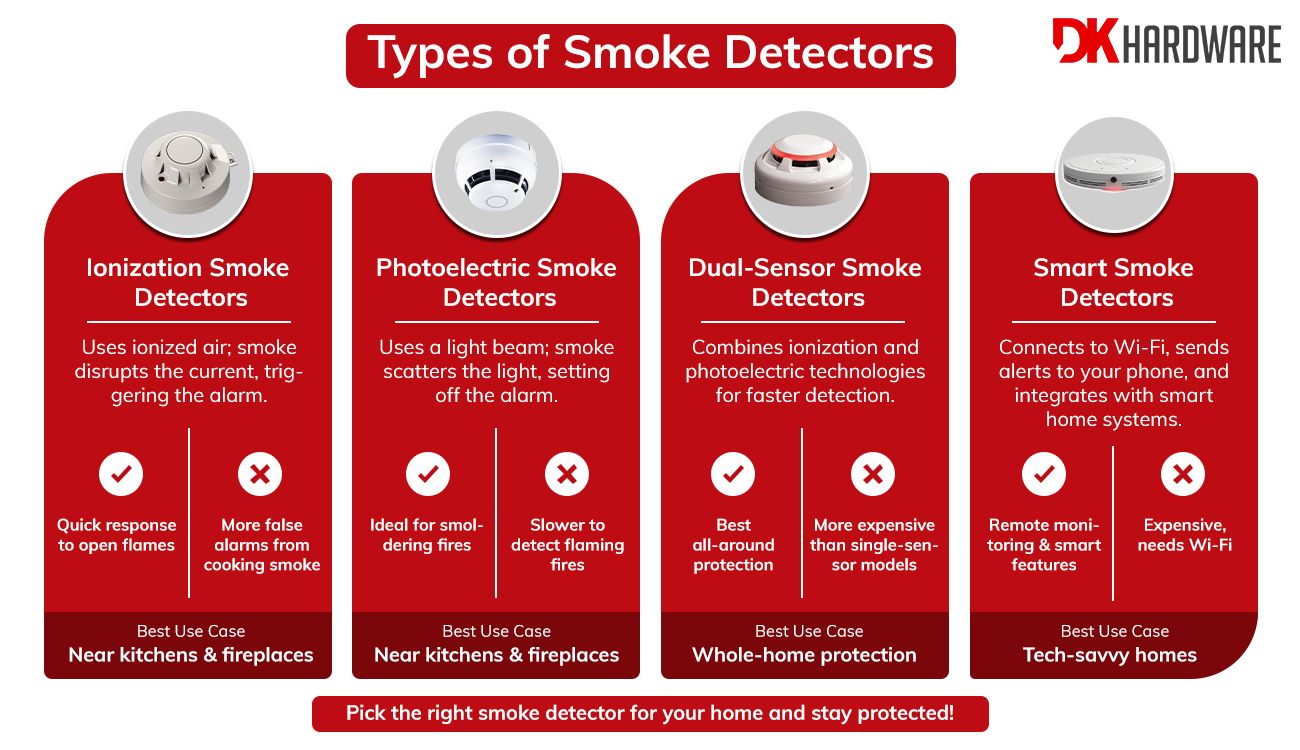
Recognizing the distinct strengths and weaknesses of ionization and photoelectric technologies, manufacturers developed combination smoke detectors. These units incorporate both types of sensors into a single device, offering the best of both worlds. A combination detector can quickly respond to both fast-flaming and slow-smoldering fires, providing a more balanced and comprehensive level of protection. This hybrid approach is now widely recommended by fire safety professionals as the optimal solution for most residential and many commercial environments.
Beyond combining sensing technologies, the most significant leap in smoke detection comes from smart smoke detectors. These devices leverage the “Internet of Things” (IoT) and “AI Tools” to provide enhanced features and connectivity:
- Wireless Connectivity: Smart detectors connect to Wi-Fi or other wireless protocols, allowing them to communicate with smartphones, smart home hubs, and even other smart detectors in a network.
- App Notifications: In the event of an alarm, homeowners receive instant alerts on their smartphones, regardless of their location. This remote monitoring capability is a crucial aspect of “Digital Security,” ensuring property protection even when away.
- Remote Testing and Silence: Users can test their alarms or silence nuisance alerts directly from their phone apps, enhancing “Productivity” and convenience.
- Integration with Smart Home Ecosystems: Smart smoke detectors can be integrated with other smart devices. For example, in case of an alarm, they might trigger smart lights to illuminate escape routes, unlock smart doors for easier evacuation, or even shut down HVAC systems to prevent smoke spread.
- Multi-Criteria Sensing: Many smart detectors incorporate additional sensors for heat and carbon monoxide (CO), transforming them into all-in-one environmental safety monitors. AI algorithms are increasingly being used to analyze data from these multiple sensors, reducing false alarms and improving the accuracy of fire identification.
- Voice Alerts: Instead of just a siren, some smart detectors can issue voice alerts, specifying the type of threat (e.g., “Smoke detected in the living room,” “Carbon monoxide detected”), providing clearer information for rapid response.
These advancements represent a significant convergence of safety technology with daily digital living, enhancing peace of mind and offering unprecedented levels of control and information. They are prime examples of how “Technology Trends” translate into practical, life-saving applications.
Ensuring Optimal Safety: Installation, Maintenance, and Future Trends
The most sophisticated smoke detector is useless if not properly installed and maintained. Strategic placement is crucial: at least one detector on every level of the home, inside each bedroom, and outside each sleeping area. Combination detectors are often recommended for all locations. Regular testing (monthly) and battery replacement (at least annually, or when the low-battery chirp sounds) are simple yet critical maintenance steps. For hardwired detectors with battery backup, testing remains essential. These “Tutorials” on proper usage are vital for maximizing device effectiveness and ensuring “Digital Security.”
Looking ahead, the future of smoke detection is poised for even greater innovation:
- Advanced AI and Machine Learning: Algorithms will become even more sophisticated, capable of distinguishing between actual threats and nuisance triggers with higher accuracy, potentially integrating with “AI Tools” for predictive analytics based on environmental data.
- Video Analytics for Smoke Detection: Cameras with advanced image processing capabilities could potentially identify smoke or flames even faster, offering visual confirmation alongside traditional sensor data.
- Nanotechnology Sensors: Miniaturized sensors leveraging nanotechnology could offer unprecedented sensitivity, lower power consumption, and greater selectivity in detecting specific fire byproducts.
- Wireless Mesh Networks: These could create self-healing communication networks between detectors, ensuring alarms are communicated across an entire property even if one device loses connectivity.
- Energy Harvesting and Long-Life Batteries: Innovations in power sources could lead to detectors with significantly longer operational lives, reducing maintenance burdens.
For companies manufacturing these devices, a commitment to reliability, ease of use, and integration into existing smart home ecosystems is paramount, directly influencing their “Brand Strategy” and “Reputation.” For consumers and businesses, investing in high-quality, well-maintained smoke detection systems is an invaluable financial decision, minimizing potential losses from fire and impacting “Business Finance” positively.
In conclusion, understanding the two primary types of smoke detection technologies – ionization and photoelectric – is foundational to ensuring effective fire safety. While ionization detectors excel at rapid detection of fast-flaming fires and photoelectric detectors are superior for smoldering fires, the modern recommendation increasingly points towards combination detectors for comprehensive coverage. Furthermore, the integration of smart technology is transforming these essential safety devices into intelligent, connected guardians that offer enhanced monitoring, control, and peace of mind. As technology continues to evolve, our ability to detect and mitigate the threat of fire will only grow, making our homes and workplaces safer environments for everyone.
aViewFromTheCave is a participant in the Amazon Services LLC Associates Program, an affiliate advertising program designed to provide a means for sites to earn advertising fees by advertising and linking to Amazon.com. Amazon, the Amazon logo, AmazonSupply, and the AmazonSupply logo are trademarks of Amazon.com, Inc. or its affiliates. As an Amazon Associate we earn affiliate commissions from qualifying purchases.