
What Are Two Characteristics of IP? Choose Two
In the vast and intricate web of global communication, a singular protocol stands as the fundamental bedrock, enabling the exchange of information across billions of devices: the Internet Protocol, or IP. Without IP, the internet as we know it would cease to exist. It’s the unsung hero that ensures your emails reach their destination, your video calls connect, and your web pages load. Understanding the core characteristics of IP is not just an academic exercise; it’s essential for anyone involved in networking, software development, cybersecurity, or simply seeking a deeper comprehension of our digital world.
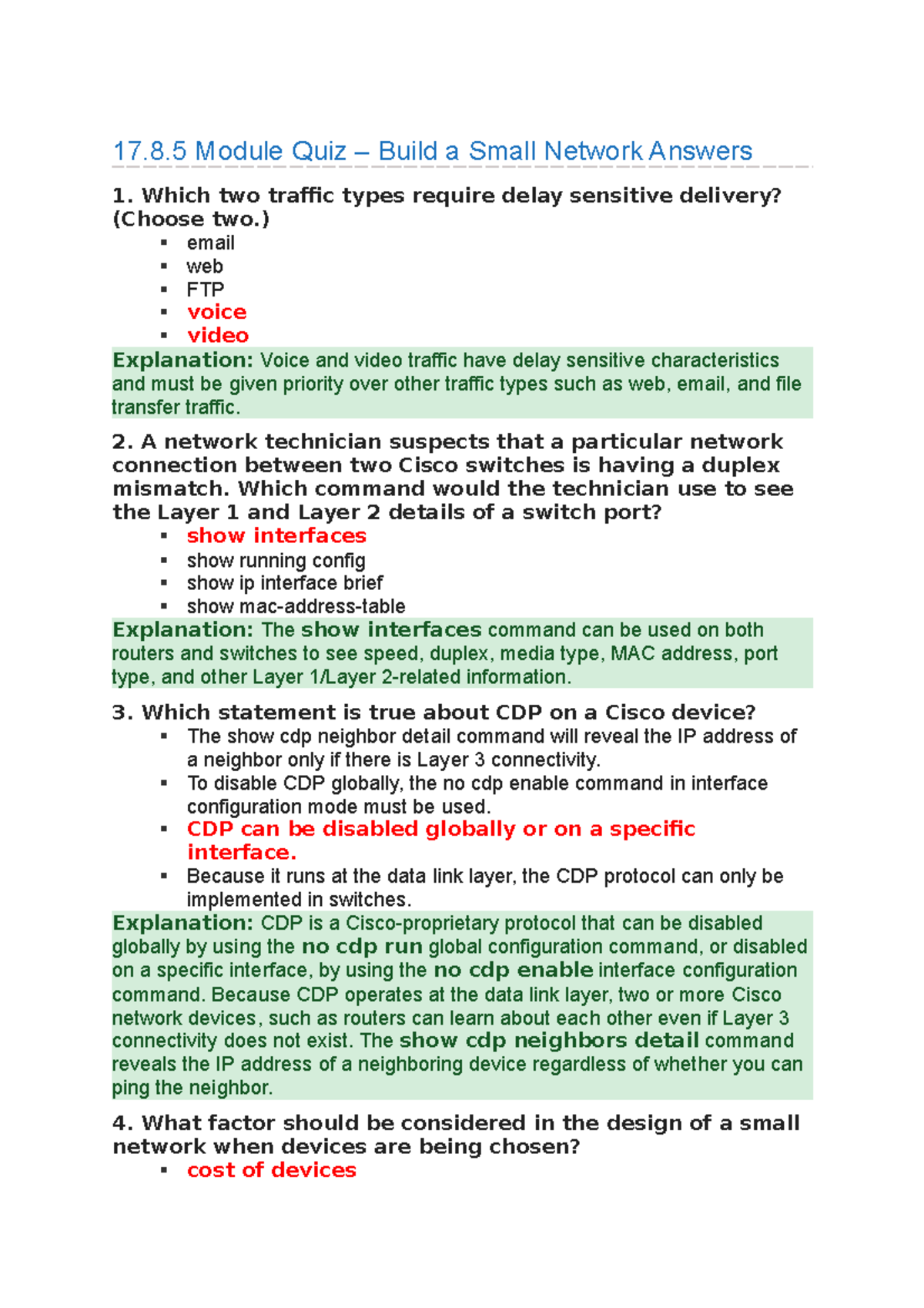
While IP boasts several critical attributes, two stand out as foundational to its design and pervasive functionality: connectionless communication and best-effort delivery. These two characteristics define how IP operates at a fundamental level, influencing everything from network efficiency to the architecture of higher-layer protocols.
The Fundamental Role of Internet Protocol (IP) in Global Connectivity
Before diving into its specific characteristics, it’s crucial to establish IP’s place in the networking hierarchy. IP operates at the network layer (Layer 3) of the TCP/IP model, primarily responsible for addressing and routing packets of data between hosts on different networks. It acts like a digital postal service, ensuring that information fragments (packets) find their way from a source to a destination, regardless of the physical path they take.
Defining IP: The Backbone of the Internet
At its heart, IP defines the rules for addressing and routing data across networks. Every device connected to the internet, from your smartphone to a large server farm, is assigned a unique IP address. This address acts as its identifier and locator, much like a street address for a physical location. IP then uses this addressing scheme to determine the most efficient path for data packets to travel from one point to another across potentially many different networks. It’s the universal language that allows disparate networks, built on varying technologies, to communicate seamlessly.
IP Addresses: Locating Devices on the Network
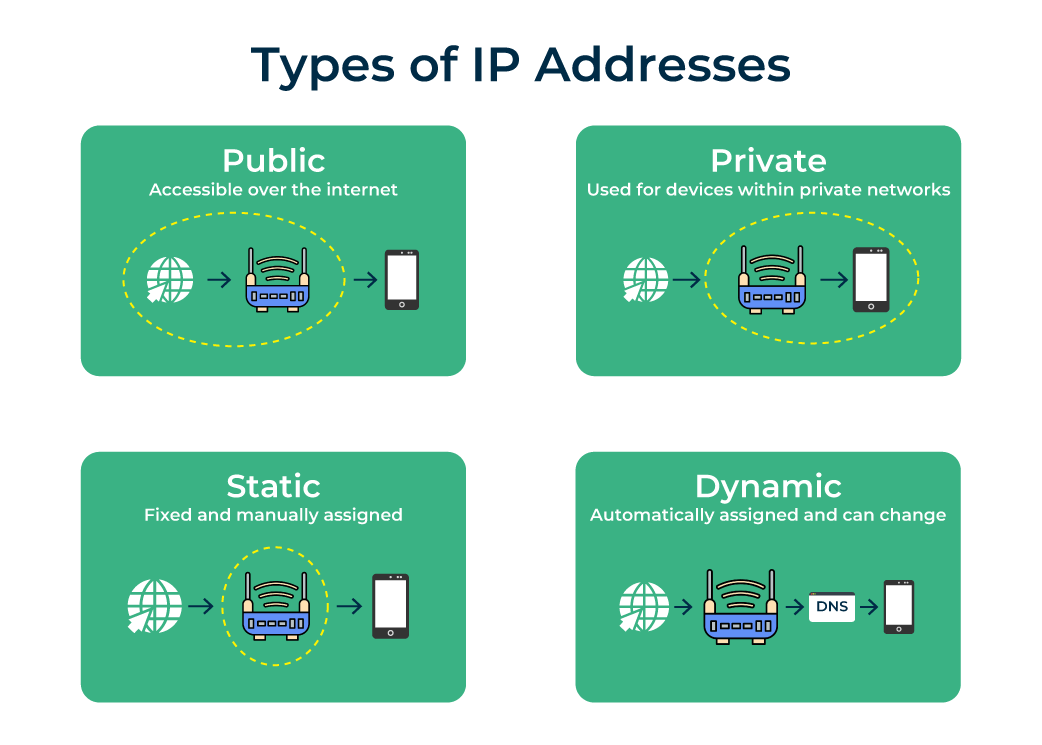
The concept of an IP address is central to understanding how the protocol functions. These numerical labels (e.g., 192.168.1.1 for IPv4 or 2001:0db8:85a3:0000:0000:8a2e:0370:7334 for IPv6) are logically assigned to a network interface to identify and locate a device on an IP network. Without a unique address, a device cannot send or receive data over the internet. The management and allocation of these addresses are critical tasks, overseen by organizations like IANA (Internet Assigned Numbers Authority) and regional internet registries (RIRs), ensuring global uniqueness and order.
Packet Switching: How IP Delivers Data
IP operates on a principle known as packet switching. When you send data—be it an email, a photo, or a voice message—it’s not sent as one continuous stream. Instead, it’s broken down into smaller, manageable units called packets. Each packet contains a segment of the original data, along with header information that includes the source IP address, the destination IP address, and other routing details. These individual packets are then transmitted independently across the network, potentially taking different routes, before being reassembled in the correct order at the destination. This method is incredibly efficient and robust, as it allows for optimal utilization of network resources and provides resilience against network failures.
Characteristic 1: Connectionless Communication
One of the two paramount characteristics of IP is its connectionless nature. This means that IP does not establish a dedicated, persistent connection between the sender and the receiver before transmitting data. Instead, each packet is treated as an independent unit, sent out into the network without any prior setup or handshake with the destination.
Understanding Connectionless Nature
In a connectionless protocol, the sender simply “fires and forgets” each packet. There’s no negotiation, no session establishment, and no acknowledgment of receipt at the IP layer. Each packet is delivered to the network with a destination address, and the routers along the path independently decide where to forward it next, based solely on the information contained within that packet’s header. It’s akin to sending multiple postcards to the same address; each postcard is sent individually, without checking if the recipient is ready or confirming prior postcards arrived.
Advantages of Statelessness: Efficiency and Robustness
The connectionless design offers significant advantages, primarily in terms of efficiency and robustness.
-
Efficiency: By avoiding the overhead of establishing and maintaining connections, IP can process and forward packets much faster. This reduces latency and consumes fewer network resources, making the network more scalable and responsive. Routers don’t need to store state information about ongoing conversations, simplifying their design and allowing them to handle a massive volume of traffic from countless different sources simultaneously.
-
Robustness: If a particular network path becomes congested or fails, individual packets can be rerouted dynamically without disrupting an established “connection” that doesn’t exist at this layer. This makes the internet highly resilient to failures; if one path goes down, subsequent packets can simply take another, and the overall communication can continue, albeit potentially with some delay or loss of a few packets.
The Role of Higher-Layer Protocols (TCP) for Reliability
While IP itself is connectionless, many applications require a more reliable form of communication. This is where higher-layer protocols, most notably the Transmission Control Protocol (TCP), come into play. TCP sits above IP in the TCP/IP model and does establish a connection, manage segment reordering, perform error checking, and request retransmissions of lost packets. Think of IP as the postal service that delivers individual envelopes, and TCP as the mechanism that ensures all the envelopes forming a complete letter arrive, in order, and requests replacements for any that go missing. This modularity is a genius aspect of the internet’s architecture: IP provides the raw, efficient delivery mechanism, while TCP adds the necessary reliability for applications that demand it, creating a flexible and powerful system.
Characteristic 2: Best-Effort Delivery
The second critical characteristic of IP, intrinsically linked to its connectionless nature, is best-effort delivery. This characteristic defines the level of guarantee (or lack thereof) that IP provides regarding the transmission and arrival of data packets.
What “Best-Effort” Truly Means
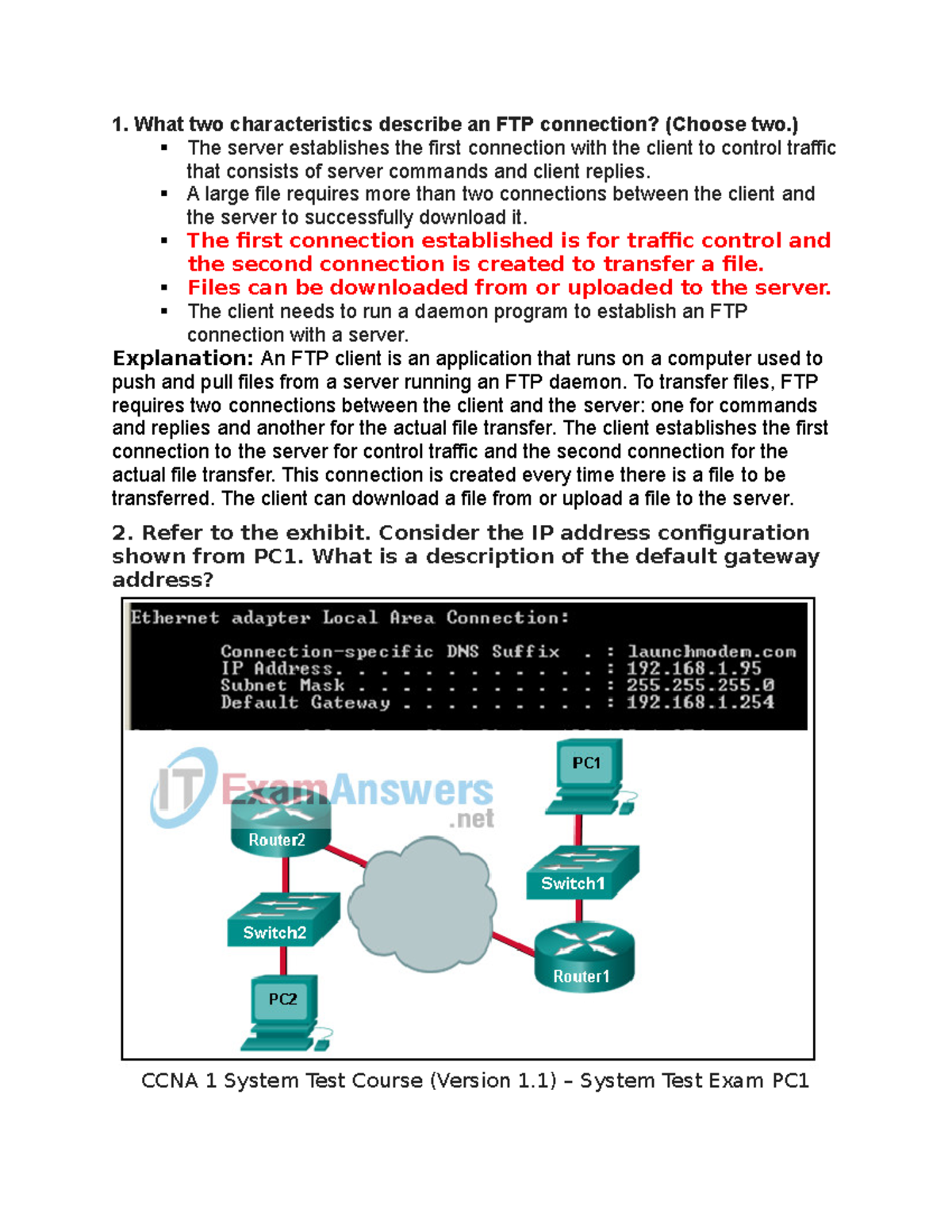
“Best-effort delivery” means that IP will do its utmost to deliver a packet from the source to the destination, but it offers no guarantees whatsoever. Specifically, IP does not guarantee:
-
Delivery: A packet might be lost due to network congestion, hardware failure, or errors during transmission. IP will not detect this loss or attempt to recover the packet.
-
Order of Arrival: Packets belonging to the same data stream might take different routes and arrive at the destination out of sequence. IP does not reorder them.
-
Duplication: Under certain network conditions, a packet might be duplicated and delivered multiple times. IP does not detect or prevent this.
-
Error Checking (beyond header): IP checks for errors in its own header but does not perform comprehensive error checking on the actual data payload.
In essence, IP simply sends the packet and hopes for the best. It doesn’t monitor whether the packet arrived, if it arrived correctly, or if it was the only copy.
Why IP Doesn’t Guarantee Delivery
The rationale behind best-effort delivery is rooted in the pursuit of speed and simplicity. Providing guarantees like reliable delivery, ordered arrival, and error-free transmission would introduce significant overhead. Routers would need to maintain state, acknowledge receipt, buffer out-of-order packets, and manage retransmissions. This complexity would drastically slow down the routing process, increase latency, and make the network less scalable and more expensive to operate. By offloading these responsibilities to higher-layer protocols (like TCP), IP can remain lean, fast, and highly efficient at its core task of routing.
Implications for Network Design and Application Development
The best-effort characteristic has profound implications:
-
Network Design: Network administrators must design networks with sufficient bandwidth and redundancy to minimize packet loss and congestion, knowing that IP itself won’t recover lost data. Quality of Service (QoS) mechanisms are often employed to prioritize certain types of traffic (e.g., real-time voice or video) to mitigate the impact of best-effort delivery.
-
Application Development: Developers must consider whether their application requires reliable data transfer. If it does (e.g., file transfer, web browsing), they must use protocols like TCP. If some packet loss is acceptable or even desirable for speed (e.g., live streaming where dropping a few frames is better than significant delay), they might opt for User Datagram Protocol (UDP), which also uses IP’s best-effort service but adds minimal overhead. This choice allows for application-specific optimization.
The Evolution of IP: From IPv4 to IPv6
The foundational characteristics of connectionless communication and best-effort delivery have remained constant throughout the evolution of IP. However, the protocol itself has undergone significant development, most notably the transition from IPv4 to IPv6, primarily driven by the need for more addressing space.
Addressing Limitations of IPv4
IPv4, introduced in the 1980s, uses 32-bit addresses, allowing for approximately 4.3 billion unique addresses. While this seemed abundant at the time, the explosion of internet-connected devices (PCs, smartphones, IoT devices) led to the imminent exhaustion of available IPv4 addresses. This limitation spurred the development and adoption of IPv6.
Key Improvements and Features of IPv6
IPv6, standardized in the late 1990s, uses 128-bit addresses, providing an astronomically larger address space (approximately 340 undecillion unique addresses). Beyond just addressing, IPv6 also brings several other improvements:
-
Simplified Header: While larger, the IPv6 header is streamlined for more efficient routing.
-
Improved Security: IPSec (IP Security) is natively built into IPv6, offering robust end-to-end encryption and authentication.
-
Autoconfiguration: IPv6 supports stateless address autoconfiguration, making device setup easier and less reliant on DHCP servers.
-
Better Support for Mobile Devices: Enhanced mobility features allow devices to maintain connectivity while changing network locations.
The Transition and Future of IP
The transition from IPv4 to IPv6 is an ongoing, gradual process. Both protocols coexist on the internet, often through mechanisms like dual-stack implementations, tunneling, and translation. The core connectionless, best-effort principles remain, but IPv6 offers a more robust, scalable, and secure foundation for the future of the internet, accommodating the ever-growing number of connected devices and services.
The Interplay of IP Characteristics and Network Performance
The interplay between IP’s connectionless and best-effort characteristics is crucial to understanding overall network performance, reliability, and security. These design choices are not arbitrary; they are the result of deliberate engineering to create a maximally scalable and flexible network.
Balancing Efficiency and Reliability
IP’s design represents a brilliant engineering trade-off: it sacrifices inherent reliability at its layer to gain tremendous efficiency and scalability. This allows the internet to handle an unimaginable volume of traffic without being bogged down by connection management overhead. Reliability is then added on a per-application basis by higher-layer protocols like TCP when needed. This modular approach ensures that network resources aren’t wasted on providing reliability for applications that don’t require it (e.g., streaming video or audio where a dropped packet is less critical than delay).
How IP’s Design Influences Digital Security
The connectionless and best-effort nature of IP also has implications for digital security. Because IP doesn’t track connections or verify the authenticity of every packet at its layer, it becomes susceptible to various attacks like IP spoofing (where an attacker sends packets with a false source IP address) or denial-of-service (DoS) attacks (where an overwhelming flood of best-effort packets can easily saturate network resources). This necessitates the implementation of security measures at other layers, such as firewalls, intrusion detection/prevention systems, and VPNs, which can add connection state, filter traffic, and authenticate users. While IP itself provides no inherent security, its statelessness necessitates a robust layered security approach.
The Foundation for Innovation in Networking
Ultimately, the characteristics of connectionless communication and best-effort delivery have provided the flexibility and resilience necessary for the internet to evolve into the ubiquitous platform it is today. They allow for a diverse array of applications, from highly reliable financial transactions to real-time, loss-tolerant video games, to coexist and thrive on the same underlying infrastructure. This fundamental design has empowered generations of innovators to build new services and technologies without having to reinvent the wheel of basic data transport, making IP a true cornerstone of the digital age. Understanding these two core characteristics is therefore not just about knowing what IP is, but appreciating why the internet works the way it does.
aViewFromTheCave is a participant in the Amazon Services LLC Associates Program, an affiliate advertising program designed to provide a means for sites to earn advertising fees by advertising and linking to Amazon.com. Amazon, the Amazon logo, AmazonSupply, and the AmazonSupply logo are trademarks of Amazon.com, Inc. or its affiliates. As an Amazon Associate we earn affiliate commissions from qualifying purchases.