
In the history of human innovation, few inventions carry the weight of the transistor. Often described as the “nerve cell” of the information age, the transistor is the fundamental building block of all modern electronic systems. While the average consumer rarely sees one, they interact with billions of them every second. From the smartphone in your pocket to the complex artificial intelligence algorithms running in remote data centers, transistors are the silent engines driving the digital revolution.
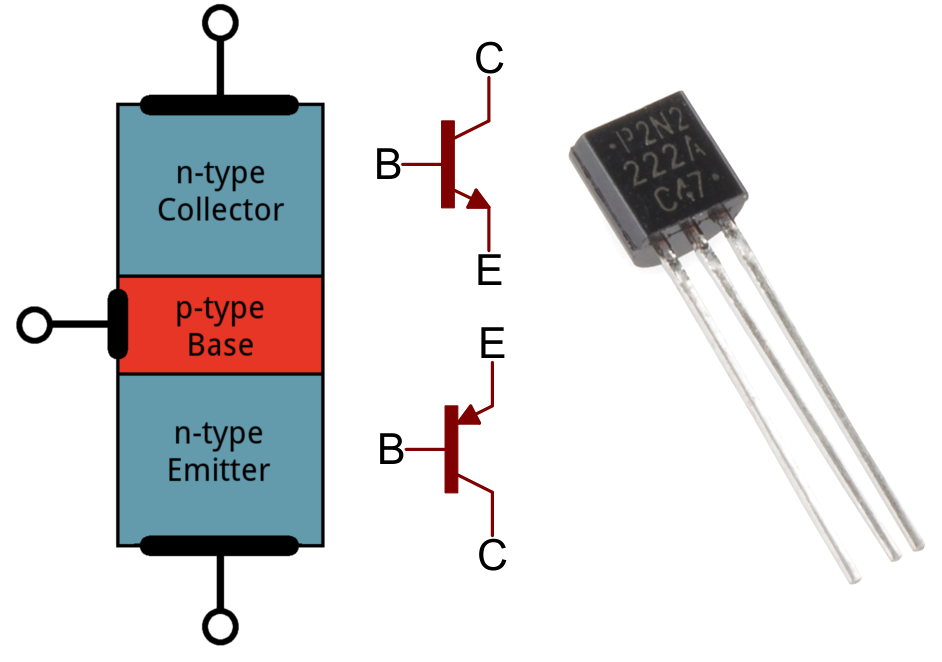
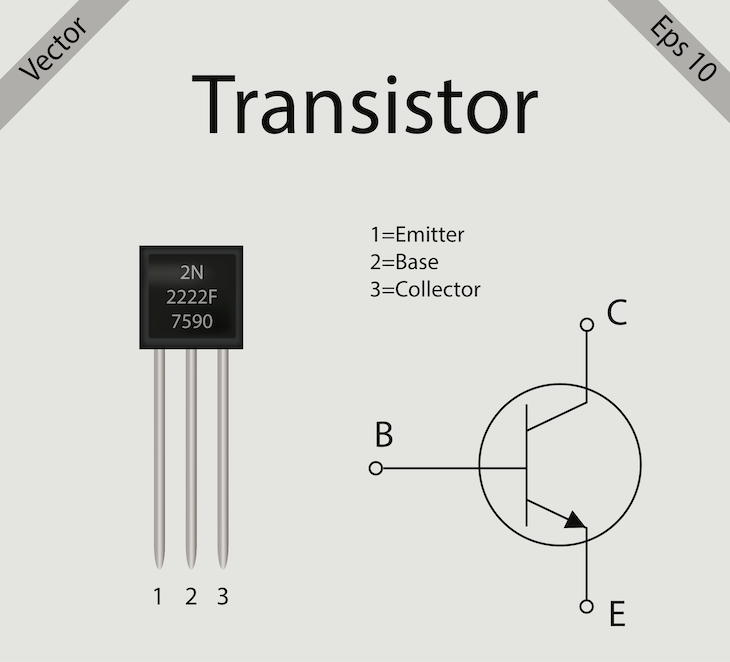
To understand what transistors are used for is to understand the mechanics of the modern world. At its simplest, a transistor is a semiconductor device used to switch or amplify electrical signals and power. However, its applications are far more profound, serving as the bridge between physical reality and digital logic.
1. The Core of Digital Logic and Microprocessors
The most significant use of transistors today is in the creation of integrated circuits (ICs), specifically microprocessors and microcontrollers. In this context, transistors act as ultra-fast electronic switches.
The Binary Language of 0s and 1s
In digital electronics, information is processed using binary logic. A transistor can be either “on” (allowing current to flow) or “off” (blocking current). These two states represent the 1s and 0s of binary code. By arranging millions—and now billions—of transistors on a single silicon chip, engineers create logic gates (AND, OR, NOT). These gates are the foundation of all software, allowing computers to perform complex calculations and execute instructions.
The Evolution of CPUs and Moore’s Law
The central processing unit (CPU) of a modern laptop contains upwards of 10 to 50 billion transistors. The density of these components has followed “Moore’s Law,” a tech-sector observation that the number of transistors on a microchip doubles approximately every two years. This miniaturization is what has allowed computers to shrink from room-sized machines to wearable devices. Today, we use transistors at the 3-nanometer scale, where they are so small that quantum tunneling effects become a design challenge for engineers.
System-on-a-Chip (SoC) Integration
Beyond traditional computers, transistors allow for the creation of Systems-on-a-Chip (SoCs). Devices like the iPhone or high-end Android tablets use SoCs where the CPU, Graphics Processing Unit (GPU), and neural engines are all housed on one piece of silicon. This high-density transistor integration is what enables high-performance mobile gaming, real-time video editing, and complex biometric security like FaceID.
2. Signal Amplification and Wireless Communication
While their role as switches is vital for computing, transistors were originally celebrated for their ability to amplify signals. This function remains indispensable in the world of telecommunications and audio technology.
Radio Frequency (RF) Amplification
Every wireless device—whether it is a 5G smartphone, a Wi-Fi router, or a Bluetooth headset—relies on transistors to amplify weak radio signals. When your phone receives a signal from a cell tower miles away, that signal is incredibly faint. Transistors within the device’s RF front-end module take that weak input and amplify it into a strong enough signal for the processor to interpret. Without this amplification, long-distance wireless communication would be impossible.
High-Fidelity Audio and Visuals
In the realm of consumer tech gadgets, transistors are used in power amplifiers to drive speakers and headphones. Unlike the bulky, heat-intensive vacuum tubes of the past, modern transistors (such as MOSFETs) provide clean, efficient amplification with minimal distortion. This technology is what allows for the high-fidelity sound found in professional studio equipment and home theater systems.
Signal Modulation in 5G and Beyond
As we move into the era of 5G and 6G, the demand for high-frequency transistors has skyrocketed. These specialized transistors are used to modulate and demodulate data at extremely high speeds. By switching at billions of cycles per second, they allow for the massive bandwidth required to stream 4K video or operate autonomous vehicles that require instantaneous data feedback.
3. Data Storage and Memory Architecture
If microprocessors are the “brain” of a device, memory is its “storage.” Transistors play a critical role in how we store and retrieve digital information, both in the short term and the long term.
Volatile Memory: SRAM and DRAM
Static Random Access Memory (SRAM) and Dynamic Random Access Memory (DRAM) use transistors to hold bits of data while a computer is running. In SRAM, which is used for high-speed CPU cache, a configuration of several transistors (usually six) creates a “flip-flop” circuit that holds a bit of data as long as power is supplied. This allows for the near-instantaneous data retrieval required for high-speed processing and gaming.
Non-Volatile Storage: Flash Memory
The Solid State Drives (SSDs) and USB sticks we use today rely on a specialized type of transistor known as a Floating-Gate MOSFET. Unlike standard transistors, these can “trap” an electrical charge even when the power is turned off. This is the technology behind NAND Flash memory. Because these transistors have no moving parts (unlike traditional spinning hard drives), they are much faster, more durable, and more energy-efficient, making them the standard for all modern tech hardware.
Managing Data Integrity
Beyond just storing 0s and 1s, transistors are used in memory controllers to manage data flow. These controllers ensure that data is written evenly across a drive (wear leveling) and correct errors that might occur during the read/write process. This ensures that the high-resolution photos and critical documents we store digitally remain uncorrupted over years of use.
4. Power Electronics and Energy Management
As the tech industry shifts toward sustainability and mobile efficiency, the role of transistors in power management has become a primary focus. Power transistors are designed to handle high voltages and currents, acting as the gatekeepers for energy distribution.
Power Conversion in Mobile Gadgets
Every time you charge your laptop or smartphone, transistors are at work. Power MOSFETs and Gallium Nitride (GaN) transistors are used in modern “fast chargers” to convert high-voltage AC power from a wall outlet into low-voltage DC power that your battery can accept. GaN technology, in particular, has revolutionized this space by allowing chargers to be smaller and more efficient, losing less energy as heat.
Electric Vehicles (EVs) and Grid Tech
The automotive tech sector is currently one of the largest consumers of high-power transistors. In an electric vehicle, transistors are used in the inverter to convert DC power from the battery into AC power for the motor. Advanced Silicon Carbide (SiC) transistors are now being used to increase the range of EVs by reducing switching losses, allowing cars to travel further on a single charge.
Voltage Regulation for Sensitive Components
Within a computer, different components require different voltages. The CPU might need 1.2V, while the cooling fans need 12V. Transistors serve as the core of Voltage Regulator Modules (VRMs) on motherboards, precisely stepping down and “cleaning” the power to ensure that sensitive silicon components are not fried by power surges.
5. The Future: AI Hardware and Quantum Transistors
The trajectory of transistor technology is currently being rewritten by the demands of Artificial Intelligence (AI) and the pursuit of quantum computing.
AI Accelerators and Tensor Processing
Traditional CPUs are general-purpose, but AI requires a different kind of architecture. Tech giants are now designing “AI Accelerators” or Tensor Processing Units (TPUs). These chips use massive arrays of transistors optimized for matrix multiplication—the mathematical operation that powers deep learning. These specialized transistor layouts allow AI models like ChatGPT or DALL-E to be trained in weeks rather than decades.
Transistors in the Quantum Realm
As we reach the physical limits of silicon, researchers are looking toward quantum transistors. Unlike a standard transistor that is either “on” or “off,” a quantum transistor uses the principles of superposition to exist in multiple states simultaneously. While still largely in the experimental phase in research labs, these devices could one day solve problems—such as complex molecular modeling or advanced cryptography—that are impossible for today’s transistor-based supercomputers.
The Rise of Edge Computing
Finally, transistors are enabling the move toward “Edge Computing,” where data is processed locally on a device rather than in the cloud. By integrating high-performance transistors into IoT (Internet of Things) devices, we are seeing the rise of smart cities, autonomous drones, and wearable medical sensors that can analyze health data in real-time.
Conclusion
The transistor is arguably the most important technological achievement of the 20th century, and its relevance has only grown in the 21st. From providing the logic for our software to amplifying the signals of our global networks and managing the power of our green energy transitions, transistors are the invisible foundation of the digital world.
As we look to the future, the continued evolution of the transistor—whether through new materials like Gallium Nitride or new paradigms like Quantum Computing—will continue to define the limits of what is possible in technology. We don’t just use transistors; we live in a world built by them.
aViewFromTheCave is a participant in the Amazon Services LLC Associates Program, an affiliate advertising program designed to provide a means for sites to earn advertising fees by advertising and linking to Amazon.com. Amazon, the Amazon logo, AmazonSupply, and the AmazonSupply logo are trademarks of Amazon.com, Inc. or its affiliates. As an Amazon Associate we earn affiliate commissions from qualifying purchases.