
In the dynamic world of finance, the concept of “trading hours” is far more than just a schedule; it’s a fundamental pillar that dictates market activity, liquidity, and ultimately, the opportunities and risks for investors worldwide. At its core, trading hours refer to the specific periods when financial markets are open for buying and selling various assets, be it stocks, bonds, currencies, commodities, or cryptocurrencies. These hours are meticulously set by regulatory bodies and exchanges, designed to ensure fair and orderly markets, facilitate price discovery, and manage the complex logistics of trade settlement.
Understanding trading hours is not merely about knowing when you can place an order; it’s about comprehending the rhythm of global finance. Each market operates on its own clock, influenced by geographical location, local holidays, and the unique characteristics of the assets traded. For an aspiring investor, a seasoned trader, or even someone simply managing their personal investments, a deep dive into what constitutes trading hours, why they exist, and how they vary across different asset classes is indispensable for effective financial decision-making and strategic market engagement.

The Fundamentals of Market Trading Hours
The existence of defined trading hours for traditional financial markets is not arbitrary. It’s a carefully constructed framework that serves multiple critical functions, from ensuring operational efficiency to protecting investors. This section delves into the foundational aspects of why these hours are structured the way they are and the overarching implications for market participants.
Defining “Trading Hours”
At its simplest, “trading hours” refers to the official window during which a specific financial exchange is open for business. This period typically encompasses a predefined start time (the “open”) and an end time (the “close”). For many major stock exchanges, such as the New York Stock Exchange (NYSE) and NASDAQ, this window is generally from 9:30 AM to 4:00 PM Eastern Time, Monday through Friday, excluding public holidays.
During these hours, market participants can submit buy and sell orders, which are then matched and executed by the exchange. This concentrated period of activity is crucial because it aggregates the maximum number of buyers and sellers, leading to higher liquidity. Higher liquidity means that large orders can be executed without significantly impacting the asset’s price, resulting in tighter bid-ask spreads and more efficient price discovery. Conversely, trading outside these core hours (e.g., pre-market or after-hours) often involves significantly lower liquidity, wider spreads, and increased volatility.
The Rationale Behind Fixed Hours
The decision to limit trading to specific hours, rather than a continuous 24/7 operation, stems from several practical and historical considerations:
-
Order Matching and Settlement: Traditional markets require time for brokers and exchanges to process, match, and settle trades. While technology has significantly sped up execution, the underlying infrastructure still benefits from defined cut-off points for reconciliation and clearing. This ensures that transactions are properly recorded and assets are transferred between accounts.
-
Human Factor and Market Analysis: A large part of market activity is driven by human analysts, portfolio managers, and traders who need time to research, analyze news, develop strategies, and, crucially, rest. Fixed hours allow for periods of reflection and preparation, leading to more informed decision-making during active trading periods. It also enables professionals to integrate new information (like earnings reports or economic data, often released outside market hours) into their strategies before the next trading day begins.
-
Preventing “Market Overload”: Concentrating trading activity within specific windows helps manage the sheer volume of orders and data that exchanges process daily. While modern systems are robust, an always-open market could potentially lead to system strain without adequate maintenance windows or periods of lower activity.
-
Fairness and Transparency: A universal open and close time ensures that all participants have equal access to the market during its most liquid phase. It creates a level playing field where major news or events have a defined period to be digested and reacted to by the broadest possible audience.
Time Zones and Global Markets
The concept of trading hours becomes more complex when considering the global nature of financial markets. While an individual exchange has fixed hours in its local time zone, the world’s major financial centers open and close sequentially, creating an almost continuous flow of trading activity across different asset classes.
For example, when markets close in New York, trading is already well underway in Asia (Sydney, Tokyo) and Europe (London, Frankfurt). This sequential opening allows for a global capital flow, with different regions reacting to news and economic data in their respective market hours. Understanding these overlaps is particularly critical for international investors and those involved in currency trading, where the 24-hour nature of the forex market allows for trading around the clock from Monday to Friday.
Navigating Trading Hours Across Different Asset Classes
While the fundamental concept of trading hours remains consistent, its application varies significantly depending on the asset class. Each market type has evolved its own unique schedule and characteristics, driven by the nature of the assets, regulatory frameworks, and historical practices.
Stock Markets (Equities)
Stock markets are perhaps the most recognizable example of defined trading hours. Major exchanges like the NYSE and NASDAQ operate on a typical 9:30 AM to 4:00 PM ET schedule, Monday through Friday. These “regular trading hours” are when the vast majority of volume occurs, and prices are generally most stable due to high liquidity.
However, the modern equity market also features “pre-market” and “after-hours” trading. Pre-market trading typically begins around 4:00 AM ET and runs until the market open, while after-hours trading can extend from 4:00 PM ET until 8:00 PM ET. These extended sessions are primarily electronic and offer flexibility for institutions and individual traders to react to news released outside regular hours, such as earnings reports or major economic announcements. It’s crucial to note that liquidity in these sessions is often significantly lower, leading to wider bid-ask spreads and potentially larger price swings on smaller volumes. Regional differences are also key; for instance, the London Stock Exchange (LSE) operates from 8:00 AM to 4:30 PM GMT, and the Tokyo Stock Exchange (TSE) from 9:00 AM to 3:00 PM JST with a lunch break.
Foreign Exchange (Forex)
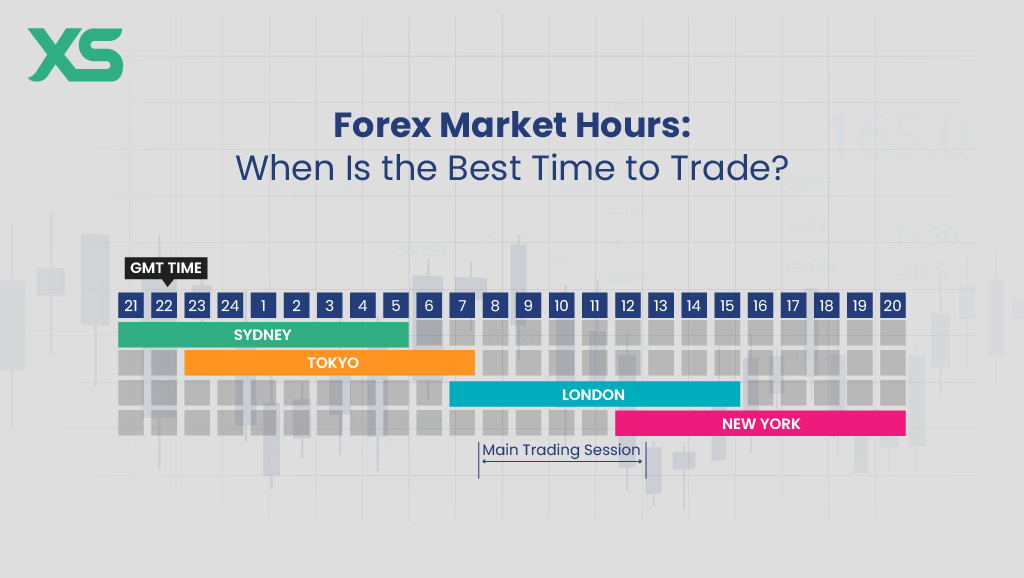
The foreign exchange market is unique in that it operates 24 hours a day, five days a week, from Sunday evening EST to Friday evening EST. There is no single central exchange; instead, it’s a global, decentralized network of banks, brokers, and financial institutions. This 24/5 operation is possible because as one major financial center closes, another on the other side of the world is opening, creating continuous market activity.
The forex market is typically divided into four major trading sessions, each associated with a primary financial hub:
-
Sydney Session: Opens first, often considered the start of the trading week.
-
Tokyo Session: Overlaps with Sydney, bringing significant Asian market activity.
-
London Session: The largest and most liquid session, overlapping with both Asian and North American markets.
-
New York Session: Overlaps with London, often characterized by significant volatility due to U.S. economic data releases.
Understanding the overlaps between these sessions is critical for forex traders, as liquidity and volatility often peak when two major sessions are open simultaneously (e.g., London and New York overlap).
Commodities Markets
Commodities, such as crude oil, gold, silver, natural gas, and agricultural products, are primarily traded on futures exchanges like the Chicago Mercantile Exchange (CME) Group (which includes NYMEX and COMEX). These markets also have specific trading hours, which can vary by commodity.
Many commodities futures contracts trade almost 24 hours a day electronically, but with specific periods of heightened activity and potential “halts” or closures. For example, crude oil futures might trade from Sunday evening through Friday evening with short daily breaks. However, their most liquid and impactful periods often align with the opening and closing hours of major financial centers, particularly when physical supply and demand news is released. Historically, some commodities also involved “pit trading,” where traders physically gathered to shout orders, which had very defined human-centric hours, though this has largely been replaced by electronic trading.
Cryptocurrency Markets

Cryptocurrency markets stand out as the truly 24/7 trading environment. Due to their decentralized nature and digital infrastructure, cryptocurrencies like Bitcoin and Ethereum can be traded around the clock, every day of the year, including weekends and holidays. There are no official “market closes” or “openings” in the traditional sense.
This continuous trading environment has significant implications:
-
Constant Volatility: Prices can fluctuate wildly at any time, day or night, in response to global news, regulatory developments, or whale movements.
-
Accessibility: Investors can react to events immediately, without waiting for a market open.
-
Global Reach: Crypto exchanges serve a worldwide audience simultaneously, without time zone restrictions.
While this offers unparalleled flexibility, it also means that investors must be constantly vigilant or utilize automated trading tools, as there are no “off-hours” during which to escape market movements.
The Strategic Importance of Understanding Trading Hours
Beyond merely knowing when to execute a trade, a deep understanding of trading hours is a crucial strategic advantage. It informs risk management, optimizes entry and exit points, and even helps shape a trader’s personal schedule and approach to the markets.
Optimizing Trading Strategies
Different phases within trading hours exhibit distinct characteristics that can be leveraged by traders:
-
Market Open: The first hour after a market opens is often characterized by high volatility and heavy volume as traders react to overnight news, economic reports, and earnings announcements. This period can present significant opportunities for quick profits but also carries higher risk.
-
Mid-Day Lull: As the initial rush subsides, volume often decreases, and markets may become calmer or trend-bound. This can be suitable for strategies that rely on less volatile conditions or for longer-term position entries.
-
Market Close: The final hour before the close also sees increased activity as traders close out positions, roll over contracts, or make last-minute adjustments. Volatility can pick up again, influenced by institutional rebalancing.
For forex traders, understanding the overlap of major sessions is key. Trading during the London/New York overlap, for example, often provides the highest liquidity and tightest spreads, making it ideal for strategies that require efficient execution.
Managing Risk and Exposure
Trading hours directly impact a trader’s exposure to risk:
-
Overnight Risk: For assets with fixed trading hours (like stocks), holding positions overnight means being exposed to “gap” risk. A gap occurs when the market opens significantly higher or lower than its previous close due to news or events that transpired while the market was closed. This can lead to substantial, unforeseen losses or gains.
-
Liquidity Risk: Trading in extended hours (pre-market/after-hours) or during low-volume periods (e.g., specific forex sessions) exposes traders to lower liquidity. This can result in larger bid-ask spreads, making it more expensive to enter or exit positions, and potentially leading to slippage where an order is filled at a worse price than expected.
-
News Releases: Economic data, corporate earnings, and geopolitical events are often scheduled for release outside regular trading hours or at specific times during trading hours. Knowing these schedules allows traders to either prepare for increased volatility or choose to step away from the market to avoid unpredictable swings.
Work-Life Balance for Traders
The varying nature of trading hours across asset classes also plays a significant role in a trader’s lifestyle and well-being. A stock trader might focus intensely during a specific 6.5-hour window, whereas a crypto trader needs to be aware of market movements 24/7. Forex traders might choose to specialize in sessions that align with their personal schedules, such as focusing on the London session if they are based in Europe or the New York session if in the Americas. Recognizing these demands helps traders set realistic expectations, avoid burnout, and integrate trading into a sustainable work-life balance.
Beyond Standard Hours: Extended and 24/7 Trading
The evolution of technology and global interconnectedness has increasingly blurred the lines of traditional trading hours. While standard hours remain paramount for many markets, extended sessions and continuous 24/7 trading are becoming more prevalent, reshaping the landscape for investors.
Pre-Market and After-Hours Trading
For equity markets, pre-market and after-hours trading sessions have become standard offerings from most brokers. These sessions allow participants to trade outside the regular 9:30 AM to 4:00 PM window.
-
Accessibility: These sessions provide flexibility for investors to react to news, earnings reports, or broker ratings released when the main market is closed.
-
Lower Liquidity and Higher Spreads: The primary downside is significantly reduced liquidity compared to regular hours. Fewer participants mean that it can be harder to execute large orders without moving the price, and bid-ask spreads are typically wider, increasing transaction costs.
-
Institutional vs. Retail Participation: Historically, these sessions were dominated by institutional investors. While retail access has expanded, institutions still tend to have an advantage due to direct market access and sophisticated algorithms.
Tools for extended-hours trading usually involve specific order types (e.g., limit orders are crucial due to volatility) and platforms that connect to Electronic Communication Networks (ECNs) that facilitate these trades.
The Rise of 24/7 Markets (Crypto and Beyond)
The cryptocurrency market is the pioneering example of true 24/7 trading, fundamentally challenging the traditional paradigm. This continuous operation offers both advantages and disadvantages:
-
Pros:
-
Immediate Reaction: Investors can respond to any global event or news instantaneously, rather than waiting for market open.
-
Flexibility: No time zone restrictions, allowing anyone, anywhere, to trade at their convenience.
-
No Overnight Gaps: While volatility is high, there are no “gaps” in the traditional sense caused by overnight closures.
-
-
Cons:
-
Constant Vigilance: Requires continuous monitoring or reliance on automated systems, which can lead to fatigue or missed opportunities if unmanaged.
-
No “Breaks”: There are no natural periods for reflection or for markets to cool down, which can contribute to rapid and sometimes irrational price movements.
-
Looking ahead, there is ongoing debate about whether traditional markets will eventually move towards more extended or even 24/7 trading, perhaps influenced by the crypto model. While the infrastructure and regulatory hurdles are significant, the trend towards greater globalization and technological integration suggests that market access will likely continue to expand beyond the conventional 9-to-5.
Conclusion
Trading hours are far more than just arbitrary schedules; they are the structured backbone of financial markets, deeply influencing everything from liquidity and volatility to risk management and trading strategies. Whether dealing with the fixed, well-defined periods of stock exchanges, the continuous flow of the 24/5 forex market, the specialized schedules of commodities, or the perpetual motion of cryptocurrency markets, understanding these timings is paramount for anyone engaging with financial assets.
For investors and traders, an insightful grasp of trading hours allows for strategic timing of entries and exits, effective management of exposure to news events, and optimization of risk-reward profiles. It empowers informed decision-making, helping to navigate the complexities of global finance with greater confidence and precision. As markets continue to evolve, with technology pushing boundaries and extending accessibility, staying attuned to the nuances of trading hours will remain a crucial skill for success in the ever-dynamic world of money and investing.
aViewFromTheCave is a participant in the Amazon Services LLC Associates Program, an affiliate advertising program designed to provide a means for sites to earn advertising fees by advertising and linking to Amazon.com. Amazon, the Amazon logo, AmazonSupply, and the AmazonSupply logo are trademarks of Amazon.com, Inc. or its affiliates. As an Amazon Associate we earn affiliate commissions from qualifying purchases.