
Purchasing a home is one of the most significant financial decisions an individual or family will ever make. For most, this dream is realized through a mortgage – a specialized loan used to buy real estate. A mortgage is more than just a financial tool; it’s a long-term commitment that directly impacts your financial health for decades. Given its profound implications, understanding the various types of mortgages available is not merely helpful, but absolutely essential. The mortgage market is diverse, offering a spectrum of products designed to cater to different financial situations, risk tolerances, and homeownership goals. Without a clear grasp of these options, borrowers risk making a suboptimal choice that could lead to financial strain or missed opportunities for savings.
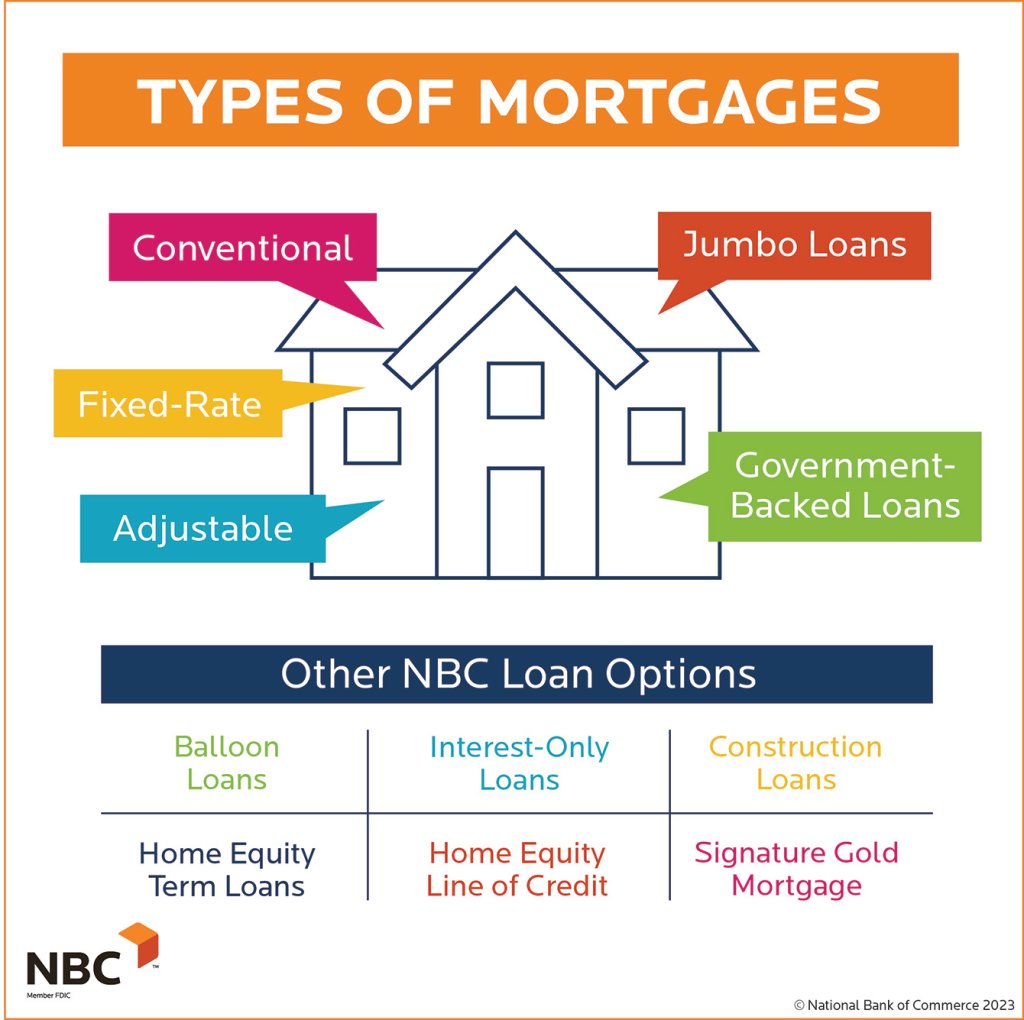
This comprehensive guide aims to demystify the world of mortgages, breaking down the primary types, their features, advantages, and disadvantages. By the end, you’ll have a clearer understanding of how these financial instruments work, empowering you to approach the homebuying process with confidence and make an informed decision that aligns perfectly with your personal finance strategy. Whether you’re a first-time homebuyer navigating the complexities, or a seasoned homeowner considering refinancing, a deep dive into mortgage types is your first step towards securing your ideal home with the right financial foundation.
Understanding the Fundamentals of Mortgage Lending
Before diving into the specific types of mortgages, it’s crucial to establish a foundational understanding of how mortgage lending operates. A mortgage is essentially a secured loan, meaning the property itself serves as collateral. Should the borrower default on payments, the lender has the right to repossess the property through foreclosure. This security allows lenders to offer large sums of money over extended periods, typically 15 to 30 years.
Key Components of a Mortgage
Every mortgage, regardless of its type, is built upon several core components:
- Principal: This is the original amount of money borrowed to purchase the home. Each mortgage payment you make contributes a portion to reducing this principal balance.
- Interest: This is the cost of borrowing money from the lender. It’s expressed as an annual percentage rate (APR) and is added to your principal balance over the life of the loan. The total interest paid can often exceed the original principal.
- Term: This refers to the length of time over which you agree to repay the loan. Common terms are 15, 20, or 30 years. A shorter term typically means higher monthly payments but less interest paid overall, while a longer term offers lower monthly payments but more interest over time.
- Escrow: Many mortgages include an escrow account, managed by the lender, to collect funds for property taxes and homeowner’s insurance premiums. A portion of your monthly payment goes into this account, ensuring these critical expenses are paid on time.
- Private Mortgage Insurance (PMI): If your down payment is less than 20% of the home’s purchase price, lenders typically require PMI. This insurance protects the lender (not you) in case you default. It adds an extra cost to your monthly payment until you reach sufficient equity in your home.
How Mortgage Interest Rates Work
Mortgage interest rates are a critical factor influencing the total cost of your home. They are determined by various market forces, including the federal funds rate, inflation, and the overall economic outlook. Rates can be either fixed or adjustable:
- Fixed Interest Rates: The interest rate remains constant for the entire life of the loan. This provides predictable monthly payments and makes budgeting easier.
- Adjustable Interest Rates: The interest rate can change periodically after an initial fixed period. These rates fluctuate based on a specified financial index, offering lower initial payments but introducing payment uncertainty.
The Role of Down Payments and Loan-to-Value (LTV)
A down payment is the initial sum of money you pay upfront towards the purchase of a home. The larger your down payment, the less you need to borrow, which can lead to lower monthly payments and less interest paid over the life of the loan. The loan-to-value (LTV) ratio is a key metric lenders use to assess risk, calculated by dividing the loan amount by the home’s appraised value. A lower LTV (meaning a larger down payment) typically qualifies you for better interest rates and can help you avoid PMI. While a 20% down payment is often seen as the ideal, many loan programs allow for much lower down payments, some even as low as 0%.
Fixed-Rate Mortgages: Predictability and Stability
The fixed-rate mortgage is perhaps the most traditional and widely understood type of home loan, celebrated for its consistency and long-term financial predictability. It’s a cornerstone of personal finance for homeowners who prioritize stable budgeting and protection against market fluctuations.
How Fixed-Rate Mortgages Operate
With a fixed-rate mortgage, the interest rate remains constant for the entire duration of the loan term. This means your monthly principal and interest payment will never change, regardless of economic shifts or changes in the broader interest rate environment. Early in the loan term, a larger portion of your payment goes towards interest, and a smaller portion towards the principal. As time progresses, this ratio gradually shifts, with more of each payment allocated to paying down the principal balance.
Common Fixed-Rate Terms
The most prevalent fixed-rate mortgage terms are:
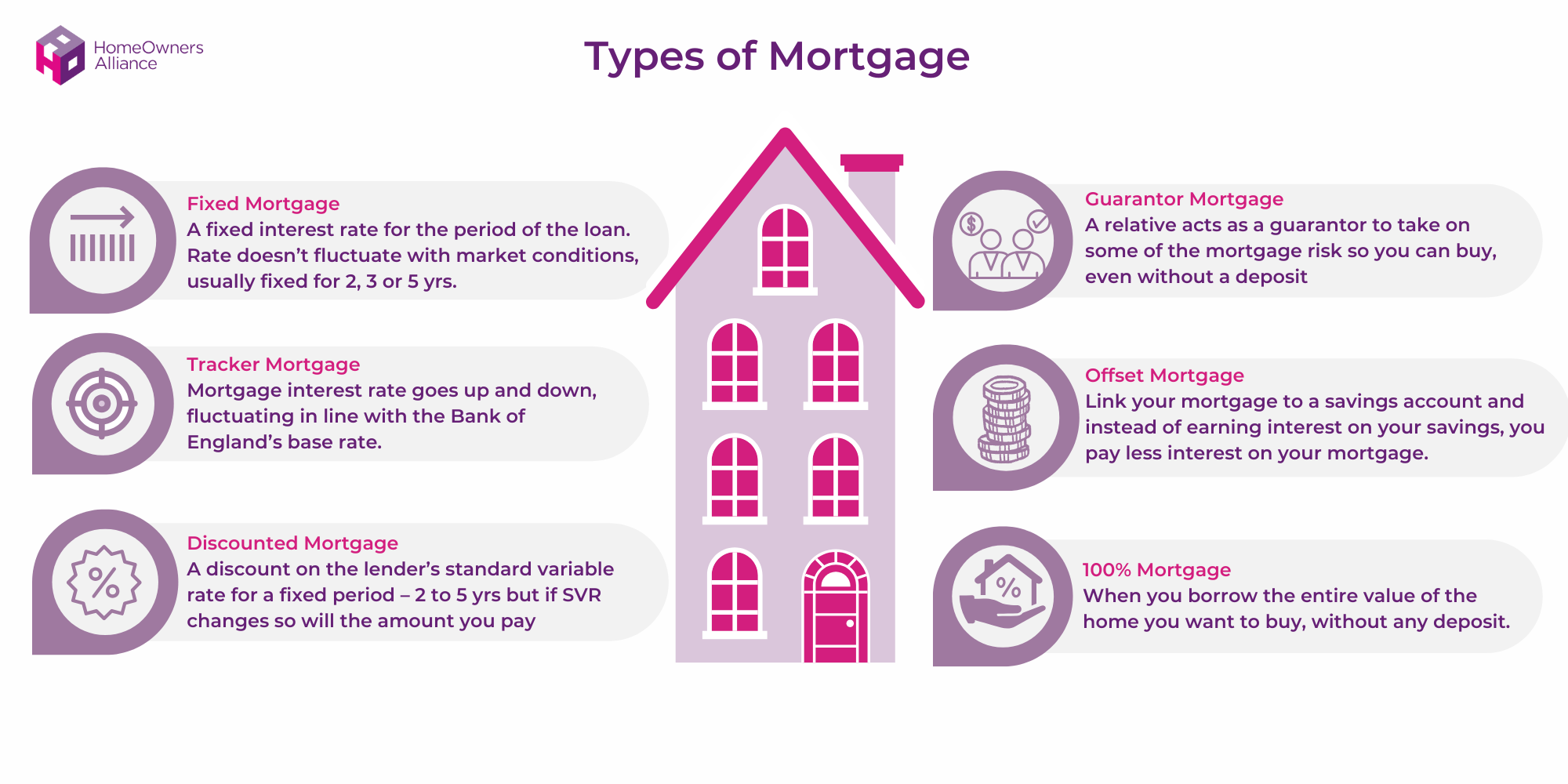
- 30-Year Fixed-Rate Mortgage: This is the most popular choice, offering the lowest monthly payments due to the extended repayment period. While it means paying more interest over the life of the loan, it provides maximum affordability and flexibility in a monthly budget.
- 15-Year Fixed-Rate Mortgage: This option features higher monthly payments compared to a 30-year loan because the principal is repaid over a shorter period. However, the significant advantage is a substantially lower total interest paid over the life of the loan, leading to substantial long-term savings and faster equity build-up.
- Other Fixed-Rate Terms (e.g., 10-year, 20-year): Less common but still available, these terms offer a middle ground, balancing payment size with the overall interest cost and repayment speed.
Advantages of Fixed-Rate Mortgages
- Predictable Payments: The primary benefit is knowing exactly what your principal and interest payment will be every month for the life of the loan, making long-term financial planning straightforward.
- Budgeting Stability: Insulates borrowers from potential interest rate increases in the market, providing peace of mind and protection against rising housing costs.
- Long-Term Security: Ideal for homeowners who plan to stay in their home for many years and desire financial stability.
- Simplicity: Generally easier to understand and manage compared to more complex adjustable-rate options.
Disadvantages of Fixed-Rate Mortgages
- Higher Initial Rates: Fixed rates typically start higher than the initial rates offered on adjustable-rate mortgages when interest rates are low.
- Missed Opportunity in Falling Markets: If market interest rates drop significantly, you won’t benefit from lower payments unless you refinance, which incurs additional costs.
- Less Flexibility: While stable, they don’t offer the flexibility to take advantage of short-term lower rates.
For those who value stability above all else, a fixed-rate mortgage remains an unparalleled choice, offering a solid foundation for homeownership and peace of mind in managing one of life’s largest expenses.
Adjustable-Rate Mortgages (ARMs): Flexibility with Calculated Risk
While fixed-rate mortgages offer unwavering predictability, Adjustable-Rate Mortgages (ARMs) present a different proposition: initial lower payments in exchange for potential future payment adjustments. ARMs are designed for borrowers who are comfortable with a degree of risk and whose financial plans align with the fluctuating nature of these loans.
How ARMs Work
An ARM begins with an introductory period during which the interest rate is fixed, often for 3, 5, 7, or 10 years. This initial rate is typically lower than what a fixed-rate mortgage would offer at the time. Once this introductory period ends, the interest rate becomes variable and will adjust periodically (e.g., annually) based on a specific financial index (like the Secured Overnight Financing Rate – SOFR, or the London Interbank Offered Rate – LIBOR, though LIBOR is being phased out) plus a margin set by the lender.
Crucially, ARMs include caps that limit how much the interest rate can change:
- Initial Adjustment Cap: Limits how much the rate can increase or decrease at the first adjustment after the fixed period.
- Periodic Adjustment Cap: Limits how much the rate can change during any subsequent adjustment period.
- Lifetime Cap: Establishes the maximum interest rate the loan can ever reach over its entire term.
Common ARM Structures
ARMs are often expressed with two numbers, like “5/1 ARM” or “7/1 ARM”:
- 5/1 ARM: The interest rate is fixed for the first five years, then adjusts annually (the “1”) for the remainder of the loan term.
- 7/1 ARM: Fixed for seven years, then adjusts annually.
- 10/1 ARM: Fixed for ten years, then adjusts annually.
Other less common structures include 3/1 ARMs or hybrid ARMs with different adjustment periods.
Advantages of ARMs
- Lower Initial Interest Rates: ARMs typically offer a lower interest rate during the initial fixed period compared to a comparable fixed-rate mortgage, leading to lower initial monthly payments.
- Potential for Savings: If interest rates fall after the fixed period, your monthly payments could decrease, resulting in significant savings.
- Ideal for Short-Term Ownership: If you plan to sell or refinance your home before the fixed-rate period ends, an ARM can provide substantial savings during your ownership period.
- Good for Rising Income: If you anticipate your income increasing significantly in the future, you might be more comfortable with potential payment increases down the line.
Disadvantages of ARMs
- Payment Uncertainty: The most significant drawback is the unpredictability of future payments. If interest rates rise, your monthly payments could increase substantially, potentially straining your budget.
- Interest Rate Risk: Borrowers bear the risk of rising interest rates, which can make the loan more expensive over time.
- Complexity: ARMs can be more complex to understand due to their adjustment mechanisms, caps, and indices.
- Refinancing Considerations: If rates rise significantly, refinancing into a fixed-rate mortgage might become more expensive or difficult.
When ARMs Make Sense
ARMs can be a strategic choice for specific financial situations:
- Individuals who are confident they will sell or refinance their home before the fixed-rate period expires.
- Borrowers who expect a significant increase in their income that will comfortably absorb potential payment hikes.
- Those who are comfortable with a higher level of risk and closely monitor economic trends.
Careful consideration of your financial stability, risk tolerance, and future plans is paramount when considering an adjustable-rate mortgage.
Government-Insured Mortgages: Accessibility for Diverse Borrowers
Beyond conventional loans offered by private lenders, the U.S. government plays a significant role in the mortgage market through various agencies that insure or guarantee loans. These government-backed mortgages are designed to make homeownership more accessible to specific groups of borrowers, often by relaxing credit score requirements, allowing lower down payments, or offering other favorable terms. They are not direct loans from the government but are issued by approved lenders and protected by government insurance.
FHA Loans (Federal Housing Administration)
FHA loans are insured by the Federal Housing Administration, a part of the U.S. Department of Housing and Urban Development (HUD). They are particularly popular among first-time homebuyers and those with less-than-perfect credit.
- Low Down Payment: FHA loans allow down payments as low as 3.5% of the home’s purchase price.
- Flexible Credit Requirements: Lenders are often more lenient with credit scores for FHA loan applicants compared to conventional loans.
- Mortgage Insurance Premiums (MIP): FHA loans require both an upfront MIP and an annual MIP, which can increase the overall cost of the loan. The annual MIP is typically paid monthly and, unlike PMI on conventional loans, often remains for the life of the loan or a substantial period, regardless of equity.
- Debt-to-Income Ratio: FHA loans generally allow for higher debt-to-income ratios than conventional loans.
- Property Requirements: Homes financed with FHA loans must meet certain safety, security, and structural soundness standards.
VA Loans (Department of Veterans Affairs)
VA loans are guaranteed by the U.S. Department of Veterans Affairs and are available to eligible service members, veterans, and surviving spouses. These loans are among the most powerful benefits offered to those who have served the country.
- No Down Payment Required: A standout feature of VA loans is the ability to purchase a home with 0% down payment, a significant advantage for many borrowers.
- No Private Mortgage Insurance (PMI): VA loans do not require PMI, even with no down payment, leading to substantial monthly savings.
- Competitive Interest Rates: VA loans often come with lower interest rates compared to conventional loans.
- Funding Fee: Most VA loans require a one-time funding fee, which can be financed into the loan. This fee helps offset the cost to taxpayers and keeps the program running. Disabled veterans are typically exempt from this fee.
- Flexible Credit Standards: While not as lenient as FHA, VA loans also have more flexible credit requirements than conventional loans.
USDA Loans (U.S. Department of Agriculture)
USDA loans, also known as Rural Development loans, are designed to promote homeownership in eligible rural and suburban areas. They are an attractive option for borrowers in qualifying regions.
- Zero Down Payment: Like VA loans, USDA loans often allow for 0% down payment for eligible borrowers.
- Income Limitations: Borrowers must meet specific income eligibility requirements, typically not exceeding 115% of the median income for the area.
- Property Location: The property must be located in an eligible rural area, as defined by the USDA. These areas can include many suburban communities, not just farmland.
- Mortgage Insurance: USDA loans require both an upfront guarantee fee and an annual fee, similar to FHA’s MIP, though often at lower rates.
Benefits of Government-Insured Loans
These government-backed programs significantly lower the barriers to entry for homeownership, providing pathways for individuals who might not qualify for conventional loans due to lower credit scores, limited savings for a down payment, or specific service contributions. They are vital tools in fostering economic stability and community development across various demographics.
Other Specialized Mortgage Options
Beyond the widely recognized categories, the mortgage market offers several specialized products tailored to unique financial situations, property types, or borrower needs. While less common for the average homebuyer, these options can be highly effective for specific circumstances.
Jumbo Loans
When the loan amount exceeds the conventional conforming loan limits set by the Federal Housing Finance Agency (FHFA), it falls into the category of a jumbo loan. These limits vary by region and are updated annually.
- High-Value Properties: Jumbo loans are used to finance luxury homes or properties in high-cost real estate markets.
- Stricter Requirements: Lenders typically impose more stringent qualification criteria for jumbo loans due to the larger loan amount and increased risk. This often includes higher credit scores, lower debt-to-income ratios, and larger cash reserves.
- Higher Down Payments: While not always required, larger down payments (often 10-20% or more) are common with jumbo loans to mitigate lender risk.
- Potentially Higher Interest Rates: Depending on market conditions and the borrower’s credit profile, jumbo loan interest rates can sometimes be slightly higher than conforming loan rates.
Interest-Only Mortgages
An interest-only mortgage allows the borrower to pay only the interest portion of the loan for a specified initial period (e.g., 5-10 years). During this time, the principal balance does not decrease.
- Lower Initial Payments: The main appeal is significantly lower monthly payments during the interest-only period, offering considerable cash flow flexibility.
- Principal Remains Unchanged: Since no principal is paid down, the loan balance remains the same, meaning you’re not building equity through payments during this period.
- Higher Payments Later: Once the interest-only period ends, payments increase dramatically as you begin to pay both principal and interest over the remaining, shorter loan term.
- Higher Risk: This option carries higher risk if home values decline or if the borrower’s financial situation doesn’t improve as anticipated, potentially leading to negative equity or difficulty making future payments. Often used by investors or those expecting a large lump sum in the future.
Balloon Mortgages
Balloon mortgages are characterized by lower monthly payments for a set period (often 5-7 years), followed by one very large lump-sum payment (the “balloon”) of the remaining principal balance at the end of the term.
- Short-Term Affordability: The lower initial payments can make homes more affordable in the short term.
- Large Final Payment: The significant risk lies in the balloon payment. Borrowers typically plan to sell the home or refinance before this payment is due.
- High Risk: If market conditions are unfavorable for selling or refinancing when the balloon payment is due, borrowers can face serious financial challenges, including foreclosure. These are much less common today for primary residences than in the past.
Piggyback Mortgages
A piggyback mortgage is a strategy often employed to avoid paying private mortgage insurance (PMI). It involves taking out two loans simultaneously to finance a home purchase.
- Common Structure (80/10/10): The most common arrangement is an 80% first mortgage (the primary loan), a 10% second mortgage (the “piggyback”), and a 10% down payment. This combination means you borrow 90% but have a 20% equity stake from the lender’s perspective.
- Avoiding PMI: By keeping the first mortgage at 80% LTV or less, borrowers can often avoid PMI, which is a significant monthly saving.
- Interest on Second Loan: While avoiding PMI, you will pay interest on the second mortgage, which often has a higher interest rate than the first mortgage.
- Flexibility: It offers an alternative for those who can’t make a full 20% down payment but want to avoid PMI.
Reverse Mortgages
Designed exclusively for homeowners aged 62 and older, a reverse mortgage allows them to convert a portion of their home equity into cash without having to sell the home or make monthly mortgage payments (though property taxes and homeowner’s insurance still apply).
- Access Equity: Provides a way for seniors to access funds for living expenses, healthcare, or other needs.
- No Monthly Payments: The loan is repaid when the last borrower moves out, sells the home, or passes away.
- Interest Accrues: Interest accrues on the loan balance, increasing the amount owed over time.
- Loan Limits: The amount that can be borrowed is based on the borrower’s age, current interest rates, and the home’s value.
- Counseling Required: Borrowers are required to undergo counseling by a HUD-approved agency to ensure they understand the implications of a reverse mortgage.
These specialized mortgage products demonstrate the adaptability of the lending market to diverse financial needs and goals. However, due to their unique structures and potential complexities, they often require more detailed understanding and careful consideration compared to standard fixed-rate or adjustable-rate loans.
Conclusion
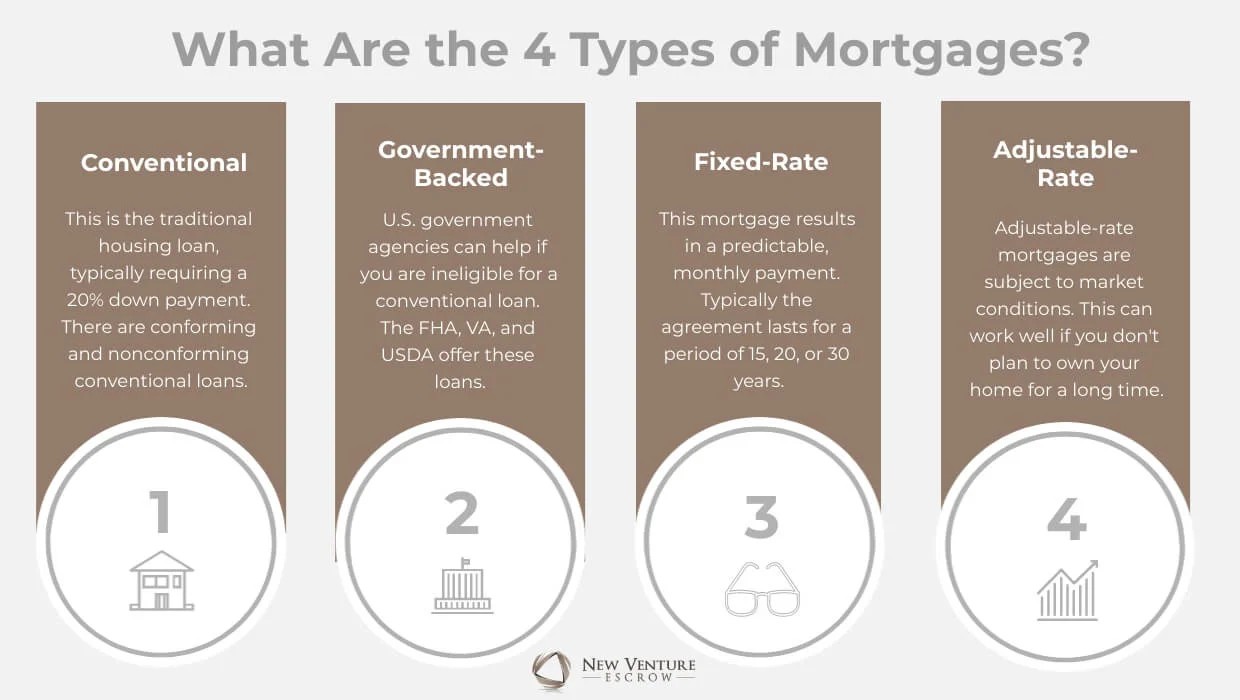
Navigating the mortgage landscape can feel daunting, but armed with a thorough understanding of the various types of mortgages, you are better equipped to make a choice that aligns with your financial aspirations. From the steadfast predictability of a fixed-rate mortgage to the flexible, albeit riskier, nature of an adjustable-rate option, and the accessibility offered by government-insured programs like FHA, VA, and USDA loans, each product serves a specific purpose for different borrower profiles. Specialized options like jumbo, interest-only, balloon, piggyback, and reverse mortgages further broaden the spectrum, catering to niche needs and financial strategies.
The journey to homeownership is deeply personal, and there is no one-size-fits-all mortgage solution. Your ideal mortgage will depend on a confluence of factors: your current financial stability, credit score, the size of your down payment, your long-term income projections, your risk tolerance, and how long you plan to stay in the home. It’s crucial to evaluate these elements critically and honestly.
Before committing to a mortgage, engage in thorough research, compare rates and terms from multiple lenders, and, most importantly, seek advice from qualified financial advisors and mortgage professionals. They can provide personalized insights, help you understand the fine print, and guide you toward the mortgage product that best supports your homeownership dream and overall financial well-being. By taking the time to understand “what are the types of mortgages,” you lay a solid financial foundation for a secure and comfortable future in your new home.
aViewFromTheCave is a participant in the Amazon Services LLC Associates Program, an affiliate advertising program designed to provide a means for sites to earn advertising fees by advertising and linking to Amazon.com. Amazon, the Amazon logo, AmazonSupply, and the AmazonSupply logo are trademarks of Amazon.com, Inc. or its affiliates. As an Amazon Associate we earn affiliate commissions from qualifying purchases.