
The digital asset landscape has rapidly evolved from a niche technological experiment into a significant force within global finance. Cryptocurrencies, at their core, represent a paradigm shift in how we perceive and transact value, offering decentralized, transparent, and often immutable record-keeping. For both seasoned investors and curious newcomers, understanding the leading players in this dynamic market is crucial. This article delves into the top cryptocurrencies, exploring their fundamental technologies, market positions, and the unique value propositions that define their prominence, all while framing them within the broader context of personal finance and investment strategy.

Understanding the Crypto Market Landscape
Before identifying specific top cryptocurrencies, it’s essential to grasp the foundational principles that govern this innovative yet volatile market. Unlike traditional fiat currencies issued by central banks, most cryptocurrencies operate on decentralized networks, typically powered by blockchain technology. This decentralization aims to eliminate single points of control, foster transparency, and enhance security.
A Brief History and Evolution
The genesis of cryptocurrency can be traced back to 2008 with the publication of Satoshi Nakamoto’s whitepaper detailing Bitcoin. Launched in 2009, Bitcoin was conceived as a peer-to-peer electronic cash system, marking the birth of decentralized digital money. Its initial success paved the way for a wave of innovation. Early altcoins (alternative coins) often sought to improve upon Bitcoin’s design or cater to specific niches. The pivotal moment arrived with Ethereum in 2015, which introduced smart contracts, allowing developers to build decentralized applications (dApps) on its blockchain. This innovation expanded the utility of cryptocurrencies far beyond simple digital cash, giving rise to entire ecosystems like Decentralized Finance (DeFi), Non-Fungible Tokens (NFTs), and Web3. Today, thousands of cryptocurrencies exist, each vying for a share of market dominance and technological relevance.
Key Metrics for Evaluation
When assessing the “top” cryptocurrencies, various financial and technological metrics come into play, crucial for any potential investor.
-
Market Capitalization: This is perhaps the most widely cited metric, calculated by multiplying the current price of a cryptocurrency by its circulating supply. It provides a snapshot of the asset’s overall value and is often used to rank cryptocurrencies. A higher market cap generally indicates greater stability and liquidity, though it’s not a sole predictor of future performance.
-
Trading Volume: High trading volume signifies strong market interest and liquidity, making it easier for investors to buy and sell without significantly impacting the price. Consistent daily volume suggests a healthy and active market.
-
Utility and Technology: Beyond speculation, the real value of a cryptocurrency often lies in its underlying technology and practical applications. Does it solve a real-world problem? Does it enable new forms of interaction or commerce? Cryptocurrencies powering robust ecosystems (like DeFi or Web3) often have stronger long-term potential.
-
Community and Development: A strong, active community of users, developers, and supporters is vital for a project’s longevity and growth. Ongoing development, evidenced by regular updates, protocol improvements, and strategic partnerships, signals a commitment to innovation and security.
-
Tokenomics: This refers to the economic model of a cryptocurrency, including its supply schedule (e.g., maximum supply, inflation/deflation mechanisms), distribution methods, and how the token is used within its ecosystem. Well-designed tokenomics can incentivize participation and ensure network sustainability.
The Importance of Diversification
Just like traditional investing, diversification is a critical strategy in the volatile crypto market. Relying solely on one or two cryptocurrencies, even highly ranked ones, exposes an investor to undue risk. Spreading investments across different assets with varying use cases, market caps, and risk profiles can help mitigate potential losses and capture growth opportunities across the broader market. A diversified crypto portfolio might include a mix of large-cap “blue-chip” cryptocurrencies, promising mid-caps, and perhaps a small allocation to high-risk/high-reward smaller projects.
The Dominant Players: A Closer Look at Bitcoin (BTC)
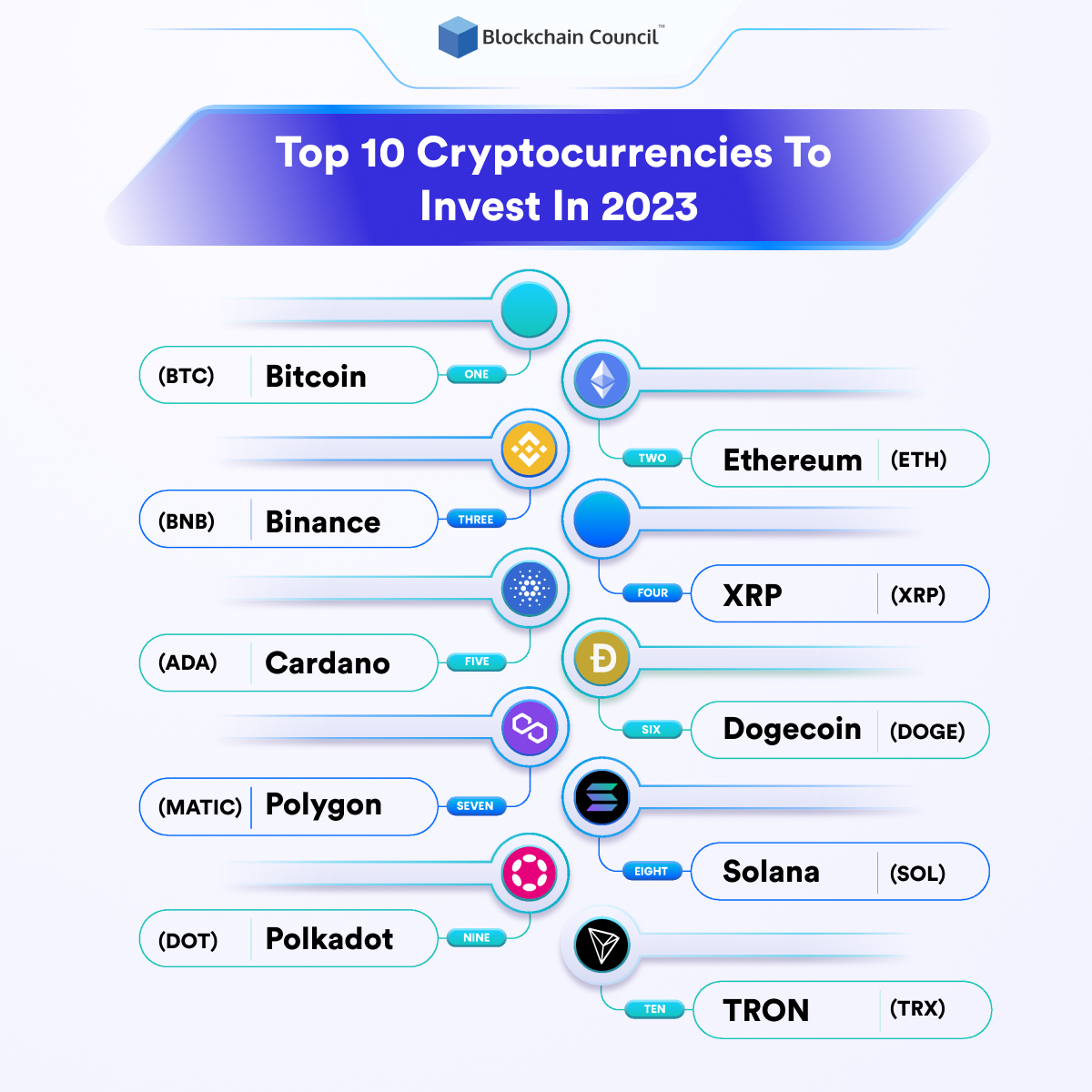
Bitcoin remains the undisputed king of cryptocurrencies, consistently holding the largest market capitalization and serving as the benchmark for the entire industry. Its continued dominance is not merely a historical accident but a testament to its robust design and fundamental value proposition.
The Original Digital Gold
Bitcoin’s primary function has evolved from a simple peer-to-peer cash system to a widely recognized store of value, earning it the moniker “digital gold.” Its finite supply, capped at 21 million coins, mirrors the scarcity of precious metals. This programmatic scarcity, combined with its resistance to inflation from central bank money printing, makes it an attractive hedge against economic uncertainty for many investors. As a macro asset, Bitcoin’s correlation with traditional markets is increasingly observed, positioning it as a significant component in diversified portfolios.
Network Effects and Security
Bitcoin’s network is the most secure and decentralized blockchain in existence. Its proof-of-work (PoW) consensus mechanism, relying on a vast global network of miners, makes it incredibly difficult and economically prohibitive for any single entity to compromise the network. This unparalleled security builds immense trust and reliability. Furthermore, Bitcoin benefits from significant network effects: the more users, developers, and institutions that adopt and build on Bitcoin, the stronger and more valuable its ecosystem becomes. Its liquidity is unmatched, and its infrastructure, including exchanges, wallet providers, and payment processors, is the most developed.
Current Challenges and Future Outlook
Despite its strengths, Bitcoin faces ongoing challenges, primarily concerning scalability. Its transaction throughput is relatively slow compared to newer blockchains, leading to higher fees during periods of high demand. Solutions like the Lightning Network aim to address this by enabling off-chain, instant, and low-cost transactions, but adoption is still growing. The future of Bitcoin continues to be shaped by increasing institutional adoption, with major corporations and financial institutions adding BTC to their balance sheets or offering crypto-related services. Regulatory clarity, while still evolving globally, is also likely to cement Bitcoin’s role as a legitimate, long-term asset class.
The Smart Contract King: Ethereum (ETH)
If Bitcoin is digital gold, Ethereum is the digital oil that fuels the decentralized internet. Launched in 2015 by Vitalik Buterin and his team, Ethereum introduced the revolutionary concept of smart contracts, programmable agreements that execute automatically when predefined conditions are met. This innovation transformed the blockchain landscape, enabling a vast array of decentralized applications.
Beyond Digital Cash: Powering Decentralized Applications (dApps)
Ethereum’s native cryptocurrency, Ether (ETH), is not just a medium of exchange but the “gas” that powers transactions and computational operations on the Ethereum network. Its primary value stems from its utility as the foundational layer for thousands of dApps. These applications span various sectors, from lending and borrowing protocols in DeFi to marketplaces for NFTs, decentralized autonomous organizations (DAOs), and Web3 infrastructure. Developers choose Ethereum for its robust security, established developer tools, and extensive ecosystem, making it the dominant platform for innovation in decentralized technology.
The Ecosystem: DeFi, NFTs, and Web3

Ethereum is the undisputed engine behind the explosion of Decentralized Finance (DeFi). DeFi protocols aim to recreate traditional financial services—like lending, borrowing, trading, and insurance—without intermediaries, leveraging smart contracts for automation and transparency. Similarly, the boom in Non-Fungible Tokens (NFTs), unique digital assets representing ownership of art, collectibles, and more, largely originated and thrives on the Ethereum blockchain. Beyond these, Ethereum is central to the vision of Web3, a decentralized internet where users have more control over their data and digital identities. Its dominance in these burgeoning sectors underscores its critical importance to the future of the digital economy.
The Merge and Future Upgrades (Ethereum 2.0/Serenity)
Ethereum has undergone one of the most significant technological upgrades in crypto history: “The Merge.” This transition saw the network shift from a power-intensive Proof-of-Work (PoW) consensus mechanism to a more energy-efficient Proof-of-Stake (PoS) system. The Merge was a crucial step towards Ethereum 2.0 (now often referred to as Serenity), a multi-phase upgrade aimed at dramatically improving scalability, security, and sustainability. Future upgrades, including sharding, will further enhance transaction speed and reduce costs, potentially solidifying Ethereum’s position as the leading smart contract platform and addressing some of its long-standing performance bottlenecks.
Emerging Giants and Niche Innovators
While Bitcoin and Ethereum hold the top two spots, the crypto market is a dynamic arena with numerous other cryptocurrencies offering unique value propositions and competing for market share. These projects often specialize in particular use cases or offer alternative approaches to scalability and decentralization.
Solana (SOL): The High-Performance Contender
Solana has rapidly emerged as a formidable challenger in the smart contract platform space, lauded for its incredibly high transaction speeds and low fees. It utilizes a novel consensus mechanism called Proof-of-History (PoH) in conjunction with PoS, enabling it to process thousands of transactions per second, significantly outperforming Ethereum’s current capabilities. This speed makes Solana particularly attractive for high-frequency trading, gaming, and other applications requiring rapid throughput. However, its history has also seen network outages and a more centralized validator set, which are trade-offs for its performance. Despite these concerns, Solana’s ecosystem of dApps and NFTs continues to grow, making it a key player to watch.
Ripple (XRP): Bridging Traditional Finance
RippleNet, and its associated cryptocurrency XRP, aims to revolutionize cross-border payments for financial institutions. Unlike other decentralized cryptocurrencies, Ripple Labs (the company behind XRP) works closely with banks and payment providers, offering a faster, cheaper, and more efficient alternative to traditional systems like SWIFT. XRP acts as a bridge currency, facilitating quick conversions between different fiat currencies. Its value proposition is distinctly focused on enterprise solutions within traditional finance, rather than pure decentralization for the masses. It’s important to note that XRP has been involved in a protracted legal battle with the U.S. Securities and Exchange Commission (SEC), which has significantly impacted its market performance and perception. Any resolution to this case will have major implications for XRP’s future trajectory.
Cardano (ADA): The Peer-Reviewed Blockchain
Cardano stands out for its academic, research-driven approach to blockchain development. Founded by Ethereum co-founder Charles Hoskinson, Cardano emphasizes a scientific philosophy, with every development phase undergoing rigorous peer review before implementation. It aims to provide a highly scalable, secure, and sustainable blockchain platform for smart contracts and dApps. Its native cryptocurrency, ADA, underpins this ecosystem. Cardano’s layered architecture and commitment to formal verification are designed to ensure long-term stability and resistance to future vulnerabilities. While its development pace can sometimes appear slower due to its meticulous approach, its methodical progress and strong community support position it as a significant force in the smart contract landscape.
Stablecoins (USDT, USDC): A Foundation of Stability
While not typically viewed as investment vehicles for appreciation, stablecoins like Tether (USDT) and USD Coin (USDC) are crucial to the cryptocurrency ecosystem. Pegged to stable assets like the U.S. dollar, stablecoins provide a haven from crypto market volatility, enabling traders to secure profits, enter and exit positions, and facilitate transactions without converting back to fiat currency. They are fundamental to DeFi lending, borrowing, and trading activities, acting as the digital backbone for liquidity and price stability within the broader volatile crypto market. Understanding their role is vital for anyone engaging with digital assets.
Navigating the Risks and Rewards of Crypto Investing
Investing in cryptocurrencies offers unparalleled opportunities for financial growth but comes with inherent risks that must be carefully considered. A professional approach to financial planning in this space demands thorough due diligence and a clear understanding of the market’s dynamics.
Volatility and Market Cycles
Cryptocurrency markets are notoriously volatile. Prices can fluctuate wildly within short periods, driven by news, regulatory changes, technological advancements, and broader market sentiment. This high volatility presents both opportunities for significant gains and risks of substantial losses. Investors should be prepared for sharp corrections and understand that “hodling” (holding for the long term) is a common strategy to weather these cycles, rather than attempting to time the market. Recognizing typical market cycles—bull runs, corrections, and bear markets—can help temper expectations and inform investment decisions.
Regulatory Landscape and Compliance
The regulatory environment for cryptocurrencies is still evolving and varies significantly across different jurisdictions. Governments worldwide are grappling with how to classify, tax, and oversee digital assets. This lack of consistent global regulation creates uncertainty, which can impact market prices and the operational freedom of crypto businesses. Investors must stay informed about regulatory developments in their region, particularly regarding taxation of crypto gains and income, to ensure compliance. The increasing scrutiny from financial authorities highlights the shift of crypto from a fringe asset to a recognized, albeit still nascent, asset class.
Security Best Practices
Given the decentralized nature of cryptocurrencies, individuals bear the primary responsibility for the security of their assets. This involves adopting robust security practices:
-
Wallet Selection: Choosing appropriate wallets (hardware wallets for cold storage of large amounts, software wallets for smaller, more liquid holdings).
-
Private Key Management: Understanding that “not your keys, not your crypto” is a cardinal rule. Safely backing up and securing private keys or seed phrases is paramount.
-
Avoiding Scams: Being vigilant against phishing attempts, fake exchanges, fraudulent projects, and social engineering scams is crucial.
-
Two-Factor Authentication (2FA): Implementing 2FA on all exchange accounts and wallets significantly enhances security.
These measures are not optional; they are fundamental to protecting one’s digital wealth.
The Importance of Research (DYOR)
The adage “Do Your Own Research” (DYOR) is particularly pertinent in the cryptocurrency space. With thousands of projects and a constant stream of information, relying on hype or social media trends is a recipe for disaster. Prospective investors should thoroughly investigate a project’s whitepaper, development team, technology, use case, tokenomics, community, and competitive landscape. Understanding the underlying technology and the problem a cryptocurrency aims to solve provides a more solid foundation for investment decisions than speculative sentiment alone. Continuous learning and a critical mindset are essential for navigating this complex market.
In conclusion, the cryptocurrency market, led by giants like Bitcoin and Ethereum and fueled by innovative challengers, represents a frontier in finance. While offering transformative potential for wealth creation and technological advancement, it demands a disciplined, informed, and cautious approach from investors. Understanding the fundamentals, recognizing the inherent risks, and adhering to sound financial principles are key to navigating this exciting, yet challenging, landscape successfully.
aViewFromTheCave is a participant in the Amazon Services LLC Associates Program, an affiliate advertising program designed to provide a means for sites to earn advertising fees by advertising and linking to Amazon.com. Amazon, the Amazon logo, AmazonSupply, and the AmazonSupply logo are trademarks of Amazon.com, Inc. or its affiliates. As an Amazon Associate we earn affiliate commissions from qualifying purchases.