
In an increasingly interconnected globe, understanding the dominant languages is not merely an academic exercise in demographics; it is a critical imperative for technology companies, developers, and innovators shaping our digital future. The question “what are the top 5 languages in the world” transcends simple spoken numbers to encompass their profound influence on software development, artificial intelligence (AI) tools, app ecosystems, and the very fabric of digital security. This article delves into the linguistic powerhouses that command global attention, examining their unique digital footprints and why they are indispensable considerations in the ever-evolving tech landscape.
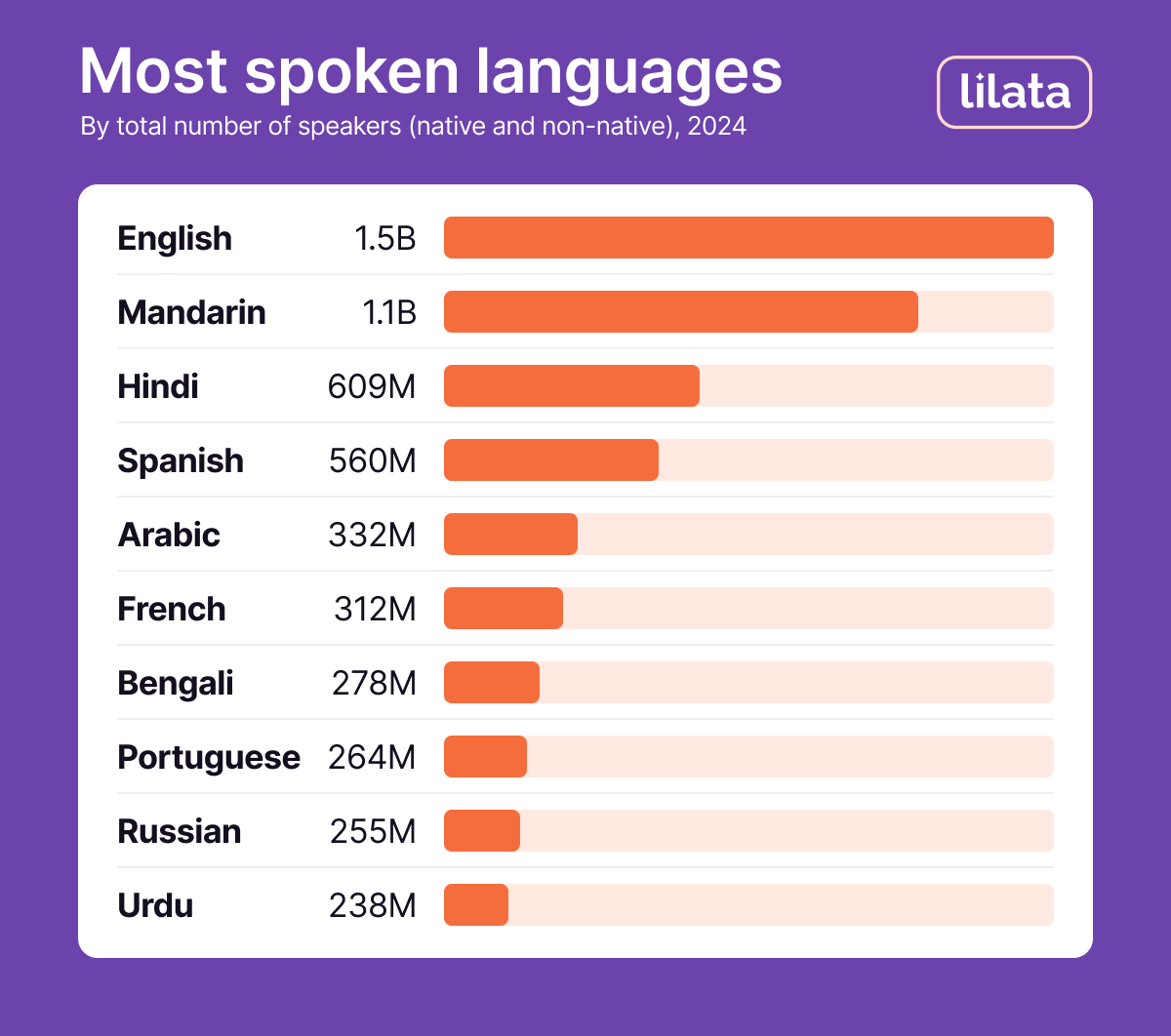
The notion of a “top language” is dynamic, shifting with technological advancements and user adoption trends. While traditional metrics often focus on native speakers or total speakers, the digital age introduces new dimensions: the volume of online content, the prevalence in software interfaces, the richness of data for AI training, and the sheer number of internet users. For tech entities striving for global reach and impact, navigating this multilingual digital cosmos is not just an advantage—it is a necessity.
The Shifting Linguistic Landscape in the Digital Age
The internet, once largely dominated by English, has rapidly evolved into a vibrant polyglot space. As billions of new users from diverse linguistic backgrounds come online, the digital landscape is being reshaped, presenting both immense opportunities and significant challenges for technology.
Beyond Raw Numbers: Digital Dominance vs. Spoken Prevalence
While raw speaker counts offer a foundational understanding, they don’t tell the whole story for the tech sector. A language might have a vast number of native speakers but a relatively low internet penetration rate, or conversely, a smaller total speaker count but an incredibly high digital engagement. For technology trends, the focus shifts to a language’s digital utility and online presence. This includes the amount of web content available in that language, its adoption in popular apps and software, and its representation in the vast datasets that fuel modern AI. Companies aiming to launch global applications or develop cutting-edge AI tools must prioritize languages not just by population size, but by their active digital communities and existing technological infrastructure.
The Internet’s Lingua Franca and Emerging Digital Powers
For decades, English has served as the de facto lingua franca of the internet, particularly in areas of software development, scientific research, and international business communication. Its pervasive influence shaped early web standards, programming languages, and user interfaces. However, this dominance is steadily being challenged by the explosive growth of internet users in non-English speaking regions. The rise of localized search engines, social media platforms catering to specific linguistic groups, and the increasing demand for content in native tongues highlight a significant trend: while English remains crucial, ignoring other major languages means missing out on vast, growing digital markets. Countries like India, China, and various Spanish-speaking nations are rapidly expanding their online populations, creating powerful new digital ecosystems that demand attention from tech innovators.
The Quintet of Global Linguistic Powerhouses and Their Tech Relevance
Understanding these languages is crucial for market penetration, AI development, and ensuring digital inclusivity. Here are five languages that stand out for their global reach and profound impact on the tech world:
English: The Undisputed Digital Commander
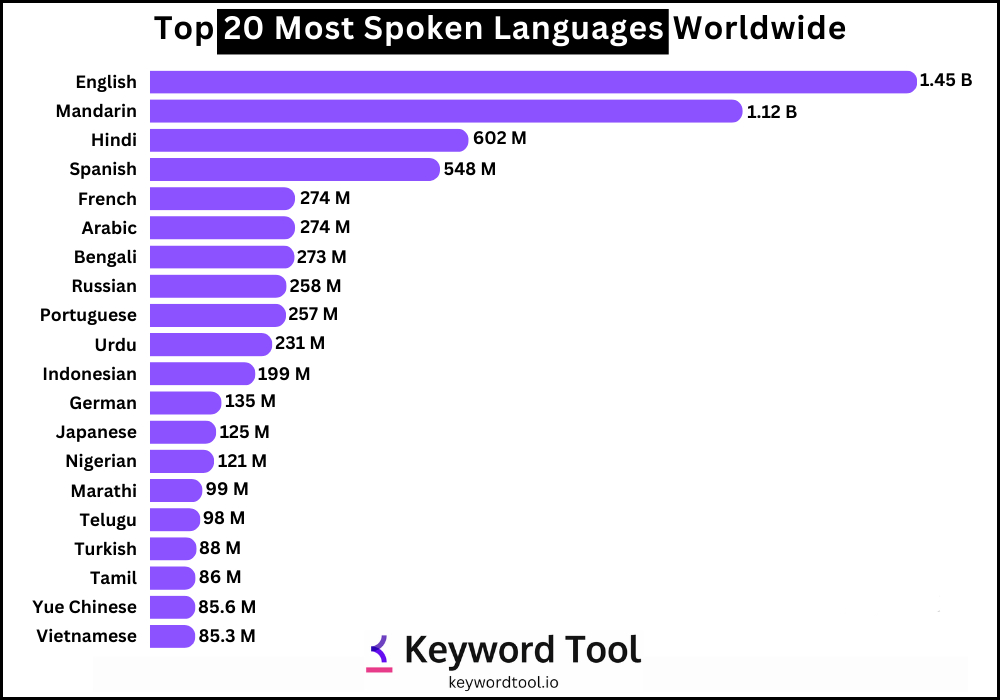
With an estimated 1.5 billion speakers globally (including native and non-native), English remains the bedrock of the digital world. It is the primary language for most programming languages, scientific and technical documentation, and a vast majority of online content. For tech, English is indispensable:
- Software Development & Documentation: From coding languages like Python and Java to API documentation and development forums, English is the standard.
- Academic & Research: The bulk of AI research papers, cybersecurity threat intelligence, and technology reviews are published in English.
- Global Communication: It facilitates international collaboration in distributed teams and serves as a common language for global tech conferences and events.
- AI Training Data: Historically, AI models have had a disproportionately large amount of English data for training, leading to more robust performance in English NLP tasks.
Mandarin Chinese: The Digital Dragon’s Roar
Boasting over 1.1 billion speakers, Mandarin Chinese represents an colossal digital market. China’s internet ecosystem is vast, unique, and largely self-contained, presenting both challenges and immense opportunities for tech companies.
- Massive User Base: China has the world’s largest internet user population, driving demand for localized apps, services, and content.
- Unique Ecosystem: Dominant local tech giants like Tencent, Alibaba, and Baidu have built a sophisticated digital infrastructure with unique social media, e-commerce, and payment systems, all primarily in Mandarin.
- AI/NLP Challenges & Opportunities: The complexity of Chinese characters (Hanzi) and tonal nuances present distinct challenges for AI and Natural Language Processing (NLP) but also fuel significant local innovation in these fields.
- Digital Security: A distinct regulatory and technical environment necessitates tailored digital security solutions.
Spanish: Bridging Continents Digitally
With approximately 590 million speakers, Spanish is a global language with a significant footprint across Europe, Latin America, and North America. Its widespread geographic distribution makes it vital for tech expansion.
- Significant Online Presence: Spanish ranks highly in terms of active internet users and online content creation, especially in social media and e-commerce.
- Mobile-First Markets: Many Spanish-speaking regions are mobile-first, meaning app development and mobile-optimized web experiences are paramount.
- Localization Demands: Tech companies targeting diverse Spanish-speaking markets must consider regional variations in dialect, slang, and cultural nuances for effective localization.
- AI for Diverse Populations: Developing AI tools that accurately understand and generate Spanish across its many variations is key for customer service chatbots, voice assistants, and accessibility features.
Hindi: India’s Digital Surge
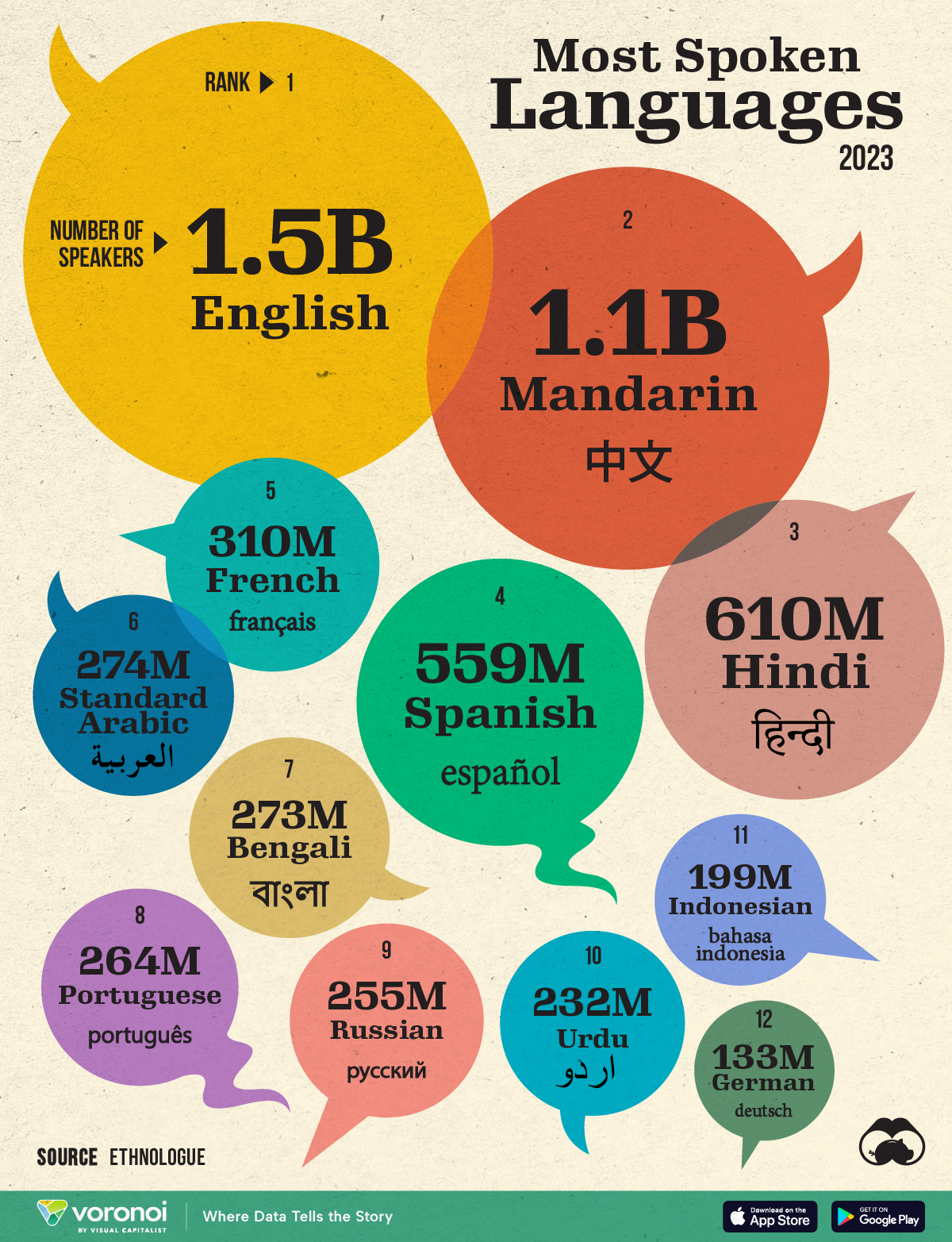
Spoken by over 615 million people, predominantly in India, Hindi is at the forefront of one of the world’s fastest-growing digital markets. India’s rapid internet adoption, driven by affordable smartphones and data, positions Hindi as a critical language for future tech growth.
- Explosive Internet Growth: India is adding millions of new internet users annually, many of whom prefer content and interfaces in Hindi.
- Localized Content Demand: There’s a burgeoning demand for localized content, apps, and digital services tailored to Hindi speakers, particularly in Tier 2 and Tier 3 cities.
- AI for Diverse Dialects: India’s linguistic diversity (with Hindi having numerous dialects) presents both a challenge and a massive opportunity for AI and NLP researchers to develop robust multilingual models.
- Digital Inclusion: Providing tech solutions in Hindi is vital for digital inclusion, bridging the gap for millions who are less proficient in English.
Arabic: Unlocking the MENA Digital Frontier
With over 420 million speakers across 22 countries, Arabic is a critical language for accessing the economically dynamic Middle East and North Africa (MENA) region. Its unique script and cultural context require specialized tech approaches.
- Unique Script Challenges: The right-to-left script, ligatures, and contextual letter forms present distinct challenges for UI design, typesetting, and rendering in software and apps.
- Growing E-commerce & Social Media: The MENA region is experiencing rapid growth in e-commerce and social media usage, with a strong preference for Arabic content.
- Government Tech & Digital Transformation: Many governments in the region are investing heavily in digital transformation, creating a demand for Arabic-localized enterprise software and e-governance solutions.
- Cybersecurity Considerations: The geopolitical landscape and unique digital infrastructure mean cybersecurity solutions must be culturally and linguistically adapted for Arabic-speaking users.
Technological Imperatives: Why These Languages Matter for Tech Innovation
The digital dominance of these languages isn’t just about market access; it’s about fundamental technological development, user experience, and global digital security.
Localization and UI/UX Design
For any software, app, or digital platform to succeed globally, seamless localization is paramount. This goes beyond mere translation; it involves adapting the user interface (UI), user experience (UX), and content to reflect cultural nuances, reading directions, and specific linguistic conventions of each market. For languages like Arabic with right-to-left scripts, UI design requires fundamental structural changes. For Hindi and Mandarin, ensuring proper font rendering and input methods is critical. Companies that master multilingual UI/UX design can offer intuitive and culturally resonant experiences, leading to higher adoption rates and customer satisfaction. Failing to do so can alienate vast user bases, regardless of the quality of the underlying technology.
The Backbone of AI and NLP Development
Artificial Intelligence, particularly Natural Language Processing (NLP), is heavily reliant on vast datasets for training models. The prevalence of English data has historically given AI an “English bias,” making models more proficient in English. As AI aims for true global intelligence, access to high-quality, representative datasets in other dominant languages like Mandarin, Spanish, Hindi, and Arabic becomes critical.
- Data Scarcity: Non-English languages often suffer from data scarcity, leading to less accurate AI models for these languages.
- Model Training: Developing robust AI that understands sentiment, nuance, and context in diverse languages requires significant investment in data collection, annotation, and model training for each specific language.
- Language Barriers in AI Understanding: For AI-powered tools like chatbots, voice assistants, and automated translation, bridging the linguistic gap is essential for providing equitable and effective service to a global user base. Future AI breakthroughs will increasingly depend on its ability to transcend linguistic boundaries effectively.
Cybersecurity and Digital Trust
Digital security is a global concern, but its manifestation often varies significantly across linguistic and cultural contexts. The top global languages play a crucial role in how cybersecurity threats are propagated and how defenses are implemented.
- Phishing & Scams: Phishing attacks, malware, and online scams are increasingly localized, targeting users in their native languages. Understanding these linguistic patterns is vital for developing effective detection and prevention mechanisms.
- Threat Intelligence: Monitoring cyber threats requires analyzing intelligence from various linguistic sources, including dark web forums, social media, and news outlets in these dominant languages.
- User Education: Educating users about digital security best practices must be done in their native language to ensure comprehension and foster digital trust. Tech companies offering security solutions need multilingual capabilities to protect a diverse user base effectively.
Future Trends: Multilingual AI and the Metaverse
The trajectory of technology points towards increasingly seamless and immersive digital experiences, where linguistic diversity will be a core feature rather than an afterthought.
The Promise of Seamless Multilingual AI
The future of AI aims to break down language barriers entirely. Real-time translation tools, advanced multilingual chatbots, and AI-powered localization platforms are constantly evolving. As AI models become more sophisticated and access to diverse linguistic datasets improves, we can anticipate a world where language is no longer a significant impediment to digital interaction. This has profound implications for global commerce, education, and social connection, democratizing access to information and services across linguistic divides.
Building Inclusive Digital Worlds
The emerging concepts of the Metaverse, virtual reality (VR), and augmented reality (AR) envision highly immersive digital worlds. For these worlds to be truly global and inclusive, they must be inherently multilingual. From avatars speaking different languages in real-time to culturally localized virtual environments, linguistic diversity will be a foundational element. Tech companies building these future digital spaces must bake in multilingual capabilities from the ground up, ensuring that users from any linguistic background can participate fully and meaningfully, fostering a truly global and equitable digital experience.
Conclusion
The question of “what are the top 5 languages in the world” transcends mere curiosity, becoming a strategic cornerstone for the technology sector. English, Mandarin Chinese, Spanish, Hindi, and Arabic, among others, are not just spoken languages; they are digital powerhouses shaping software development, driving AI innovation, influencing app ecosystems, and defining the landscape of digital security. For tech companies aiming for global impact, understanding the digital footprint of these linguistic giants is paramount. Embracing linguistic diversity in design, development, and deployment is not just a trend but a fundamental requirement for building inclusive, accessible, and ultimately, successful technology in our increasingly interconnected world. The future of tech is inherently multilingual, and only those who acknowledge and integrate this reality will truly lead the way.
aViewFromTheCave is a participant in the Amazon Services LLC Associates Program, an affiliate advertising program designed to provide a means for sites to earn advertising fees by advertising and linking to Amazon.com. Amazon, the Amazon logo, AmazonSupply, and the AmazonSupply logo are trademarks of Amazon.com, Inc. or its affiliates. As an Amazon Associate we earn affiliate commissions from qualifying purchases.