
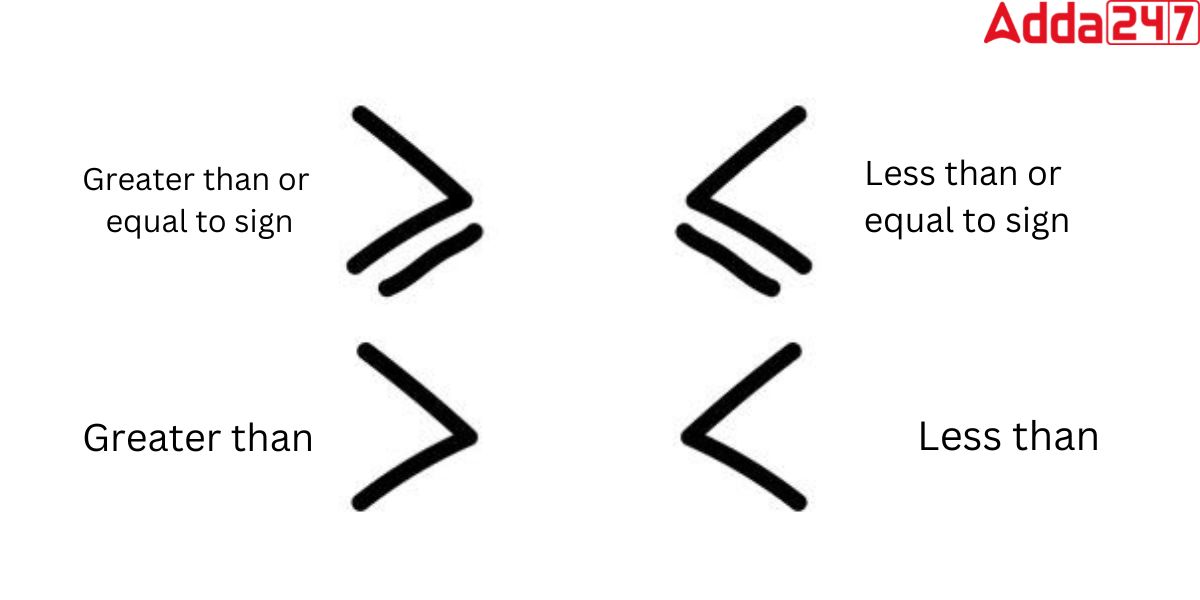
In the foundational years of education, the symbols for “greater than” (>) and “less than” (<) are introduced as simple tools to compare numerical values. However, as we transition from the classroom to the high-stakes world of technology, these characters—often referred to as angle brackets—evolve into the literal scaffolding of the digital age. From the logic gates that power our processors to the complex algorithms driving artificial intelligence, these symbols are the primary conduits of decision-making and structural organization in software.
To understand these symbols within a tech context is to understand the language of logic. They are not merely mathematical shorthand; they are the fundamental operators that allow a computer to “think,” choose, and categorize. This article explores the multifaceted roles of the greater than and less than symbols across programming, web architecture, data science, and system administration.
The Foundation of Logic: Comparison Operators in Software Development
At the heart of every software application—whether it is a simple mobile app or a complex enterprise system—lies the concept of conditional logic. Programming languages like Python, Java, C++, and JavaScript rely on “greater than” and “less than” symbols as comparison operators. These operators are the triggers for Boolean logic, returning values of either True or False.
Boolean Logic and Conditional Statements
In programming, the primary use of < and > is within if-else statements. This is the mechanism that allows software to respond to user input. For example, a banking application might use the logic if (withdrawalAmount > currentBalance) to trigger an error message. Without these symbols, the software would have no way to evaluate conditions, making interactive computing impossible.
Beyond the basic symbols, developers use “Greater Than or Equal To” (>=) and “Less Than or Equal To” (<=). These variations are critical for defining boundaries and ranges, such as determining if a user meets the age requirement for a digital service or if a hardware sensor has reached a critical temperature threshold.
Comparison in Modern Languages and Syntax
Different languages treat these symbols with slight variations in performance, but their functional purpose remains consistent. In Python, these operators can be used to compare not just integers, but also strings (based on alphabetical/ASCII order) and complex data structures. In the world of “Big O Notation,” which measures the efficiency of an algorithm, the symbols are used to describe how the time or space requirements of a program grow as the input size increases. This theoretical application is vital for software engineers aiming to build scalable, high-performance systems.
Structural Architecture: The Role of Angle Brackets in Web Development
While their role in logic is paramount, the greater than and less than symbols serve an entirely different, structural purpose in web development. Here, they are known as “angle brackets,” and they form the basis of Markup Languages, specifically HTML (HyperText Markup Language) and XML (eXtensible Markup Language).
HTML and the Anatomy of the Web
Every website you visit is built using a series of tags enclosed in < and >. For instance, <p> tells the browser to start a paragraph, and </p> tells it to end one. These symbols act as delimiters, separating the content of a webpage from the instructions given to the browser.
The “less than” symbol signifies the start of a command, and the “greater than” symbol closes it. This syntax is what allows the internet to be a structured, visual experience rather than a chaotic wall of text. In modern web frameworks like React, these symbols are used in JSX (JavaScript XML), allowing developers to write HTML-like code directly inside their JavaScript files, bridging the gap between logic and UI.
Data Interchange via XML and JSON
In the realm of backend technology and API (Application Programming Interface) development, the symbols are used in XML to wrap data in descriptive tags. This allows different systems to communicate with one another by providing a standardized format for data exchange. While JSON has become more popular due to its lighter weight, XML remains a cornerstone in enterprise systems, document formatting, and telecommunications, proving that the structural utility of these symbols is as relevant today as it was at the dawn of the internet.
Data Management and SQL: Filtering the Digital Noise
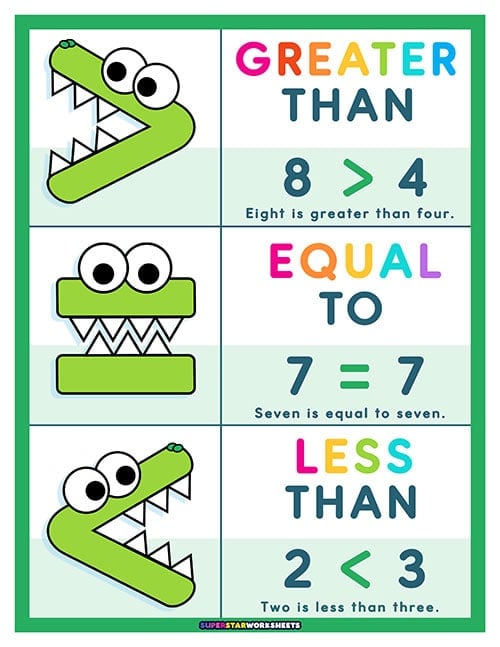
In the era of Big Data, the ability to filter and retrieve specific information from massive datasets is a vital skill. This is where the symbols of greater than and less than become indispensable tools for database administrators and data scientists using SQL (Structured Query Language).
Querying and Filtering Large Datasets
When interacting with a database, the WHERE clause is frequently paired with comparison operators. A data analyst might run a query such as SELECT * FROM Sales WHERE Revenue > 10000;. In this context, the “greater than” symbol acts as a high-speed filter, discarding millions of irrelevant rows of data to pinpoint specific financial targets.
This functionality is essential for business intelligence. By leveraging these symbols, companies can track inventory levels (e.g., Stock < 10), analyze user engagement, and perform complex temporal analysis (e.g., Date > '2023-01-01').
Sorting Algorithms and Indexing
The underlying technology of databases—the way data is indexed and stored—also relies heavily on these symbols. Binary Search Trees and B-Trees, which are data structures used to speed up data retrieval, use “greater than” and “less than” logic to organize data points. When a new piece of data is entered, the system compares it to the existing nodes; if it is “less than,” it goes to the left branch; if it is “greater than,” it goes to the right. This mathematical hierarchy is what allows a search engine to return results in milliseconds.
Shell Scripting and Command Line: Directing the Flow of Information
For system administrators and DevOps engineers, the “greater than” and “less than” symbols are not just for comparison or tagging—they are “redirection operators” used in the Command Line Interface (CLI) of Linux, Unix, and Windows systems.
Output Redirection
In a terminal environment, the > symbol is used to redirect the output of a command into a file. For example, ls > list.txt takes the list of files in a directory and writes them into a text file rather than displaying them on the screen. The double greater than symbol (>>) is used to append data to the end of an existing file. This is a fundamental technique for logging system errors, managing server health, and automating repetitive tasks through shell scripts.
Input Redirection and Piping
Conversely, the < symbol is used for input redirection, allowing a command to read its input from a file rather than from the keyboard. This allows for the automation of complex workflows where one program’s output becomes another program’s input. In the tech world, this “piping” of information is the backbone of the “Unix Philosophy”—building small, modular tools that do one thing well and can be connected through these symbolic operators.
The Future of Logic: Inequality in AI and Machine Learning
As we move into the frontier of Artificial Intelligence (AI) and Machine Learning (ML), the “greater than” and “less than” symbols find a new home in the world of probability and thresholds.
Neural Networks and Activation Functions
In a neural network, a “neuron” receives multiple inputs, calculates a weighted sum, and then decides whether to “fire” or pass information to the next layer. This decision is often governed by an activation function that uses a threshold. For instance, in a Step Function, if the input is > 0, the output is 1; otherwise, it is 0. These symbols are the binary switches that allow AI models to categorize images, recognize speech, and make predictions.
Algorithmic Bias and Optimization
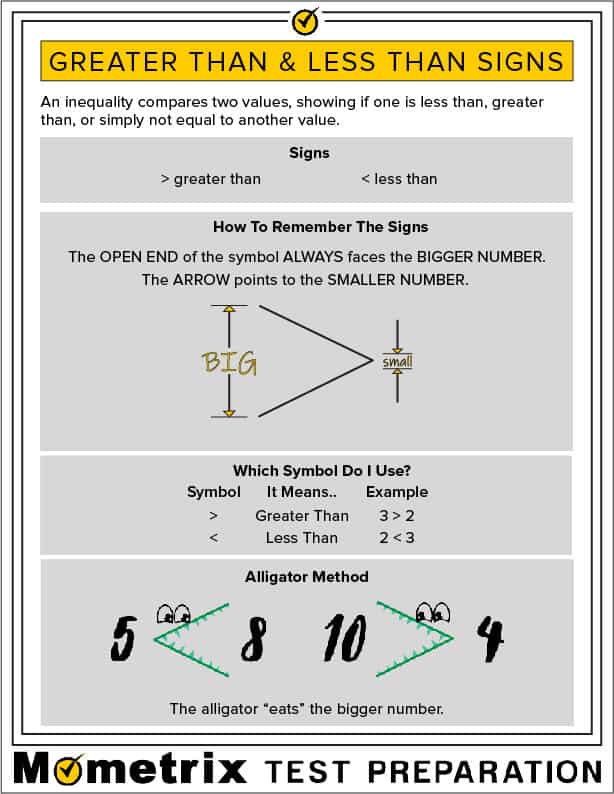
Data scientists also use these symbols to set constraints on AI models to ensure fairness and accuracy. By setting parameters where error rates must be < 0.05 or confidence intervals must be > 0.95, engineers can tune algorithms to meet rigorous safety and ethical standards.
In conclusion, the symbols of “greater than” and “less than” are far more than elementary school relics. In the tech industry, they are the versatile tools of the trade. They define the logic of our applications, the structure of our websites, the efficiency of our databases, and the flow of our operating systems. As technology continues to advance, these simple angle brackets will remain the essential characters in the code that writes our future.
aViewFromTheCave is a participant in the Amazon Services LLC Associates Program, an affiliate advertising program designed to provide a means for sites to earn advertising fees by advertising and linking to Amazon.com. Amazon, the Amazon logo, AmazonSupply, and the AmazonSupply logo are trademarks of Amazon.com, Inc. or its affiliates. As an Amazon Associate we earn affiliate commissions from qualifying purchases.