
In the world of investing, timing is often as critical as the assets themselves. For the modern investor, understanding stock market hours is not merely about knowing when the doors open and close; it is about recognizing the rhythmic pulse of global liquidity, volatility, and opportunity. While digital platforms have made it possible to place trades at any hour of the day, the formal windows of exchange operations dictate the pricing and execution quality that can make or break a portfolio’s performance.
Whether you are a long-term value investor or an active day trader, the clock is a constant factor in your financial decision-making. This guide explores the intricate schedule of the financial markets, the nuances of extended trading sessions, and how global time zones influence the flow of capital across the world.
The Standard Trading Day: Understanding Core Hours in the United States
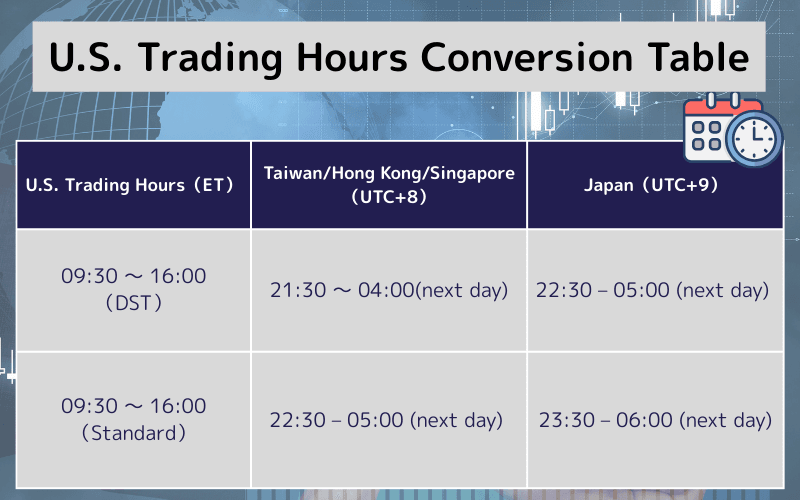
For the majority of retail investors, the “standard” trading day refers to the operating hours of the two largest exchanges in the world: the New York Stock Exchange (NYSE) and the Nasdaq. Both are located in the Eastern Time (ET) zone, and their schedules form the backbone of American financial activity.
The Opening and Closing Bells
The standard trading session for the U.S. stock market runs from 9:30 AM to 4:00 PM Eastern Time, Monday through Friday. The “Opening Bell” at 9:30 AM signifies more than just the start of the day; it is the moment of price discovery. This is when the market reconciles all the news, earnings reports, and geopolitical events that occurred overnight.
Conversely, the “Closing Bell” at 4:00 PM marks the finalization of daily prices. Many institutional funds and ETFs execute their trades near the close to ensure they receive the “Net Asset Value” (NAV) price, leading to a significant surge in volume during the final minutes of the day.
The Significance of the “Core” Session
Trading during core hours offers several advantages, most notably liquidity. Liquidity refers to the ease with which an asset can be bought or sold without affecting its price. Because the vast majority of institutional investors, market makers, and high-frequency trading algorithms are active between 9:30 AM and 4:00 PM, the “bid-ask spread”—the difference between the buying and selling price—is typically at its narrowest. This ensures that investors get the fairest possible price for their shares.
Mid-Day Lulls and the Professional Gap
While the market is open for six and a half hours, the intensity of trading is not uniform. Experienced investors often note a “mid-day lull” between 12:00 PM and 2:00 PM ET. During this period, trading volume often drops as institutional traders take lunch breaks and the initial morning volatility subsides. This period can be deceptive; lower volume can lead to erratic price movements, leading some professionals to avoid heavy trading until the “Power Hour” begins at 3:00 PM.
Beyond the Bell: The Mechanics of Extended-Hours Trading
The evolution of Electronic Communication Networks (ECNs) has dismantled the traditional barriers of the 9:30-to-4:00 window. Today, investors can participate in pre-market and after-hours sessions, though these periods operate under a different set of rules and risks.
Pre-Market Trading
Pre-market trading in the U.S. typically begins as early as 4:00 AM ET and runs until the official opening at 9:30 AM. However, most retail brokerages only provide access starting at 7:00 AM or 8:00 AM. Pre-market sessions are often used by investors to react to early-morning news, such as government employment data or European market trends.
After-Hours Trading
The after-hours session begins immediately at 4:00 PM ET and can run until 8:00 PM ET. This is arguably the most volatile time for individual stocks, as the vast majority of publicly traded companies release their quarterly earnings reports shortly after the closing bell. A stock might close the day at $100, but within minutes of an earnings miss at 4:05 PM, it could be trading at $85 in the after-hours market.
The Risks of Extended Trading
While the ability to trade 24/5 (in some cases) sounds advantageous, it carries substantial risks for the uninitiated.
- Lower Liquidity: Fewer participants mean that a single large order can swing the price of a stock significantly.
- Wider Spreads: Because there are fewer market makers, the gap between what a buyer wants to pay and what a seller wants to receive is much larger, effectively increasing the cost of the trade.
- Price Uncertainty: The price a stock reaches in the after-hours session does not always reflect where it will open the next morning. It is common to see “fakes,” where a stock rallies after-hours only to plummet when the full weight of the market arrives at 9:30 AM.
The Global Relay: Trading Across International Time Zones
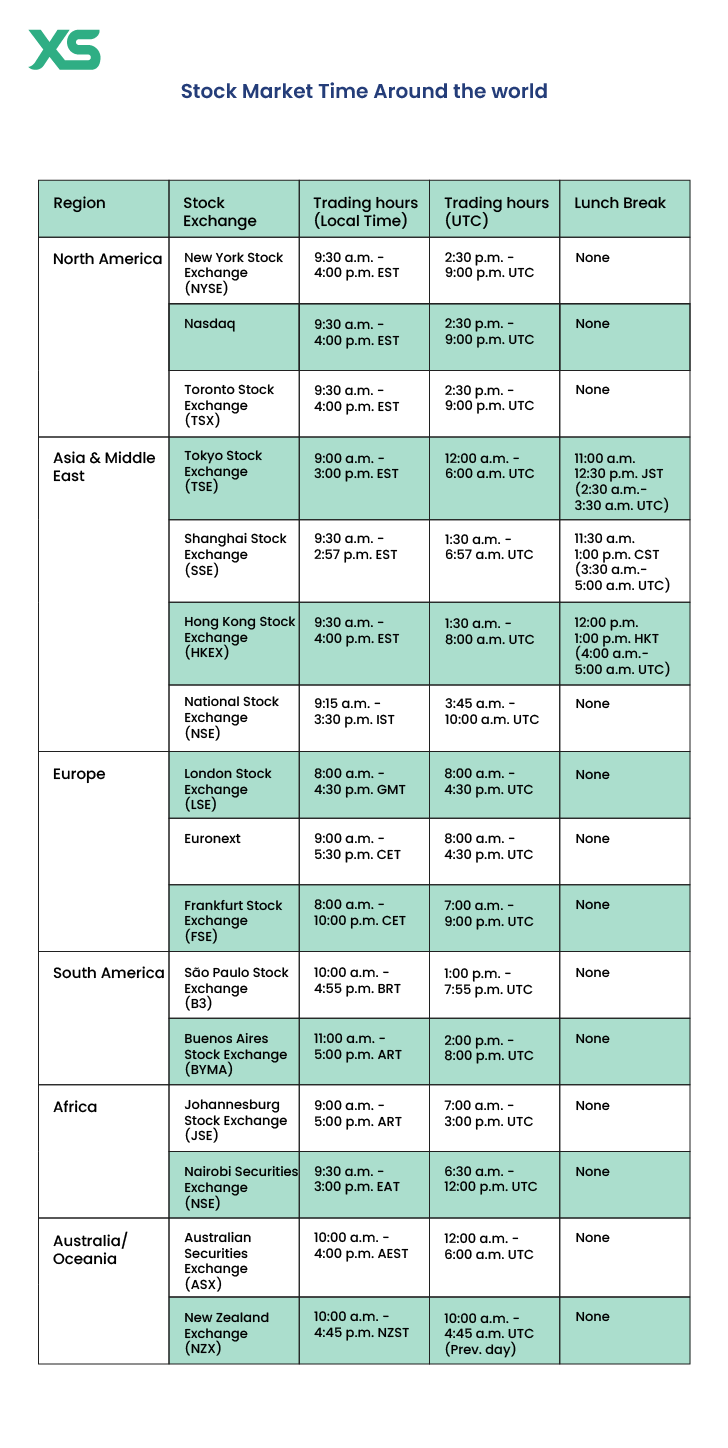
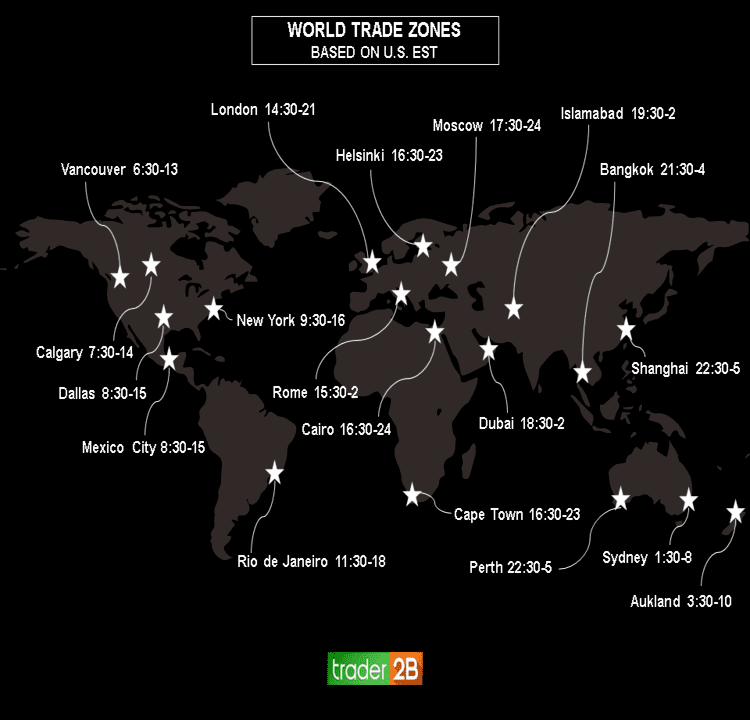
Capital never truly sleeps. As the sun sets on Wall Street, it is rising on the major financial hubs of Asia and Europe. Understanding the global market cycle is essential for investors who hold international equities or want to understand the “macro” forces driving U.S. futures.
The European Powerhouses
The London Stock Exchange (LSE) is the crown jewel of European finance. Its hours are typically 8:00 AM to 4:30 PM GMT. For U.S.-based investors, the London session overlaps with the New York session for a few crucial hours in the morning (roughly 8:00 AM to 11:30 AM ET). This overlap is often the most liquid and volatile period for global currency markets and large-cap multinational stocks.
The Asian Markets
The Asian trading day begins with the Tokyo Stock Exchange (TSE) and the Hong Kong Stock Exchange (HKEX). A unique feature of many Asian markets is the mandatory lunch break. For instance, the HKEX typically closes for an hour in the middle of the day, a practice that has largely disappeared in Western markets. The performance of the Nikkei or the Hang Seng often sets the tone for the “S&P 500 Futures,” giving American investors a preview of how their portfolio might perform before they even wake up.
The 24-Hour Cycle and Futures
While individual stocks have set hours, the futures market operates nearly 24 hours a day, six days a week. From Sunday evening at 6:00 PM ET until Friday evening, futures contracts on indices like the Dow Jones or Nasdaq-100 trade continuously. This provides a “live” sentiment gauge of the global economy, reacting in real-time to midnight political shifts or overseas economic data.
Weekends and Holidays: When the Markets Take a Break
Even the fast-paced world of finance requires periods of rest. The U.S. stock market is closed on Saturdays and Sundays, and it observes several federal holidays throughout the year.
Standard Holiday Closures
The NYSE and Nasdaq follow a specific holiday schedule. These include:
- New Year’s Day
- Martin Luther King, Jr. Day
- Presidents’ Day
- Good Friday
- Memorial Day
- Juneteenth National Independence Day
- Independence Day (July 4th)
- Labor Day
- Thanksgiving Day
- Christmas Day
Early Closures and “Bridge” Days
On certain days, such as the day after Thanksgiving (Black Friday) or Christmas Eve, the market often has a scheduled early close at 1:00 PM ET. These sessions are typically characterized by extremely low volume, as many institutional traders take the day off. Interestingly, these low-volume days often see an upward bias in prices—a phenomenon sometimes referred to as the “holiday effect.”
The Weekend Effect
The “Weekend Effect” is a financial theory suggesting that stock returns on Mondays are often significantly different from those on the preceding Friday. While the markets are closed, news continues to accumulate. Political crises, natural disasters, or unexpected corporate scandals that happen on a Saturday cannot be priced into the market until Monday morning. This can lead to “gaps”—where a stock opens at a price significantly higher or lower than its Friday close.
Strategic Timing: How Market Hours Influence Portfolio Performance
For the sophisticated investor, the time of day a trade is executed is a tactical decision. The market behaves differently at 10:00 AM than it does at 2:00 PM, and understanding these “personality shifts” can improve execution.
The Morning Rush (9:30 AM – 10:30 AM)
This is the hour of maximum volatility. It is when “dumb money” (retail orders placed overnight) meets “smart money” (institutional reactions). For long-term investors, it is often wise to wait until 10:00 AM or 10:30 AM for the initial volatility to settle before entering a position. For day traders, this is the prime window for catching large “momentum” moves.
The Institutional Rebalance (3:00 PM – 4:00 PM)
The final hour of trading, known as the “Power Hour,” is dominated by institutional activity. Mutual funds must manage their inflows and outflows, and ETFs must rebalance their holdings to track their benchmarks. This often leads to a surge in volume and a definitive trend. If the market has been rallying all day and the Power Hour sees continued strength, it is often a sign of “conviction” among professional investors.
Time-Based Risk Management
Understanding hours also means understanding when not to trade. Using “Market Orders” during the pre-market or in the first five minutes of the opening bell can be dangerous, as prices are fluctuating wildly. Instead, disciplined investors use “Limit Orders,” which specify the maximum price they are willing to pay, protecting them from the temporary price spikes that occur when the market is at its most frantic.
In conclusion, the stock market is more than a list of tickers and prices; it is a global engine that runs on a strict schedule. By mastering the nuances of standard hours, extended sessions, and international overlaps, investors can better navigate the complexities of the financial world. Success in the markets requires not just the right assets, but the wisdom to know when to strike and when to wait for the clock to work in your favor.
aViewFromTheCave is a participant in the Amazon Services LLC Associates Program, an affiliate advertising program designed to provide a means for sites to earn advertising fees by advertising and linking to Amazon.com. Amazon, the Amazon logo, AmazonSupply, and the AmazonSupply logo are trademarks of Amazon.com, Inc. or its affiliates. As an Amazon Associate we earn affiliate commissions from qualifying purchases.