
For decades, the pursuit of Artificial Intelligence (AI) was focused almost exclusively on replicating human-centric logic: mathematical computation, linguistic mastery, and linear problem-solving. However, as the tech industry hits the limitations of silicon-based processing and energy consumption, engineers and developers are looking toward a different muse. When we ask “what are the smartest animals in the world,” the tech sector is no longer looking for trivia; it is looking for architectural blueprints.
From the decentralized nervous system of the octopus to the navigational precision of migratory birds, biological intelligence offers a masterclass in efficiency, adaptability, and resilience. This article explores how the “smartest” traits found in the animal kingdom are being transcribed into code, hardware, and the next generation of technological innovation.

1. Decentralized Architecture: The Octopus and the Future of Edge Computing
The octopus is frequently cited as one of the most intelligent creatures on Earth, but its intelligence is fundamentally different from ours. Two-thirds of an octopus’s neurons are located in its arms, not its head. This allows each limb to “think” and react independently to stimuli without waiting for instructions from a central brain.
The Shift Toward Edge Computing
In the tech world, this biological structure is the primary inspiration for Edge Computing. Traditional cloud computing relies on a massive central server (the “brain”) to process data sent from peripheral devices. However, as the Internet of Things (IoT) expands, this centralized model creates latency and bandwidth bottlenecks. By mimicking the octopus, tech architects are developing “Smart Edges”—sensors and local devices capable of processing data on-site. This reduces response times in critical applications like autonomous vehicles and industrial robotics, where a millisecond of delay can be catastrophic.
Soft Robotics and Haptic Feedback
Beyond software, the physical “smartness” of the octopus is revolutionizing soft robotics. Traditional robots are rigid and struggle with unpredictable environments. By studying the musculature and sensory integration of cephalopods, engineers are creating flexible, “smart-skin” robots. These machines use distributed sensors to navigate tight spaces in search-and-rescue missions or perform delicate surgeries, proving that intelligence is often most effective when it is spread throughout the system rather than confined to a single processor.
2. Swarm Intelligence: Lessons from Ants and Bees in Optimization
When considering “smart” animals, the individual ant or bee may not seem impressive. However, collectively, they exhibit “Swarm Intelligence”—a phenomenon where simple individual agents follow basic rules to create complex, highly efficient systems. This has become a cornerstone of modern logistics and network optimization.
Ant Colony Optimization (ACO) in Software Engineering
Ant Colony Optimization (ACO) is a probabilistic technique used in computer science to find optimal paths through graphs. In nature, ants leave pheromone trails to guide others to food sources. In technology, this logic is applied to data routing. Internet service providers use ACO algorithms to manage traffic, ensuring that packets of data find the most efficient route through a network, even when certain nodes are congested or down. It is a self-healing system that requires no “manager,” making it incredibly robust against failure.
The Rise of Drone Swarms
The defense and agricultural sectors are currently investing billions into “drone swarming.” Rather than controlling a single expensive drone, operators deploy hundreds of low-cost units that communicate with one another to map terrain, identify targets, or pollinate crops. These drones mimic the collective decision-making of honeybees. If one drone is destroyed, the “swarm” re-adjusts its formation and continues the mission. This move from “singular-smart” to “collective-smart” represents a paradigm shift in how we build resilient tech infrastructures.
3. Avian Navigation: Corvid Logic and the Evolution of Spatial AI
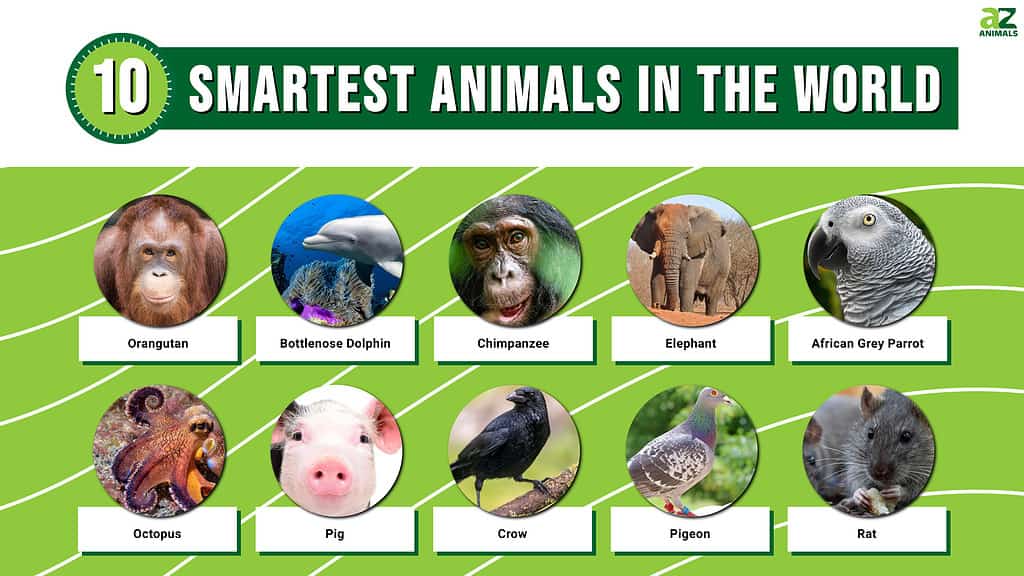
Crows, ravens, and other corvids are often ranked as the smartest animals due to their ability to use tools and plan for the future. Similarly, migratory birds possess a “smart” internal GPS that far surpasses the efficiency of our current electronic sensors. The tech industry is currently obsessed with these avian traits to solve the “Spatial AI” puzzle.
Tool-Use and API Integration
Crows are famous for using sticks to reach insects, and even bending wires to create hooks. In the realm of AI, this is known as “Tool-Use Capability.” Modern Large Language Models (LLMs) are being trained not just to talk, but to use external tools—such as calculators, web browsers, and code executors—to solve complex problems. We are moving away from AI as a static encyclopedia toward AI as a “Corvid-style” problem solver that understands which digital tool to pick up to achieve a specific goal.
Bio-Inspired Sensors and Quantum Navigation
Birds navigate using magnetoreception, a biological ability to sense the Earth’s magnetic field. Tech researchers are currently attempting to replicate this using quantum sensors. The goal is to create navigation systems for autonomous drones and underwater vehicles that do not rely on GPS satellites, which can be spoofed or blocked. By studying the “smart” hardware of a bird’s eye and brain, we are developing a new class of resilient, satellite-independent positioning technology.
4. The Neural Efficiency of the Honeybee: Sustainability in AI
One of the greatest challenges in modern technology is energy consumption. Training a single large-scale AI model can consume as much electricity as several hundred households do in a year. In contrast, a honeybee, with less than a million neurons, can perform complex facial recognition, navigation, and communication—all on the energy provided by a drop of nectar.
Neuromorphic Computing and Brain-on-a-Chip
To solve the energy crisis in tech, scientists are developing “Neuromorphic Computing.” This involves designing hardware that mimics the physical structure of an insect’s brain. Unlike traditional Von Neumann architecture, where the processor and memory are separate (causing energy loss during data transfer), neuromorphic chips process and store data in the same place. By looking at how “small but smart” animals operate, the tech industry is creating “TinyML” (Tiny Machine Learning)—powerful AI that can run on a smartwatch or a remote sensor for years without a battery change.
Pattern Recognition Without Big Data
Most AI requires millions of data points to learn a concept. A smart animal like a dog or a parrot can learn a new command or recognize a person after only a few repetitions. Tech researchers are studying this “Few-Shot Learning” capability to create more efficient algorithms. This would allow AI to operate in niche industries—like rare disease diagnosis or specialized manufacturing—where “Big Data” simply doesn’t exist.
5. Ethical Frontiers: The Convergence of Bio-Tech and Animal Intelligence
As we successfully map and replicate the “smartest” traits of the animal kingdom, we approach a new technological frontier: the integration of biological and synthetic intelligence. This is no longer the realm of science fiction but a growing sector of the biotech and neural-interface industry.
Brain-Computer Interfaces (BCI)
Companies like Neuralink and Synchron are already working on interfaces that allow brains to communicate directly with computers. While initial applications are medical, the long-term tech trend is to augment human intelligence with the specialized “smart” traits of animals. Imagine a human operator with the spatial awareness of a bat (sonar) or the distributed processing power inspired by a cephalopod.
The Sustainability of Bio-Mimicry
Ultimately, the most important lesson the tech world is learning from the “smartest” animals is sustainability. Nature has spent millions of years optimizing for survival with minimal resources. As we build the “Metaverse,” autonomous cities, and global AI networks, the “smartest” move for the tech industry is to abandon the “more is better” philosophy in favor of the “efficient is better” philosophy demonstrated by the animal kingdom.
In conclusion, the question of “what are the smartest animals in the world” provides more than just biological insight; it provides a roadmap for the next century of digital innovation. By transposing the decentralized logic of the octopus, the swarm intelligence of the ant, and the energy efficiency of the honeybee into our gadgets and software, we are moving toward a future where technology is not just powerful, but naturally intelligent.
aViewFromTheCave is a participant in the Amazon Services LLC Associates Program, an affiliate advertising program designed to provide a means for sites to earn advertising fees by advertising and linking to Amazon.com. Amazon, the Amazon logo, AmazonSupply, and the AmazonSupply logo are trademarks of Amazon.com, Inc. or its affiliates. As an Amazon Associate we earn affiliate commissions from qualifying purchases.